


Crime in Roskovec/ 35-year-old perpetrator ends his life
Police Announcement: Following preliminary information...

Police Announcement: Following preliminary information...

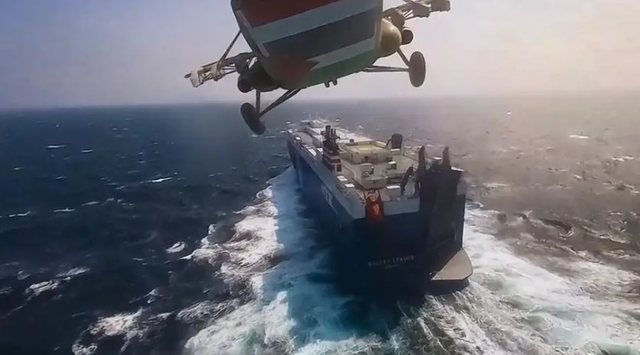
Some shipping companies are currently avoiding sailing through the strait near Yemen because Yemen's Iran-backed Houthi rebels have repeatedly attacked ships traveling through the Bab al-Mandeb strait in recent weeks. On their way to the Suez Canal all ships must pass through this sea strait.
Bab ach-Madneb separates the Arabian Peninsula from Africa and connects the Red Sea to the Gulf of Aden - and thus to the Indian Ocean. The focus of Houthi militia attacks are ships suspected of having ties to Israel.
In response, the US formed the international military coalition OPG (Operation Prosperity Guardian) a few days before Christmas to secure shipping in the Red Sea. On December 30, 2023, the US Navy sank several boats belonging to Houthi rebels that attacked the Danish container ship Maersk Hangzhou. Shipping giant Maersk suspended all Red Sea voyages for 48 hours on Sunday, but is now considering using the route again.
If ships do not pass through the Suez Canal on their way from the Far East to Europe, then they must traverse the entire African continent. This is a longer voyage for a week, approximately 3,500 nautical miles (6,482 kilometers) more travel.
The Suez Canal, which connects the Red Sea to the Mediterranean, is the shortest route between Europe and Asia. About 12 percent of global shipping traffic passes through this waterway.
Big expenses
According to analysts, attacks by Houthi rebels have already significantly increased the cost of transporting goods. If the crisis drags on for a longer period, the prices that consumers themselves have to pay for imported goods may increase even more.
"If we take, for example, a round trip from Shanghai to Rotterdam, just one detour through the Cape of Good Hope increases fuel costs by up to $1 million," Peter Sand, chief analyst at the market analysis company based in Berlin, told DW. in Copenhagen, Xenet."
Oil shipments are at risk
About nine percent of all vessels carrying oil and gas sail through the Red Sea. Oil tankers were also targeted by Houthi rebels. British oil company BP is one of the companies avoiding this route since December 18.
"We're seeing here and now that energy supplies — whether it's oil, coal or gas — have been affected simply because of the Northern Hemisphere winter," analyst Sand said. This could have a domino effect on energy prices.
Ehsan Khoman, chief commodity market analyst at major Japanese bank MUFG, has a different opinion. He believes that attacks by Houthi rebels will not have a lasting effect on energy prices. "Vessel diversion disrupts supply chains, but not manufacturing."
Export problems
Shipment delays are also affecting container ports across Europe, Lars Jensen, director of Vespucci Maritime, a Denmark-based consultancy, told DW. "Let's say I have a port that handles 50,000 containers a week. If nothing arrives one Sunday, and 100,000 containers arrive the next Sunday, that can lead to congestion," says Jensen.
The Red Sea crisis brings back memories of March 2021. At that time, the Suez Canal was blocked for six days after being blocked by the ship Ever Given. At the time, the world was in lockdown due to the corona pandemic, while global trade supply chains were severely damaged.
Hundreds of ships were stranded in the Red Sea for weeks. Container shipping costs increased from $2,000 (about €1,800) to $14,000 (over €12,000). The crisis caused further delays in importing goods from Asia for months.
The US and its allies are strengthening maritime security
As part of the multinational operation to protect maritime trade in the Red Sea, the United Kingdom, Bahrain, Canada, France, Italy, the Netherlands, Norway, Seychelles and Spain conduct joint patrols in the southern Red Sea and the Gulf of Aden.
Although US and British warships in the area have begun targeting the Houthis with missiles and drones, it is unclear whether the presence of a larger naval force will be enough to fully prevent attacks.
The Houthis, who control large parts of Yemen, see themselves as part of a self-proclaimed "axis of resistance" directed against Israel. In addition to the radical Hamas, there is also Hezbollah in Lebanon, which is also supported by Iran./ DW

Russia has attacked Ukraine with missiles supplied by Nort...
Këtë javë Departamenti amerikan i Drejtësisë bëri publik d...

The new leader of the Syriza party in Greece, Stefanos...

The owner of a store in Iran has been sentenced to two yea...
Chinese Foreign Minister Wang Yi said on Friday that the m...

The sweet bond between Princess Charlotte and Mia Tindall ...

Four people have died in a fire at a hospital near Ham...

The Prime Minister of Kosovo, Albin Kurti, said that the d...

On January 13, Taiwan will elect a new president in a ...

Gjatë një patrullimi të zhvilluar në orët e fundit, Po...

A large number of people chose Kosovo as their destina...

"Our tasks grow like an avalanche, but we are Russia, we a...

A 29-year-old Albanian has fallen into the hands of the It...

Pensioners in East Germany are better off financially ...

Serbian opposition politician Nikola Sandulovic was brutal...

A mother and her child have died after being hit by a ...

British police are investigating a landmark case invol...

The Government of Kosovo has announced that it has dec...

The spokesman for the National Security Council at the...

Rescue teams in Japan are scrambling to find 242 peopl...

A 39-year-old citizen has been arrested in Lezha, after se...

CNA has launched another investigation that could lead to ...

Irfan Hysenbelliu is a businessman that we call "Irfan the...

In March 2026, CNA launched another investigation centered...

The Special Board of Appeal (KPA) decided this Monday ...

The KPA vetting decided this Thursday to dismiss the p...

Suela Salavaçi, a prosecutor in the Prosecutor's Offic...

The Special Board of Appeal reinstated the prosecutor ...

Police Announcement: Following preliminary information...

New details from the operation being carried out in Fier t...

The 17-year-old, who was seriously injured yesterday after...

RENEA is headed towards Roskovec after the murder that occ...

By noon, cloudiness is expected to prevail in almost all o...

Children without parental care, for whom alternative famil...

On Thursday, our country will be under the influence of st...

A serious accident that occurred this Wednesday with the c...

US President Donald Trump will host his Ukrainian counterp...

The Basic Court in Pristina found the former mayor of Pris...

The European Union Office in Kosovo has called on all poli...

Serbian President Aleksandar Vučić, at a press conference ...

At a time when industrial products are increasingly taking...

Trust among people is not just a three-syllable word. It c...

Master of humor Todi Llupi has passed away at the age of 7...

The ninth edition of "MIK Festival" kicked off with one of...
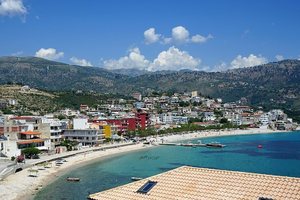
The number of active enterprises in Albania continued to g...
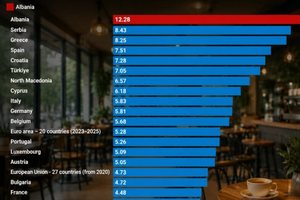
In Albania, the bar-cafe has long become an almost unique ...

This Friday, one US dollar is bought for 81.7 lek and sold...

The average sale price of apartments in Tirana reaches rec...