

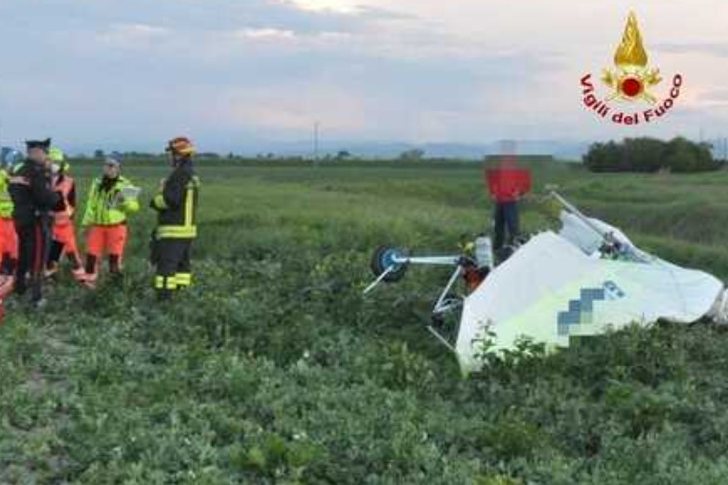
Serious in Italy/ Two paratroopers lose their lives, one of them Albanian
A serious incident occurred on the border between the ...



The use of ChatGPT is viewed partly with critical eyes in the EU. But Artificial Intelligence, AI, is much bigger than that and it is now thought to be regulated by a European law - a process that is moving rather slowly.
The Italian data protection authority, which goes by the name Garante, took a hasty step at the end of March when it preemptively banned the use of ChatGPT. This software, with which artificial intelligence can create texts and computer programs similar to those produced by humans, was suspicious for the Italian authorities.
The problem that the Italian authority "Garante" has is not related to the use of Artificial Intelligence (AI), i.e. attempts to transmit human knowledge and thoughts to the computer in order to give it intelligence, but it is mainly related to the protection of data. "Garante" asks the producers of this software, which is the firm "OpenAI", behind which the American Internet concern Microsoft is located, to inform its customers what happens to their data when they use ChatGPT.
In addition, customers' permission must be obtained, if the data is used to further develop this software, they must be informed. Likewise, access for children under the age of 13 should be prevented. If these conditions are met by the end of April, Garante says in a press release, then OpenAI is allowed to reopen the ChatGPT software for Italy. An OpenAI spokesperson in San Francisco expressed readiness for full cooperation. He also said that he is pleased that the Italian authorities are reconsidering their decision once again.
Meanwhile, Spain and France have also expressed their uncertainty about ChatGPT.
The law on AI will be issued maybe in 2025
A law that regulates in the EU the treatment of Artificial Intelligence and its use in software and products such as self-driving cars, medical technology or surveillance technology, does not yet exist. The EU Commission distributed a draft law two years ago, but consultations are still underway in the European Parliament. Then it will be necessary to obtain the approval of the EU member states.
By the time the AI ??law comes into force, it will have started in 2025. Developments in artificial intelligence like the work of ChatGPT were not yet present in the market two years ago and when the new law comes into force in the EU, they will be even more developed. too much, says MEP Axel Voss (Christian Democrat). "But the developments are present, and in fact they are moving so fast that many of them will no longer be relevant by the time the law comes into force," says Axel Voss to Deutsche Wellen. He has been dealing with Artificial Intelligence for the Christian Democrat faction for years. of the European Parliament and played a leading role in the drafting of the "Law on Artificial Intelligence" of the EU.
Risk classes for IA
It is not certain whether the use of the CHATGPT text generator will be covered by EU law. The draft law divides AI programs into several categories ranging from "unacceptable" to "harmless". Only when the risks are of medium and high level, certain arrangements should be made for the documentation of the algorithms, for the transparency and disclosure of the use of the data.
Certain applications that deal with the social behavior of people, to predict and evaluate their activities, the division and selection of people in certain classes (social scoring) and certain areas of facial recognition should be prohibited. Still debatable is how far AI should be allowed to collect data on people's feelings or to simulate them. How exactly these risk classes will be, is still being discussed in the EU Parliament.
"For competition reasons and since we are still limping along, the EU needs a push to deal more intensively with AI. But what the majority in the European Parliament is doing is blocking because of fears and concerns," says Axel Voss, an expert on Christian Democrats' AI Data protection officers in EU member states require an independent supervisory authority to make appropriate data protection adjustments when using AI.
Is using ChatGPT good or bad?
The general manager of AI at ChatGPT's parent company, Microsoft, Natasha Crampton, has asked in an interview that the regulations "focus on high-risk uses". This includes algorithms in general, but not complex texts and new software that are able to write. The Future of Life Institute, which deals with AI, refutes this. Its political director, Mark Brakel, told Deutsche Wellen that it is precisely the general uses of AI that underpin GPT must be regulated by law They can come into operation in hundreds of thousands of uses.
A chatbot, which imitates human communication, is only a small part of the possible uses that are risky. "What interests us as an organization are the much more complex risks. GPT technology is able to show people how a biological weapon can be created in a short time. There are huge risks that shake the way we understand the truth, because IA it can convince large masses of people with wrong information, but which seems to come from, say, Deutsche Welle," says Brakel. But the whole technique should not be banned just because some of the technique can be used for bad purposes.
"Man misjudges the two-facedness of digital development," says Axel Voss in conversation with Deutsche Wellen. "But what needs to be done is further training with its algorithms."
Even in automobiles, the standard we have today did not exist from the beginning. "But the misuse of automobiles to use them as weapons to kill someone was never intended. But we have to think that many people can use AI for negative purposes so we come to a point where we are required to be more careful,” says Voss.
Companies can leave
The EU Commission and the European Parliament are trying to find the balance between data protection, regulation and freeing up the economy and research work. Because "Artificial Intelligence" offers great chances as a feeder for a digitized society and economy, thinks the EU Commissioner in charge of the policy for industry, Thierry Breton. The EU should not expel from Europe the creators and producers of AI, instead it should ask them to come and settle in the EU, Breton said two years ago when he introduced the IA law.
"We must create the conditions so that the EU does not become dependent on a particular and foreign provider," Breton has asked. The industrial data needed for AI must be extracted in the EU, stored and processed here.
EU AI laws should hold companies accountable. Risk classes for certain applications are no longer enough, says Mark Brakel of the Future of Life Institute. Software developers should check specific uses for the risks they pose.
"This risk management should be mandatory and the results should be made public," suggests Mark Brakel. Sometimes companies don't even know what risks their AI poses and are surprised by the results themselves. Chatbots prompted a person in Belgium to committed suicide or had minors lured into having sex with adults,” says Brakel.
"If we are too complicated here, then companies go somewhere else and develop their algorithms and systems there. Then they will come back here to us, to use us as a consumer country," warns MEP Axel Voss, who deals with future AI laws in the European Parliament.
"Ernie" is coming
What prompted heated discussions in Europe about ChatGPT is the fact that in the US the software has been developed to be used all over the world. OpenAI is competed by American firms such as Google or Elon Musk's Twitter, which are working on a Chatbot.
The Chinese state leadership has made it a task for Chinese firms to market an AI application with the same functions. The Chinese bot from Baidu will be named "Ernie". But in Europe? According to the portal of this sector "futurezone" research is being done in Europe but there are no plans for any European product./DW

A serious incident occurred on the border between the ...

A boat carrying 50 migrants capsized in the Messinian ...

The US government is tracking more than 650 possible ca...

All departures from four airports in Germany will be c...
A new study conducted by the Cologne Institute for ...

At least 85 people died and more than 300 were injured...
The US special envoy for the Western Balkans, Gabriel ...
After a Moscow court sentenced opposition politician Vladi...

About 700 flights will be cancelled, affecting almost 100,...

At least four civilians were killed and 27 others were wou...
Russia has warned South Korea against sending weapons ...
The Moscow City Court has rejected an appeal submitted...
Nënshkruhet vendimi për liberalizimin e vizave për Kosovën...
Shtetet e Bashkuara të Amerikës presin nga Kosova dhe ...
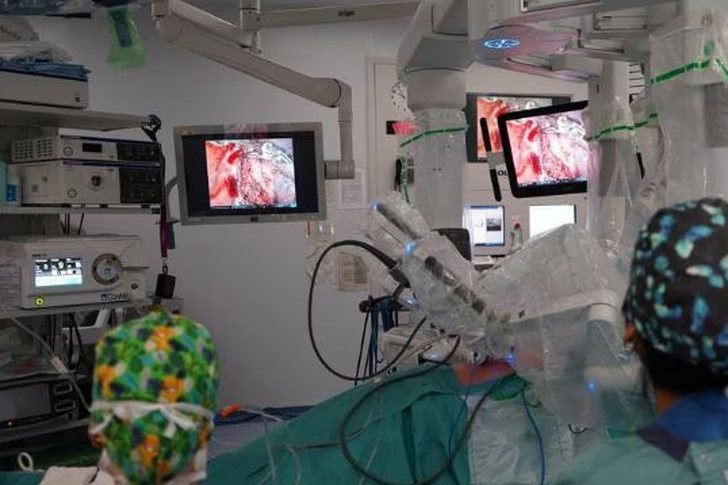
A team of surgeons in Spain has successfully performed the...
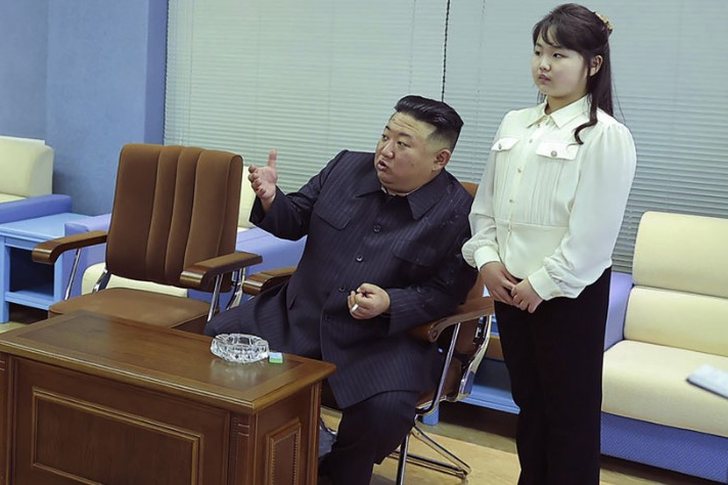
North Korean leader Kim Jong-un said his country has c...
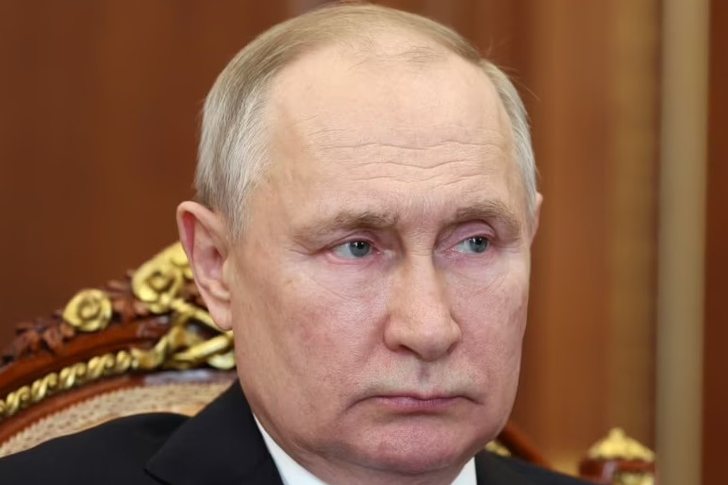
Russian President Vladimir Putin now leads Russia, alm...

A major police operation is underway in the German cit...
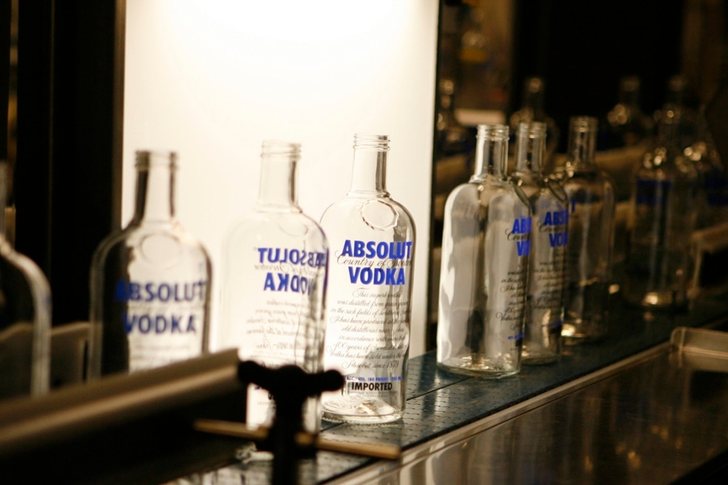
Absolut Vodka will not export its products to Russia, ...
Two New York City residents arrested by the FBI on Monday ...

A 39-year-old citizen has been arrested in Lezha, after se...

CNA has launched another investigation that could lead to ...

Irfan Hysenbelliu is a businessman that we call "Irfan the...

In March 2026, CNA launched another investigation centered...

The Special Board of Appeal (KPA) decided this Monday ...

The KPA vetting decided this Thursday to dismiss the p...

Suela Salavaçi, a prosecutor in the Prosecutor's Offic...

The Special Board of Appeal reinstated the prosecutor ...

A conflict for weak motives was recorded today in the vill...

An accident involving three vehicles occurred a few minute...

55-year-old Belere Plaka, who was injured today with a sho...

Police Announcement: Following preliminary information...

By noon, cloudiness is expected to prevail in almost all o...

Children without parental care, for whom alternative famil...

On Thursday, our country will be under the influence of st...

A serious accident that occurred this Wednesday with the c...

Peru and Venezuela will restore diplomatic relations, the ...
United States President Donald Trump has left open the pos...

Israeli Prime Minister Benjamin Netanyahu will travel to t...

A bipartisan group of US lawmakers is calling for a Europe...

In my research at the Central State Archives, specifically...

At a time when industrial products are increasingly taking...

Trust among people is not just a three-syllable word. It c...

Master of humor Todi Llupi has passed away at the age of 7...

War, weather and supply disruptions could send gas prices ...

The number of active enterprises in Albania continued to g...
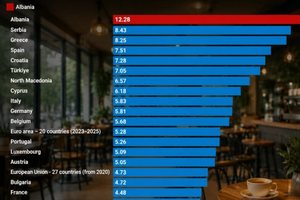
In Albania, the bar-cafe has long become an almost unique ...

This Friday, one US dollar is bought for 81.7 lek and sold...