

White House confirms second attack on ship in Venezuela
The White House has confirmed that a top US Navy commander...


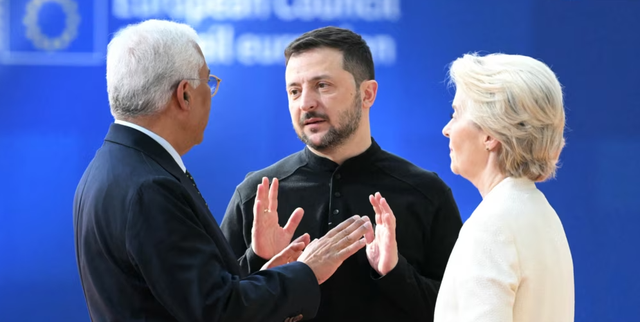
If there is any way European Union officials think they can participate in talks to resolve the war in Ukraine, it is through the 176 billion euros in frozen Russian assets being held within the bloc and how they can be used politically and economically.
Last month, the EU was sidelined when the United States presented a peace plan, which was then "elaborated" when American and Ukrainian diplomats met in Geneva a few days later.
European officials, speaking to Radio Free Europe (RFE/RL) on condition of anonymity, say they have managed to remove some of the text's initial ideas that directly relate to Ukraine's membership in the EU and NATO.
But Europe has a "golden ticket" in hand that could secure it a seat at the negotiating table: financing for Ukraine.
Pledge- ing to "cover Ukraine's financial needs for 2026 and 2027," European Commission President Ursula von der Leyen recently gave member states three options to provide around 140 billion euros to Kiev over the next two years.
With the United States reluctant to provide additional money for Ukraine, the EU's willingness to intervene has become crucial for Kiev as the full-scale Russian occupation nears four years.
The first option explained by von der Leyen in the document is for individual member states to give Ukraine the money.
In the second option, the European Commission would raise the necessary funds from the financial markets. But it is the third option – a compensation loan using frozen Russian assets in the EU – that is the most popular, as it would not directly affect the pockets of EU taxpayers.
However, it is not that simple.
First, time is running out and Belgium, where most of these assets are frozen, still opposes this step. Then there is the United States, which in its initial proposal also expressed interest in receiving a large portion of the funds.
Von der Leyen told the European Parliament on November 26 that she could "not see any scenario where European taxpayers would foot the bill alone" for Ukraine and that she was ready to present the legal text for the reparations loan.
Providing support for a compensation loan
According to REL's sources, the European Commission is now working on no less than 11 legal acts related to the loan, and that EU capitals are very angry as they have not yet seen concrete details of how the plan will work.
A European Commission official told REL that the original idea was to first secure political support for the reparations loan when EU leaders gather at a summit in Brussels on December 18.
The details would be resolved early next year to enable the money to start flowing to Kiev by the second quarter of 2026.
There is also a fear that national diplomats and lawyers could get bogged down in the details and hinder the chances of reaching an agreement if legal acts are presented too early.
Belgium, which hosts the financial markets company Euroclear where most Russian bonds are frozen, wants to see adequate guarantees from other EU member states as it expects legal retaliation from Moscow.
Taking on demands for 140 billion euros from Russia – an amount that is a third of Belgium's annual GDP – would be a disaster for the country.
In a letter to von der Leyen, which REL has seen, Belgian Prime Minister Bart De Wever again expressed his concerns.
"While I have every sympathy for the argument that the European taxpayer should not be the only one covering the financing of Ukraine, the brutal legal reality is that never in history have sovereign fixed assets been 'repurposed' for a war," he wrote.
"These assets have been the subject of decisions during post-war settlements, usually in the context of war reparations by the losing side."
However, the European Commission still believes that a deal can be reached in December if enough EU member states provide legally binding guarantees to back the reparations loan based on their gross national income (GNI).
This means that smaller – and more skeptical – countries like Hungary and Slovakia may choose not to participate as their share of total EU GNI is minimal.
But other richer and larger European countries must commit to sharing the burden. And Brussels hopes that other G7 countries that are not part of the EU will contribute as well.
"If the European Council were called upon to decide on a reparations loan scheme at its next meeting, this would only be possible on the basis of full and accurate coverage of all the concerns expressed above," De Wever wrote at the end of his letter to Von der Leyen.
"This includes a full guarantee from the willing states that enables Euroclear to maintain the liquidity of the assets for their total amount."
"American Corner"
But the Belgians are not the only obstacle that must be overcome.
There is also the "American angle," as some EU officials call it.
The initial 28-point US peace plan mentioned that “$100 billion of frozen Russian assets will be invested in US-led reconstruction and investment efforts in Ukraine” and that “the US will receive 50 percent of the profits from this project.”
This formulation really worried European politicians and diplomats, especially since they had predicted that the money given to Ukraine in the form of a loan for reparations would be used by Kiev to purchase weapons manufactured in Europe.
EU officials say most parts of the original US proposal have been weakened or removed entirely, but they acknowledge that any final document could change significantly and they do not have access to the latest discussions on the wording.
While the EU would like the reparations loan to be a European project, most diplomats agree that it is essential that Washington is involved, and happy. That could mean being open to the idea of ??the United States receiving a share of the funds or, at the very least, Ukraine using the money to buy American weapons.
However, Brussels must also ensure that the United States will continue to pressure Hungary to accept the extension of EU sanctions, which include freezing Russian assets, every six months.
In July, when it came time to continue the measures, Hungary did not threaten a veto, and this was largely thanks to American pressure.
Brussels hopes the United States will play the same role when the time comes for sanctions to be renewed again in January. /REL

The White House has confirmed that a top US Navy commander...
Russian President Vladimir Putin will meet with US special...
The Trans-Siberian Highway has been paralyzed after snowfa...
Twelve people have died and 30 are missing after a landsli...
Married couples in Turkey will have to be more careful on ...
US President Donald Trump has announced that he has decide...
US President Donald Trump's special envoy for peace missio...
US President Donald Trump has called an emergency meeting ...
For billionaire Elon Musk, the solution to the US's massiv...

A 19-year-old man was attacked by lions at a zoo in Brazil...
A street in New York will now bear the name of the nationa...
Residents of a Romanian village were shocked. On the morni...
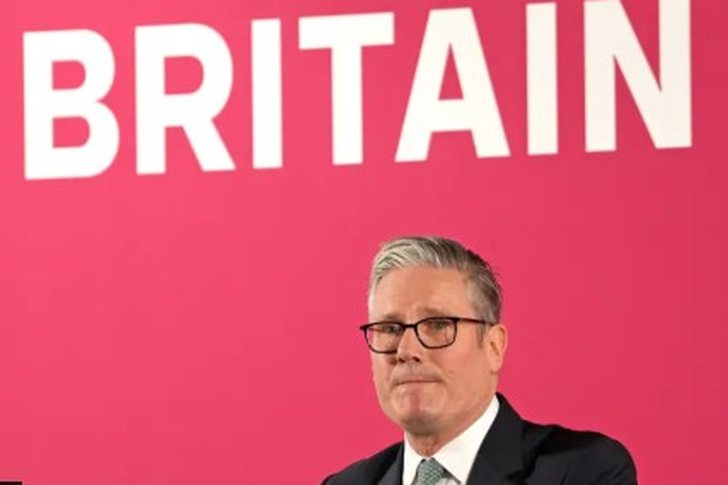
British Prime Minister Keir Starmer held a media conferenc...
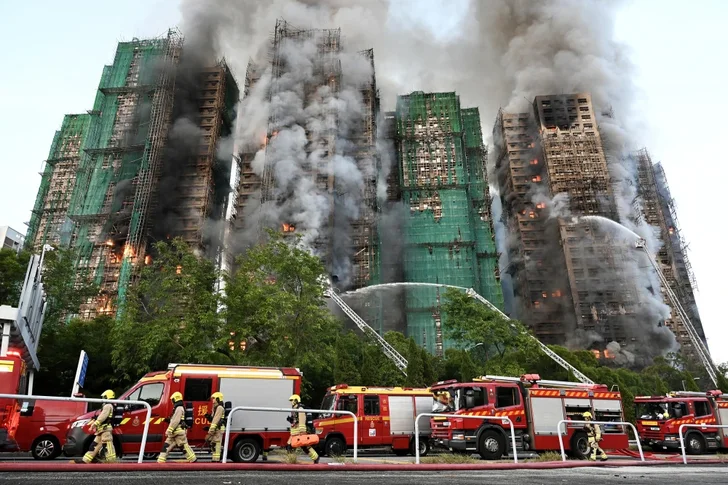
Hong Kong authorities have arrested 13 people on suspicion...
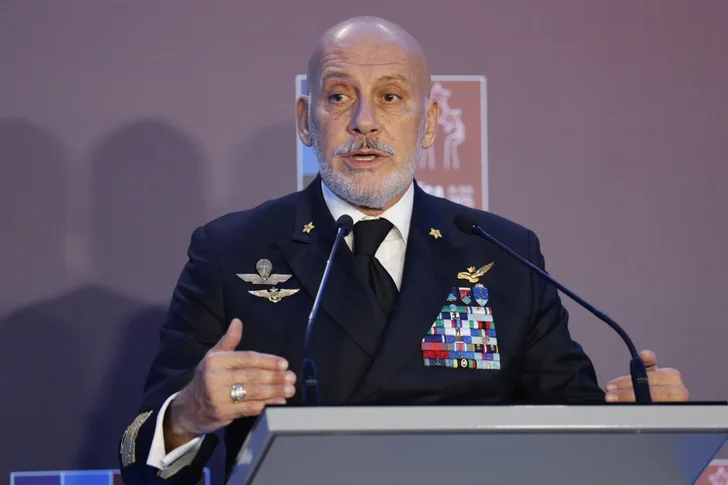
NATO is considering being more aggressive in responding to...
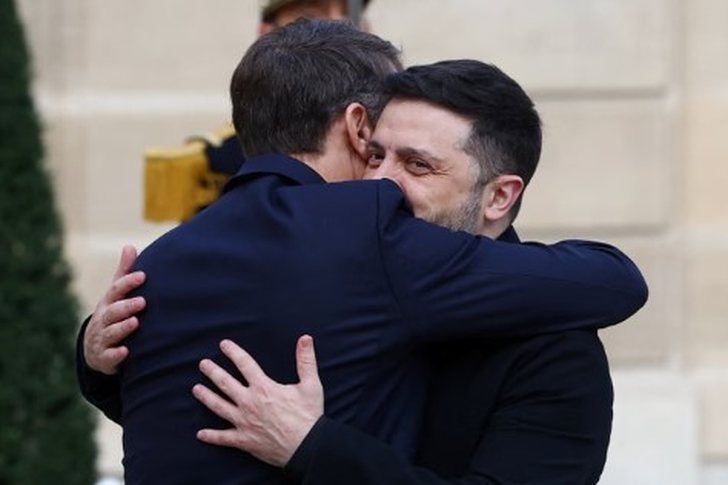
Ukrainian President Volodymyr Zelenskyy has arrived in Par...
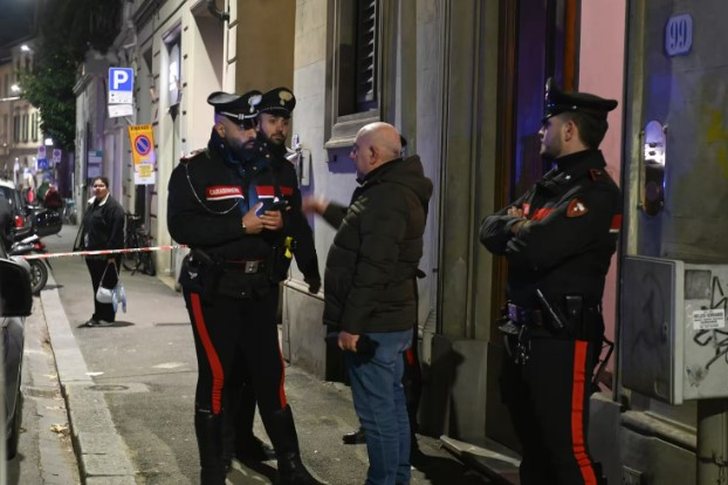
A businessman, art lover and social activist, Franco Giorg...
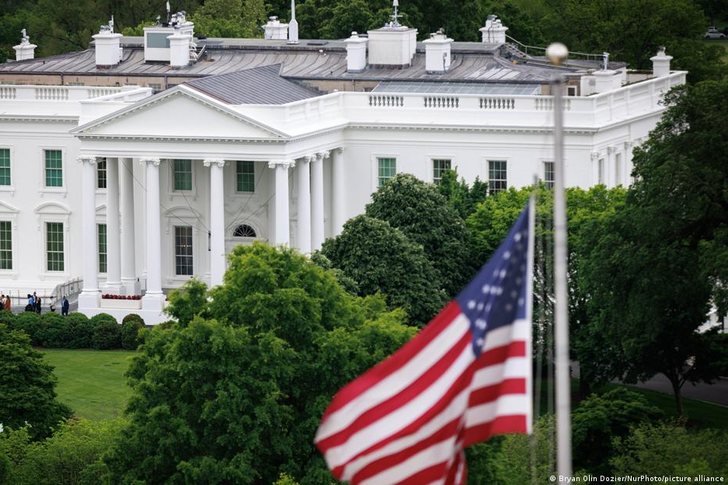
The White House has launched a new subpage on its "Media V...

Floods and landslides caused by tropical storms in recent ...
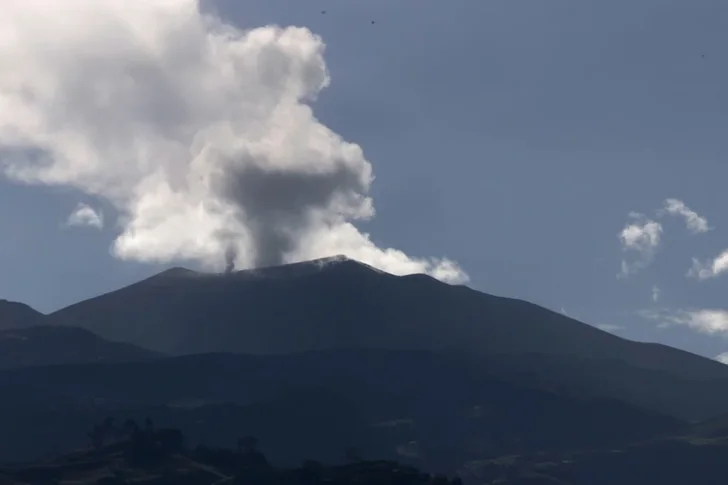
The alert level for an eruption risk has been raised in Co...

CNA has launched another investigation that could lead to ...

Irfan Hysenbelliu is a businessman that we call "Irfan the...

In March 2026, CNA launched another investigation centered...
The arrested mayor of Tirana, Erion Veliaj, with 13 charge...

The Special Board of Appeal (KPA) decided this Monday ...

The KPA vetting decided this Thursday to dismiss the p...

Suela Salavaçi, a prosecutor in the Prosecutor's Offic...

The Special Board of Appeal reinstated the prosecutor ...
Citizen MH, 61, a fisherman, was found dead near the islan...

Another phase of the international operation, codenamed "T...

Police have arrested a 34-year-old woman at Rinas Airport ...

A serious accident has occurred on the Lezhë-Shëngjin axis...

Rising energy and fertilizer prices are expected to contin...

Over 18,000 foreign citizens from 140 countries have appli...

This Wednesday, our country will be under the influence of...
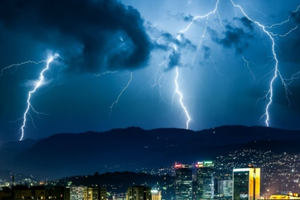
All of Southern Europe will face changing weather conditio...

Prime Minister Andy Burnham has announced that most bus fa...

France's parliament has passed a law to ban social media f...

US Secretary of State Marco Rubio arrived in Manila on Jul...
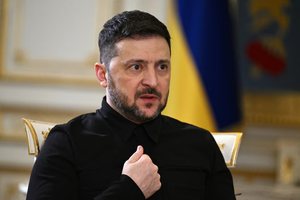
In the space of a few days, Ukrainian President Volodymyr ...

At a time when industrial products are increasingly taking...

Trust among people is not just a three-syllable word. It c...

Master of humor Todi Llupi has passed away at the age of 7...

The ninth edition of "MIK Festival" kicked off with one of...

Businesses will no longer be required to simply register t...

Despite economic growth and income in recent years, Albani...

This Wednesday, one US dollar is bought for 81.4 lek and s...

Construction company licenses will have a validity period ...