


Foreign currencies "freeze"/ Exchange rate, April 12, 2026
This Sunday in the foreign exchange market, the euro will ...


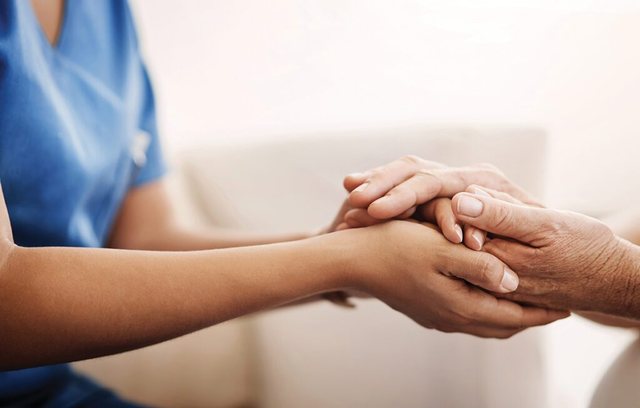
According to sociologists, the acceleration of population aging is significantly increasing the demand for elderly care services. Faced with this need, the public system can only provide care for 370 pensioners in existing centers for the elderly. In private nursing homes, fees reach up to 120 thousand lek per month, while for home caregivers, the payment reaches up to 80 thousand lek per month. According to the “Policy Document on Aging 2025–2030”, state institutions will respond to demographic pressure with policies to increase pensions. Meanwhile, the managers of private centers are seeking incentives and supportive policies to promote investment and development in the nursing home sector.
Mimoza Kalaja, director of the "Te Moza" senior center in Tirana, receives over ten calls a day from family members looking for a place for their relatives.
The center cares for 25 elderly people who need intensive medical care and has 10 caregivers trained for specialized services.
Mimoza Kalaja says that all elderly people are individuals with physical injuries or in a serious mental state, who require 24-hour medical and nursing attention and care, for whom it is impossible to provide care at home, even through a caregiver.
Caregiver for the elderly continues to remain among the most sought-after professions in the employment market for employees within the family.
Data for "Monitor" from the database of the portal "Çelësi" and the recruitment agency "Profesionisti" show that in 2025, 9,776 announcements for employment in families for elderly caregivers were published nationwide. Compared to the previous year, the number of announcements for employment of caregivers increased by 37%. For employment within the family, the most sought-after positions in the country are for caregivers for the elderly, caregivers for children or nannies and for cleaners. For these three positions, 16.2 thousand announcements were published in 2025, according to data obtained from the database of the portal "Çelësi". Compared to 2024, the total number of announcements increased by 12.4%.
According to the data, hiring a caregiver for the elderly took the lead in 2025, accounting for 60% from 61% in 2024.
Managers of family employment agencies claim that the demand for employment of caregivers for the elderly remains high compared to other professions. While compared to years, the performance of demand appears the same.
Albana Uku, head of one of the mediation agencies for domestic workers, underlines that the main cause of the stagnation of demand is the high fees, which are considered unaffordable by family members.
For sociologist Gëzim Tushi, Albania is gradually turning into a society with "white hair", where the emigration of young people and the increase in pensioners living alone are changing the country's social structure, significantly increasing the demand for care services and financial support.
According to him, the increase in demand for elderly care services comes at a time when Albania is facing an accelerated aging population and a system of state and private social services that remains insufficient for growing needs.
"The demand for services for the elderly is increasing. Especially for those who, for biological, social or financial reasons, are in a state of need and without support. Our society is in an accelerated aging process, even to the point that we are becoming a 'gray-haired' society, and this has increased the demands and needs to provide personalized services for lonely elderly people."
The 2023 Census data also indicated that across the country, about 64,000 people over 60 lived alone. Emigration has further expanded the social 'wound of loneliness' and the elderly in a state of loneliness. Although a large part of them have secured homes and pensions, they need specific and special services, for health care and services.
From the 2011 census to the 2023 census, the number of people aged 0 to 49 has been decreasing, while the number of people aged 50 to 94 has increased significantly.
According to the 2023 Census data, the population in the age group from 85 to 89 years has recorded the highest increase of 79% compared to the 2011 Census data. During these 12 years, high growth has also been recorded in the population in the age group 65-69 years, with an increase of 63%.
Insufficient asylum service
The public social care system consists of 6 centers for the elderly, or as they are otherwise known, retirement homes, located in Tirana, Shkodër, Kavajë, Fier, Gjirokastër, Poliçan, as well as two multi-purpose day centers in Kamëz and Saranda.
According to data from the State Social Service for 2025, 371 elderly people are housed in these centers. The highest number of pensioners results in the elderly centers in Kavaja and Gjirokastra, where 72 pensioners are housed in each institution. While in the elderly center in Tirana for 2025, 48 pensioners were treated.
Data available from 2020 shows that state asylums in the country manage to treat a constant number of pensioners ranging from 300 to 370 pensioners per year.
In addition to the state service with low capacities in terms of numbers for caring for the elderly, private structures also result in not being proper institutions for the aging of pensioners.
"The reality in Albania for senior centers is completely different from the way these centers operate in most European countries. There, after retirement, a citizen autonomously decides to take shelter in a senior center, in order to have a social life.
So the retiree is able to live independently in his home, but decides to stay in a senior center.
Meanwhile, in Albania, family members are forced to bring the elderly to centers only because of their serious health condition after surgeries, with wounds, or those suffering from diseases such as dementia, schizophrenia, etc., which require intensive medical and nursing care 24 hours a day, because care at home, even with the employment of a caregiver, is not possible.
"Because of this reality in Albania, almost all of these private centers cannot be called centers for the elderly, but are rehabilitation centers or 'nursing homes', which offer the highest level of care for the elderly outside of hospital facilities," claims Mimoza Kalaja, from the private senior center "Te Moza".
Also, in the area of ??the former Kinostudio in Tirana, there is the private asylum "Strehë dhe shpresë", which offers a combination of humanitarian and social services for the elderly and people in need, to preserve the tradition of the "Kuka" family, which first opened the center in 1892 as a humanitarian mission to help poor families.
A few years later, in 1917, this center had become a true humanitarian home, at which time it was officially recognized by the Albanian state. The asylum was closed during the communist period, only to reopen in 1997.
According to the director Hysni Kuka, the “Strehë dhe hspres” shelter houses 90 individuals in need, including pensioners. 70 of them are treated at this center for minimal fees, while 20 others are treated free of charge. As a result, the center manages to survive financially thanks to foreign donors.
For sociologist Gëzim Tushi, the elderly care service in the country, including public and private, remains extremely understaffed, providing services to around 500 pensioners per year, far from the needs of Albanian society. In this situation, he emphasizes the urgent need for state institutions to increase the number of centers for the elderly.
"The institutional fulfillment of these needs through the provision of services in public or private 'Homes for the Elderly' (paid and as a social business) is too far in relation to the physical number and care capacities of the institutions they provide."
The network of residential institutions currently treats no more than 500 elderly people in full residential services. Together with day and community services, they are insufficient.
Thus, the burden of caring for the elderly and the costs of this specific care fall on the biological family to provide alternative forms of personalized service, through the payment of special workers, who serve the elderly in their homes or in other care facilities.
Because they need specific social and life services in their family, services that have a cost and are covered by two sources, at best: from the personal pension fund and from the complementary financial contribution of their family and children.
There is a universal principle for a country's social policies: When society ages, care institutions must increase, be renovated, and become more dynamic, being competitive with the growing demands and needs of the elderly for collective or personalized social services.
"It is immediately, even urgently, necessary to expand the map of elderly care institutions and their homogeneous geographical distribution across the country's territory, and to adjust the standard between the needs and demands for services for the elderly and the diversified offer: public services plus private services," he asserted.
Meanwhile, Mimoza Kalaja, director of the private center for the elderly "Te Moza", emphasizes the need for supportive policies for private nursing homes, underlining the importance of creating clear legislation to ensure their sustainable functioning.
Ms. Kalaja calls for measures that support professional management, safety and high service standards, as well as incentives for investment and development in the private asylum sector.
The costs of an elderly person living in a nursing home or with a caregiver at home
The aging population is no longer just a social issue, but also an economic one. The many families seeking to hire in-home caregivers for the elderly must pay fees ranging from 50,000 lek, 60,000 lek to 80,000 lek per month for 6 hours of work.
"These payments can only be afforded by the families of the elderly living abroad. There are few local families who can financially afford these fees. As a result, the demand has remained unchanged compared to years, despite the high needs," claims Albana Uku.
Meanwhile, in private homes for the elderly, monthly fees, according to the director of the "Te Moza" center, range from 100 thousand lek per month to 120 thousand lek per month, depending on the health condition of the patient.
The expensive fees at these centers, according to Ms. Mimoza Kalaja, are due to the intensive service offered to the elderly, who come in a serious health and mental condition. She says that the fees are covered by their families, as the vast majority of pensioners at these centers have minimum pensions of up to 10 thousand lek per month.
Market sources claim that fees at private centers reach up to 150 thousand lek per month if the elderly person is treated with oxygen due to a health condition.
Meanwhile, in state-run nursing homes, 40% of the pension is withheld from the pensioner for care, while 60% remains with him.

This Sunday in the foreign exchange market, the euro will ...

The Albanian administration has an old habit: whenever it ...

This Saturday in the foreign exchange market, the euro wil...

For a comparison regarding the effects that a geopolitical...

Today in the foreign exchange market, the euro will be exc...

Energy prices in Europe could remain high for some time, e...
Agriculture is the world's largest consumer of water. Acco...
The new pensioner bonus distribution scheme has been in ef...

For at least three years, Albania has been successfully lo...

This Thursday, one US dollar is bought for 81.2 lek and so...

The World Bank has slightly revised down its expectation f...

International stock markets rose sharply, while oil prices...

The price of oil in the country increased by about 30% in ...

This Wednesday, one US dollar is bought for 82 lek and sol...

Property compensation, despite efforts to speed up the pro...
Today in the foreign exchange market, the euro will be exc...

Albanian investments abroad reached a new historical recor...

The labor market in Albania in the last quarter of 2025 co...

There seems to be no hope for easing traffic. The crisis i...

This Monday, one US dollar is bought for 82.2 lek and sold...

The protests of recent days related to the situation in Zv...

The case addressed this Wednesday, June 3, on the show "St...

The show "Stop" broadcast this Wednesday, June 3, the case...

Irfan Hysenbelliu claims to be a big businessman, an hones...

The Special Board of Appeal (KPA) decided this Monday ...

The KPA vetting decided this Thursday to dismiss the p...

Suela Salavaçi, a prosecutor in the Prosecutor's Offic...

The Special Board of Appeal reinstated the prosecutor ...
Several images provided by CNA show the area where this mo...

A quantity of explosive material exploded this morning at ...

The Head of the State Police, Skënder Hita, expressed his ...

New details have emerged regarding the serious incident th...

For many children and teenagers, the long summer holidays ...
Witnesses in Lozhan, Maliqi, have shared details from the ...
Albania is facing an unprecedented demographic transition,...

On Thursday, our country will be affected by unstable weat...

French fighter jets took off 11 times last week as part of...
A number of European Union member states are pressuring th...

Hungary and Ukraine have reached an agreement on the right...
Serbian President Aleksandar Vučić has confirmed that he w...
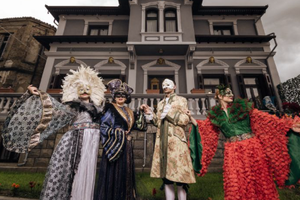
Korça is ready to open the summer season with one of the c...

Two years after his passing, the renowned Korçë poet Skënd...
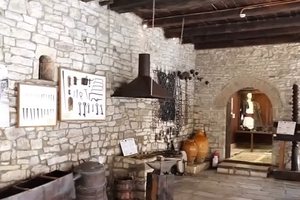
The Ethnographic Museum of Berat has opened its doors to v...
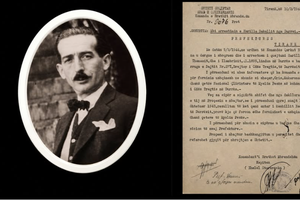
The story of Harilla Bakalli is one of the most chilling t...

Kursi i këmbimit të euros me lekun ka rënë më tej këtë jav...
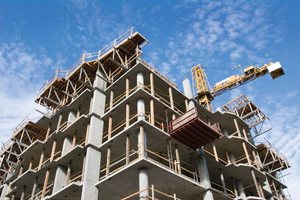
Profit margins in the construction sector have increased s...

The Transparency Board, at its meeting today, decided to i...

Today, in the foreign exchange market, one US dollar is bo...