


Serious accident on the Tirana-Elbasan axis/ Concrete mixer falls from a height, suspected victims
A serious accident occurred this Wednesday on the Elbasan-...

A serious accident occurred this Wednesday on the Elbasan-...

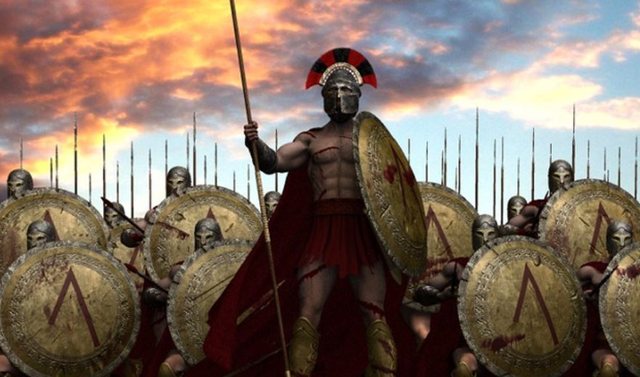
History is often filled with myths and legends that have accompanied human existence throughout the centuries, the stories have been inherited, modified and become part of the collective consciousness of society. As amazing as these myths are, they can also obscure the truth about our past.
1. 300 Spartans stopped the great army from invading Greece
According to legend, 300 brave Spartan soldiers fought against the Persian King Xerxes' army of nearly 100,000 warriors. In fact, 300 Spartans, including their own king Leonidas, fought bravely against the Persians. But they were helped by at least 4,000-6,000 troops coming from the regions of Thespia and Thebes.
2. The Spartans threw weak children or those born with physical defects from the cliffs
This is what Plutarch wrote. But there is no archaeological evidence that the Spartans deliberately killed children. No children's skeletons have ever been found in the mountains of the province of Laconia. In Sparta, there was a class of hyperons, very poor or very weak citizens. They weren't much respected, but they didn't jump off the cliffs.
3. The pyramids in Egypt were built by slaves
Or so Herodotus claimed. But he was wrong. Excavations of the tombs of the builders of the pyramids have shown that they were free people. They were fed beef, and received regular medical attention, and were buried near the pharaoh's tomb, an honor that could not be given to slaves.
4. Nero burned Rome
No, the strange emperor did not burn Rome or recite any poetry about the destruction of Troy in the company of a lyre while watching the fire from afar. According to the Roman historian Tacitus, who witnessed the fire as a child, Nero made every effort to stop the flames. He organized fire brigades and provided at his own expense food and shelter for people who had lost their homes. Even after the fire he drew up a new construction plan for the city and rebuilt Rome.
5. Vikings wore horned helmets during battles
There is no confirmation that Viking military helmets had animal horns on top. Because this was impractical during battle and could cause major injuries. But there is evidence that Norse and German clergy sometimes wore horned helmets in religious ceremonies, but not in battle.
6. Cowboys wore their own special hats
Actually, the inhabitants of the Wild West (Far West) did not wear hats with bent corners. This garment was invented by John Stetson in 1865 and over time, it became very fashionable. However, the true inhabitants of the Wild West mostly wore warm beaver skin hats, wool flat hats or Mexican sombreros.
7. Salieri poisoned Mozart
This myth was made famous by Pushkin's tragedy "Mozart and Salieri". But Salieri had no reason to hate Mozart. He was much more popular and enjoyed the patronage of the emperor of Austria, was master of the court, received a high salary and frequented the highest circles of Viennese society. And it is a fact that Salieri treated Mozart very well and appreciated his work. Therefore, the great composer did not die of poisoning, but of a serious kidney problem or streptococcal infection.
8. Napoleon was very short
British cartoonists portrayed Napoleon as a short and fat man. He was said to be only 155 cm tall. The term "Napoleon complex" originates from this claim. But in reality, Napoleon was 169 cm tall. And this is an average height even today, when people are mostly taller./ Adapted in Albanian by CNA









A flurry of headlines in the media in recent weeks about C...
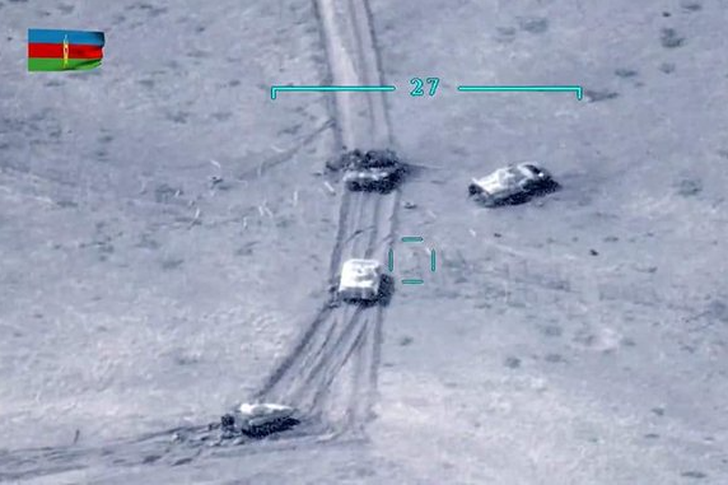
Over the past few years the importance of unmanned aerial ...

1934 - The world famous French actress Brigitte Bardot...

Një mori titujsh kryesorë në mediat javët e fundit në ...

An unresolved conflict is always like a time mine. That's ...

When President Vladimir Putin leaves office - in whatever ...

Stresi, ndjenja e pakënaqësisë dhe mungesa e mirënjohj...
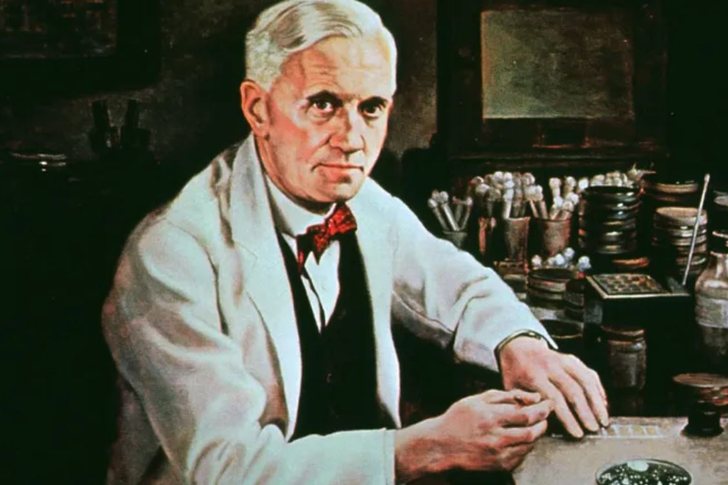
1928 - Anglezi Aleksandër Fleming zbulon penicilinën 95 v...
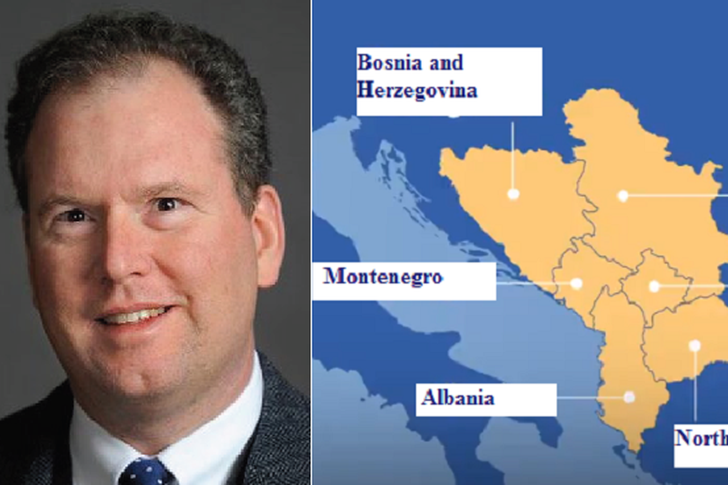
The Western Balkans, that is the countries of the former Y...

Overhydration is a condition characterized by excessive fl...
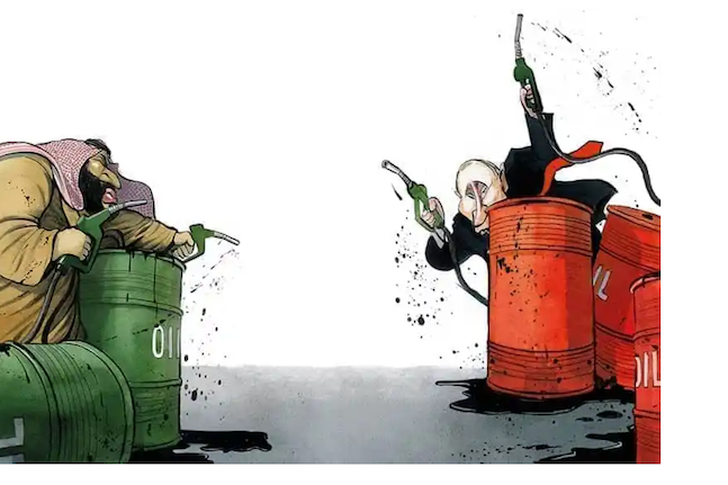
Beyond environmental issues, one of the most compelling ar...

1960 - Xhon Kenedi dhe Riçard Nikson përballen në deba...

Although Ukraine's much-anticipated counteroffensive start...

During the time of the Soviet Union, an anecdote was often...

2005 - The IRA is officially disarmed Two months after an...

Repetition has a strange relationship with the human mind....

The Italian Coast Guard rescues a boat full of migrants of...

Dr. Jim Tucker, a psychologist at the University of Virgin...

1939 - The "father" of psychoanalysis, Sigmund Freud, pass...

After World War I, the League of Nations was created with ...

CNA has launched another investigation that could lead to ...

Irfan Hysenbelliu is a businessman that we call "Irfan the...

In March 2026, CNA launched another investigation centered...
The arrested mayor of Tirana, Erion Veliaj, with 13 charge...

The Special Board of Appeal (KPA) decided this Monday ...

The KPA vetting decided this Thursday to dismiss the p...

Suela Salavaçi, a prosecutor in the Prosecutor's Offic...

The Special Board of Appeal reinstated the prosecutor ...

A serious accident occurred this Wednesday on the Elbasan-...
Citizen MH, 61, a fisherman, was found dead near the islan...

Another phase of the international operation, codenamed "T...

Police have arrested a 34-year-old woman at Rinas Airport ...

The Institute of Geosciences has shared a forecast for wea...

Rising energy and fertilizer prices are expected to contin...

Over 18,000 foreign citizens from 140 countries have appli...

This Wednesday, our country will be under the influence of...

Prime Minister Andy Burnham has announced that most bus fa...

France's parliament has passed a law to ban social media f...

US Secretary of State Marco Rubio arrived in Manila on Jul...

In the space of a few days, Ukrainian President Volodymyr ...

At a time when industrial products are increasingly taking...

Trust among people is not just a three-syllable word. It c...

Master of humor Todi Llupi has passed away at the age of 7...

The ninth edition of "MIK Festival" kicked off with one of...

Businesses will no longer be required to simply register t...

Despite economic growth and income in recent years, Albani...

This Wednesday, one US dollar is bought for 81.4 lek and s...

Construction company licenses will have a validity period ...