


Accusations about the "Milot-Balldren" road/ Karakaçi refutes the opposition: The contract does not only include the construction cost
The Minister of Infrastructure and Energy, Enea Karakaçi, ...

The Minister of Infrastructure and Energy, Enea Karakaçi, ...

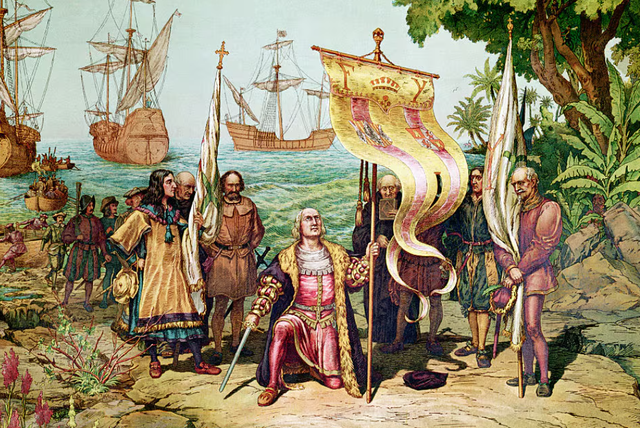
In the school books we learned that when Christopher Columbus, in 1492, left for America, he also brought with him a "phantom cargo", the viruses that wiped out the indigenous population. According to what historians have reported so far, when the European colonizers landed on the unexplored American land, they "imported" diseases for which the native populations had no antibodies, according to historiography, in fact, it was not only smallpox that destroyed the Indians, but also flu, scarlet fever, measles, diphtheria, mumps, salmonella and typhoid.
In fact, a new study published in the Proceedings of the National Academy of Sciences, based on mathematical models, found that many pathogens took decades or even centuries to spread through the oceans.
Jamie Lloyd-Smith, a researcher in the Department of Infectious Diseases at the University of California, Berkeley, asked how likely these pathogens were to reach their destination, making a long transoceanic voyage, with only 30 people on board, given that a virus can spread, an unbroken chain of infection from the origin of travel to arrival.
The answer was discovered, with the help of historian Elizabeth Blackmore, thanks to a mathematical model capable of estimating the spread of major viral diseases. To formulate it, the researchers took into account various factors such as the duration of the journey, the size of the ship, the transmission capacity of the virus, the incubation period, the length of time that people remain infected and of course the different types of pathogens.
In this way they were able to make predictions about the duration of measles, influenza and smallpox epidemics in different scenarios, and then compared the results obtained with data related to historically important voyages made between 1492 and 1918.
Thanks to this data, the researchers found that smallpox is more likely to survive on a ship than measles, while influenza is less likely to survive a long voyage.
For example, according to these calculations, Columbus' 1492 voyage aboard the Santa Maria, which lasted 35 days and had 41 people on board, would have had a 24% chance of bringing measles across the ocean if he had set out with only one case on board.
The same goes for smallpox. Instead, influenza, a virus that travels much faster, would have had a much lower chance of landing among Indians. Of course, as the number of ships traveling increased, viruses would have an ever greater chance of spreading. The faster you travel, the more viruses you spread.
The researchers also used their model to analyze a series of data about ships arriving in the port of San Francisco between 1850 and 1852 to assess how likely it was that these voyages introduced measles, smallpox, or influenza to these ships. territories.
For example, if a person with the flu virus boarded the steamship Columbus, which took 18 days to transport 420 passengers from Panama to San Francisco, there was only a 0.1% chance that the virus would reach its destination.
Instead, the risk increased to 66% if an infected person boarded the Columbia for a trip of just 3 days, with 74 passengers on board, from Oregon to San Francisco.
So steamboats, which drastically reduced travel times while increasing the number of passengers, made it much more likely that viruses would spread over long distances.
The assumptions on which this mathematical model is based have been questioned by other researchers. For example, Danish epidemiologist Lone Simonsen points out that the authors of the study did not have good data on a very important factor, immunity.
By the 15th century, almost every adult in Europe was exposed to measles and smallpox, and those who did not die developed lifelong immunity to these diseases.
"In their calculations," explains Simonsen, "the researchers simply assumed that 5% of the passengers were susceptible to contracting the virus, but in reality it is likely that there were large differences, depending on place and time". Adapted from CNA


Operation "Valkyrie" (bomb attack of July 20, 1944) was th...

If today it is one of the most famous areas for tourists a...

The last decade and a half has seen unrest across the glob...
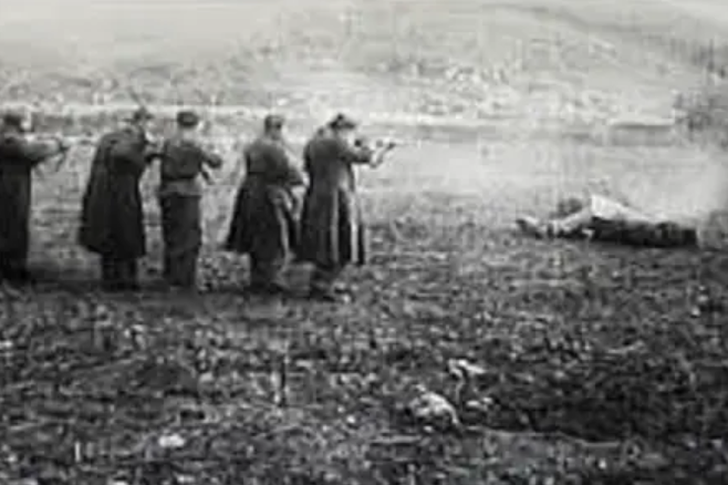
August 23 is "Black Ribbon Day", the official European Day...

It's been a few years since Artificial Intelligence is...
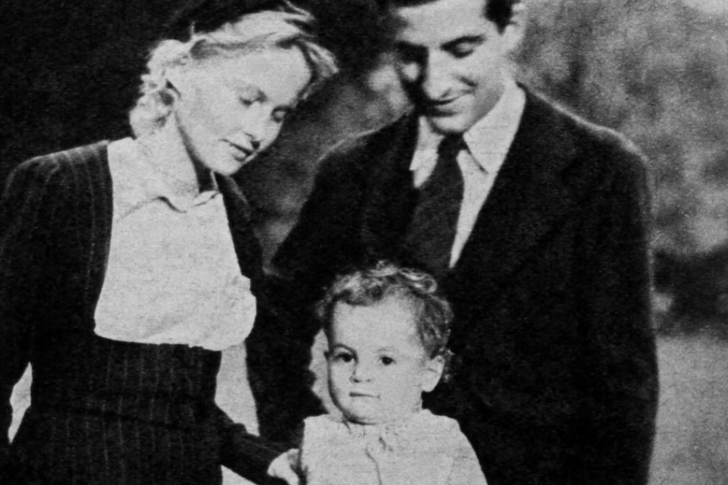
Tuscan physicist Bruno Pontecorvo (1913-1993), born into a...

Sweden has issued licenses to kill 20% of its brown bear ...
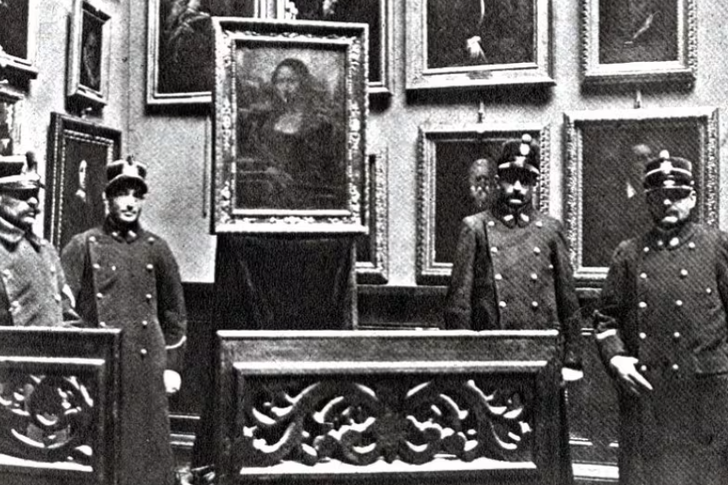
At seven o'clock in the morning on August 21, 1911, the da...

Tina Modotti, born in Friuli in 1896, is known as: actress...

During the 16th century in medieval Japan, wealthy married...
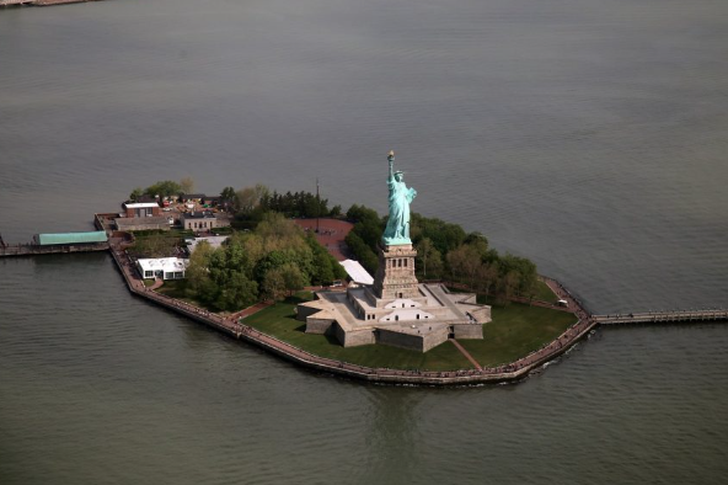
After being envisioned as a towering beacon to guide s...

In the mid-1300s, humanity faced one of its darkest chapte...
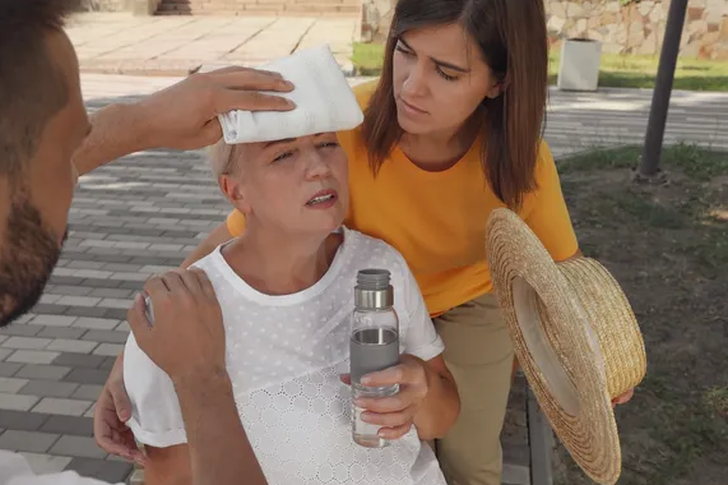
This summer the media has been filled with alarming re...

Flooding from heavy rain near Lake Pátzcuaro has caused th...

We all played the broken phone game in our childhood, ...
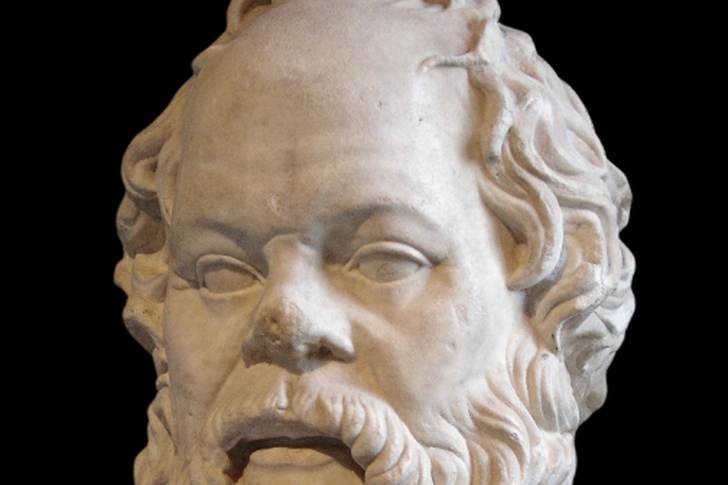
Socrates, the famous philosopher of ancient Greece, had a ...

To transport the stone blocks needed to build Djoser's pyr...

Whether you're watching from afar, cheering, competing...

In the event that plan A is to 'revive' Joe Biden, and...
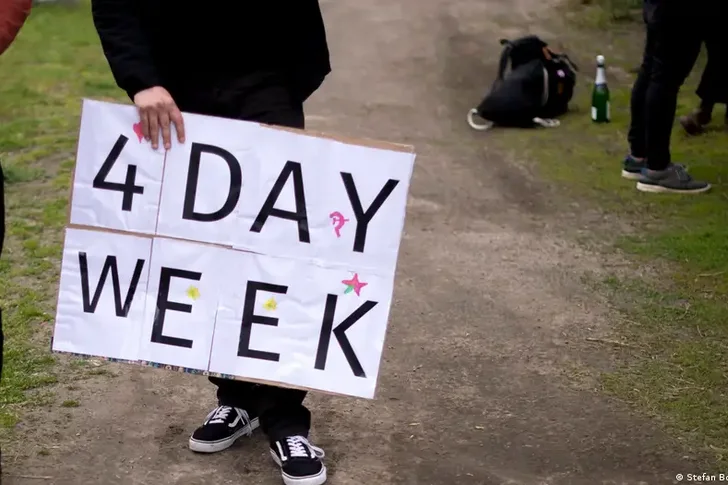
A carpet cleaning company, a construction company, a m...

A 39-year-old citizen has been arrested in Lezha, after se...

CNA has launched another investigation that could lead to ...

Irfan Hysenbelliu is a businessman that we call "Irfan the...

In March 2026, CNA launched another investigation centered...

The Special Board of Appeal (KPA) decided this Monday ...

The KPA vetting decided this Thursday to dismiss the p...

Suela Salavaçi, a prosecutor in the Prosecutor's Offic...

The Special Board of Appeal reinstated the prosecutor ...

Following the successive operations carried out by the ope...

The Police Supervision Agency has seized the service weapo...

A serious incident occurred in Lushnje, where citizen IY, ...

As a result of the investigative and procedural actions ca...

Today, our country will be under the influence of stable a...

By noon, cloudiness is expected to prevail in almost all o...

Children without parental care, for whom alternative famil...
On Thursday, our country will be under the influence of st...

Marine Le Pen is entering the decisive phase of the presid...

Member states of the International Criminal Court voted to...

From the declining role of exports to new public investmen...

South Korea is becoming one of the most sought-after desti...

Two windows, a century of history and the metaphysics of p...

In my research at the Central State Archives, specifically...

At a time when industrial products are increasingly taking...

Trust among people is not just a three-syllable word. It c...

This Saturday, one US dollar is bought for 81.7 lek and so...

War, weather and supply disruptions could send gas prices ...
The number of active enterprises in Albania continued to g...

In Albania, the bar-cafe has long become an almost unique ...