


Second victim of bad weather/ Fisherman drowns in Ksamil
Citizen MH, 61, a fisherman, was found dead near the islan...

Citizen MH, 61, a fisherman, was found dead near the islan...

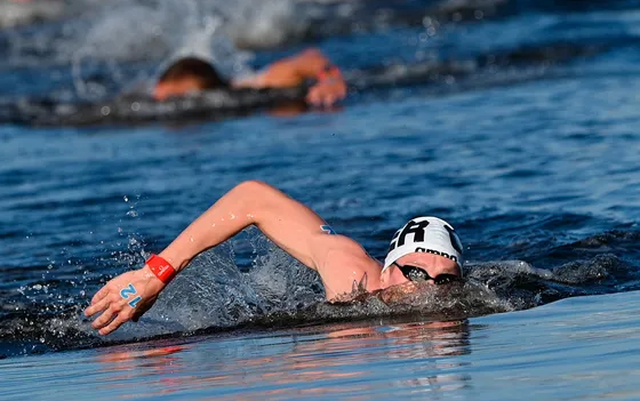
Whether you're watching from afar, cheering, competing in the Olympics, every event is exciting from start to finish, but not as exciting as waiting to see what disease you might get from participating.
In fact, experts have warned that any athlete who competes in the murky waters of Paris' Seine River runs the risk of contracting diarrhea afterward.
"I would never have chosen the Seine," Davey Jones, professor of environmental science and public health at Bangor University, told BBC Science Focus.
"I know it's iconic, but it also goes through an extremely urbanized area which is always a recipe for disaster when it comes to potential exposure to chemicals or biological pathogens."
According to Jones, we're unlikely to see any illnesses anytime soon after the open water marathons on Thursday and Friday. "The danger will come the next day when they have diarrhea," he says. "They'll probably recover fairly quickly within a week or two."
Some athletes have also expressed concern after Tuesday's training session in the Seine was called over concerns about levels of faecal matter in the water. The session had been canceled five times before due to river pollution.
"I think if someone says they're not worried at all, they're probably lying," Austrian swimmer Felix Auböck told The Associated Press. "I'm worried. I just hope and trust the organization in the sense that they let us in when it's safe enough to do so. But, of course, you're worried because nobody wants to get sick."
According to Jones, part of the problem is that we're not testing for the right things when deciding whether water is safe to swim in. Organizers have repeatedly canceled training sessions and even postponed events due to unsafe levels of E.coli bacteria being present in tests.
While E.coli is certainly a risk, Jones says, “Evidence suggests that many of us get sick in water from viruses, and viruses behave very differently from E.coli. So if you just measure E.coli, it doesn't give any information about the risk of viruses."
In fact, Jones' research team has observed ear infections as a classic post-swimming illness, as well as norovirus (vomiting).
"These things are in the population all the time. "Whenever there is a sewage spill, for example, in the Seine, the norovirus is released into the water," he added. "Theoretically you only need to ingest 1-10 viral particles to get sick. And when we're sick, every time we go to the bathroom, we release trillions of these viral particles."
These evils spread through water directly from sewage into our homes. While this waste is usually treated before being released into rivers like the Seine, the treatment may not completely eliminate the risk of disease. Even in the best UK treatment works, 0.1 per cent of sewage still escapes. "And 0.1 percent is a lot," says Jones.
In addition, these sewers are designed to overflow after heavy rain as rainwater fills their capacity. Effluent, known as 'stormwater', is a mixture of rainwater and raw sewage, and flows straight into the river.
Heavy rain, of course, delayed the first Olympic outdoor swimming event of the year. Although the Seine is a massive river, the dilution must be great to eliminate the risk from these pathogens. Athletes' body suits protect them to some extent, but they can't keep their heads above water all the time or stop their mouths from opening.
According to Prof David Werner, an environmental systems modeling expert at Newcastle University, it would be a very difficult job to properly clean the Seine: “Clean rivers require large mitigation measures. In a city like Paris with a high population and predominantly urban land use, the challenge to achieve washing water quality in an urban river will be great.”
Additionally, Werner's research has shown that drainage systems for roofs and streets also release enough pathogens into the water to make washing water unsafe.
"Intuitively I wouldn't swim in the river that flows through Paris after heavy rain," says Werner.
But given that the Seine has been selected and the open water events are ongoing, Jones sees it as an opportunity for this “big scientific study to see how many people get sick.
"I wish them luck."
About the experts
Prof Davey Jones holds a Professorship in environmental science and public health at Bangor University. He has advised the UK and Welsh Government on their policies on COVID-19, public health, agriculture, waste and climate change, including being part of SAGE's sub-committee on COVID-19 and the environment. His research has been published in the Journal of Ecology, Journal of Virological Methods and Nature.
David Werner is a professor of environmental systems modeling at the University of Newcastle. His research has been published in the journals Water Science & Technology, Science of the Total Environment and Environmental Pollution./ Adapted from CNA


In the event that plan A is to 'revive' Joe Biden, and...
A carpet cleaning company, a construction company, a m...
Who are the main favorites in this European Championship? ...

"Heydar Aljevi did not care that I was Armenian. What matt...

The successful film of director Christopher Nolan, "Oppenh...
Worry about layoffs, not burnout*. Worrying about being o...

Now that President Joe Biden and former President Donald T...
Communism is an unnatural philosophy of life, against ...

To work side by side with death! Years ago, in England, t...
The EU's goal was quite ambitious. 1 million artillery she...
By 2026, Ukraine alone will lose the equivalent of about $...

It was a warm handshake between two statesmen, conducted i...
They say one thing and they do another. This expression is...
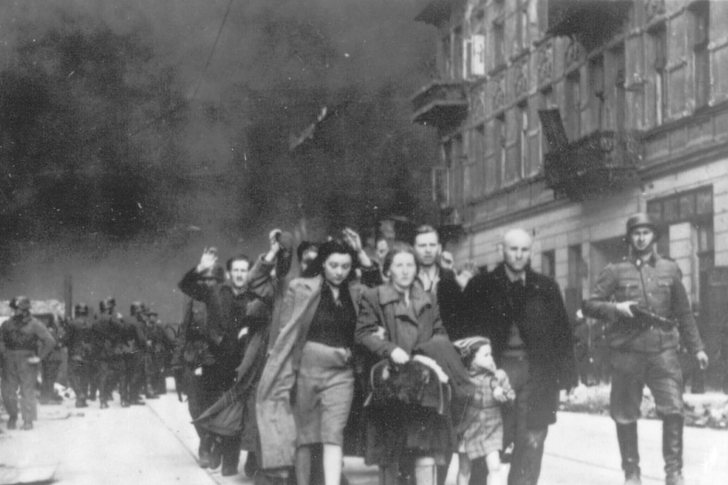
After World War II and Nazi Germany's murder of 6 million ...
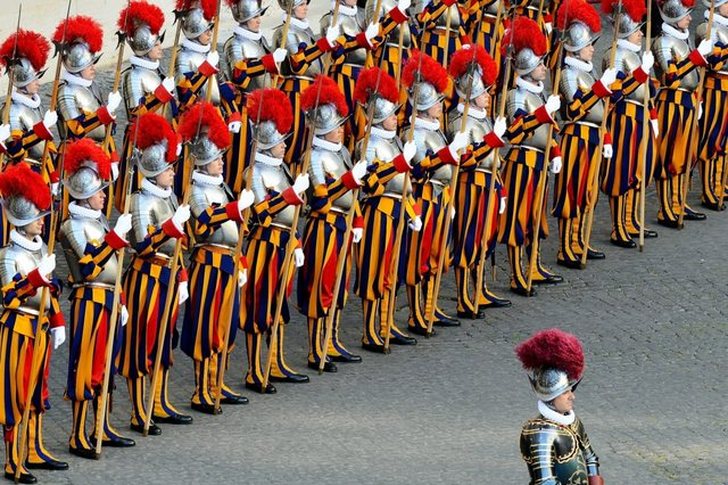
"With courage and faith", this is the motto that accompani...
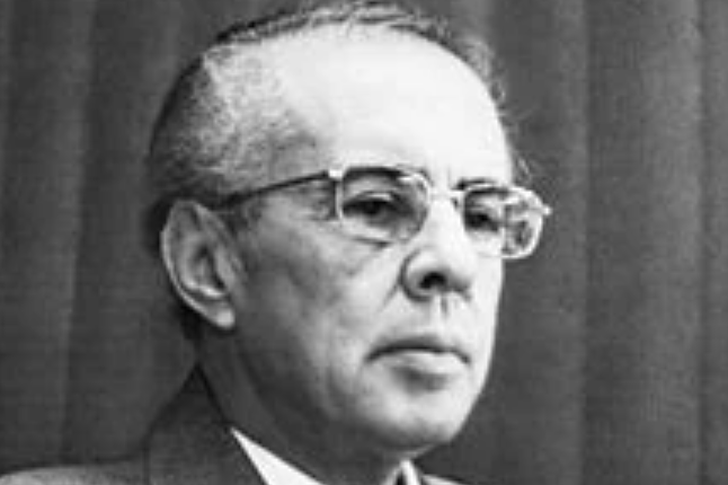
Everyone knows Hitler, Stalin, Mao and Pol Pot. But th...
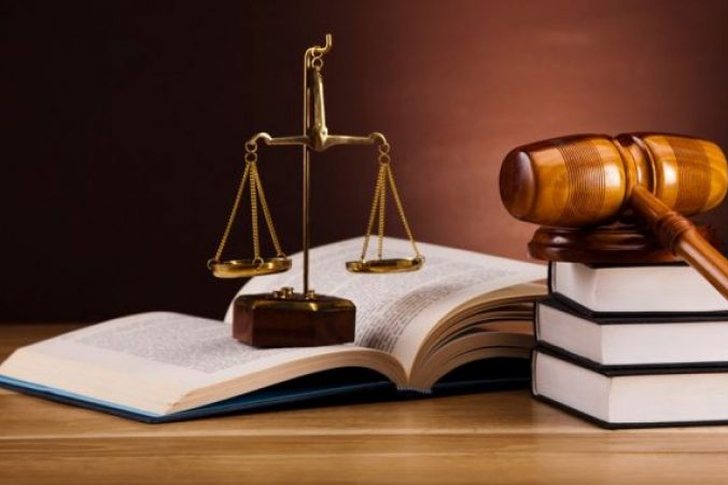
Montesquieu, "De l'esprit des lois", (On the Spirit of Law...
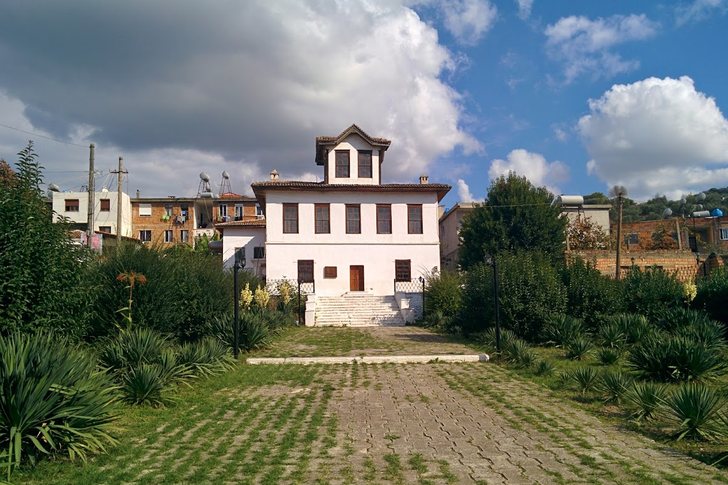
Sot është përvjetori i 104-rt i çeljes së Kongresit të...

Is it true that Big Brother is followed so much all ov...

In ancient mythology, Zeus was considered "Lord of the god...

CNA has launched another investigation that could lead to ...

Irfan Hysenbelliu is a businessman that we call "Irfan the...

In March 2026, CNA launched another investigation centered...
The arrested mayor of Tirana, Erion Veliaj, with 13 charge...

The Special Board of Appeal (KPA) decided this Monday ...

The KPA vetting decided this Thursday to dismiss the p...

Suela Salavaçi, a prosecutor in the Prosecutor's Offic...

The Special Board of Appeal reinstated the prosecutor ...
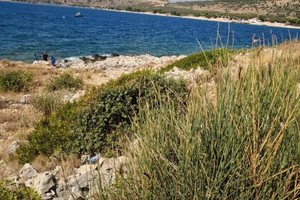
Citizen MH, 61, a fisherman, was found dead near the islan...
Another phase of the international operation, codenamed "T...
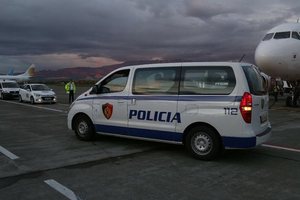
Police have arrested a 34-year-old woman at Rinas Airport ...

A serious accident has occurred on the Lezhë-Shëngjin axis...
This Wednesday, our country will be under the influence of...
All of Southern Europe will face changing weather conditio...
Albania was hit by temperatures significantly higher than ...

For the first time, Pogradec welcomed the Inter-Lake Chess...

Prime Minister Andy Burnham has announced that most bus fa...
France's parliament has passed a law to ban social media f...

US Secretary of State Marco Rubio arrived in Manila on Jul...
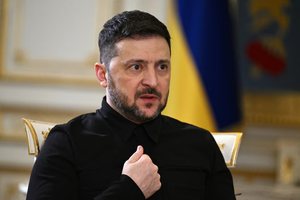
In the space of a few days, Ukrainian President Volodymyr ...

At a time when industrial products are increasingly taking...

Trust among people is not just a three-syllable word. It c...

Master of humor Todi Llupi has passed away at the age of 7...

The ninth edition of "MIK Festival" kicked off with one of...

Businesses will no longer be required to simply register t...

Despite economic growth and income in recent years, Albani...

This Wednesday, one US dollar is bought for 81.4 lek and s...

Construction company licenses will have a validity period ...