

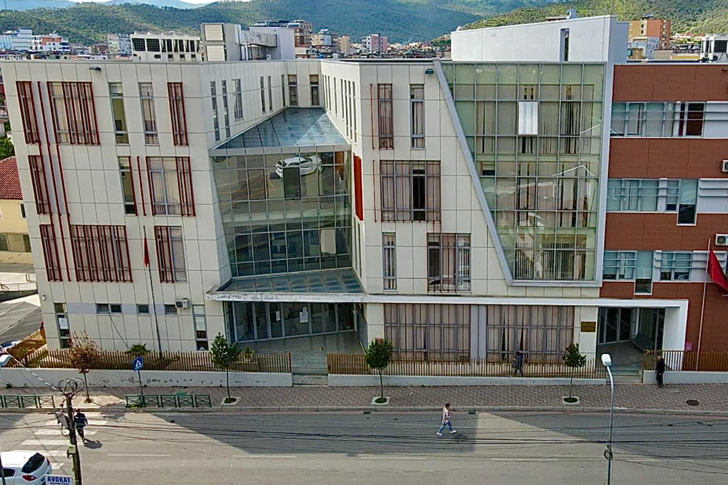
The damages that caused the blockage of the Librazhd-Pogradec axis / The Elbasan Prosecutor's Office launches investigations
The Prosecutor's Office at the First Instance Court of Gen...


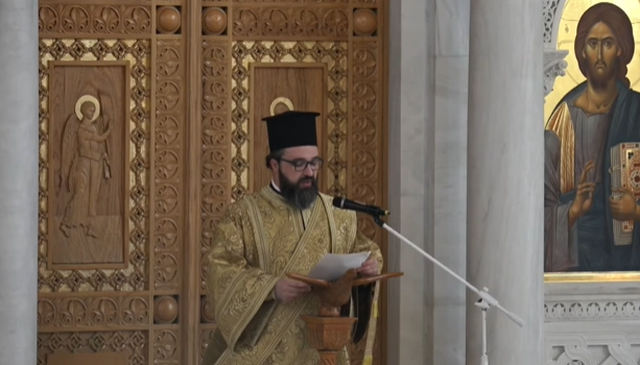
Orthodox believers have begun the journey of Great Lent, a period that beyond food deprivation, invites deep spiritual reflection. This Sunday at the "Resurrection of Christ" Cathedral in Tirana, Hierodeacon Johani conveyed a strong message on the meaning of forgiveness and the danger of judging others.
According to Orthodox tradition, the time of Lent is not simply a diet, but a return to the “Father’s house.” Hierodeacon John reminded the faithful that Adam lost paradise through pride, while modern man can regain it through humility.
"Woe to the man who uses his mouth to hide his own wounds and reveal those of others," he said, quoting Saint Ephrem the Syrian.
One of the key points of the message was the meaning of forgiveness. In today's mentality, forgiveness is often seen as weakness or betrayal of oneself, but this Sunday's sermon overturned this concept.
Forgiveness is not just a gift for the other, but a liberation for oneself.
"Holding a grudge is like drinking poison and waiting for the other person to die," was the strong warning he left for believers for this Lenten period.
"Cheese Sunday" marks the end of the consumption of dairy products, ushering in the long weeks of Lent that culminate in the feast of Easter. This year's call is clear: not to be harsh in judging others, but gentle in repenting for ourselves, turning this period into an opportunity for inner and collective peace.
Message of Hierodeacon Johannes
Honorable fathers, dear sisters and brothers!
Our journey towards Easter passes through several stages, each of which has a great meaning and importance. In this period we are invited not only to reflect, but also to try to act. We begin the Triodion period with the Sunday of the Publican and the Pharisee, continue with that of the Prodigal Son, then with the Sunday of the Last Judgment, and today we remember the expulsion of Adam from paradise.
As Saint Gregory the Great says, the time of Lent is not simply a time of abstaining from food, but a time of returning to the Father's house, from which we were expelled due to disobedience.
This Sunday invites us to remember the cunning of the serpent, his tongue and the trap he used. We recall the impetuous action of the woman and, immediately after her, of the man; their hiding when they heard the voice of God; and, finally, the justification and accusation that Adam made, saying: "The woman whom you gave to be with me, she gave me of the tree, and I ate." The Lord says to the woman: "Why have you done this?" She replies: "The serpent deceived me, and I ate."
If we stop to reflect on these lines, I believe we will all find ourselves in their responses and reactions.
How many times do we use the language of a snake when we start asking questions that seem innocent and kind, but on the other hand we encourage others to speak.
Saint John the Baptist sternly warns us, saying: "The tongue is a knife smeared with honey; it silently kills your brother's honor, while you smile."
Of course, we don't use this language towards those we truly love, because we immediately become protective of them.
But we use it with those we don't like, or when we hypocritically show what we are not, but instead incite and weave our conversations in such a way that others say what we want, becoming the initiators of a word machine.
Other times, we begin to deny our mistakes and actions, like Adam. We begin to accuse others of being responsible because they once helped or guided us.
Or like Eve, we say that someone lied to us and we are innocent for our negligence and our lack of vigilance.
Saint Ephrem the Syrian says: "Woe to the man who uses his mouth to hide his own wounds and reveal those of others."
This Sunday brings this to our mind: the first sin, which we repeat every day with our behavior and our lives.
When we begin to judge and give assessments, and easily judge our brother and sister, while on the other hand we become aggressive and do not accept any criticism and judgment from others.
The Church places this Sunday before the beginning of Great Lent, reminding us all that the breakdown of our relationship with God brings about our separation from Him, because our pride and ego are often stronger than our love for God the Father. Saint Silouan the Athonite said with pain: "The soul that does not love its enemy and does not forgive him cannot know God, for God is love and forgiveness."
Therefore, the beginning of Lent and the entire period leading up to Easter is a period that invites us to repentance, humility, and love, paving the way for our return to the Father.
This is Sunday that invites us to say "forgive me." In today's Gospel passage according to Matthew we read: "If you forgive men their trespasses, your heavenly Father will also forgive you. But if you do not forgive men their trespasses, neither will your Father forgive your trespasses."
These few lines summarize all our freedom and responsibility. If we stop and think, we see that God leaves us free. He does not force us to act, but leaves us free to choose.
We are free to do what we think, but at the same time, God reminds us to be responsible for our actions.
We are free to open our hearts by forgiving and to fill our lives with love and peace. At the same time, the hardening we do to our hearts, when our ego and extreme pride enslave us, distances us from God the Father.
Saint Isaac the Syrian teaches us that peace is a treasure that is gathered in silence and preserved in humility. As soon as one begins to judge, this treasure is lost.
We have the opportunity to set the measure of our judgment, based on our actions. Often each of us finds ourselves in situations where we need to react and take a stand. This happens to us in the family, in our work environment, in society, or even while being in a public environment among people. We can do a wrong action, or someone else can do it against us. What do we do in that case? Do we apologize? Do we expect others to apologize to us? Or do we start to clarify who did what and who was responsible?
In this way we enter a vicious circle, wasting time, peace and love. The question arises: what should we do in that case? Seek those responsible? Condemn the guilty? Each of us will give and make different choices. Precisely when we are in this moment, let us ask ourselves: what would Christ want us to do?
But is it easy to apologize? Forgiving may seem easy in theory, but in the reality and mentality of our country it is often one of the most difficult things to do. When the pain is fresh, it makes forgiveness seem like a betrayal of oneself, or when the fear of the same situation repeating itself enslaves us in disbelief.
We must remember the words of St. John of Kronstadt: "Do not be cruel to the one who has done wrong, for you too are full of wounds. See in your brother the image of God who is suffering under the weight of sin. Holding a grudge is like drinking poison and waiting for the other to die."
Forgiveness is not always an immediate act; it is often a process in which we must be the initiators and allow God to enlighten and help us. Forgiveness does not necessarily mean forgetting, but it does mean not allowing the wrongdoing of another to control your peace.
We can see forgiveness as personal liberation, not simply as a gift to another. When we become empathetic, we understand that we all make mistakes. When we choose our personal and collective peace over conflict, we choose life.
While we strive every day to secure material goods, or to possess what we think is ours, we forget that time is passing. When we spend every hour, every day and every week between dreams and predictions, not enjoying the days we are living, we are accumulating treasures on earth.
But where does our heart lie? Adam lost paradise with a morsel of pride, while we can regain it with a word of humility.
Today, before we begin the journey of Lent, let us say to each other with a broken heart: "I forgive you." Let this not remain a beautiful word of habit, but let it be the key that opens the closed door of heaven for us. Let us not become harsh in judgment, but gentle in repentance. Let us turn our gaze from sin and towards the true treasure: inner peace and love, so that we may taste the light of the Resurrection and return to the Father's house.
And finally, brothers and sisters, let us remember the Lord's Prayer: "And forgive us our debts, as we also forgive our debtors."
As we are in this moment of reflection and mutual forgiveness, I apologize to all of you if I have been long-winded, tedious, or for my actions, inactions, and behaviors. Pray for me, that this Lenten journey will find us all with a pure heart.
Happy Lent and may Easter find us joyful! Amen!/ CNA

The Prosecutor's Office at the First Instance Court of Gen...

The Anti-Smuggling Directorate, in cooperation with the Ti...

Commissioner of the Pan-European Commission on Climate and...

SPAK has sent 21 defendants accused of various offenses, r...

Prime Minister Edi Rama stated in the "Flasim" podcast tha...

The Special Prosecution Office against Corruption and Orga...
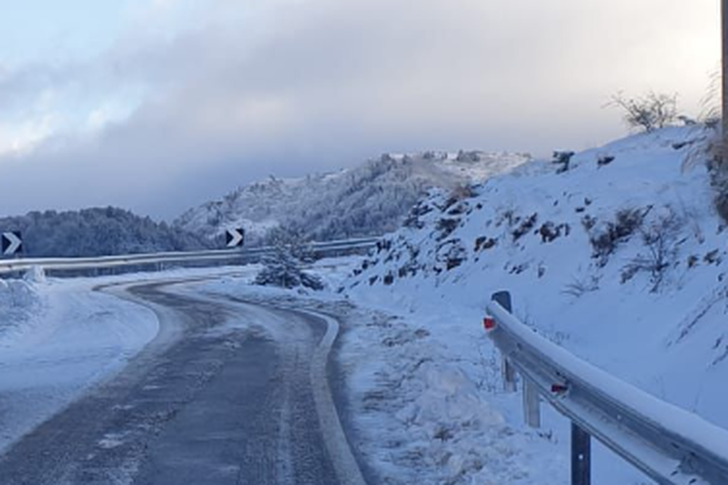
The situation in the territory of Korça Region appears cal...

The Qafë Thores road has been blocked again this Saturday,...

The Albanian Road Authority has issued several instruction...
Journalist Mentor Kikia has shared a concern regarding the...

The road to numerous areas in the southeast of the country...

The kilometer-long queues created in the southeast area af...
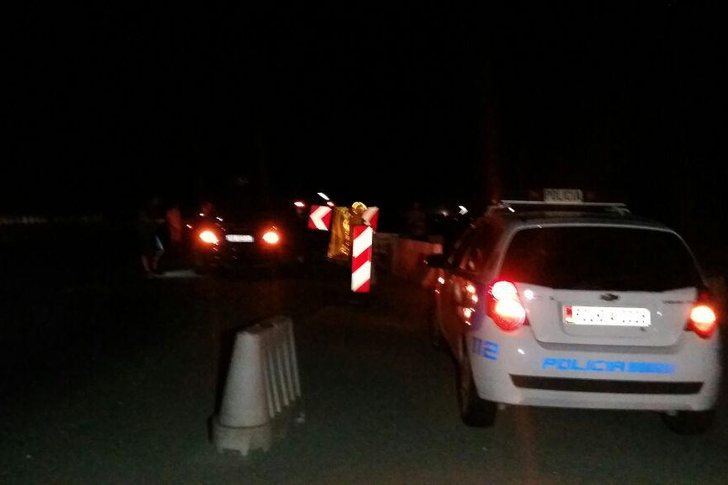
Following the announcement made by the Albanian Road Traff...

The queue continues on the Maliq-Moglica axis. For this re...

The blockage near Moglica by trailers has led to an isolat...
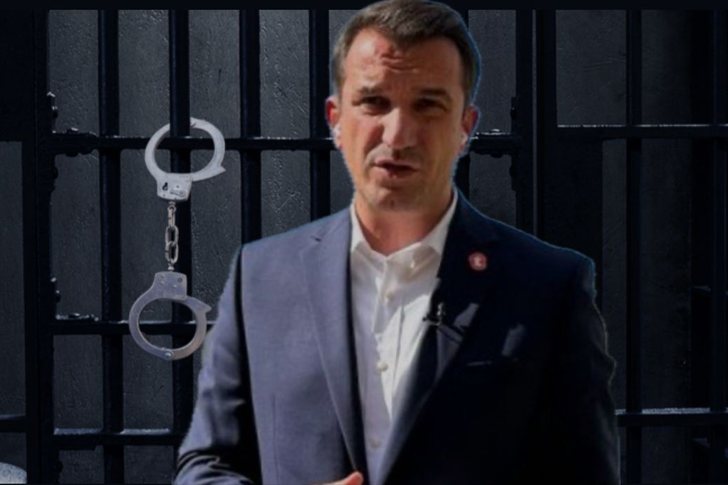
The arrested mayor of Tirana, Erion Veliaj, who has been i...
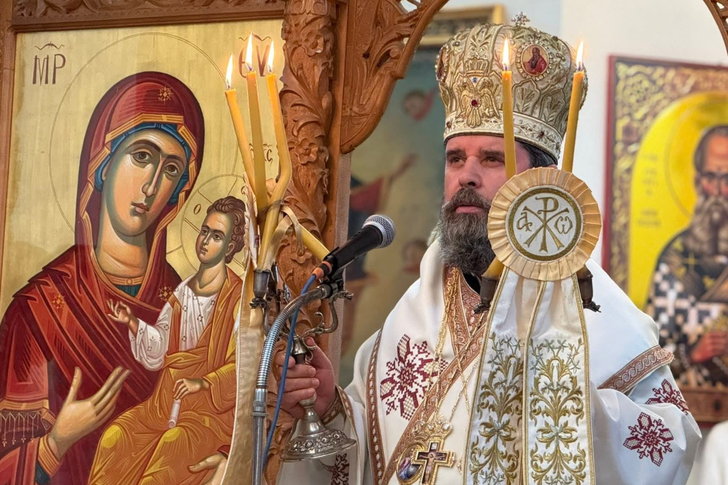
The Archbishop of Tirana, Durrës and All Albania, His Beat...

The first traffic problems begin in the alternative segmen...

Situata në aksin nacional Librazhd-Pogradec është përkeqës...
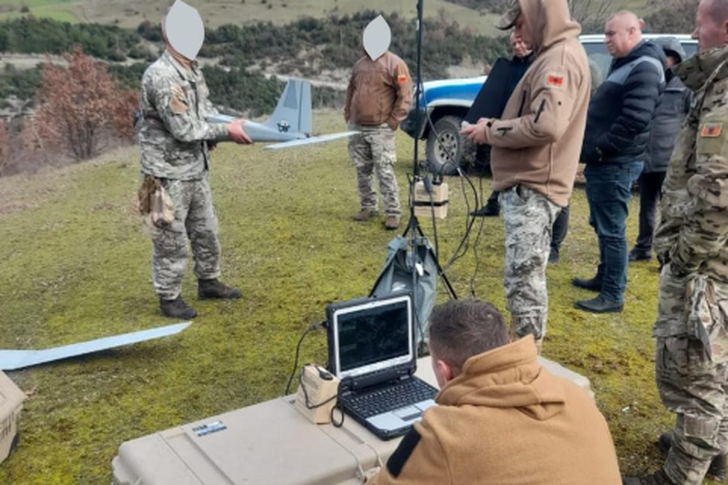
Engineering specialists have launched the action to ...
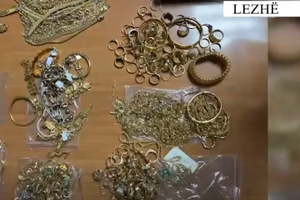
A 39-year-old citizen has been arrested in Lezha, after se...

CNA has launched another investigation that could lead to ...

Irfan Hysenbelliu is a businessman that we call "Irfan the...

In March 2026, CNA launched another investigation centered...

The Special Board of Appeal (KPA) decided this Monday ...

The KPA vetting decided this Thursday to dismiss the p...

Suela Salavaçi, a prosecutor in the Prosecutor's Offic...

The Special Board of Appeal reinstated the prosecutor ...

The police have provided details regarding the accident th...
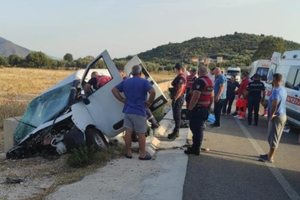
A serious accident has occurred on the Vlora-Llogara road....

Several gunshots were reported today in the village of Gjo...

Following the successive operations carried out by the ope...

Company leaders can improve productivity by investing in a...

Today, our country will be under the influence of stable a...

As the year 2026 is in its second half, the world is exper...

Today, our country will be under the influence of stable a...

Over 300,000 people have been evacuated from France and Sp...

British Prime Minister Andy Burnham has stated that he wil...

In the heart of the infamous New Bell prison in Douala, Ca...
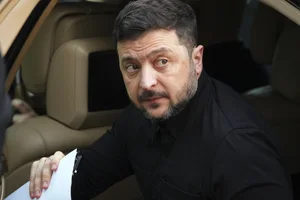
Ukrainian President Volodymyr Zelensky said Russia wants t...
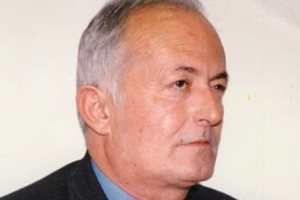
Two windows, a century of history and the metaphysics of p...
In my research at the Central State Archives, specifically...

At a time when industrial products are increasingly taking...

Trust among people is not just a three-syllable word. It c...

This Sunday, one US dollar is bought for 81.5 lek and sold...

This Saturday, one US dollar is bought for 81.7 lek and so...

War, weather and supply disruptions could send gas prices ...
The number of active enterprises in Albania continued to g...