




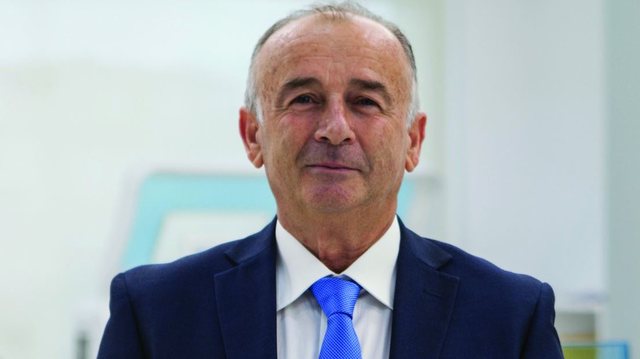
Artificial Intelligence is also widely used in medicine. Dr. Vasil Llajo said that the use of AI in the "Intermedica" network of laboratories has been extended from imaging diagnosis and early detection of diseases, where AI analyzes patient data and risk factors for specific diseases, to the processing of data in a number high among Albanian patients. The use of AI in the medical field is helping to reduce human error and increase efficiency in private laboratories. Despite the widespread use of Artificial Intelligence and ChatGPT in medicine, Mr. Llajo says that in this sector, it will never happen that medical personnel will be replaced by robots or other intelligent elements.
How is Artificial Intelligence being used by the network of "Intermedica" laboratories and how does it help in the diagnosis of diseases?
Artificial Intelligence (AI) has brought revolution in all fields of technology, biotechnology, the medical field is no exception. In recent years, AI has become a powerful tool for medical diagnosis and laboratory applications, offering speed, accuracy and results unprecedented or unseen before.
There has been a lot of talk about AI in recent years, but its history is much older. It begins in antiquity, with the famous Greek philosopher Aristotle, who was the first to describe logic "as a way of codifying right thought, through the rules that describe the procedure of this thought, reaching nowadays Marvin Minsky, who is accepted by everyone as the father of Artificial Intelligence.
Together with Dean Edmonds they built the first neural network, taking as a model the human neuron of the nervous system.
Image-based diagnosis. AI algorithms can analyze medical images obtained, such as X-rays, scanner examinations, magnetic resonance imaging to detect and localize abnormalities and pathologies, helping radiologists to provide the most accurate diagnoses.
"Deep learning" algorithms can learn patterns and features from huge amounts of imaging data, helping in the automated detection and localization of tumors, fractures, various anomalies, etc.
An area that "Intermedica" deals with very successfully in its daily practice, in imaging diagnostics, is the use of the PACS (Picture Archiving and Communication System) system, making possible the transmission of stored, stored images and the correlative information therein. the entire "Intermedica" network with the use of modern AI algorithms and "auto-routing", pre-fetching, streaming, push technology, etc. methods. Through the PACS system, the acquired images can be sent anywhere, all over the world, where the exact interpretation can be done.
"Intermedica" also uses the real-time transmission system with the help of the i-cloud application as part of IA.
This means that the imaging examination can be performed in Saranda, Gjirokastër, Durrës, Kavajë, etc., wherever there are "Intermedica" imaging centers and the images can be displayed at the same time on the computer or phone of the radiologist in Tirana or anywhere it is situated, for a selective thought and interpretation. Also, the use of intravenous contrast injection automatically in the scanning examination is based on the information it receives from the scanner's computer, systems and programs as part of the AI.
Early detection of diseases. Early diagnosis is of vital importance for effective therapy of various diseases. Systems that rely on AI can analyze patient data, including electronic health records, genetic information and biomarkers to locate patterns and risk factors associated with specific diseases. It allows doctors to predict and diagnose diseases in early stages, improving the accuracy of results for patients.
IA is also used in medical diagnostic laboratories to optimize the flow of laboratory procedures. Laboratories process enormous volumes of data and samples, which can be time-consuming and error-prone. AI systems can automate routine work procedures, such as screening, data analysis, and quality control. These not only reduce human error, but also increase efficiency, allowing laboratory personnel to use more complex procedures. "Intermedica" is the first laboratory that has installed the PSM and LIS system for many years.
The installation of the robotic system for analyzing samples and processing the results are another element of AI, but what makes the Intermedica laboratory special and makes it the only one that uses it today in Albania is the installation and application of biochip technology in personalized selective diagnosis, personalized treatment is based on this. This achievement is the result of cooperation with the German company BOSCH in the production of chips and the English company RANDOX, in their branding with bio elements and biotechnology. Here we have the application of "BIOCHIP ARRAY TECHNOLOGY" as "SMART-Intelligent Technology", with the use of MULTIPLEX tests, the results of which are read by a "CD-Camera" and "Custom Image-processing software", which are an application of IA.
Also quite efficient is the use of atlases and albums of tumors, pathological diseases of the blood where it goes further and deeper than the doctor's eye. All "Intermedica" subsidiaries are connected to each other with the control management system, quality control application and analyzer with such a program, as part of the IA application, where it is possible to look at real time-online all computer systems analyzers. So at the same time, the applicant can view all the analyzer computers wherever they are located, such as in the city of Tirana, or in any other city of the Republic of Albania, where they are installed.
How does the use of Artificial Intelligence in data analysis serve in the field of medicine?
AI algorithms can analyze volumes of data, the product of diagnostic laboratories, to locate trends and patterns. Specifically, "Intermedica" with the help of IA presented at the World Congress of Laboratory Medicine "WorldLab & EuroMedLab" held in May 2023 in Rome two papers with a huge volume of data, where one of them was over 90,000 patients and the other , over 50,000 others. This information can be used to predict the prevalence of patients for the optimization of testing protocols and the development of personalized therapy schemes.
Prognostic analysis in diagnostic centers can improve patient outcomes, reduce costs, and improve population health management. AI is transforming the medical and diagnostic sector, offering great opportunities for improved diagnosis and therapeutic treatment. It is worth noting that it is helping in early diagnosis and personalized therapy. It is also worth noting that the inclusion and mass use of surgical robots was really based on AI, algorithms and the processing in fractions of a second of the data it receives during the operation.
Specifically, in the orthopedics of reconstructing the knee joint with prosthesis, the company "Smith & Nephew" very successfully uses the robotic system of "SMART 3D" technology without the help of CT/MRI with real time planning for personalized surgery. A very important field of application of AI is also diabetes, the sugar disease with the erosive social phenomenon that with the help of AI algorithms can be predicted, prevented or treated in a personalized way with the technology of implementing glucose level meters with chips- on the patient's arm and reading the result with the mobile application.
In your opinion, how is the use of AI expected to affect health, what are the challenges of its use?
Among the main challenges in the use of Artificial Intelligence remain privacy and data security, since the use of AI in medicine results in the use of sensitive personal data of the patient. Guaranteeing the privacy and security of patient data information is vital to ensuring patient trust and compliance with regulatory models. Strict personal data protection measures such as cryptology and access control should be implemented to protect the patient's personal data from unauthorized persons.
AI algorithms are quite reliable today and the data they specialize in. Biases that may arise from training, specialization data may lead to biased predictions, affecting non-analogously correct patient groups. The interpretation and transparency of the data should also be seriously considered and the negative interpretation of AI in the labor market should be avoided, with the replacement of personnel with robots or intelligent elements, especially in medicine. The addiction created by AI applications that we often see on social networks is also quite serious.
The point is to stop or limit them, or limit individual freedom. The point is to respect individual freedom, allowing people to be free to use applications, but on the condition that adequate information on negative effects and voluntary application are respected. In the field of medicine, we should not be covered by phobia or pessimism and the misinterpretation that robots and AI will replace doctors and other medical personnel.
It cannot happen for the simple reasons: AI is the creation of human intelligence; The human being is a social being and not a creature of technology. Thought, consciousness, judgment, self-judgment, correlative social action are the exclusive property of the gray subconscious, they are an exclusively human, human product, and this product will always be one step ahead of AI.
How is ChatGPT used in healthcare? Can its use replace man?
ChatGPT (Generative Pre-Trained Transformer) is an Artificial Intelligence application that allows dialogue, answering (chatbot), which is launched by Open AI in November 2022. ChatGPT specializes in a giant corpus of data and can implement a variety natural language processing, such as answers to various questions, translations, summaries of texts, etc. Using ChatGPT has its positive and negative reviews. In December 2022, it became the subject of positive reviews in the "New York Times", where it characterized it as "the best Artificial Intelligence chatbot that has ever circulated among the general public".
ChatGPT on a thesis topic of a student gave the concept that his text was on par with that of a good student and expressed that the "academic world" has enough serious problems to deal with. As for the negative reactions, there are many articles that maintain the attitude towards ChatGPT, considering it as a tool that affects professional knowledge and, as a result, the assessment of personnel skills. Others, like The Verge's James Vincent, call it mainstream and even call it a thoughtful parrot. The main problem and danger of ChatGPT is the electronic (cyber) attack on government sites, as it is able to write electronic messages called "phishing or malicious".
Problems can be observed in the educational system, in culture, science, etc. by copyright. Despite these negative reactions, ChatGPT as a part and product of IA is a technological revolution and moves the future forward. We should not be afraid, because as I mentioned above, AI does not replace human logic and reasoning, it does not have critical thinking or self-critical evaluation and use of self-knowledge. ChatGPT is not always right and has no subliminal morality. AI has brought a revolution and made giant strides in technology for medical diagnosis./ Monitor.al




Journalist Klodian Tomorri today published a news abou...
A 46-year-old man has been criminally prosecuted after he ...
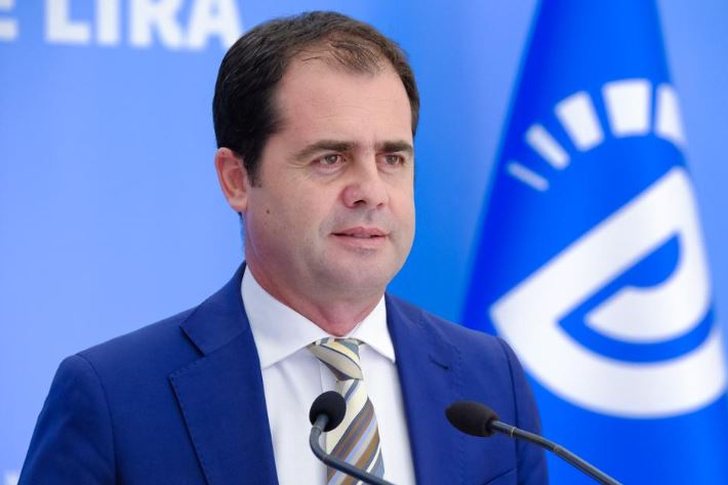
The vice-president of the DP, Oerd Bylykbashi, in a st...
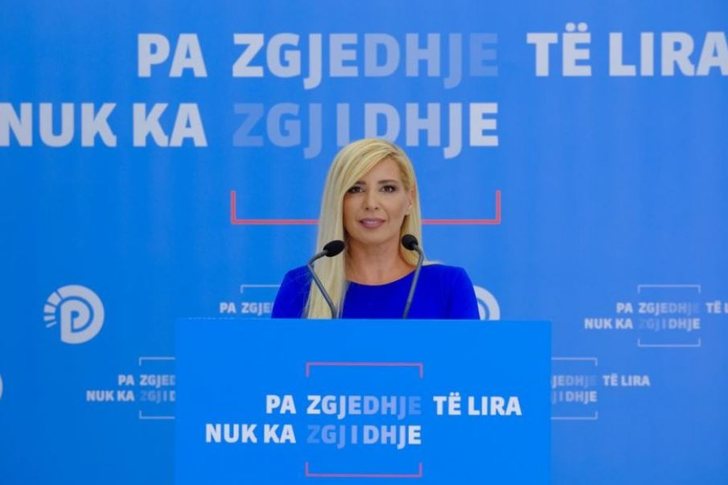
The Spokesperson of Anti-Corruption at the DP, Genta Vangj...
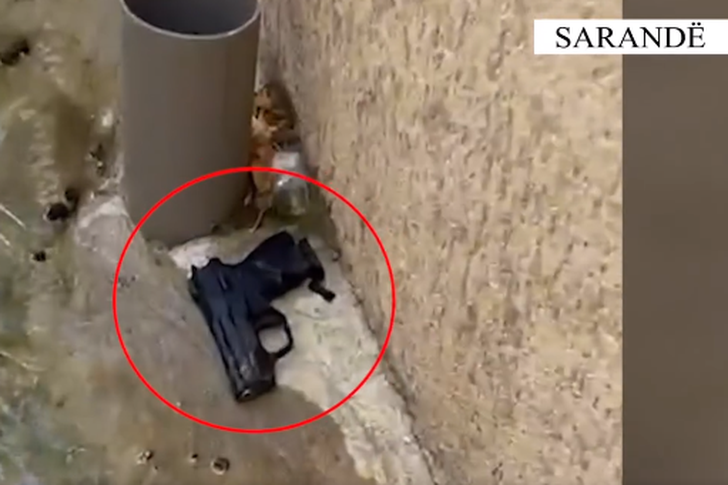
The police have found the weapon with which a 23-year-old ...
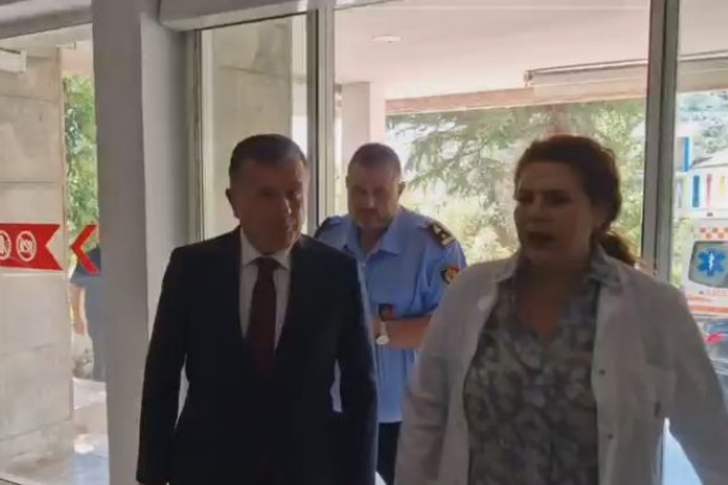
The Minister of the Interior, Taulant Balla, today visited...
Now that the landfill of Sharra has passed into state ...
The chairman of the Freedom Party, Ilir Meta, has spoken a...
The chairman of the Freedom Party, Ilir Meta, in a stateme...
The chairman of the Freedom Party, Ilir Meta, in a stateme...
Former Prime Minister Sali Berisha in a statement from the...
In the end, Giorgia Meloni decided to spend the middle of ...
A Spanish tourist who was left on the path between Theth a...
Tonight starts the first magical night of the Beer Fes...
Partia Demokratike e Sali Berishës ka kërkuar nga Ministri...

The deputy director of the state police has revealed detai...
The US Embassy encourages all magistrates to apply for vac...

The wait has come to an end! Today starts the first magica...
Journalist Klodian Tomorri has informed that about a m...
The Minister of the Interior, Taulant Balla, reacted after...

CNA has launched another investigation that could lead to ...

Irfan Hysenbelliu is a businessman that we call "Irfan the...

In March 2026, CNA launched another investigation centered...
The arrested mayor of Tirana, Erion Veliaj, with 13 charge...

The Special Board of Appeal (KPA) decided this Monday ...

The KPA vetting decided this Thursday to dismiss the p...

Suela Salavaçi, a prosecutor in the Prosecutor's Offic...

The Special Board of Appeal reinstated the prosecutor ...

A serious incident occurred this Tuesday in the Yrshek are...

An accident occurred this Tuesday on "Dituria" street in K...
A tourist has lost her life on Orikum beach, where she was...

Two people were arrested and two others were prosecuted af...

All of Southern Europe will face changing weather conditio...

Albania was hit by temperatures significantly higher than ...

For the first time, Pogradec welcomed the Inter-Lake Chess...

Albania has achieved a record for the employment of foreig...

An operation led by Europol, through authorities in severa...

US President Donald Trump hosted the Lebanese president at...

The European Union has criticized the decision of the acti...

An earthquake measuring 5.0 on the Richter scale struck so...

At a time when industrial products are increasingly taking...

Trust among people is not just a three-syllable word. It c...

Master of humor Todi Llupi has passed away at the age of 7...

The ninth edition of "MIK Festival" kicked off with one of...

The Centralized Purchasing Operator recently opened a tend...

The new draft law "On the Bank of Albania" provides that t...

This Tuesday, one US dollar is bought for 81.2 lek and sol...

Deputy Minister of Economy and Innovation, Enkelejd Musabe...