


Hazardous waste/ Sampling begins from containers in Porto Romano
It is reported that the port of Durrës has begun taking sa...


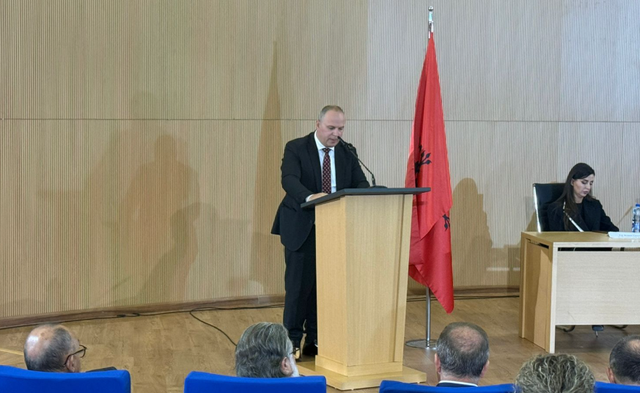
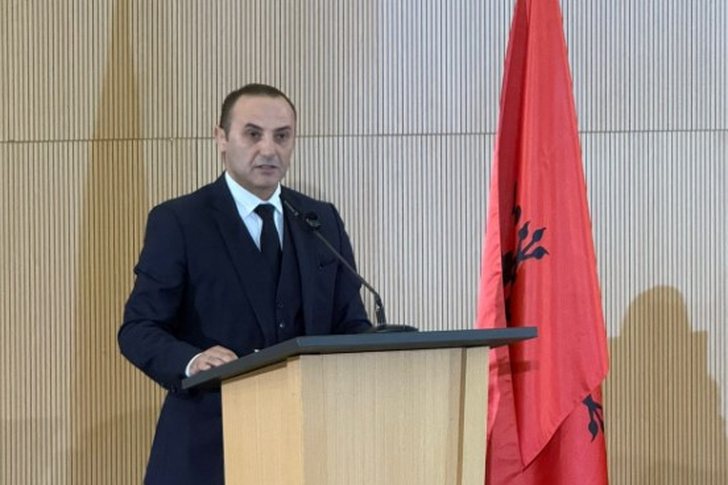
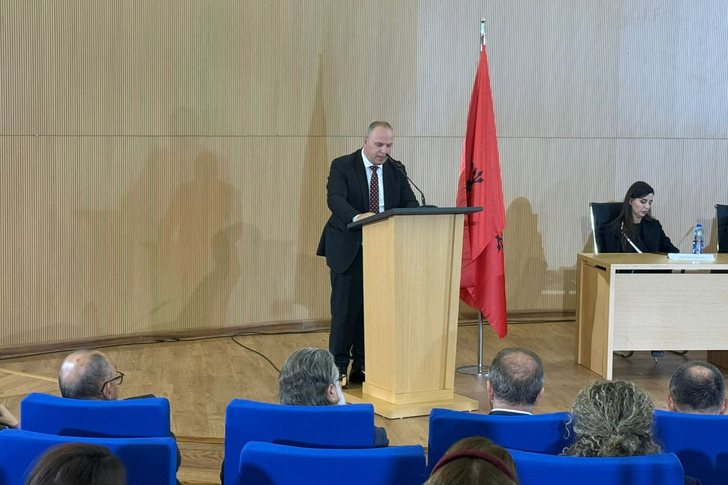
The Head of the Special Court, Erjon Bani, in his speech at the joint meeting with members of the judiciary on the murder of the late judge Astrit Kalaja, said that Albania has an open wound in relation to the judicial system.
Bani stated that it is unacceptable that a country aiming for membership in the European Union still has such a prejudiced public perception towards the judiciary.
The head of the GJKKO said that judges must unite and revive the ideal as the judiciary is in a demoralizing and unacceptable state.
Bani said that this moment should serve as a turning point, so work is needed to change and create a future generation that sees the judiciary as a symbol of the state, not as an object of pressure or hatred, and therefore work must be done in schools and universities.
"The tragic event of November 6, at the Court of Appeal, where our late colleague, Judge Astrit Kalaja, lost his life in the line of duty, will long remain in our memory as a deep wound and a severe blow to the judicial system of the Republic of Albania.
This event, which shocked not only the body of magistrates but the entire public opinion, should serve as a historical turning point to radically reevaluate the way security is handled in court premises and to increase citizens' awareness of respect for justice institutions.
Also, this event is a moment when more than ever we must be united and determined to protect the fundamental values ??of the Albanian justice system.
Today, we are aware that Albania has an open wound in relation to the judicial system. The problem is not limited only within the walls of the courts, it starts from the lack of legal culture in society, from the misunderstanding of the role of justice as a guarantee of social peace and ends with a public discourse that is often aggressive and denigrating towards judges. It is unacceptable that a country aiming for membership in the European Union still has such a prejudiced public perception towards the judiciary.
In developed countries, respect for the judiciary is unconditional, no one questions the role of the judge as a defender of the law and fundamental human rights. In Albania, unfortunately, this respect has been eroded for years by political attacks, by the lack of institutional protection and by a public spirit that often sees the judge as an enemy, not as a guarantor of justice.
The state of the judiciary today is unacceptable and demoralizing, but this meeting should serve as a moment of unity and reflection. We must give strength to each other, to revive the ideal that guided us from the benches of the Faculty of Law and the School of Magistracy, the ideal of an Albania where the law rules, where every citizen is equal before it, and where every magistrate can exercise his or her duty with dignity and in complete security.
This change must start from the foundation of society, from schools, universities, families and especially the media, to create a new culture of respect for the law and the institutions of justice. Only in this way can the next generation be formed that sees the judiciary as a symbol of the state, not as an object of pressure or hatred.
Legal and regulatory situation in Albania
When I talk about security in courts, I am not just talking about the physical protection of judges. Protection includes every person who enters the court or performs duties within the court, including administrative employees, parties to court proceedings, witnesses, victims, experts, journalists, and the public.
Albania has a legal framework that establishes the responsibility of the State Police for maintaining order and security in courtrooms as well as the obligation of the Court Councils to detail the rules for maintaining security (VKM no. 333/2010, 932/2010, 538/2020 and article 38 of law no. 98/2016). However, this protection has not yet been implemented in the country's courts. It is time for each Court Council to establish internal rules for maintaining security and for the Council of Ministers, in cooperation with the High Judicial Council, to draft a well-defined policy for order and security in court premises according to the provisions of article 49 of law no. 98/2016.
International standards.
In this speech, I would like to highlight the reaction of US judges to the fatal attack on the home of federal judge Esther Salas in New Jersey on July 19, 2024, which killed her son and seriously injured her husband. The Judicial Conference immediately addressed the US Congress with a request for a package of security measures, requesting funds to improve security systems in judges' homes and federal buildings, as well as additional measures to protect judges' personal information. The proposals included the installation of modern alarm systems, an increase in the number of federal police officers, improved security cameras, and legal measures to prevent the publication of personal information.
"This case underscores the importance of the safety of judges and their families and serves as a reference point for examining the situation in Albania."
Erjon Bani presented a series of recommendations for improving security in the courts and stated that he aims to raise awareness among the community of magistrates.
Bani stated that security in the courts is not a privilege of judges, it is a fundamental condition for the existence of the rule of law. Without secure courts, there is no independence, no justice, and no hope.
"In this context, my speech today aims to raise awareness among the magistrate community regarding court security and provide concrete recommendations for its improvement. It is based on the manuals entitled “Best Practices in Court Security” of the National Center for State Courts in the US (NCSC, 2022) and the “National Sheriffs Association Guide” (NSA, 2020) on court security.
Based on these guidelines to assess the state of physical security of Albanian courts, it is proposed to take the following steps:
I. Methodology for assessing the current situation
To build a functional security system in Albanian courts, the first step is to conduct a comprehensive assessment of the current situation, which will serve as a basis for the design of concrete policies and measures. This assessment should include several key components:
1. Physical inspections of infrastructure
· All courts should be systematically inspected to identify their strengths and weaknesses.
· The inspection should include entrances and exits (including emergency exits), courtrooms, administration offices, public spaces, and parking lots.
· The condition of existing cameras, alarm systems, fire-fighting equipment, and the security of corridors for transporting defendants should be analyzed.
· This process should be based on a standard checklist according to the international best practices mentioned above, to ensure that all aspects are treated uniformly.
2. Analysis of existing protocols and policies
· Review current documents related to security measures (internal orders, work regulations, agreements with the State Police).
· Analyze whether there are proper protocols for incident management (e.g., how to act in the event of a threat with a weapon or fire).
· Identify gaps between current practice and international standards. For example, many Albanian courts do not have standardized procedures for controlling visitors, while this is a mandatory practice according to international practices.
3. Interviewing judges, staff and security personnel
· Interviews should aim to collect information on their perceptions and experiences regarding security.
· Judges and prosecutors can highlight cases of threats or pressure, administrative staff can talk about daily security, and security officers about operational practices.
· This process helps create a realistic picture and identify perceived and real risks.
4. Testing response to emergency scenarios through practical exercises
· Organize simulation exercises (e.g., fire evacuation, response to a gunman, crowd management).
· Exercises should test not only security personnel, but also referees, staff and the public.
· The results of these exercises serve to identify gaps in response and improve emergency plans.
5. Comparison with international standards and best practices
The assessment should conclude with a comparative analysis, where the situation of Albanian courts is placed in relation to the international standards mentioned above that define fundamental, critical and essential measures and where emphasis is placed on the necessity of inter-institutional coordination, uniform procedures and public awareness.
· This comparison will enable the drafting of a national security plan for the judicial system, adapting international practices to domestic reality and resources.
II. Creation of a Security Council for the Judicial System
This Council, composed of judges of all levels and jurisdictions, would have an advisory and oversight function, similar to the security committees recommended by the National Center for State Courts in the US in its manuals entitled “Best Practices for Court Security.” Its duties would include:
Ø Adoption of a methodology for analyzing the current situation and measuring risk
. Today, a unique mechanism for measuring risk is missing. The methodology should include physical inspections, interviews with personnel, practical testing and comparative analysis with international practices.Ø Establishing monitoring centers in every court
Albanian courts have little or no centralized monitoring systems. The establishment of command centers with cameras, alarms, and emergency communications is an international standard.Ø Standardize security procedures in each court
Current procedures vary from one court to another. Standardization ensures security parity and a more coordinated response to incidents.Ø Standardization of emergency plans
Currently, courts do not have unified emergency plans. Each court needs to develop personalized plans, based on periodic risk analyses.Ø Mandatory and certified training
Judicial staff in Albania do not have specialized training in security. In line with international practices, certified training on incident response, crisis management and personal security should be conducted.
III. Establishing the role of the security coordinator in each court
Ø According to international practices, a security coordinator should serve as a liaison between the court, police and other institutions. In Albania, this role could be assigned by the judicial administration, with the authority to coordinate security protocols and emergency response.
IV. Conducting periodic external audits
Ø The Albanian judicial system lacks an independent evaluation mechanism. Audits by external experts (national or international) would ensure objective measurement of progress, transparency and identification of gaps. This practice has been highlighted by the National Center for State Courts in the US as essential for maintaining and upholding standards at all times.
VI. Inter-institutional cooperation
Ø Security is not only the duty of the court. International experience (NSA) shows that close cooperation between the courts, police, health services, civil emergencies and other institutions is essential. In Albania, this cooperation is often sporadic and informal, therefore a detailed cooperation protocol is needed. When I say inter-institutional cooperation, I also include the real commitment of the institutions responsible for drafting the state budget and approving the budget.
VI. Public education on safety rules
Ø Most incidents in Albanian courts occur due to citizens’ ignorance of the rules. Public awareness programs, such as leaflets, visual guides at the entrance, electronic notifications, and cooperation with the media, are international practices that can be adapted in Albania. This increases compliance with the rules and reduces tensions.
Ø In this process, the media plays a crucial role. It should be a partner in information, not a pressure factor, building public trust, not prejudice. Instead of denigrating language or sensational headlines, the media should provide educational information on the role of the judiciary and verify the information it transmits. Only through a responsible and professional media can a culture of respect for justice be built, helping the public understand that courts are sacred institutions of law, not arenas for public lynching.
Ø Therefore, it is the duty of every institution, every citizen and every journalist to contribute to the establishment of a new spirit of cooperation and respect for justice. Only in this way can we build a strong, secure and respected judicial system, as our country deserves.
"To conclude, I reiterate that the event of November 6 should not remain just a painful memory, but a moment of national awakening for Albanian justice. Security in the courts is not a privilege of judges, it is a fundamental condition for the existence of the rule of law. Without secure courts, there is no independence, no justice and no hope," Bani said in his speech./ CNA

It is reported that the port of Durrës has begun taking sa...
The Deputy President of the Tirana Court of First Instance...
The Deputy President of the Special Court, Erjon Bani, in ...
The Deputy President of the Administrative Court of Appeal...

The judges of the Republic of Albania held an urgent meeti...

The Special Prosecution Office against Corruption and Orga...
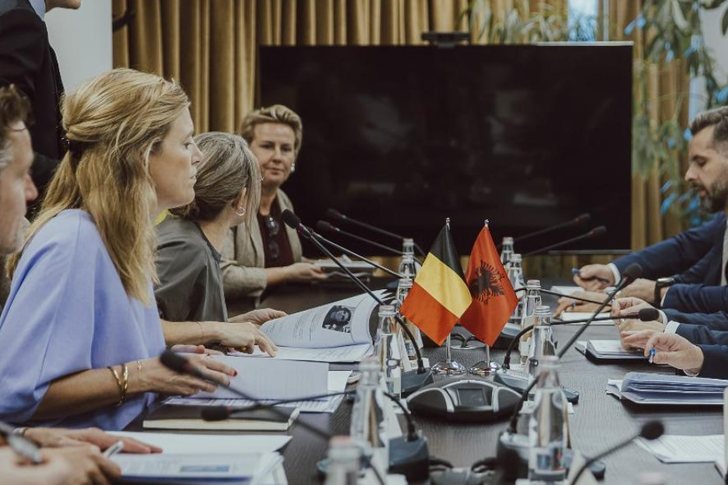
The Head of the Special Prosecution Office, Altin Dumani, ...

The court hearing in the case of Elvis Shkambi, who shot a...
The position of Chief Executive Officer of the Financial S...
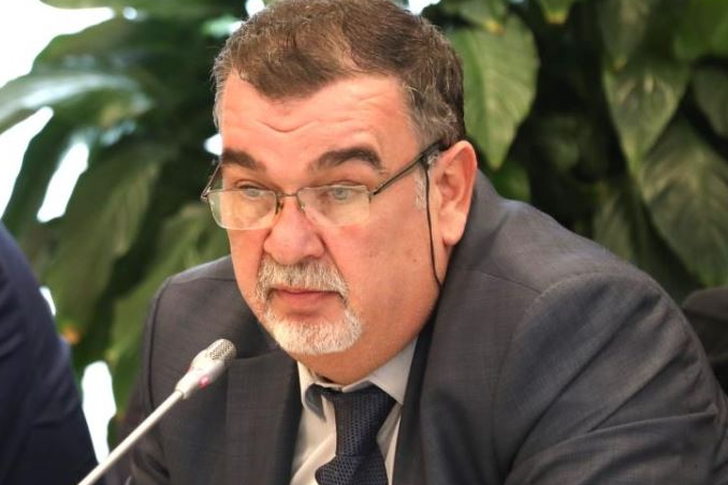
Today, security measures will be issued at the Tirana Cour...

Today, at 9:00, a preliminary hearing will be held at the ...
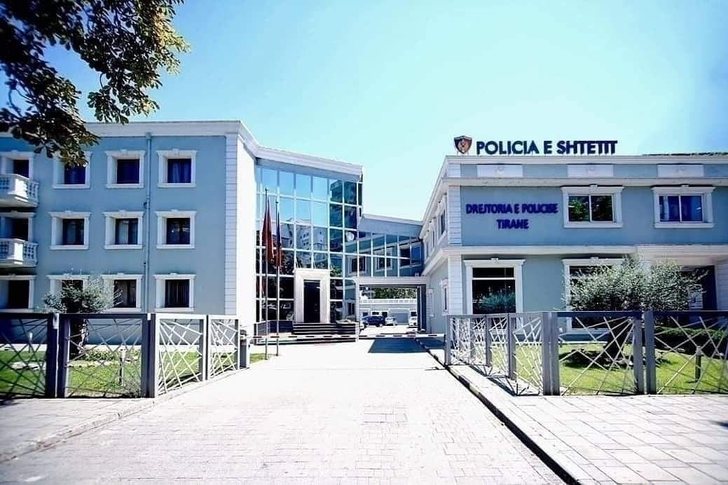
Tirana Police has announced security measures in the capit...

This Thursday we are introducing you to some of the main h...

Journalist Glidona Daci spoke this evening about the attac...
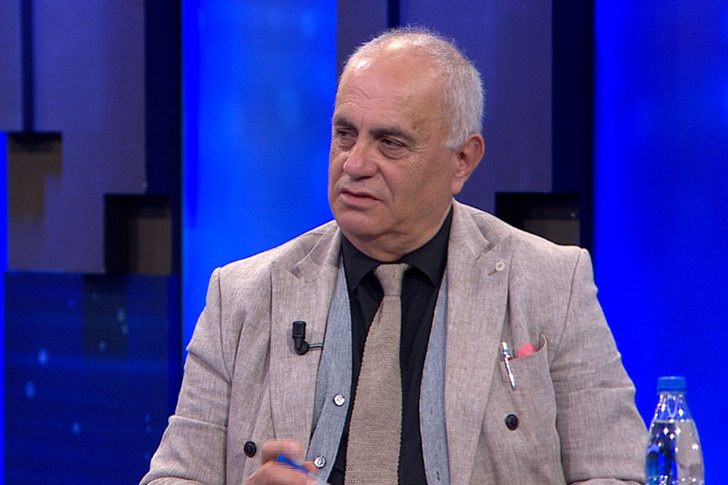
Academic Artan Fuga commented on the murder of judge Astri...

Lawyer Ylli Manjani spoke this evening about the murder of...

Analyst Lutfi Dervishi commented today on the situation of...
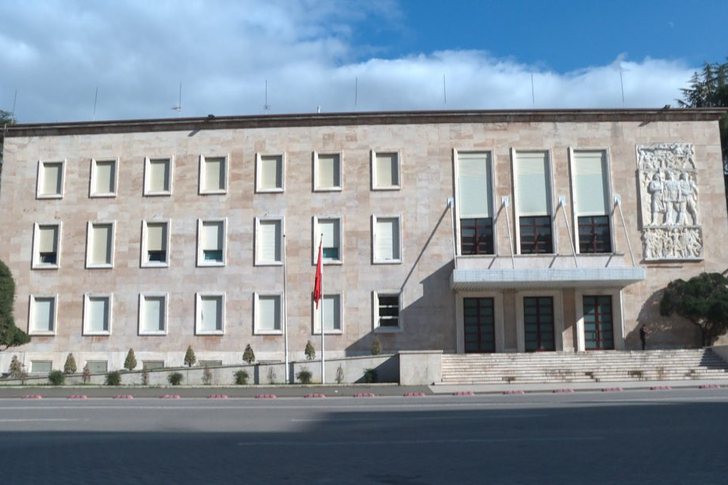
Today, at the meeting of the Council of Ministers, the dec...

A road accident occurred this evening near the Memoria...

Minister of State for Local Government, Ervin Demo, ha...

Irfan Hysenbelliu claims to be a big businessman, an hones...

The murder of officer Enea Mekolli in the line of duty has...

The next case broadcast on the show "Stop", this Thursday,...
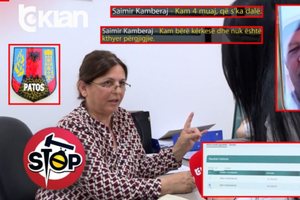
The case published this Thursday, June 4, on the show "Sto...

The Special Board of Appeal (KPA) decided this Monday ...

The KPA vetting decided this Thursday to dismiss the p...

Suela Salavaçi, a prosecutor in the Prosecutor's Offic...

The Special Board of Appeal reinstated the prosecutor ...

An accident was recorded a few minutes ago on the Pogradec...
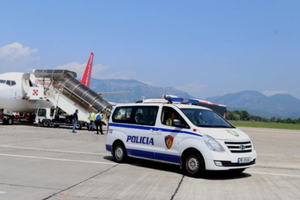
Following the cooperation of Interpol Tirana with Interpol...

An accident occurred this Saturday morning at Shkëmbi i Ka...

A TNT explosion occurred in Lezha in the early hours of th...

Albanians are officially the hardest working people in Eur...

This Saturday will be characterized by mostly clear weathe...
Today our country will be affected by stable weather condi...

For many children and teenagers, the long summer holidays ...

US Defense Secretary Pete Hegseth declared that Europe is ...

A federal judge in Rhode Island struck down a Trump admini...
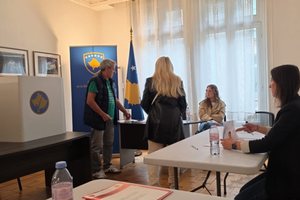
Thousands of Kosovo citizens living abroad are voting phys...

Pope Leo XIV arrived in Madrid this Saturday, where he beg...
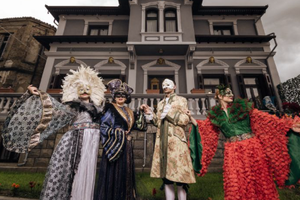
Korça is ready to open the summer season with one of the c...

Two years after his passing, the renowned Korçë poet Skënd...

The Ethnographic Museum of Berat has opened its doors to v...
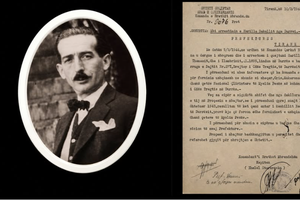
The story of Harilla Bakalli is one of the most chilling t...

The Transparency Board, in today's meeting, decided to red...

This Saturday, one US dollar is bought for 81.4 lek and so...

Despite years of efforts at regional cooperation and free ...

Albania is the country with the highest level of severe ma...