


Suspected of ordering the kidnapping of a person/ SPAK 52 bank accounts, 32 vehicles
The Special Prosecution Office against Corruption and Orga...


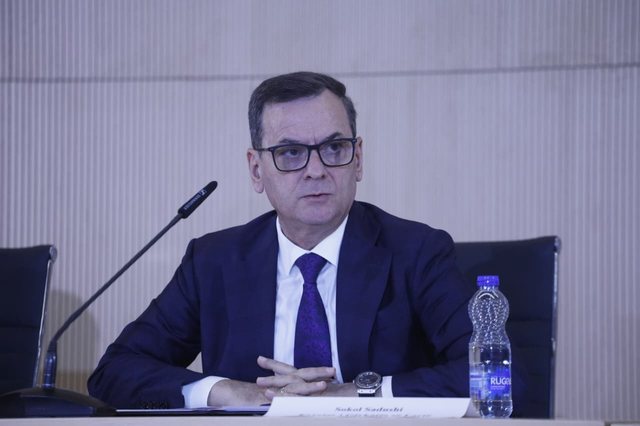
The judges of the Republic of Albania held an urgent meeting today following the execution of Appeals Judge Astrit Kalaja.
The President of the Supreme Court, Sokol Sadushi, said in his speech that the murder of Judge Kalaja is not a purely criminal event, but a blow to the foundation of what justice represents.
Sadushi said that Kala's death was foretold as for years judges have been the target of insults, threats and denigration.
The head of the Supreme Court said at the meeting that many people from politics who do not have a legal culture analyze judicial actions.
The denigration of judges, said Sadushi, continues on social networks, where every decision is distorted. These lynchings, said the head of the Supreme Court, have created distrust, fear and the rule of law has been hit.
Full speech
There are moments in the history of justice when words lose their weight, because pain is greater than any words. Today is one of those moments. The murder of our colleague, Judge Astrit Kalaja, is not simply a serious criminal event. It is a blow to the foundation of what justice represents, an open wound in our conscience as people and as judges. It is an act that has shocked not only the judiciary, but also the state, because it happened where the law should be strongest, in the courtroom, the place where justice takes shape and where the citizen seeks protection. And precisely where the law should reign, the unthinkable happened.
This is a death foretold. For years, judges have become the target of insults, threats and denigration. Instead of protecting the independence of the judiciary, its authority has been attacked. Instead of building respect for justice, contempt for it has been encouraged. Instead of building trust in the law, public opinion has been allowed to be poisoned by the language of hate and ignorance.
This is not simply a climate of disrespect, but a continuous campaign of attacks and denigration. Numerous voices from party and state politics, from unprofessional media and from individuals who appear as “eminent jurists” without even having the simplest legal culture, have become daily commentators on judicial decisions, without responsibility, without ethics and often without any minimal legal knowledge. They give judgments as if they were judges, declare the guilt or innocence of whomever they want, interpret the Constitution according to the interest of the moment and distribute television verdicts in studios that imitate courtrooms. This is not freedom of speech, it is a public distortion of justice. And when the state is silent, when the institutions that should protect the independence of the judiciary are silent, this silence becomes moral complicity.
In this cacophony of voices, senior politicians of the country, from the government or the opposition, today feel free to insult, anathematize or mock the judge who makes a decision, perhaps even without reading the reasoning, without waiting for the appeal and without respecting the judicial hierarchy. Instead of respecting the legal process, they rush to put “justice” itself on the microphone and camera, judging the magistrate as if he were a political party.
This language of contempt does not stop here. It continues to spread on social networks, where every decision is distorted and where insults, slander and hatred towards judges explode without any responsibility. Thus, politicized language has transformed into a virtual lynching culture, which feeds hostility towards the magistrate and poisons the public's perception of justice.
This is unacceptable. This is inexcusable, because this language of hate and this climate of poisoning has fueled distrust, incited fear, and ultimately attacked the rule of law itself.
The tragic event that has brought us together today is precisely the most extreme consequence of this poisoned atmosphere, an event that should have been prevented, because it was foreshadowed in every insult, in every irresponsible statement, in every public attack on a judge who is only doing his duty.
But before pointing the finger at others, we must start with ourselves. We must honestly admit that Albanian justice is not yet at the height that society expects of it. We must say it openly: delays in the adjudication of cases, unnecessary procedural delays and failure to respect legal deadlines for the reasoning of decisions are visible wounds that damage public trust. There are cases where processes drag on for years, without a justified reason, turning the citizen's expectation of justice into a separate punishment. There are decisions that remain unjustified in time, and others that vary from one court to another, creating uncertainty and a perception of a lack of coherence and justice. A judiciary that is not predictable in its jurisprudence loses the force of law and the respect of the public. When the citizen is not sure what justice he will receive for the same situation, then the entire structure of trust is shaken. Also, the way we communicate with the public is often closed, cold, incomprehensible to the citizen.
We often forget that every judicial decision is not simply a legal document, but a message to society about the strength and seriousness of the rule of law. Therefore, before we demand respect, we must set an example. We must turn into a daily professional standard what we today consider a rare virtue: timely judgment, reasoned decisions and consistency in jurisprudence. There is room for improvement, for reflection, for responsibility. Only a judiciary that accepts its weaknesses and works to strengthen itself from within has the moral right to hold others to account. Only in this way will justice gain the lost trust and the moral authority it deserves.
However, self-criticism cannot blind us to the brutal reality in which we are left to work. We know very well the difference between a critical opinion, which is acceptable in a democratic society, and an insult or personal accusation that aims to delegitimize the figure of the judge. He is not uncriticizable, but no one has the right to make him the object of public contempt. In every television dinner, in every panel where justice is discussed, a parallel trial is held against the judges and prosecutors of this country. These people, without responsibility, without ethics, without legal knowledge, have turned the insult of judges into nightly entertainment, into a spectacle for the crowd. They have become spokesmen for the emotions of the moment, not the law, and have poisoned public opinion by destroying citizens' trust in justice.
Beyond all this, there is another inequality, equally painful. The judge does not speak. He does not respond, he does not speak about himself and his decisions, he does not respond to accusations and insults, because his role itself requires it, because silence is part of the dignity of the judicial function. But while the judge is silent, politics speaks every night, in every courtroom, on every screen, without any restrictions, in accusatory tones, with denigrating language, with labels and verdicts. While we bear the weight of responsibility, they hold the privilege of speech. This creates a moral inequality, which in the eyes of the public makes the magistrate weaker, more vulnerable, more exposed to attack.
We cannot allow this inequality to return to normality. We cannot remain silent forever in the face of insults made to the system, because institutional silence, when justice is attacked, is no longer a virtue, it is surrender. The way we react must be institutional, unified and principled, not sporadic and random. There can be no random reactions, according to the pressure or emotions of the day. The judiciary needs an institutional voice that reacts with dignity, prudence and strength, whenever judges and the authority of justice are violated, because when there is silence in the face of injustice, trust is lost. And when trust is lost, justice itself collapses.
The High Judicial Council, as the body responsible for governing the system, cannot remain silent most of the time and react only sometimes, when the situation becomes unbearable. This approach is incomprehensible and unacceptable. The High Judicial Council must understand the role that the Constitution has given it, not to remain in the shadows, but to speak with strength and dignity on behalf of the entire judiciary. It is a governing body, not a technical office; it is a representative of the system, not an extension of institutional silence. It must know how to tell the other powers, loudly and clearly, in what state the judiciary is in, what its wounds are, what its needs are, and what the consequences of inaction are. The Supreme Court must show with dignity the high position granted to it by the Constitution, to confront and not to vegetate, to confront and not to conform. The Council cannot be a body that adapts to circumstances; it must be a body that changes them. The judges who have been elected to this collegial body by We, the judges of the Republic, must understand their irreplaceable role. They are not there to remain silent or to maintain false balances; they are there to protect the system from collapse and disrespect. They must not forget that very soon, after the end of their mandate, they will return to the courts from which they came; and then they will feel for themselves how grave the consequences of their inaction are. They will understand how much they have lost to the judiciary that they did not protect properly and how little they have done to change the situation that they now denounce with silence.
There can be no rule of law when the judge works without security. There can be no independent justice when the court building is in a deplorable state. There can be no respect for justice when the judge and the citizen enter the same door, wait in the same corridor and conduct the trial in an office without audio or video, in conditions that guarantee neither security, nor solemnity, nor institutional dignity. These are the painful realities of many courts in the country. Look at the courts of the capital, where with a dizzying workload, trials are held in cramped offices and without security measures. In other districts, the buildings are depreciated and without any minimum security standards. Under these conditions, the judge is not protected. And an unprotected judge is an unprotected justice.
The state cannot continue to turn a blind eye. The High Judicial Council has the legal obligation to guarantee the conditions for exercising the judicial function, but this obligation has long been neglected. The Supreme Court of Justice has been reluctant to take strong decisions on the security and protection of judges, on the modernization of court buildings and on the replenishment of human and infrastructural resources. There are unjustifiable delays in appointments, promotions, and the division of workloads. There is a lack of coordination with other constitutional and legal bodies. No one talks about the security, working conditions, and dignity of judges.
Both the executive and legislative branches have their responsibility. There can be no modern justice without state investment. You cannot demand results from a system that works with insufficient human resources, scarce funds, and last century infrastructure. Justice cannot function on the basis of propaganda. It needs concrete guarantees, a budget, security, and respect. In this dark moment, we cannot remain silent. We must raise our voices not for ourselves, but for justice. Because a state that does not protect the judge does not protect the citizen either. A state that allows judges to be threatened allows injustice to reign.
This tragic event should not bend us. It should unite us. Make us more aware, stronger and more determined to protect not only ourselves, but the entire system we represent. We do not ask for privileges. We ask for security, respect and dignity in the exercise of our duty. We ask that judges not feel abandoned, despised or threatened. Because a frightened justice system is a paralyzed justice system.
This is the moment to act. Let us no longer be satisfied with words, but take visible and measurable steps. Let us create a National Platform for Judicial Security, which includes all state institutions that have responsibility for the protection of judges.
To this end, an Inter-institutional Working Group should be established, with the participation of judges, the High Judicial Council, the Ministry of Justice, the Ministry of Interior, the State Police and security bodies, which will draft and implement this platform.
It should include preventive measures, emergency protocols and mandatory security standards for each court, as well as a permanent institutional coordination mechanism for monitoring and public reporting of the results. We should request from the relevant bodies the immediate approval and implementation of concrete measures to guarantee the physical security of judges and the conditions for exercising the judicial function. We should draft a Declaration of Solidarity of the Judges of the Republic, to publicly express our moral and professional unity. We should establish a new standard of institutional response, so that no act of violence, threat or insult against judges should go unnoticed by the judiciary. These are not just goals, they are concrete commitments to protect the independence and dignity of Albanian justice.
Today, in this hall, Albanian justice does not cry, it reflects, it rises. We speak on behalf of all the judges of the Republic of Albania and we are not here to complain, but to prove that justice has a heart that beats and a voice that speaks with dignity. The Albanian judge does not ask for mercy, he asks for respect. He does not ask for privilege, but for the conditions to protect the law. He does not ask for applause, but for the security that belongs to a man who protects others. We will not surrender in the face of fear. We will not remain silent in the face of injustice. We will stand, with dignity, with courage, with faith.
Let this meeting be the moral turning point of the Albanian judiciary. Let this be the moment when silence turns into voice, when fear turns into strength, and when pain turns into commitment for a safer, fairer, more humane justice.
In honor of our colleague and on behalf of every judge of the Republic, we make a solemn pledge today: not to bow, not to surrender and never to forget that justice is the force that keeps the state, the dignity and the hope of this country alive.
And on their behalf, as the Chief Justice of the Supreme Court, I want to say clearly and unequivocally: No act of violence will bend justice. No threat will stop a judge from performing his duty honestly. No political or public pressure will violate the independence of the judiciary.
This is our moral and professional commitment. This is our mission before the citizens and before history.

The Special Prosecution Office against Corruption and Orga...
The Head of the Special Prosecution Office, Altin Dumani, ...

The court hearing in the case of Elvis Shkambi, who shot a...
The position of Chief Executive Officer of the Financial S...
Today, security measures will be issued at the Tirana Cour...

Today, at 9:00, a preliminary hearing will be held at the ...
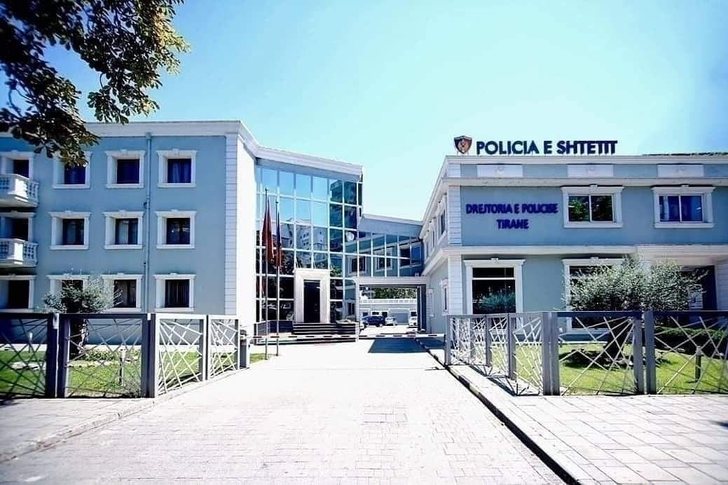
Tirana Police has announced security measures in the capit...

This Thursday we are introducing you to some of the main h...

Journalist Glidona Daci spoke this evening about the attac...
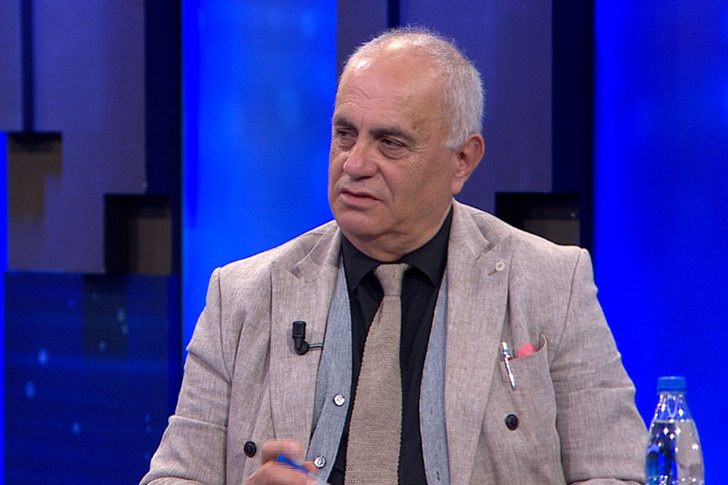
Academic Artan Fuga commented on the murder of judge Astri...
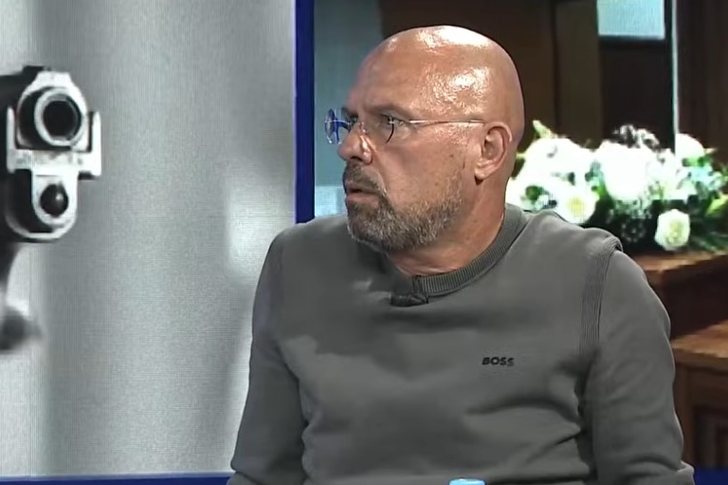
Lawyer Ylli Manjani spoke this evening about the murder of...
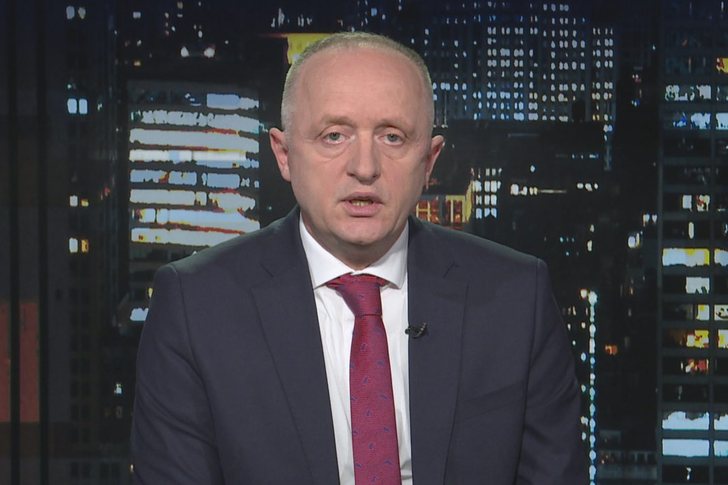
Analyst Lutfi Dervishi commented today on the situation of...
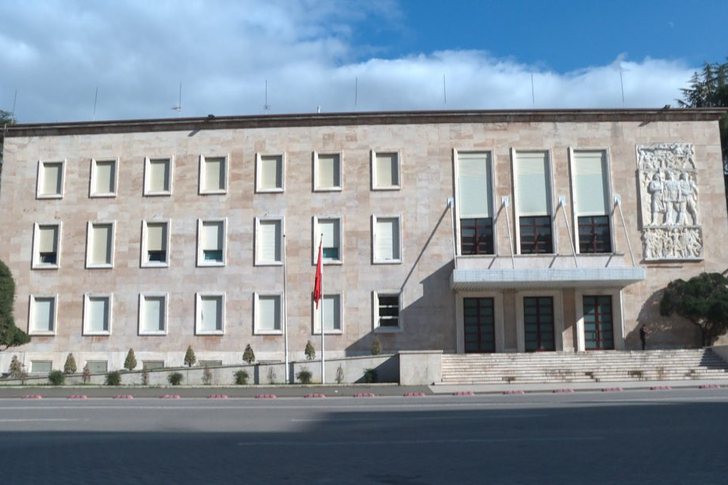
Today, at the meeting of the Council of Ministers, the dec...

A road accident occurred this evening near the Memoria...
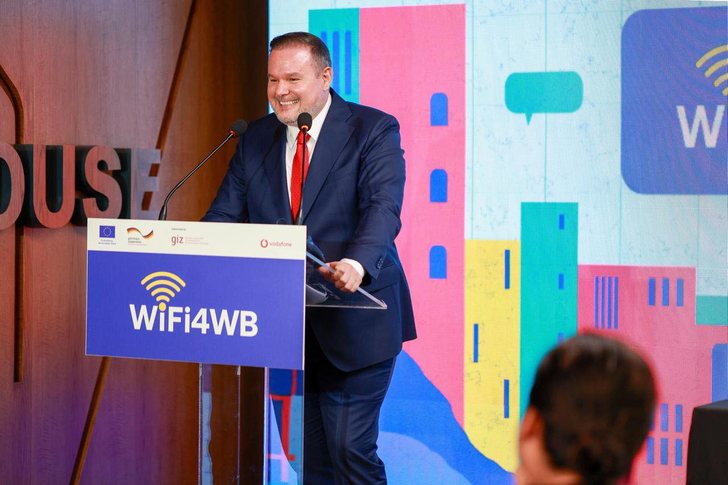
Minister of State for Local Government, Ervin Demo, ha...
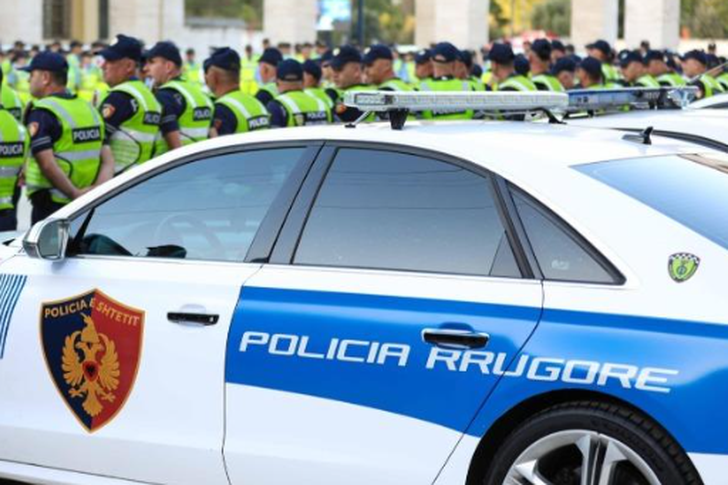
This Wednesday brought changes to the leadership of the Tr...
The Council of Ministers approved at today's meeting the d...
Arben Çuko has been relieved of his duties as prefect ...
Journalist Mentor Kikia spoke today about the candidates O...
Two citizens from North Macedonia have been prosecuted aft...

Irfan Hysenbelliu claims to be a big businessman, an hones...
The murder of officer Enea Mekolli in the line of duty has...

The next case broadcast on the show "Stop", this Thursday,...
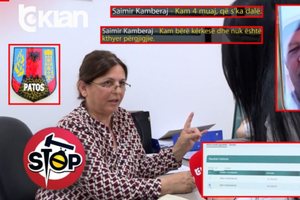
The case published this Thursday, June 4, on the show "Sto...

The Special Board of Appeal (KPA) decided this Monday ...

The KPA vetting decided this Thursday to dismiss the p...

Suela Salavaçi, a prosecutor in the Prosecutor's Offic...

The Special Board of Appeal reinstated the prosecutor ...

An accident was recorded a few minutes ago on the Pogradec...
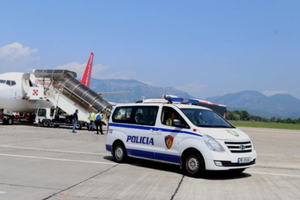
Following the cooperation of Interpol Tirana with Interpol...

An accident occurred this Saturday morning at Shkëmbi i Ka...

A TNT explosion occurred in Lezha in the early hours of th...
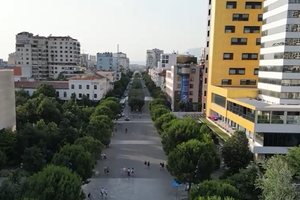
Albanians are officially the hardest working people in Eur...

This Saturday will be characterized by mostly clear weathe...
Today our country will be affected by stable weather condi...

For many children and teenagers, the long summer holidays ...
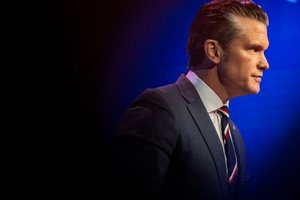
US Defense Secretary Pete Hegseth declared that Europe is ...
A federal judge in Rhode Island struck down a Trump admini...
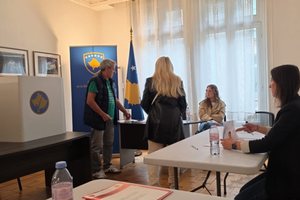
Thousands of Kosovo citizens living abroad are voting phys...
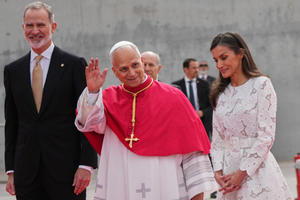
Pope Leo XIV arrived in Madrid this Saturday, where he beg...
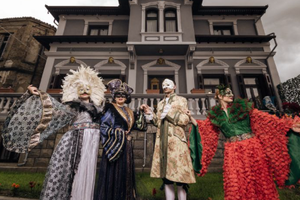
Korça is ready to open the summer season with one of the c...
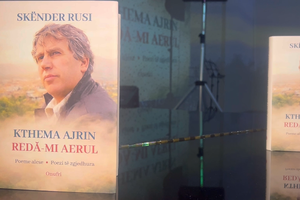
Two years after his passing, the renowned Korçë poet Skënd...

The Ethnographic Museum of Berat has opened its doors to v...
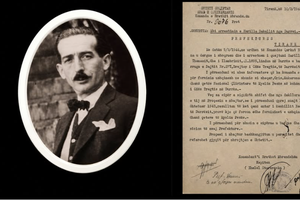
The story of Harilla Bakalli is one of the most chilling t...

The Transparency Board, in today's meeting, decided to red...

This Saturday, one US dollar is bought for 81.4 lek and so...

Despite years of efforts at regional cooperation and free ...

Albania is the country with the highest level of severe ma...