

Electoral Crimes/ BKH and Police Agents Conduct Checks in Shkodra
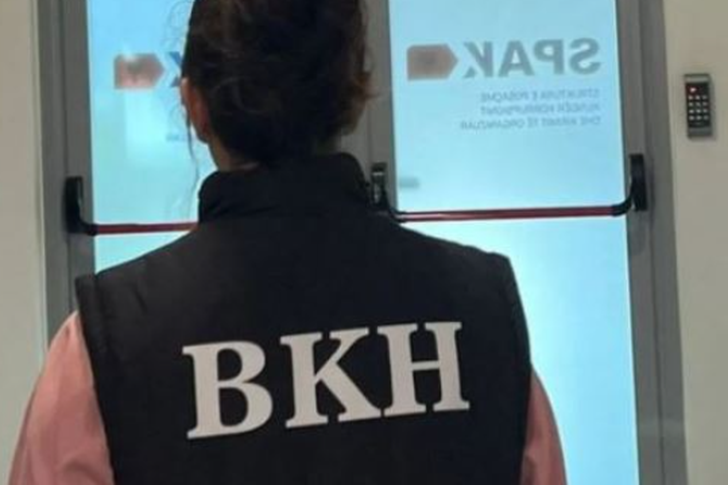
BKH agents and the Shkodra Police have conducted checks an...


by Besar Likmeta
On March 19, a page named “Team Edi Rama” appeared on Facebook, Instagram, and TikTok. The page, which describes itself as “a community dedicated to supporters and sympathizers of Prime Minister Edi Rama,” regularly publishes propaganda content in support of the Socialist Party and often denigrating the opposition led by Sali Berisha .
Although it has around 4,000 followers, “Team Edi Rama” videos often receive thousands of interactions – including likes, shares and comments, and hundreds of thousands of views on Facebook.
Its popularity is linked to two factors: sponsorships through Facebook and Instagram ads – some of them from the German-based company Acromax, and likes received from profiles originating from Vietnam – many of which appear anonymous or automated.
Page interaction data collected and analyzed by BIRN shows that within just one month, videos published by "Team Edi Rama" have been viewed over 1.6 million times.
This page is not an isolated case. Dozens of similar pages on Facebook and Instagram have engaged in recent weeks in what communications experts describe as “third-party” electoral campaigns – social profiles that are not formally affiliated with political parties, but that explicitly spread electoral messages during the campaign, which in many cases target political rivals with derogatory content.
Some of these pages distribute content created with Artificial Intelligence to amplify their messages – a tactic that is now being adopted not only by anonymous actors, but also by candidates for parliament.
“This is not a new phenomenon,” said Elvin Luku, Associate Professor in the Department of Journalism at the University of Tirana. “We have seen it in past elections – pages that are created shortly before the elections and start campaigns with sponsored posts or denigrating content.”
When asked by BIRN, Acromax director Aldor Nini said that the 'Team Edi Rama' page was created by the Socialist Party and he was not responsible for its content.
"I have been contracted as a management company for social media advertising campaigns," said Nini, adding that he had marketing contracts with the SP and the DP.
Nini stated that he had no information about interactions from Vietnam on the site, while adding that he was against the use of such methods, which are described by Meta as inauthentic, coordinated behavior.
The Socialist Party and the CEC did not respond to BIRN's requests for comment by the time of publication of this article.
Lack of transparency for 'political advertising'

On May 11, Albanians will head to the ballot boxes to elect the 140 deputies who will represent them in the Albanian Parliament for the next four years. For the first time, citizens living abroad will have the opportunity to vote by mail.
But as the country approaches election day, the activity of anonymous digital actors and content created with Artificial Intelligence is on the rise – raising concerns about the transparency, fairness and integrity of the electoral process in Albania.
Professor Elvin Luku warns that these practices bring several concerns.
“First, there is a lack of financial transparency,” he said. “We are essentially dealing with undeclared online electoral campaigns, financed with uncontrolled money.”
“Second, the use of disinformation and online smear campaigns requires stronger regulation, ideally in the Electoral Code and supported by agreements with platforms such as Facebook, Instagram and TikTok,” he added. “And third, there is a risk that coordinated online behavior, such as mass reporting by fake profiles, censors legitimate content and distorts public debate.”
During the first two weeks of the campaign for the parliamentary elections in Albania, political communication was largely dominated by the Facebook and Instagram platforms, where leaders and candidates relied extensively on images, videos, and sponsored political advertisements.
During this period, parliamentary candidates and political parties spent a total of $26,938 on political advertising on Facebook, Instagram, Audience Network and Messenger. An additional $904 was spent by the Central Election Commission (CEC) on information campaigns on the voting process.
Candidates for MPs published a total of 1,473 political advertisements, while political parties directly sponsored 89 advertisements.
About 28% of all ads were published by the Democratic Party-led coalition, the "Alliance for a Greater Albania", followed by the ruling Socialist Party with 17% and the Euro-Atlantic Coalition Party with 15%.
The parliamentary candidate with the highest recorded spending on social media advertising was Agron Shehaj, leader of the “Mundësia” party, who spent around $3,199 during the first two weeks of the campaign. He was followed by businessman Vullnet Sinaj, the Socialist Party candidate in the Vlora region, who spent $2,195 on political advertising.
Even though they did not advertise, the two main political leaders in the election, Edi Rama and Sali Berisha, recorded the highest engagement with followers on Facebook during the first half of the campaign .
On Facebook, Prime Minister Edi Rama, who is running for a fourth term, achieved higher levels of follower engagement and video views compared to Berisha, although his rival posted slightly more frequently.
The two together recorded more than 21 million views on Facebook alone, according to data collected by BIRN through the 'Post Scraper' application, continuing to be the candidates with the largest following on social networks during these elections.
Beyond the candidates, BIRN managed to identify 34 pages that campaigned as 'third parties' during the first two weeks of the campaign alone, and hundreds of ads without a disclaimer, sponsored by the profiles of the candidates for MPs on the 'Facebook' and 'Instagram' platforms. Pages like 'Team Edi Rama' also ran advertising campaigns without a disclaimer.
Aldor Nini of 'Acromax' told BIRN that the 'undisclosed' advertisements on the 'Team Edi Rama' page were made by its administrators and not by the company, while underlining that "the parties' spending was small compared to the marketing campaigns carried out by large companies."
John Fluharty, former representative of the International Republican Institute in Tirana, says that despite the cacophony of electoral posts on social media, the media and civil society must be vigilant to counter narratives that undermine trust in the electoral process.
“Once malicious actors spread inaccurate narratives, it is difficult to correct the truth by going after them,” he said, while emphasizing that the media and civil society must be prepared to respond to these narratives with speed and facts.
"Every hour that passes without a reaction from the good side is an additional hour in which false narratives gain ground," he added.
Unethical use of artificial intelligence
Although campaigning on social media is not regulated by the Electoral Code, before the start of the electoral race for the May 11 elections, the main political parties in the country signed a self-regulatory code for digital campaigning.
The parties committed to the ethical and transparent use of technology in the campaign, including Artificial Intelligence, and not to distribute misinformation content.
Data collected by BIRN shows that not all candidates, from both sides of the political spectrum – including Prime Minister Edi Rama – did not adhere to this pledge, regularly distributing AI-generated, often misinforming and misleading content on social media during the first two weeks of the campaign.
Experts are divided on how institutions should react.
According to Fluharty, the CEC has done well to convey the message to citizens that when it comes to the conduct of political actors in the campaign, laws and regulations have their limits.
“Ultimately, it is the political actors themselves who should feel compelled by the community to act rightly,” he said, adding that the debate should focus on concrete steps that social media platforms should take to curb harmful behavior.
Otherwise, Elvin Luku is of the opinion that the intervention of the Central Election Commission may be motivated and necessary when Artificial Intelligence is misused.
“I don't think AI should be prevented from being applied in electoral campaigns in cases where creative ideas and elements are presented,” said Luku.
"But in cases where there is denigration of the image, offensive language, hate speech, whether this is expressed with images produced by Artificial Intelligence, of course here the CEC should intervene and ban spots or materials produced with the help of AI," concluded Luku. /Reporter

BKH agents and the Shkodra Police have conducted checks an...
In implementation of order no. 104, dated 23.04.2025, "On ...
SPAK has published today the latest data regarding elector...
This Thursday, we are introducing you to some of the main ...
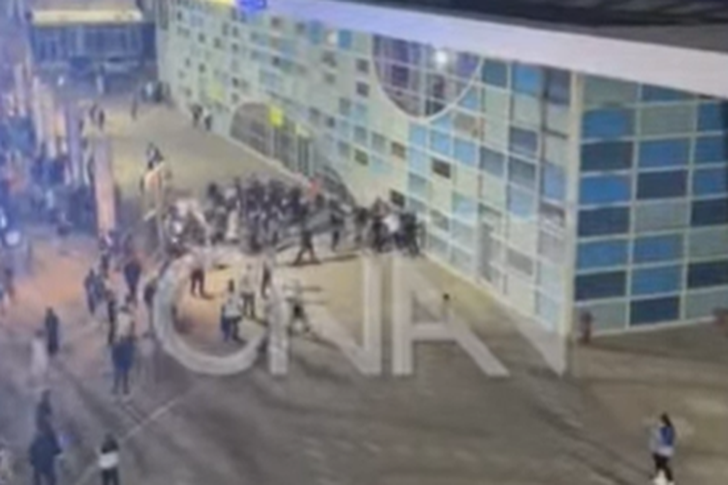
During the DP electoral meeting in Elbasan, a group of you...
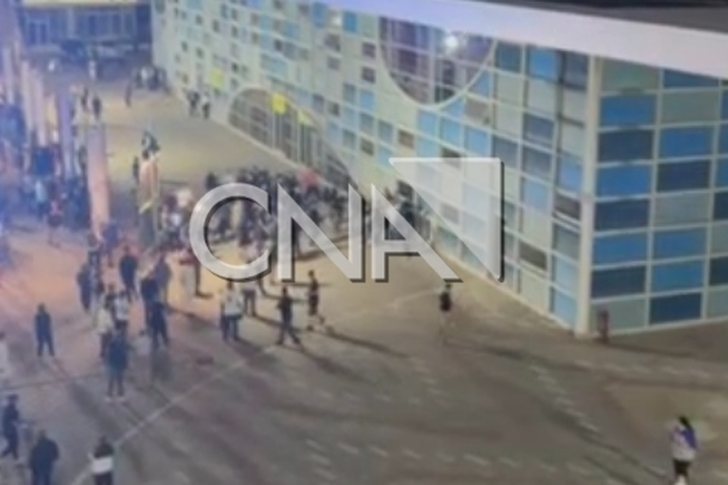
Një përplasje fizike mes një grupi njerëzish ka ndodhur në...

Vodafone Business and Fortinet announced a broad global pa...
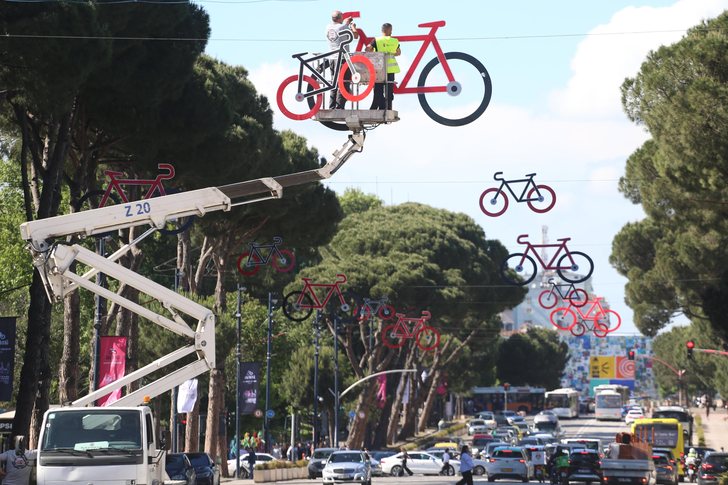
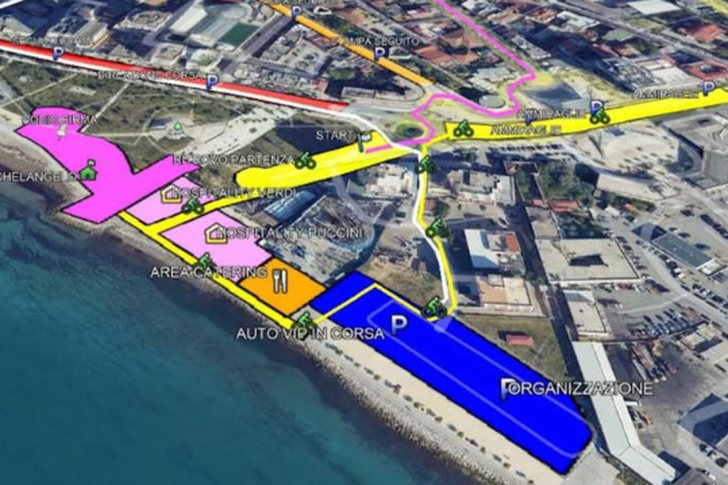
From May 9 to 11, 2025, the most prestigious cycling race ...

The GJKKO has decided today to accept a summary trial for ...
In implementation of order no. 104, dated 23.04.2025, "On ...

The sterilization hearing at the Special Court is postpone...
The General Prosecutor's Office has published data on crim...
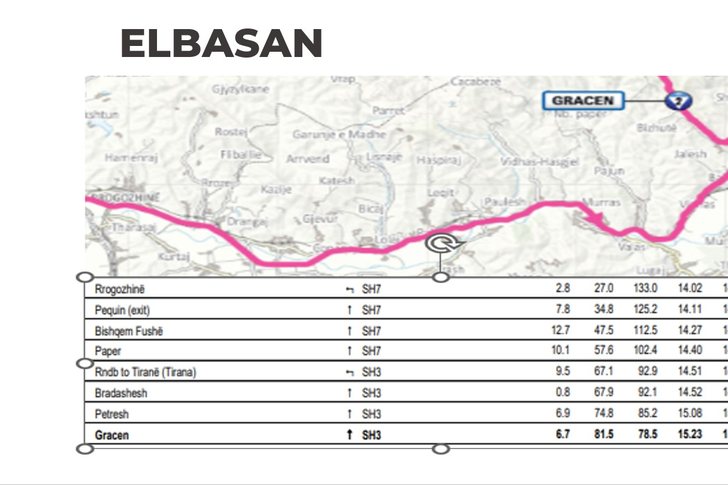
Elbasan Police have made public the roads that will be blo...
The hearing at the Criminal Court for Dritan Rexhepi and 4...
This Wednesday we are introducing you to some of the main ...
For the first time in history, one of the most important s...
The Special Prosecution Office has completed the investiga...
The Elbasan Prosecutor's Office has initiated criminal pro...
The First Instance Court of Korça has imposed the security...
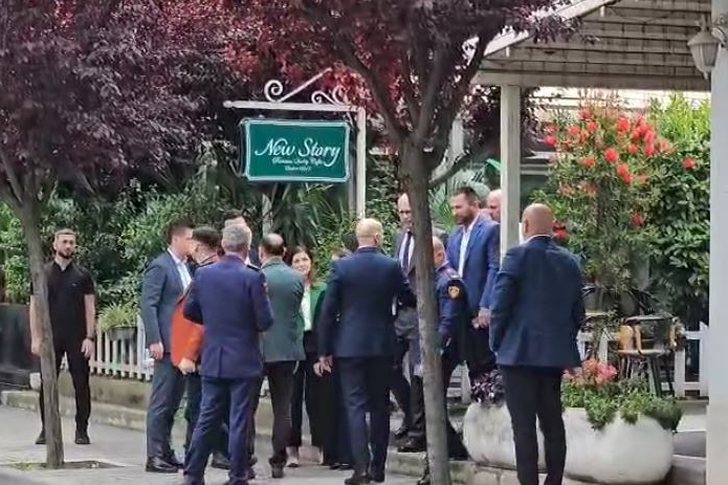
Prokuroria e Posaçme ka zhvilluar një takim me drejtuesit ...

CNA has launched another investigation that could lead to ...

Irfan Hysenbelliu is a businessman that we call "Irfan the...

In March 2026, CNA launched another investigation centered...
The arrested mayor of Tirana, Erion Veliaj, with 13 charge...

The Special Board of Appeal (KPA) decided this Monday ...

The KPA vetting decided this Thursday to dismiss the p...

Suela Salavaçi, a prosecutor in the Prosecutor's Offic...

The Special Board of Appeal reinstated the prosecutor ...
A road accident occurred this evening on Nikolla Zoraqi St...
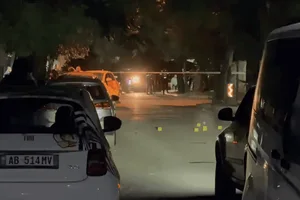
Three people were shot and wounded in Elbasan last night b...
A serious incident occurred this Tuesday in the Yrshek are...

An accident occurred this Tuesday on "Dituria" street in K...

All of Southern Europe will face changing weather conditio...

Albania was hit by temperatures significantly higher than ...

For the first time, Pogradec welcomed the Inter-Lake Chess...

Albania has achieved a record for the employment of foreig...

US Secretary of State Marco Rubio arrived in Manila on Jul...
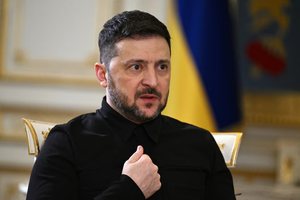
In the space of a few days, Ukrainian President Volodymyr ...

The spokesman for the Iranian Foreign Ministry warned Bulg...

Autoritetet italiane sekuestruan pako me afër 800 kilogram...

At a time when industrial products are increasingly taking...

Trust among people is not just a three-syllable word. It c...

Master of humor Todi Llupi has passed away at the age of 7...

The ninth edition of "MIK Festival" kicked off with one of...

Construction company licenses will have a validity period ...
The Centralized Purchasing Operator recently opened a tend...
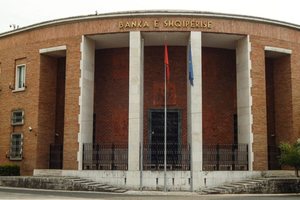
The new draft law "On the Bank of Albania" provides that t...
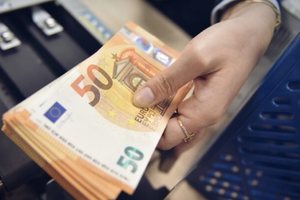
This Tuesday, one US dollar is bought for 81.2 lek and sol...