


Bridge at Arrat e Gurrës/ ARRSH: Declared impassable, will be dismantled
The situation on the national axis near the "Arrat e Gurrë...


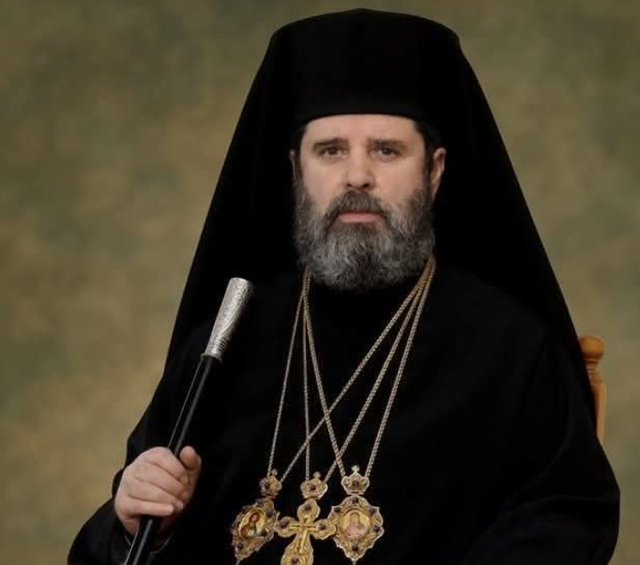
His Beatitude, Archbishop of Tirana, Durrës and All Albania, Joan, has conveyed a deep spiritual message on the occasion of the beginning of Great Lent, describing this period as "a journey towards God" and a call for awakening of conscience.
In his speech, the Archbishop emphasized that not only Lent, but the entire human life is a journey.
Archbishop Joan says that today's man risks losing "himself," seeking happiness in wealth, power, or fleeting pleasures, which cannot fill the spiritual void.
Referring to the parable of the prodigal son, he underlined that the beginning of every spiritual journey begins with "coming to one's senses," that is, with awareness of one's inner state and the ignition of the longing to return to the Father.
His Beatitude John pointed out that true happiness cannot be achieved without God and that attempts to build life outside of Him end in disappointment. He also mentioned the biblical figure of Solomon, who, despite his wealth and wisdom, called life “vanity of vanities.”
An important part of the message was devoted to the meaning of restrictions and prohibitions during Lent. According to him, the “don’ts” of Holy Scripture are not oppressive restrictions, but protection and therapy for a nature wounded by passions. Asceticism, he said, is the path to the true liberation of human freedom.
The Archbishop also warned of the danger of a formal faith, which is limited to rituals without inner experience. He emphasized that repentance is not simply a feeling of guilt, but the awakening of a longing for God and the beginning of a new path.
In conclusion, His Beatitude emphasized that the time for the journey is now and that Lent is a period of spiritual renewal and joy.
Message of His Beatitude, John, Archbishop of Tirana, Durrës and All Albania
We constantly say that Lent is a journey. Not only Lent, but our very life is a journey. All of us who have begun Lent have begun a journey. The period that changes colors has begun. God often tells us through the Gospel about the state we are in. Not only God, but also many philosophers and psychologists say that people have lost their “self,” and whoever loses themselves, has lost everything.
Everything else that a person tries to gain cannot fulfill what “self” can give him. One of the reasons a person thinks he has lost “self” is when he does not understand that he has lost “self.” You have heard it said in the parable of the “Prodigal Son” about the son who returned “came to his senses” (Luke 15:17). This means that he began to understand the situation in which he was.
No one can begin the journey of Lent unless they come to their senses. Today we have lost the purpose of life. The desire for pleasure, the thirst for power, and other such vain things cannot help a person not only to give meaning to life, but they will not make him happy either. Happiness and the purpose of life are connected to each other.
No one can achieve happiness if they do not have a purpose in life. People today have no reason to live and no reason for the purpose of life. This also happens to church people who think they believe, come to church constantly, but have lost the reason to live and the reason to die.
The very fact that we often have resentments, quarrels, gossip, and full of vanity within the church shows that these people are idle, shows that these people are not traveling. Because the person who travels does not deal with the things that happen at the station. He only has his mind on the journey. The very fact that we deal with many things that are around us means that the sense of travel has been lost. Throughout his history, man has striven for wealth. He has accumulated great wealth, and yet he has not become happy. The churchman says in his book that even knowledge is “vanity of vanities.”
No matter how much wealth you accumulate, it cannot serve you, it cannot bring you happiness. You know how rich Solomon was, and yet he was not happy, because he himself says, “Vanity of vanities” (Eccl. 1:2).
Truly, no one can achieve happiness unless his soul rests in God. Man is created in the image of the Trinity, which means that our soul will always be restless unless it rests in God. Saint Augustine says: “Lord, you have created me in your image, and we will never find rest until we rest in you.”
Rest in God cannot be understood without the journey towards Him. This is why we have called fasting a kind of journey. A journey from this physical state in which we are to another deep spiritual state. This journey requires sacrifices, it requires effort. Just as in Holy Scripture we learn that Israel returned to the promised land, passing through the desert, which symbolizes the liberation and spiritual state of man. Gaining back what you have lost is not so easy, therefore the journey is filled with difficulties and sacrifices, which require a kind of deprivation.
Infantile human reasoning and irresponsible evaluation, without knowing the real state of man and his needs, proposed various liberations. Just as the prodigal son proposed to himself, because his escape was also a movement for liberation. The story of the prodigal son is the story of all humanity. Each of us, like the prodigal son, is in a distant place. That is, he is outside his state, for which every other state is a distant place.
How many of us have a constant communion with God? How many of us live deeply spiritually with Him? - Very few. This is what philosophers have called the "tragic meaning of life," because we have lost so many things that we had.
Communion with God is not just for the saints. All people are created in the image of God, they are created to be in eternal communion with Him, but this purpose has been lost today. And the return to him comes from a desire, it comes from a longing that man will have for the other world. The son had a longing, so it says in the Bible “had a longing”.
How many of our souls and hearts are filled with longing for the next world? How many of us think about the next world, about its existence? Often this does not happen even among people within the church. And we are witnesses to the lives of people who think they believe, but do not have the desire to go to the Father. No one can go anywhere if they do not want to go.
Whether we view freedom as a burden or a gift, we cannot escape it. None of us can be freed from being free. This is one of the main foundations of Christian doctrine, that everyone is created free to accept or reject God. To begin or not to begin the journey. Many people have thought of finding happiness; many have tried to make man happy without God, but without God happiness cannot be found.
All attempts at happiness without God will end like the first attempt of Adam, who wanted to become God without God. In their attempt to find happiness, people not only lost the sense of the journey, but also lost the journey itself. Therefore, in this period, let each of us think about the journey. Whether we like it or not, one day we will be at the end of the journey. And whoever lives longer, let's say for 200 years, will finish this journey. It is good that that journey begins today.
Even a life outside the journey is no longer life. Man cannot make the journey if he does not really want to and does not decide for it. Man has different desires within him, this does not mean that they are all natural, but they come from a nature deformed by passion and this is the reason why God begins the history of man with a “don’t”. The first dialogue that God had with man was a prohibition: “You shall not eat of the tree” (Gen. 3:4).
The "not" was put in place to fulfill not only the existence of man, but also his freedom, because not every opposition to the "not" means that it is a sign of freedom. Man has a great spiritual dimension and he must fulfill this dimension. Lent is what helps him the most, to be liberated at least a little.
This may seem surprising, but asceticism is a movement for greater liberation from the false self, or as a famous Orthodox theologian says: “Liberation lies precisely in the liberation of freedom.” Our self is captured, we cannot yet know what our truly free state is, therefore the various deprivations we will have during Lent will make us free.
Restrictions should not be seen as prohibitions, nor should they be seen as deprivations that are imposed, but as protection. We often read, but do not understand, that most of the Decalogue (Ex.20:1-17) is in “thou shalt nots”: do not this, do not that, do not that….
The relationship that God has with us is the one that we have with our children. Often you have a child near you and you say to him: not here, not there. The same thing happens with us in relation to God, and these "don'ts" are not to limit us, but to protect us, because we have fallen from our first state and have lost the responsibility of freedom. We must love our true freedom, that freedom for which we must decide for ourselves about the journey. Today's man has lost this responsibility and will not even know what the purpose of life is.
Therefore, often religious teachings, sermons, parables of Christ, the sermons of Saint John were sermons and sayings that aroused spiritual crisis in people; a spiritual cry, precisely to understand what the purpose of human life is.
It is a great tragedy to see a man created in the image of God live in this way. What we must reflect on today is precisely this. We are beings who must go somewhere, because we have strayed from that somewhere. What the Church constantly emphasizes is precisely this: We live in a deformed state; our nature and our reasons are deformed, therefore deprivations are for our cure. No one can say about the medicines that a doctor can give that they do not work because they are bitter. Nor can we say about fasting and all the other ascetic restrictions that they do not work and hinder our freedom, on the contrary they strengthen our freedom. Who is the fool who says: let the child play with a pistol because in this way you deprive him of freedom? If we deeply understood these prohibitions, every day we would kiss those pages of the Decalogue that are filled with those “don’ts”.
The loss of the purpose of life, the loss of oneself has made man not understand. This is the reason why many people do not understand and go down the drain. It seems to us that we are different from others, because we come to church. I have not seen any difference between the one who believes and the one who does not believe, when both steal equally, both lie, then where does faith lie here? A faith that does not create in the soul a desire to travel, is not faith.
Therefore, this period of journey is for us to look deeply into every corner of our soul: Do we really believe or do we not believe? Is this faith for us a kind of decoration or a basic need of life? Is God for us security or the root of our soul? Can someone live outside of life? And we constantly say this in psalms and sermons: God is life and every life outside of God is crippled. And yet, is our life immersed and deeply rooted in God? These are the questions that man must ask during Great Lent. These make man begin his journey. This Lenten period is not separated from joys.
Even the troparion says: “Let us begin this period with joy.” Once Lent begins, joy will come by itself. Joy does not come to us because we do not begin. The journey towards God is filled with joy. There is no more beautiful life than to journey towards God and to live on this path. Nothing can compare to the great joy that returning to God, the journey towards Him, can give to the human soul. This is what gives the soul its true dimension, and therefore the period of Lent is a period of renewal, a period for establishing a spiritual state to realize the fulfillment of our existence (Mk.12:30). Do not neglect this.
The Church constantly gives chances. The entire liturgical life of the Church is a journey and helps us to realize the personal encounter - the journey towards God. No one can go to God unless they begin this journey, and the beginning of this journey is repentance. Each of us who has not repented and who does not continue to repent shows that he is not on the journey. Repentance is not simply realizing that you have sinned, this is a small part of repentance. Repentance means to ignite a longing for the house of God, the Father, and then the journey will begin. If we do not begin this, there is no repentance, no matter how much we lead a pseudo-spiritual life, as if we were great penitents, and such repentance is even demonic repentance.
Such people become the most incomprehensible people and think they are humble and religious. People have begun to become proud, just because they think they are humble. People who think they are on a journey and in reality they are not, are in a difficult position. This is why the wrath of God is greater with the Pharisees (see Mt.23). We would probably feel ashamed before a Pharisee. He fasted 2 times a week. Who among us does this today? He gave a tenth, who among us does this? He had not committed adultery and had not done many other things, yet God was against him. He lived in a pseudo-religion and often this catches people who are closer to religion more. Let each of us think deeply about how long he is continuing the journey or whether he needs this journey.
If we do not have a yearning in our soul to meet God, it means that the soul is dead. (See Ps. 42:1-2) And as long as we are in this life, we are in a position to make this journey. The time for the journey is now. Now is the time for us to travel. Everyone who repents benefits. Let us see Lent as a journey, not just Lent, but all of life, because in fact we are traveling even if some do not know it. Each of us is moving towards something. “If we do not become familiar with God here,” says St. John Goyard, “we will not be familiar with Him in the next life either. Friendship with God begins here. The journey and eternal communion with God begins here.”
Let us begin the journey towards God and let us think about the sacrifices of this journey. Let us think and understand as the Psalm says: “Taste and see” (Ps.34:8).
There is no greater joy than spiritual life. God will look at us from the first moment we make the move to return and from the first moment He will give us something; from the first moment we will feel a kind of presence in our soul, which will give us the joy and the strength to continue this journey.
Our life is a journey towards God, as we emphasized, and let us never forget this.
May He bless us to meet Him on Easter Day. Amen./ CNA

The situation on the national axis near the "Arrat e Gurrë...
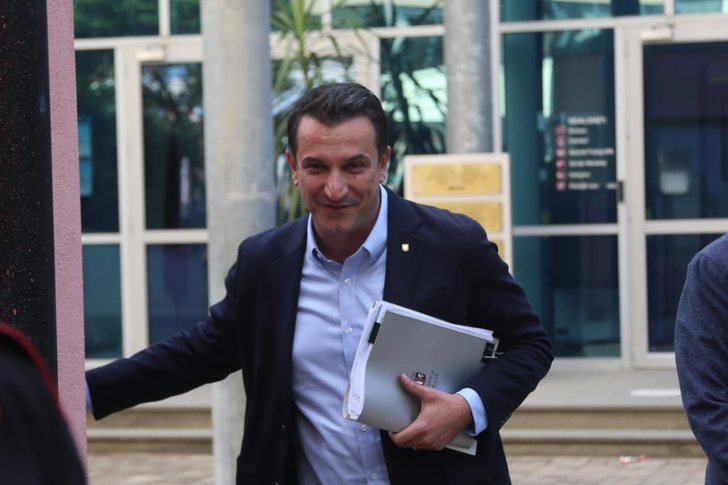
Tirana Mayor Erion Veliaj has demonstrated extreme ins...

Today marks 189 days since the public deception of Erion V...

Tirana Police have announced that criminal proceedings hav...
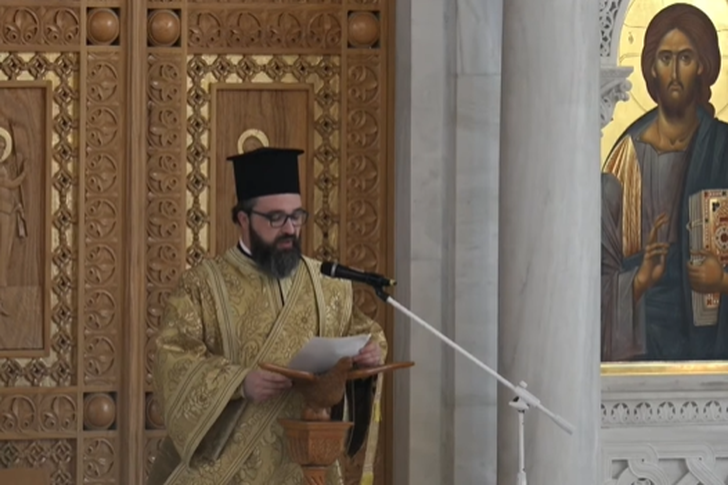
Orthodox believers have begun the journey of Great Lent, a...
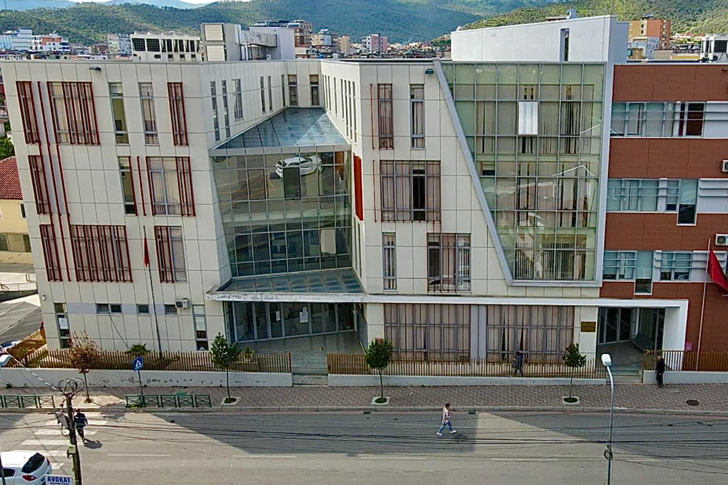
The Prosecutor's Office at the First Instance Court of Gen...

The Anti-Smuggling Directorate, in cooperation with the Ti...

Commissioner of the Pan-European Commission on Climate and...

SPAK has sent 21 defendants accused of various offenses, r...

Prime Minister Edi Rama stated in the "Flasim" podcast tha...

The Special Prosecution Office against Corruption and Orga...
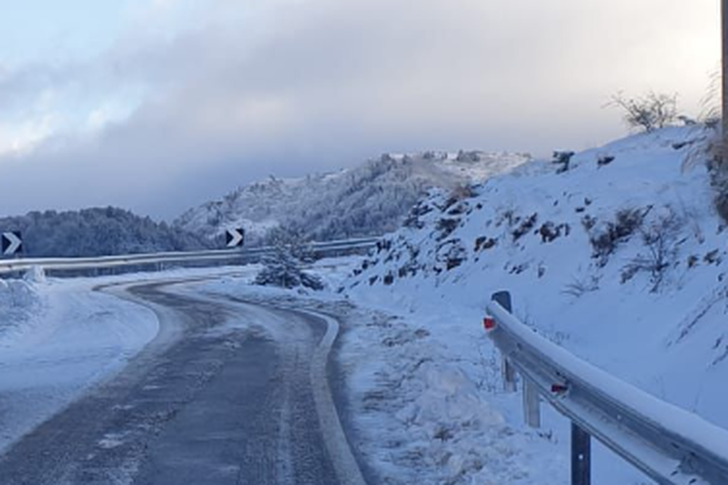
The situation in the territory of Korça Region appears cal...

The Qafë Thores road has been blocked again this Saturday,...

The Albanian Road Authority has issued several instruction...
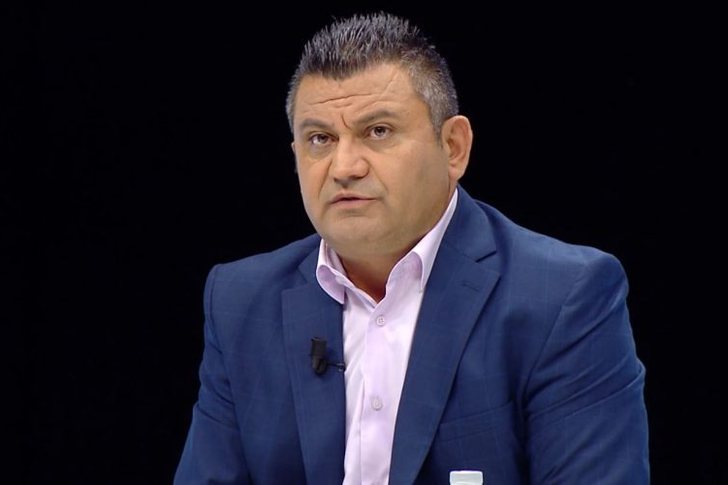
Journalist Mentor Kikia has shared a concern regarding the...

The road to numerous areas in the southeast of the country...

The kilometer-long queues created in the southeast area af...
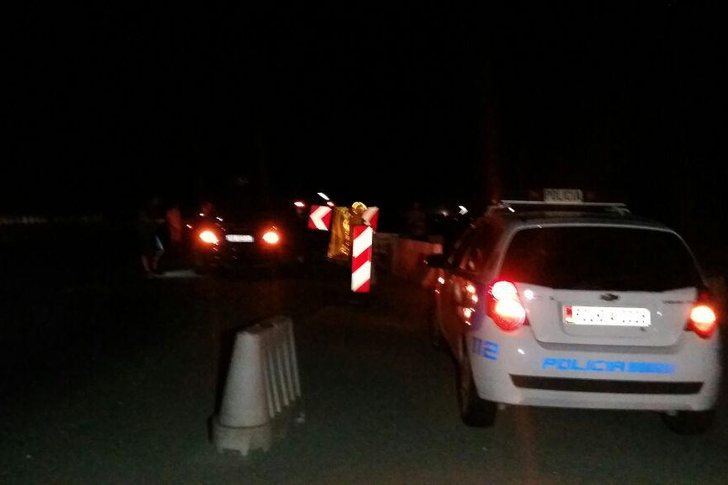
Following the announcement made by the Albanian Road Traff...

The queue continues on the Maliq-Moglica axis. For this re...

The blockage near Moglica by trailers has led to an isolat...

Dritan Prençi is the SPAK prosecutor who is sleeping on th...
The in-depth investigations that SPAK conducted into Ajola...
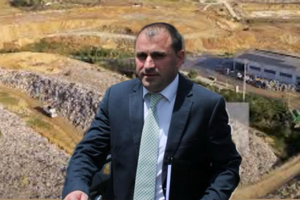
SPAK's standards, the way it investigates, how it secures ...

Irfan Hysenbelliu claims to be a big businessman, an hones...

The Special Board of Appeal (KPA) decided this Monday ...

The KPA vetting decided this Thursday to dismiss the p...

Suela Salavaçi, a prosecutor in the Prosecutor's Offic...

The Special Board of Appeal reinstated the prosecutor ...

The two German tourists who lost contact while exploring t...
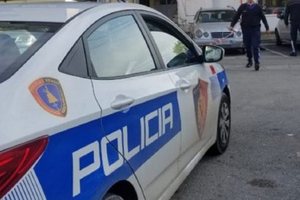
After finding 7446 narcotic plants in the village of Reç i...
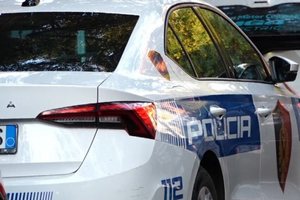
Following Operation "The Wanted", a 42-year-old man wanted...

As a result of intensive investigative and operational act...

The UN's World Meteorological Organization now warns that ...

Intense rainfall has caused numerous problems in the Radom...
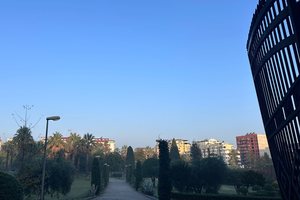
Today our country will be affected by relatively unstable ...
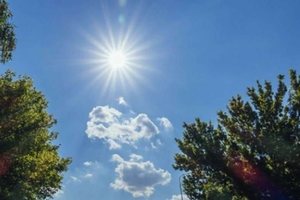
On Monday, our country will be affected by relatively stab...

Bulgaria's newly appointed Defense Minister, Dimitar Stoya...

NASA has named its crew for its next major mission to the ...

Five people have been arrested in Kosovo on suspicion of i...
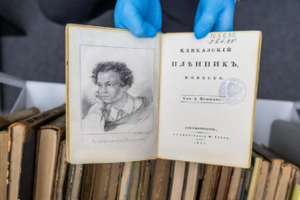
Six Georgian citizens appeared before a Paris court on Tue...

Korça has transformed this weekend into the capital of cel...
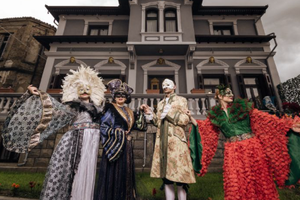
Korça is ready to open the summer season with one of the c...
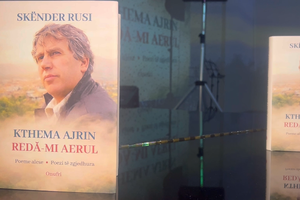
Two years after his passing, the renowned Korçë poet Skënd...
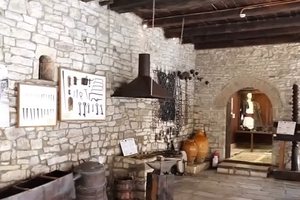
The Ethnographic Museum of Berat has opened its doors to v...

Predictions of a severe oil shortage this summer have not ...

Improving the performance of public parking lots in Vlora,...
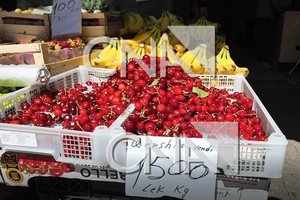
Inflation has increased in May, rising to 3% compared to 2...

Exchange rate, June 8, 2026 This Tuesday, one US dollar is...