


Names/Who are expected to take over the leadership of the police in Tirana, Durrës, Fier, Lezhë, Kukës and Vlora
The evaluation process for candidates who intend to take o...

The evaluation process for candidates who intend to take o...

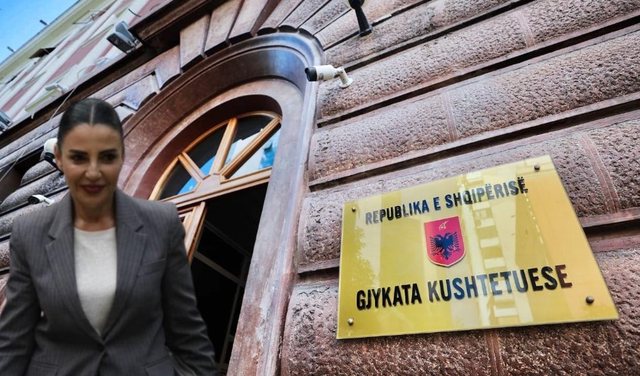
The Constitutional Court's decision to dismiss the government's appeal against the suspension from office of Deputy Prime Minister and Minister of Energy and Infrastructure, Belinda Balluku, has been made public.
As previously reported, the judges of the Constitutional Court voted 4 in favor and 4 against, thus not having the necessary quorum of votes for a decision in favor or against.
As a result, the government's request was rejected and the suspension from office, ordered by the Special Court, was reinstated. Meanwhile, the following decision also explains the reasoning for the position of each side of the judges regarding their decision-making.
The full decision of the Constitutional Court:
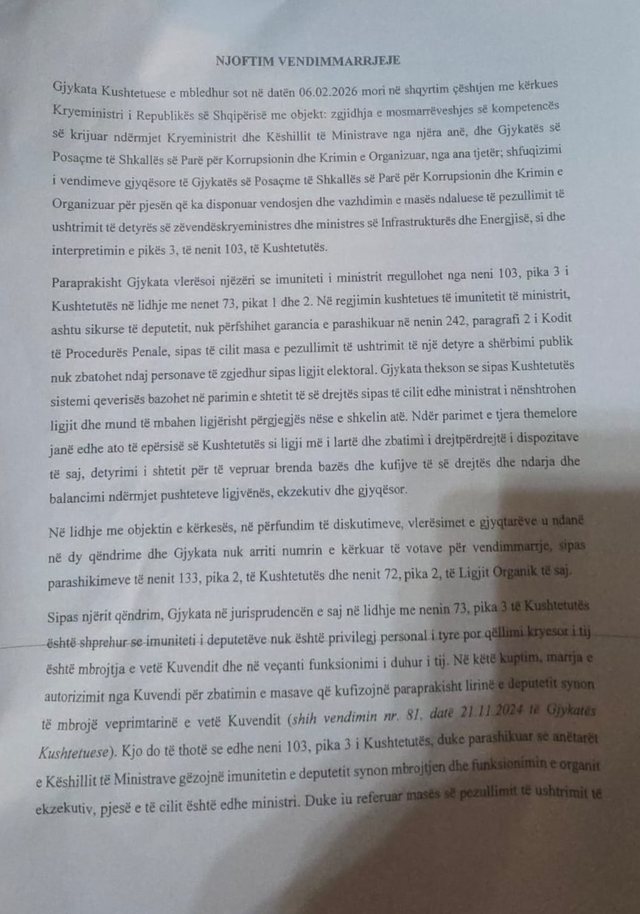
The Constitutional Court, convened today on 06.02.2026, considered the case filed by the Prime Minister of the Republic of Albania with the objective of: resolving the dispute over competence created between the Prime Minister and the Council of Ministers on the one hand, and the Special Court of First Instance for Corruption and Organized Crime, on the other hand; annulling the judicial decisions of the Special Court of First Instance for Corruption and Organized Crime for the part that ordered the imposition and continuation of the prohibitory measure of suspension of the exercise of the duties of the Deputy Prime Minister and Minister of Infrastructure and Energy, as well as the interpretation of point 3, Article 103, of the Constitution.
Previously, the Court unanimously held that the immunity of the minister is regulated by Article 103, paragraph 3 of the Constitution in conjunction with Articles 73, paragraphs 1 and 2. The constitutional regime of the immunity of the minister, as well as that of the deputy, does not include the guarantee provided for in Article 242, paragraph 2 of the Code of Criminal Procedure, according to which the measure of suspension of the exercise of a public office or service does not apply to persons elected under the electoral law. The Court emphasizes that according to the Constitution, the system of government is based on the principle of the rule of law, according to which even ministers are subject to the law and can be held legally responsible if they violate it. Other fundamental principles include those of the supremacy of the Constitution as the highest law and the direct application of its provisions, the obligation of the state to act within the basis and limits of the law, and the separation and balance between legislative, executive and judicial powers.
Regarding the subject matter of the request, at the end of the discussions, the judges' assessments were divided into two positions and the Court did not reach the required number of votes for decision-making, according to the provisions of Article 133, paragraph 2, of the Constitution and Article 72, paragraph 2, of its Organic Law.
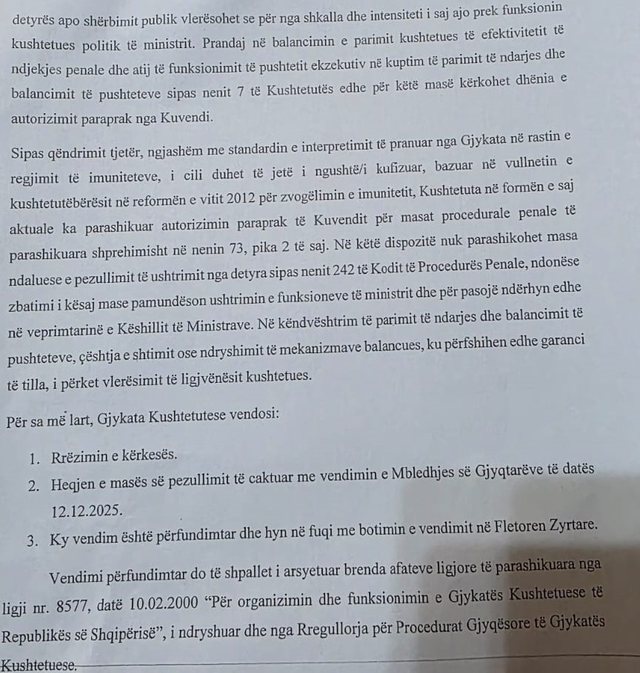
According to one position, the Court in its jurisprudence regarding Article 73, paragraph 3 of the Constitution has stated that the immunity of deputies is not their personal privilege but its main purpose is to protect the Assembly itself and in particular its proper functioning. In this sense, obtaining authorization from the Assembly to implement measures that limit in advance the freedom of the deputy aims to protect the activity of the Assembly itself (see decision no. 81, dated 21.11.2024 of the Constitutional Court). This means that even Article 103, paragraph 3 of the Constitution, by providing that members of the Council of Ministers enjoy the immunity of the deputy, aims at the protection and functioning of the executive body, of which the minister is also a part. Referring to the measure of suspension of the exercise of the duty or public service, it is assessed that by its extent and intensity it affects the constitutional political function of the minister. Therefore, in balancing the constitutional principle of the effectiveness of criminal prosecution and that of the functioning of the executive branch in terms of the principle of separation and balance of powers under Article 7 of the Constitution, prior authorization by the Assembly is required for this measure as well.
According to another position, similar to the standard of interpretation accepted by the Court in the case of the immunity regime, which should be narrow/limited, based on the will of the constitution-maker in the 2012 reform to reduce immunity, the Constitution in its current form has provided for the prior authorization of the Assembly for criminal procedural measures expressly provided for in Article 73, point 2 thereof. This provision does not provide for the prohibitive measure of suspension from office under Article 242 of the Code of Criminal Procedure, although the application of this measure prevents the exercise of the functions of the minister and consequently interferes with the activity of the Council of Ministers. From the point of view of the principle of separation and balance of powers, the issue of adding or changing balancing mechanisms, which also include such guarantees, is a matter for the assessment of the constitutional legislator.
Regarding the above, the Constitutional Court decided:
The collapse of the demand.
Lifting the suspension measure imposed by the decision of the Meeting of Judges dated 12.12.2025.
This decision is final and enters into force upon publication of the decision in the Official Gazette.
The final decision will be announced with reasons within the legal deadlines provided for by Law No. 8577, dated 10.02.2000 “On the Organization and Functioning of the Constitutional Court of the Republic of Albania”, as amended by the Court's Rules of Procedure. / CNA
Constitutional Court decision:

The Constitutional Court has rejected the government's app...
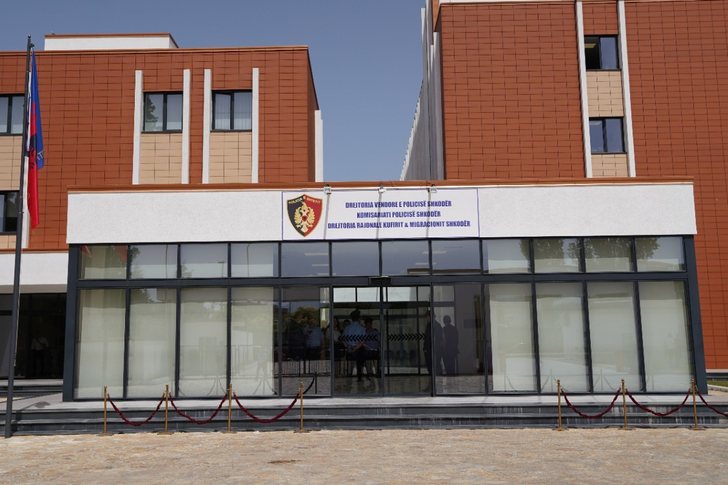
Një person ka tentuar të vjedhë pasditen e sotme një filia...
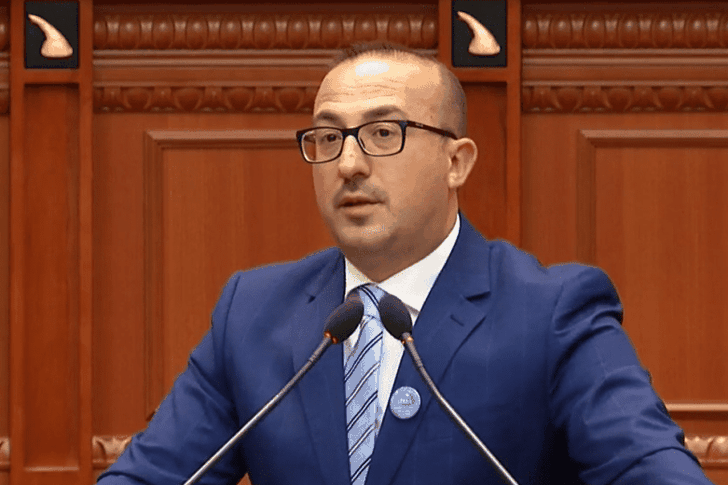
Democratic Party MP Saimir Korreshi has shown this evening...
The Durrës Court has verified the security measures for 20...
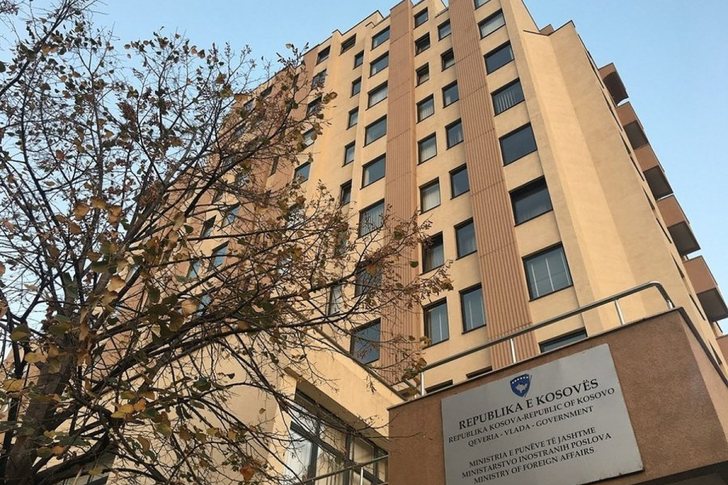
The Ministry of Foreign Affairs and Diaspora of Kosovo is ...
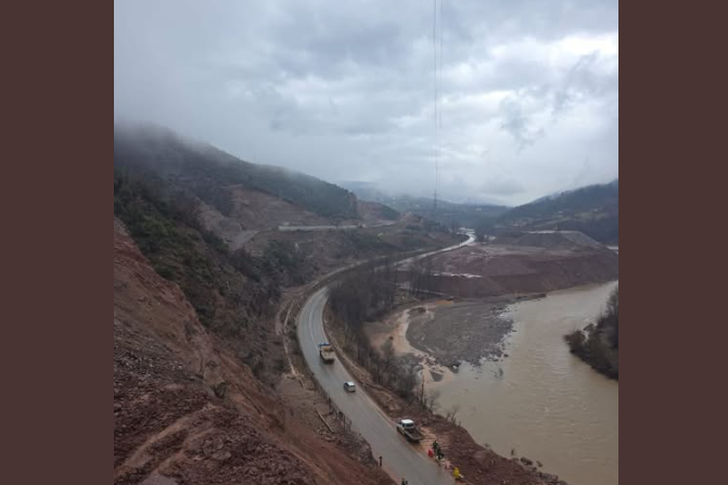
The Albanian Road Authority has announced that the works h...
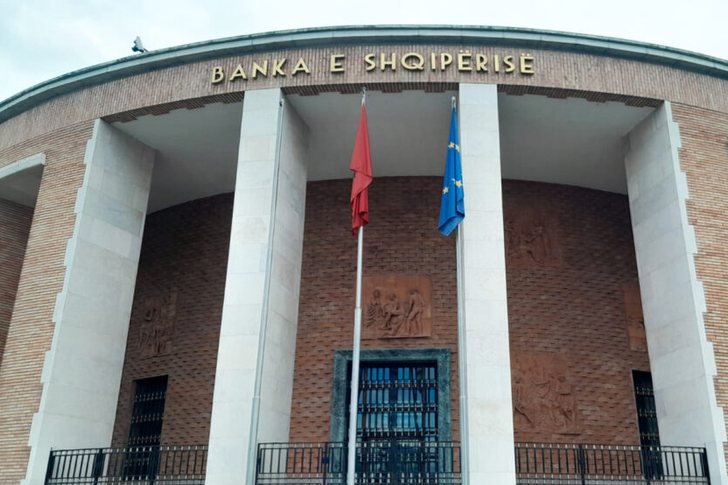
At the meeting held today, the Council of Ministers propos...
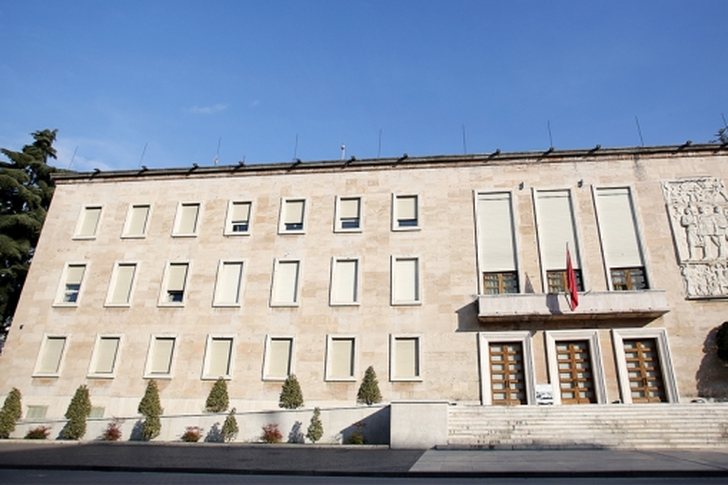
The draft law on granting amnesty was approved at today's...
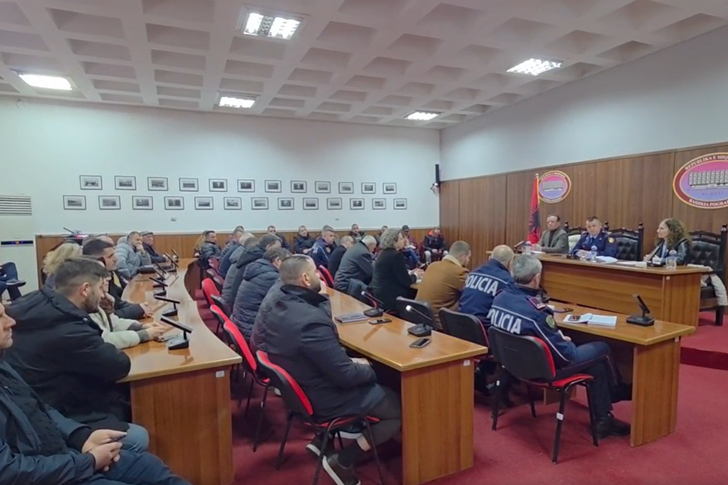
Thanks to the close cooperation between the State Police a...
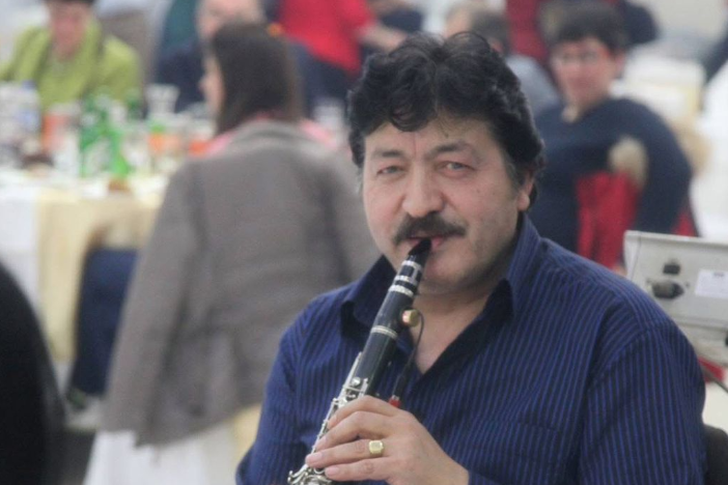
Today, the renowned clarinetist and singer from Korçë, Zha...
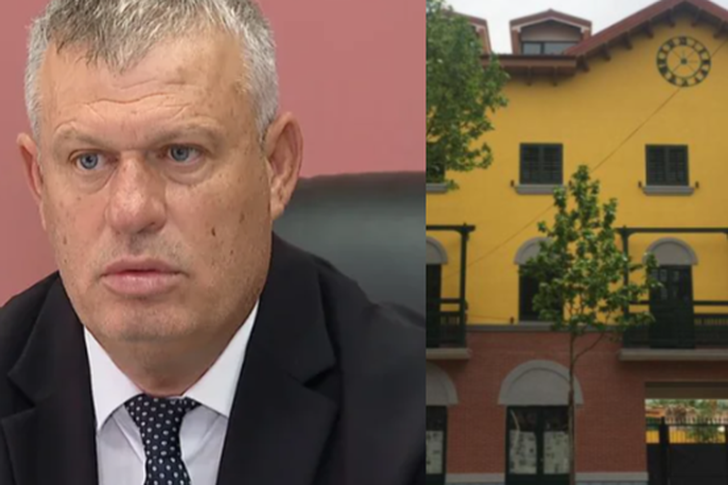
Shkëlqim Hajdari has been officially appointed as the new...
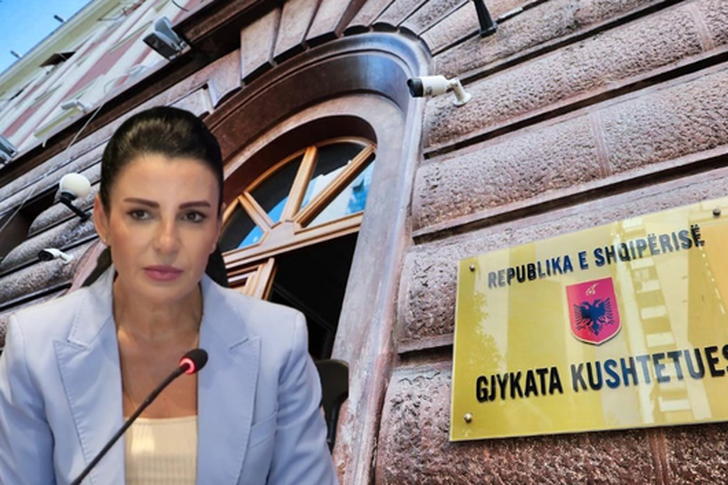
The Constitutional Court convened again today regarding th...
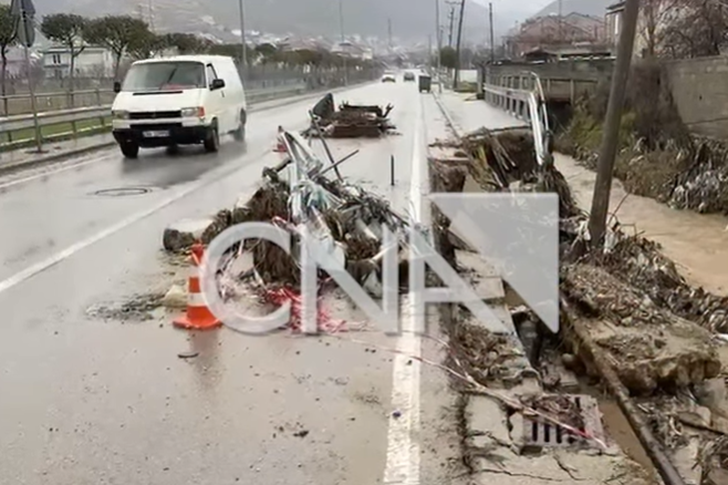
Erosion near the Verdova riverbed is deepening rapidly, cr...

The Qafë Thores area on the Bogë-Theth axis has been reope...
A delegation from the Pogradec municipality visited the ce...
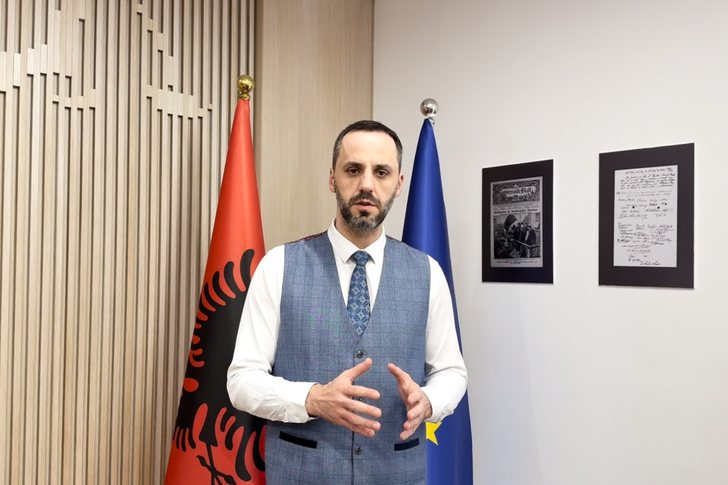
The Council of Ministers approved this Thursday the Crimin...

The road connecting the village of Senisht with the rest o...
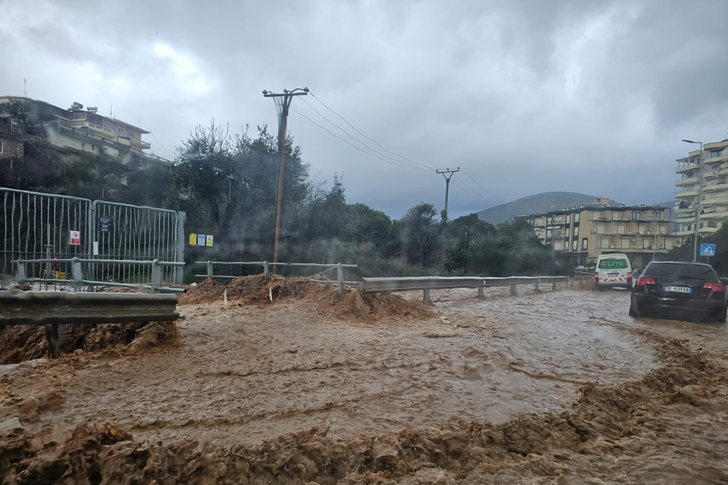
Heavy rainfall in the south of the country, especially in ...
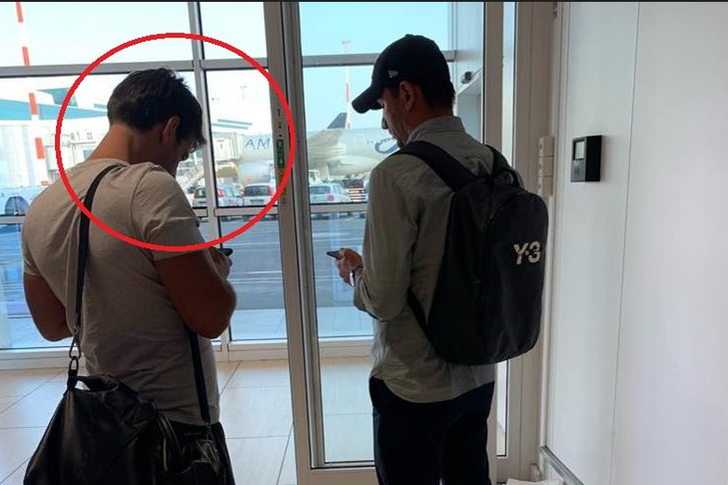
Elman Abule is a well-known character to the public, multi...

As expected, Ylli Manjani, Edi Rama's former minister, Fat...

Irfan Hysenbelliu claims to be a big businessman, an hones...

The murder of officer Enea Mekolli in the line of duty has...

The next case broadcast on the show "Stop", this Thursday,...
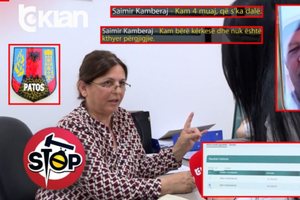
The case published this Thursday, June 4, on the show "Sto...

The Special Board of Appeal (KPA) decided this Monday ...

The KPA vetting decided this Thursday to dismiss the p...

Suela Salavaçi, a prosecutor in the Prosecutor's Offic...

The Special Board of Appeal reinstated the prosecutor ...

An accident occurred this Saturday morning at Shkëmbi i Ka...
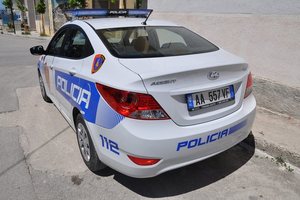
A TNT explosion occurred in Lezha in the early hours of th...

A massive brawl was recorded on Friday evening in Saranda,...

A 38-year-old man was arrested today near the Kamza turnof...
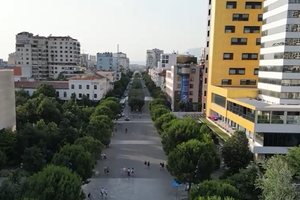
Albanians are officially the hardest working people in Eur...
This Saturday will be characterized by mostly clear weathe...
Today our country will be affected by stable weather condi...

For many children and teenagers, the long summer holidays ...

Millions of Europeans still apply for jobs without knowing...

Following the Covid-19 pandemic, the World Health Organiza...
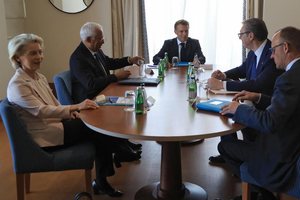
Leaders of the European Union and Western Balkan countries...
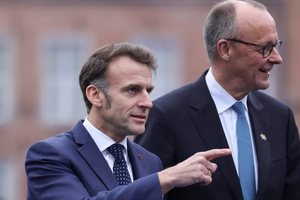
On the eve of the EU-Western Balkans summit, Germany and F...

Korça is ready to open the summer season with one of the c...
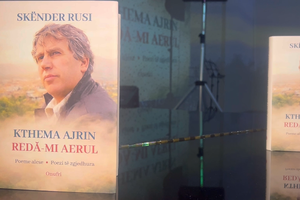
Two years after his passing, the renowned Korçë poet Skënd...
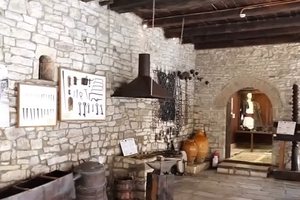
The Ethnographic Museum of Berat has opened its doors to v...
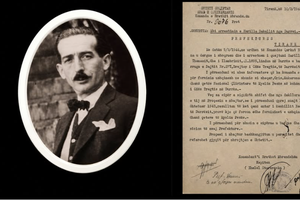
The story of Harilla Bakalli is one of the most chilling t...

This Saturday, one US dollar is bought for 81.4 lek and so...

Despite years of efforts at regional cooperation and free ...

Albania is the country with the highest level of severe ma...

This Friday, one US dollar is bought for 81.3 lek and sold...