


When the media makes a difference and when it just adds to the noise
In cases of corruption, the media can be an engine of pres...

In cases of corruption, the media can be an engine of pres...

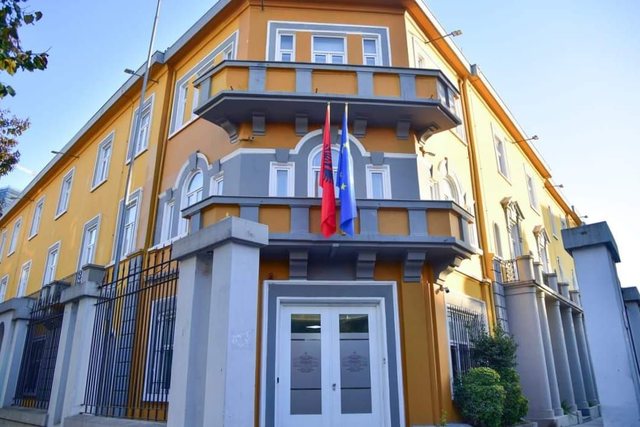
The temporary appointment of the vice-rector to the position of rector of the "Luigj Gurakuqi" University of Shkodra cannot serve the Ministry of Education to cover the essence of the problems that former rector Tonin Gjuraj presented to the minister along with his resignation letter.
Mr. Gjuraj has raised serious issues related to university autonomy, academic freedom, the functioning of governing bodies, and the way the state reacts when these principles are called into question.
In his resignation letter, he claims that the decision-making of the Board of Directors has violated the authority of academic bodies; he raises concerns about the appointment of the administrator, staff recruitment procedures, and the administration of university funds, arguing that the balance between academic authority and institutional administration has been violated.
I do not intend to judge whether or not the former rector is right in everything he presents. Nor is this the essence of the problem I want to raise.
The point lies elsewhere: such a resignation should have immediately prompted the interest and reaction of the responsible state institutions, to understand whether we are dealing with an ordinary conflict between the rector and the administrator or with a deeper problem of university governance.
The Minister of Education should not have treated this issue as a tiny "dot" of the problems she is dealing with. On the contrary, she is the first authority who should seek to know whether the former rector's claims are true or not. Not to take sides in the conflict, but to understand whether problems have been created at the University of Shkodra that endanger the normal functioning of the university governance mechanisms.
The very fact that the rector refers in his letter to a verification report from the Ministry of Education, according to which irregularities were found in administrative recruitment procedures, makes the reaction of the Minister even more necessary.
Meanwhile, if the Prime Minister felt the weight of responsibility that his position carries, he should make the resignation of the rector of the University of Shkodra the subject of a separate discussion in the government.
Higher education is part of public policy and such a conflict in a public university cannot be treated as an ordinary administrative issue. University autonomy is not a technical problem of the University of Shkodra; it is one of the pillars on which the higher education system itself is based.
It is no coincidence that for years the law on higher education has been under discussion and there has been talk of the need for a new law.
The case of the University of Shkodra vindicates the law's critics and shows that the debate is not only legal, but is related to the very balance of power within universities and the boundaries between academic authority and administrative control.
As for His Excellency, Mr. President of the Republic, I don't have much to say.
Despite the huge amount of work he's dealing with, and even though he's very busy these days as he's studying the civic protest in an attempt to understand why no meme has been written about it, as if it doesn't exist, he could find time and reason to be interested.
Not to intervene in an administrative conflict, but to understand whether the resignation of a rector decreed by him represents an individual act or the symptom of a broader institutional problem.
In such cases, interest is not interference; it is the exercise of public responsibility. Even more so when it comes to an authority that exercises its mandate based on a decree of the President of the Republic.
But no one reacted.
Today, the University of Shkodra has an acting rector, until new elections are held. She will have to make a choice: either fully exercise the authority of the rector and show whether or not her predecessor was right about the problems he raised, or accept the authority of another structure, such as the Board of Administration.
And here the "handover" of power begins.
The Law on Higher Education, which I have opposed since it was adopted, as a member of Parliament, has built a system where the rector, elected by the university community, and the Board of Administration must coexist in a relationship of balance and mutual control. But when the highest academic authority of the university itself declares that this balance has been broken, the silence of the institutions cannot be presented as impartiality.
Silence is a choice.
Professor Gjuraj's resignation may be the act of an individual.
But the problems he raises affect the entire higher education system. And when no one feels the need to listen to or verify them, the problem is no longer just the resignation of a rector.
The problem is the "handing over" of power to its chosen ones; a practice that over time has become normal.
The recent cases uncovered by SPAK, where the "handover" goes to traffickers and criminals who launder drug money and legalize it in towers, businesses, permits and appointments secured through political clientelism, or to others whom the community knows and points the finger at as the embodiment of the ugliness and greed of power, prove that this is no coincidence.
It is a way of governing.
And precisely for this reason, the resignation of a rector should be seen as an alarm signal about the way power is exercised in Albania./ CNA

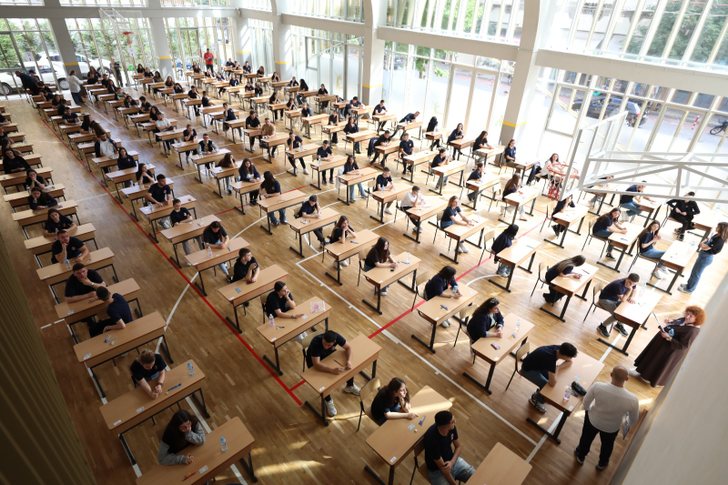
Every year, thousands of high school graduates in Albania ...
I still can't believe that Agron Çobani is no more. He had...

Political scandals in Albania do not only show the behavio...
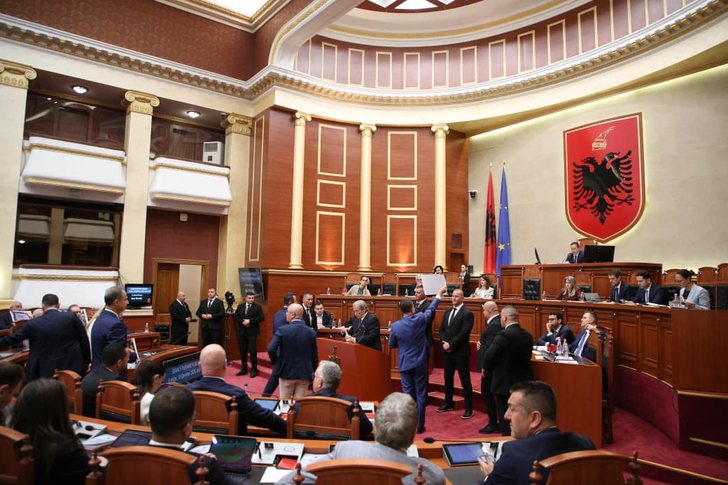
When a scandal breaks out in Tirana, the noise is loud, th...
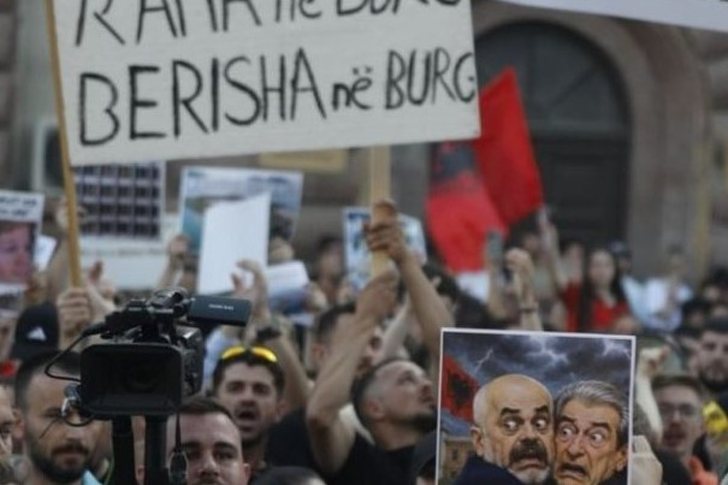
“Rama in prison, Berisha in prison, everyone in prison!” i...

There's a reason why healthy societies call madness what d...
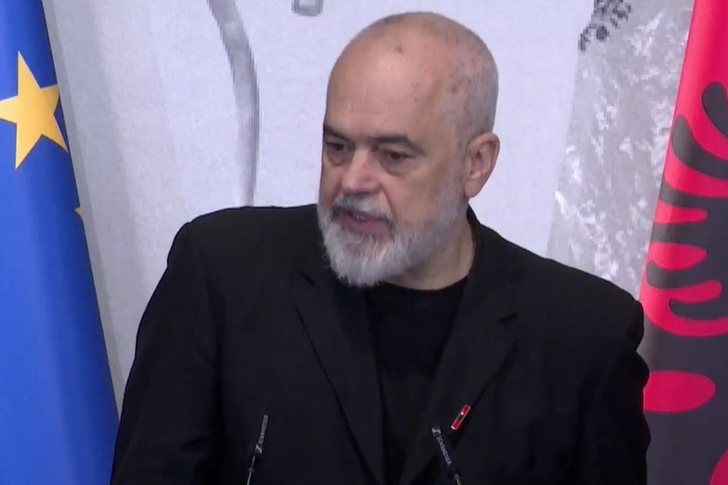
In Berlin, once a symbol of a divided Germany and Europe, Al...
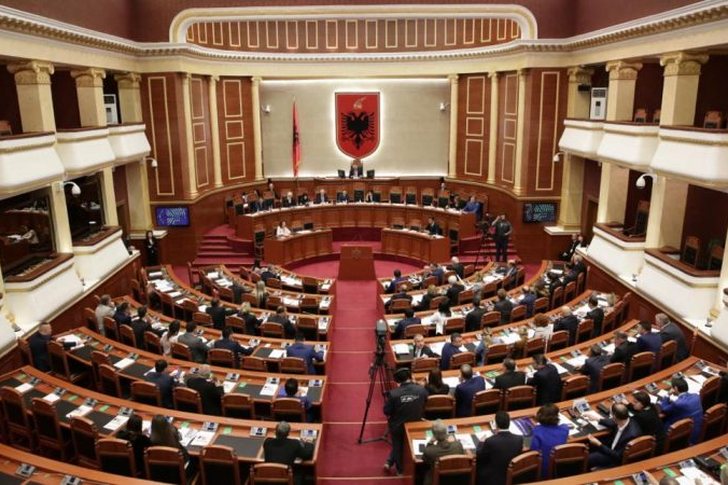
Sara Mila expressed this today during the development of t...

Albanian politics today does not take place only in Parlia...
Asnjë analizë politike shqiptare sot nuk ka kuptim pa roli...
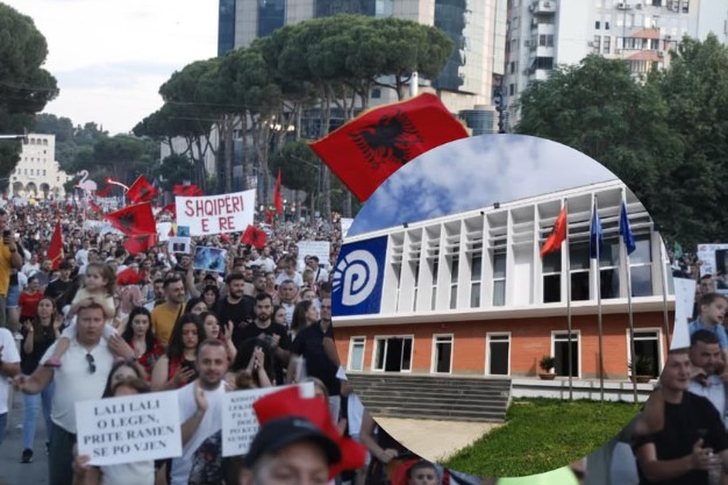
When it comes to Albanian political analysis today, the qu...
If the majority has the problem of moral and political exh...
The opposition, which has purchased a visa for "health rea...
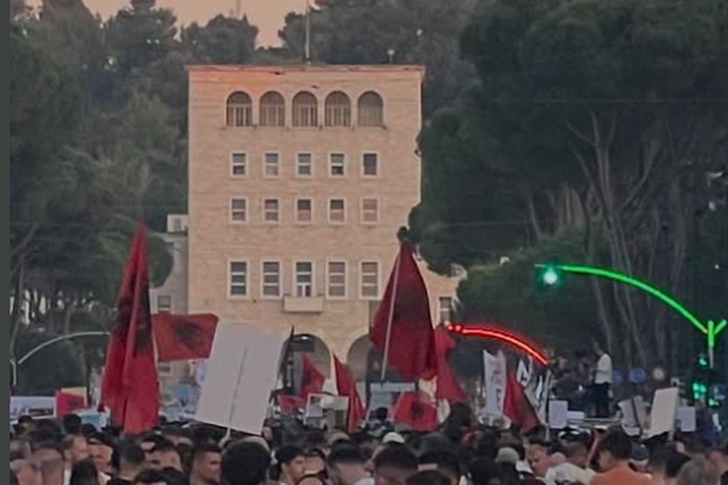
After more than two weeks of non-stop protest, the questio...
Somewhere in the mid-1990s, in an Albania that was still l...
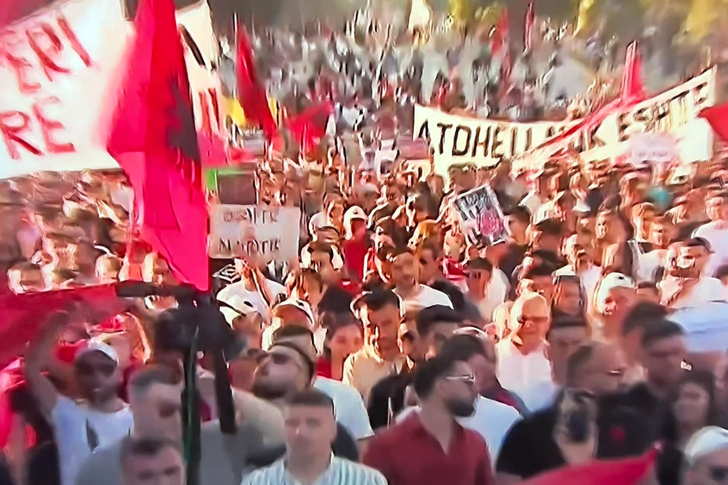
Since the protests began, this place is no longer what it ...
After 35 years, the national cry "Down with Communism!" ri...
Të gjithë kanë të drejtën e pamohueshme të protestës. Por,...
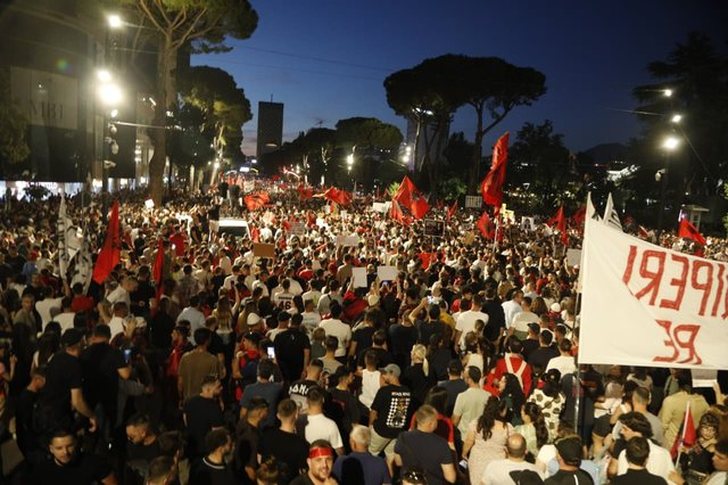
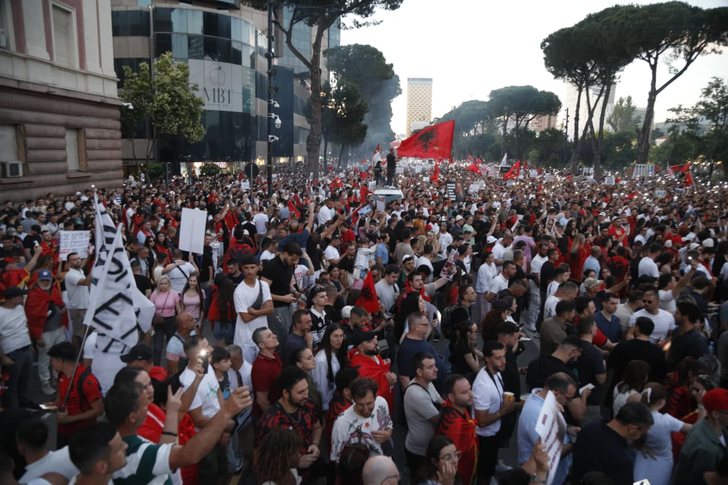
Albanian citizens who have taken to the boulevards these d...
Street revolt and political transformation 1. The cries ...
The leader of the Democratic Party, Sali Berisha, denounce...
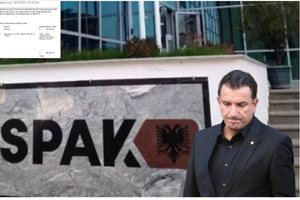
In January 2026, CNA published a series of documents and f...
Erion Isufi is the man known in the media as Lulzim Basha'...
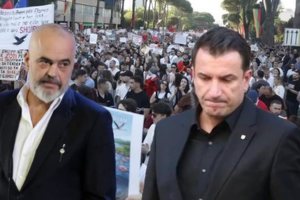
There have been 12 days of protests in the capital, which ...

The Special Board of Appeal (KPA) decided this Monday ...

The KPA vetting decided this Thursday to dismiss the p...

Suela Salavaçi, a prosecutor in the Prosecutor's Offic...

The Special Board of Appeal reinstated the prosecutor ...
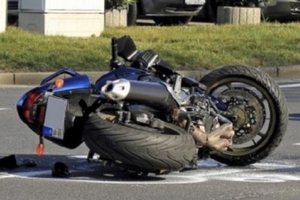
A fatal accident has been recorded on the Fier-Lushnjë hig...
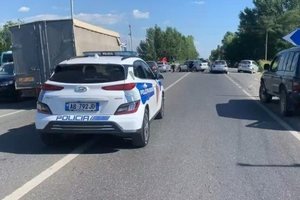
A road accident occurred today on the Lezhë-Milot highway,...
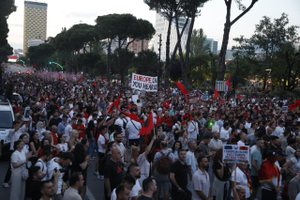
Tirana police have criminally prosecuted 27 people in conn...
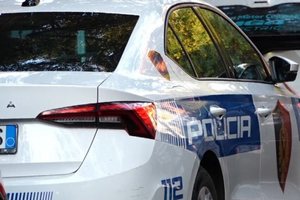
A stabbing occurred today in the "Ali Demi" area of Tira...
On Friday, our country will be affected by stable weather ...
On Thursday, our country will be affected by stable weathe...
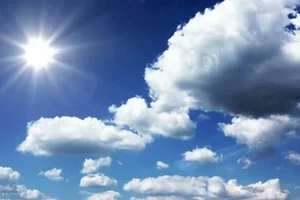
On Wednesday, our country will be affected by relatively s...
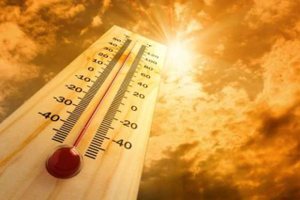
Meteorologist Tanja Porja shared some predictions today re...

The Norwegian government has decided to significantly limi...
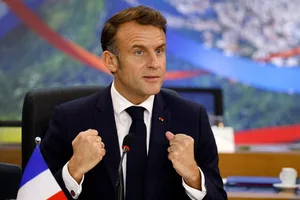
French President Emmanuel Macron said that European countr...
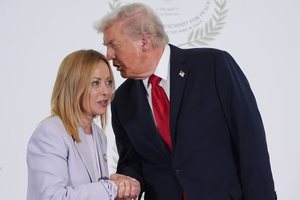
A strong diplomatic clash has erupted between the Presiden...

Israel and Hezbollah reached a ceasefire agreement on Frid...
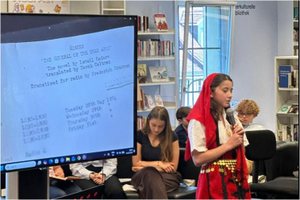
The Albanian Embassy in Switzerland has organized an eveni...
This Wednesday, the prominent actor of Albanian cinema, Gj...
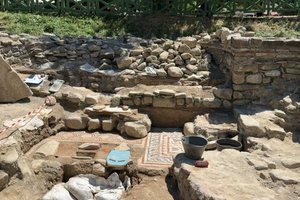
Several archaeological excavations conducted during this s...
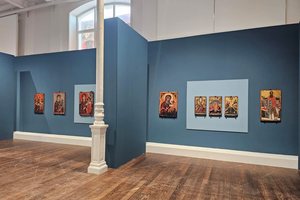
At the Museum of Fine Arts in Chambéry, France, an exhibit...
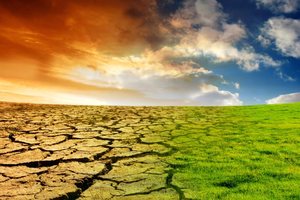
Urban development, transport, energy, forestry and agricul...
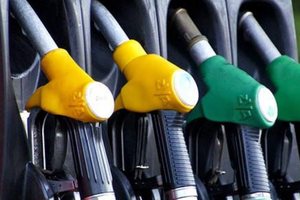
The Minister of Economy and Innovation, Delina Ibrahimaj, ...
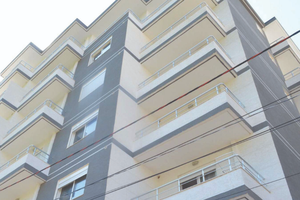
The draft law proposed by the Ministry of Finance for a ne...
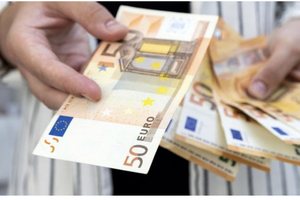
It is not only Albanian consumers who pay more than the Eu...