


Protester clashes/ Rama: Group of two-legged jackals, fascist spirit of online bullies
Prime Minister Edi Rama has reacted after the statement of...

Prime Minister Edi Rama has reacted after the statement of...

Somewhere in the mid-1990s, in an Albania that was still learning to walk in its newly acquired freedom, I was told an incident that today sounds like a complete metaphor for that time, and, unfortunately, not only for that time.
The writer Besnik Mustafaj, who at that time was the Albanian ambassador to France, told me. He had received and accompanied a well-known French journalist in Tirana, whom he had taken to a dinner with the then president, Sali Berisha. It was one of those dinners where politics is dressed in solemnity and words are weighed like rare coins. The conversation had been long, perhaps even heavy, with the big topics of transition, with the expectations of a country that had just emerged from isolation and that still did not know what it would do with its freedom.
When everything was over, the two men, Besnik and the French journalist, left the dinner and wanted to walk towards the best hotel of the time, in the heart of Tirana. It was late at night. The wide boulevard was almost empty. A strange silence had fallen over the city, a silence that was not peace, but weariness. The silence of a people who had hoped for a lot and did not yet know how long they would have to wait.
As they walked and talked about their impressions of dinner, they suddenly heard a voice. A woman, a street sweeper, bent over her broom, was talking to herself loudly. Her voice was tired, but strong enough to break the silence of the night. Among the muffled words, a sentence broke out like a cry:
"If I were in Sali Berisha's place..."
The French journalist stopped in his tracks. He didn't understand the language, but he had clearly caught the president's name. His curiosity this time wasn't diplomatic, it was human. He asked Besnik to translate for him. The ambassador tried to put it lightly: "Ordinary things... nothing important." But the journalist didn't move from his seat. Something in the woman's tone had touched him. "No... I want to know."
And then, with a simple but sufficient translation, Besnik explained. The journalist was speechless for a few moments. Then, in a voice that carried more reflection than surprise, he said: “Besnik, I am among the most well-known journalists in France. I have had a long career and I can say that the whole country knows me. But never, not once, has it occurred to me to become president of France. When a street cleaner dreams of becoming president, that means the situation here is really dire.”
And perhaps, without knowing Albania deeply, he had touched on a truth of it more accurately than many local analysts. Because it was not just a sentence. It was not ambition. It was a silent call for dignity. In consolidated countries, the dream of power is a luxury, almost a whim. In wounded countries, it takes the form of salvation. That woman, in truth, did not want power; she only wanted to get out of helplessness. Perhaps that night on the boulevard told the French journalist more about Albania than the solemn dinner with the president itself.
I have often remembered that episode. Not as a story far away in time, but as a mirror that continues to follow me at almost every table, in every conversation, in every ordinary human encounter. Because that sentence did not remain on the empty boulevard of Tirana in the '90s. It survived. I have heard it in different forms, at different times, from different people, until it became a kind of national refrain:
"If I were in Edi Rama's place... If he were to ask me... If I were in the Prime Minister's place..."
And it's not just Tirana's business. I've encountered it in remote villages too, where world politics is discussed with the same certainty as tomorrow's weather, where names like Trump, Clinton or Putin are mentioned with a strange familiarity, as if they were neighborhood neighbors we've known since the cradle. There, over a glass of brandy and a cigarette, the world map is redrawn and its power redistributed, without anyone getting up from their stool.
But what surprises me most is not this. You would expect such certainty to belong to simple tables, where life is harsh and dreams remain the only escape. The wonder is that the same language, the same boundless self-confidence, also appears at tables with educated people, with intellectuals, with those who, in principle, should weigh their words. Where one expects reflection, one hears proclamations. Where one expects questions, one hears firm decisions.
“I knew Sali Berisha… I even told him… but he didn’t listen to me. That’s why things went badly,” says one, with the certainty of someone who holds the key to history in his pocket. Another, with a slight triumph hidden under modesty, adds: “I gave Edi Rama three orders… but he didn’t carry them out.” As if the fate of a government depended on three unspoken sentences at the right moment.
And at that moment, the conversation is no longer a conversation. It is a stage. A small theater, where everyone plays the role of the invisible advisor to power, an advisor who, surprisingly, is never wrong, because his advice was never implemented and, therefore, never put to the test. All the great failures of the nation are explained by a single sentence, which has the beauty of simplicity and the comfort of innocence:
"If only they had listened to me..."
And what sticks in your mind is neither the content of that “advice,” nor its truth. But the manner. A strange ease in stepping into the shoes of another. An immediate willingness to take the decision-maker’s chair. A calm conviction that the solutions are simple, that the interlocutor had only been “there,” and the world would be fixed in an afternoon.
And it is here that the night cleaner returns to me. No longer as a lonely figure on an empty boulevard, but as a symbol that has meanwhile spread throughout society. Because today it is no longer just the one who says “If I were the president…”. Today, in one way or another, we all say it. It’s just that she said it out of helplessness; we, often, say it out of comfort.
Every time I sit at such tables, I hear the same melody: everyone talks about the jobs and professions of others, about their mistakes, about decisions that should have been made differently. But rarely, very rarely, does anyone stop and ask themselves:
"What about me? Am I doing my job properly? Can I do it better?"
We are masters at finding faults in others, but stingy in judging ourselves. We always have an opinion about the direction of the state, but rarely a concern for the direction of our own lives. We talk about big decisions, about global policies, about strategies that extend beyond borders, while we often do not have the patience to improve a small thing: a daily detail, a promise made, a responsibility that belongs directly to us and only to us. We do not see the path at our feet; we always look for it somewhere else, far, far away, where we have neither burden nor responsibility.
And at this point, like an early echo, the words attributed to Gjergj Fishta come back to me, a word that seems to belong not only to a time, but to a mindset that never ages: Albanians, he said, sit in Milot, amidst the dust and strong wind, drink raki and cry over the troubles of the English. How simple, and how poignant. Because even today we continue to comment on the world, to analyze leaders, to provide solutions for everything that is far from us, while what is close, what is in our hands, what requires dedication, responsibility and daily honesty, remains silent.
And maybe the real problem isn't that we don't know what to do. The problem is that we always think someone else should do it. That night's cleaner was looking for a place that wasn't there. We, many times, look for every place except the one that belongs to us.

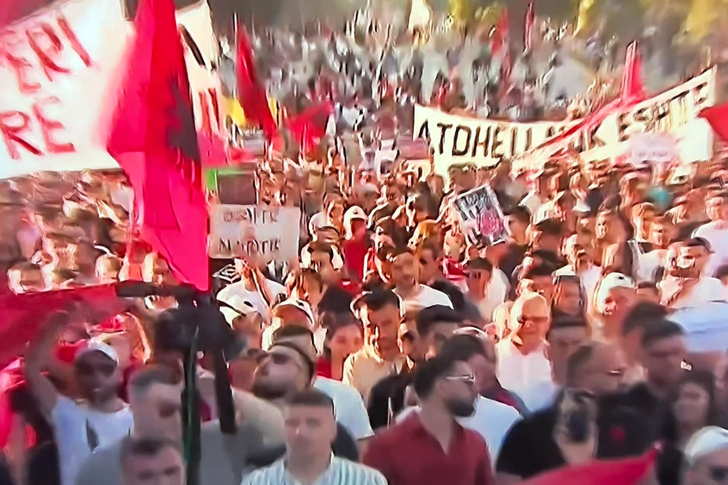
Since the protests began, this place is no longer what it ...
After 35 years, the national cry "Down with Communism!" ri...
Të gjithë kanë të drejtën e pamohueshme të protestës. Por,...
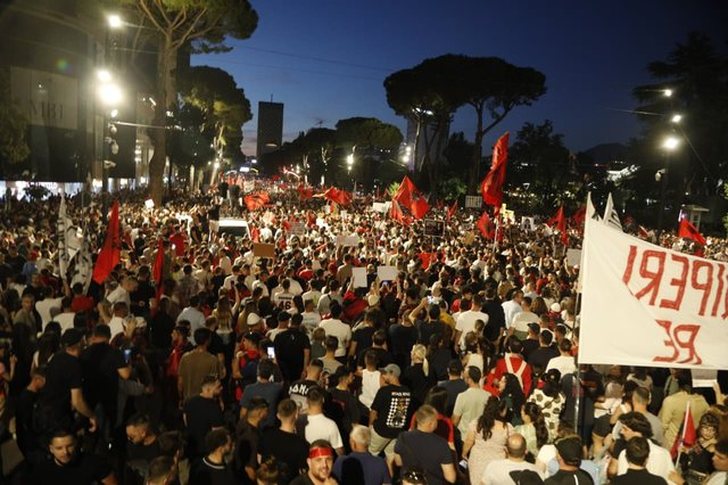
Albanian citizens who have taken to the boulevards these d...
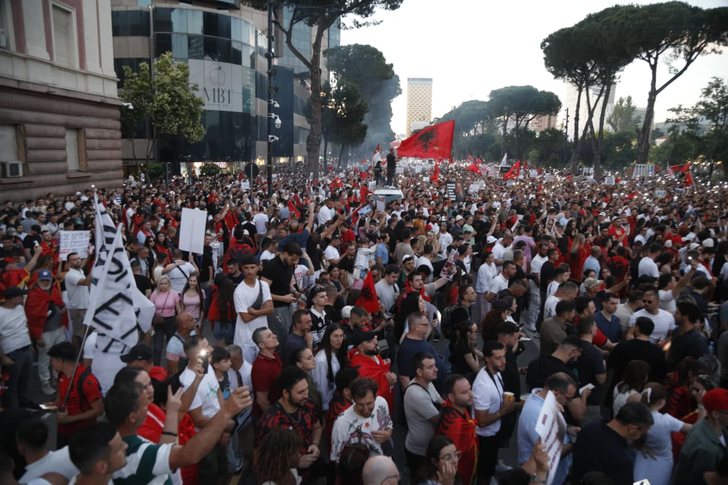
Street revolt and political transformation 1. The cries ...
One of the banners that I liked the most at the June 2026 ...
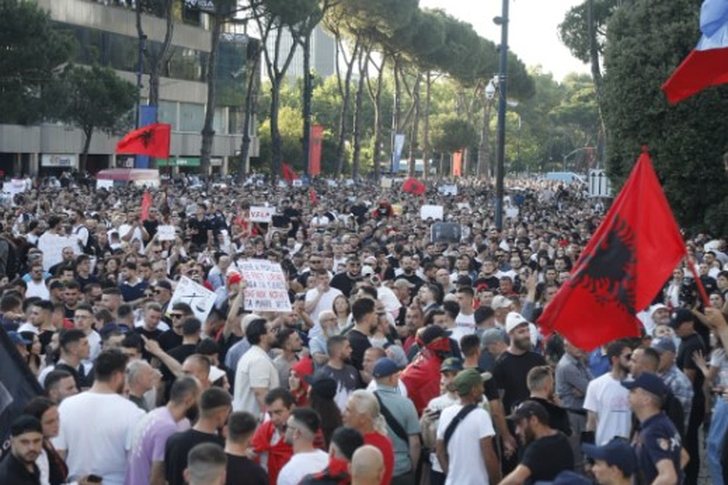
Every protest goes through several stages. Initially, it b...
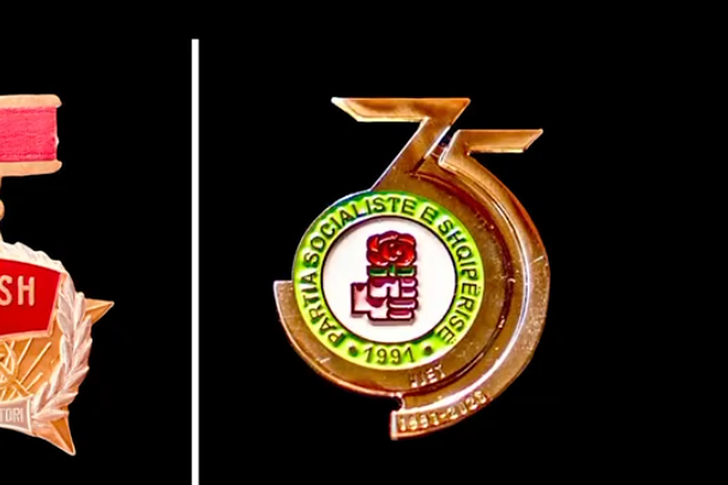
For days, the Celebration of Creation has gathered party m...
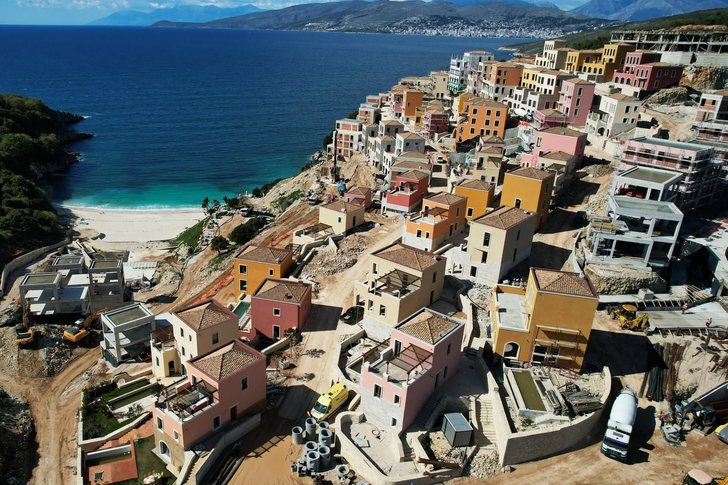
The debate over investments in coastal areas, even those t...
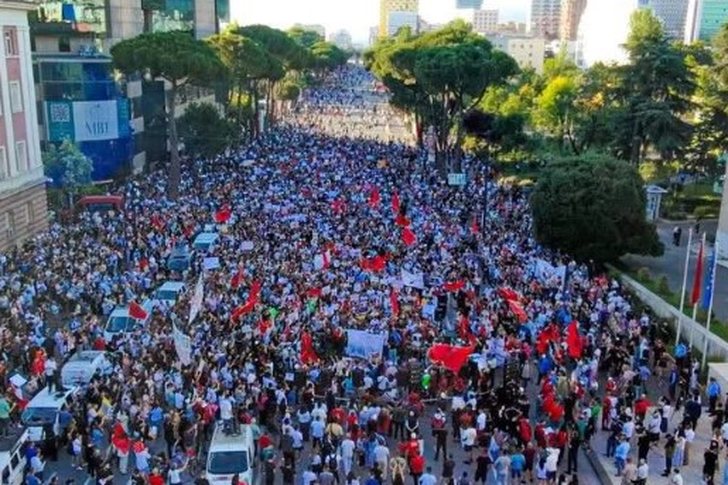
The unusual protests in Albania and in some cities around ...
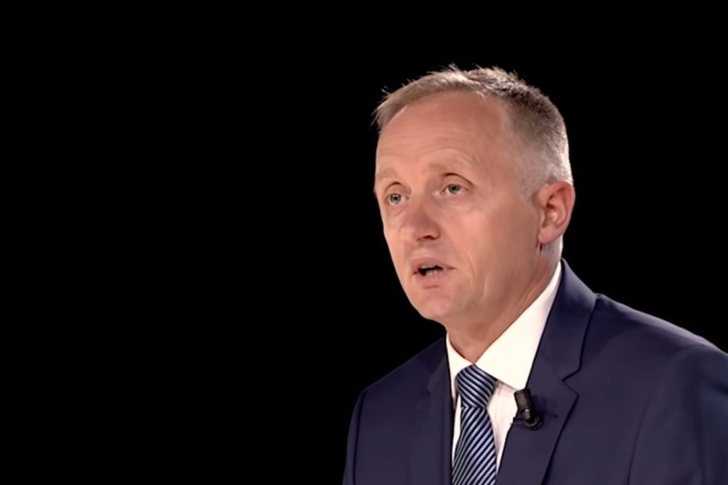
"In the beginning was the Word." Perhaps there is no more ...
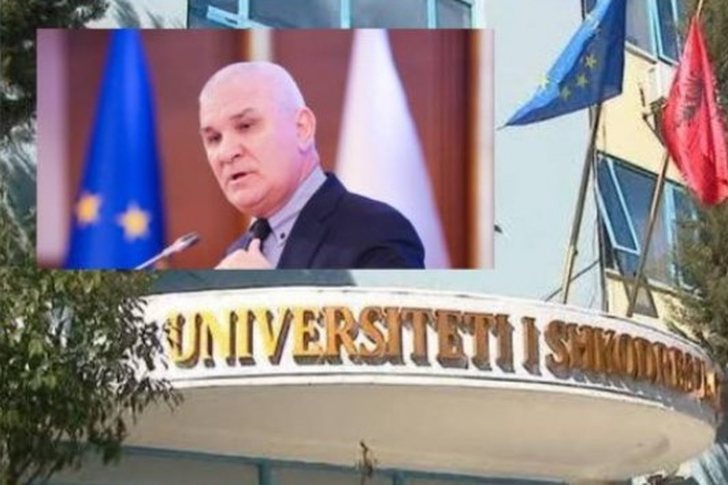
The resignation of the rector of the University of Shkodra...
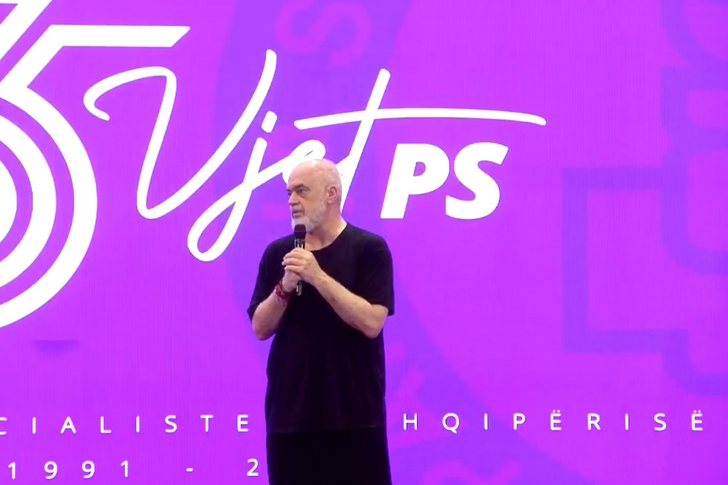
Edi Rama's grave condition and his erratic behavior can no...
In response to a request for comment I sent to the State D...
Sali Berisha's declaration that his "non grata" status has...
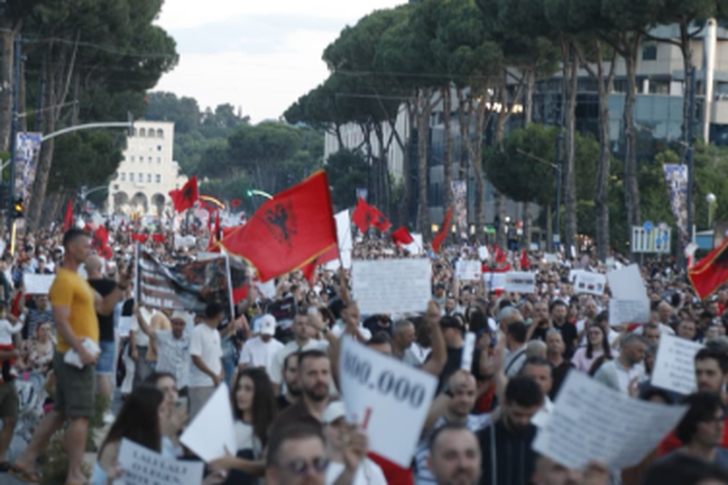
Protest is a public act of opposition, dislike, or disagre...
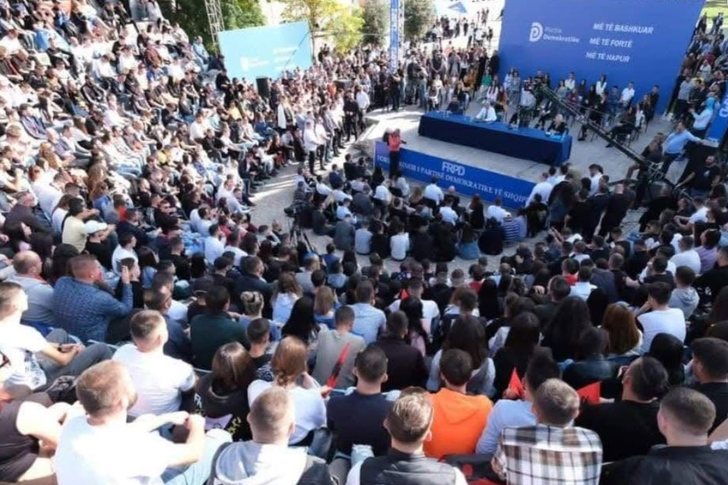
Correcting an injustice... For 5 years, we were persecute...
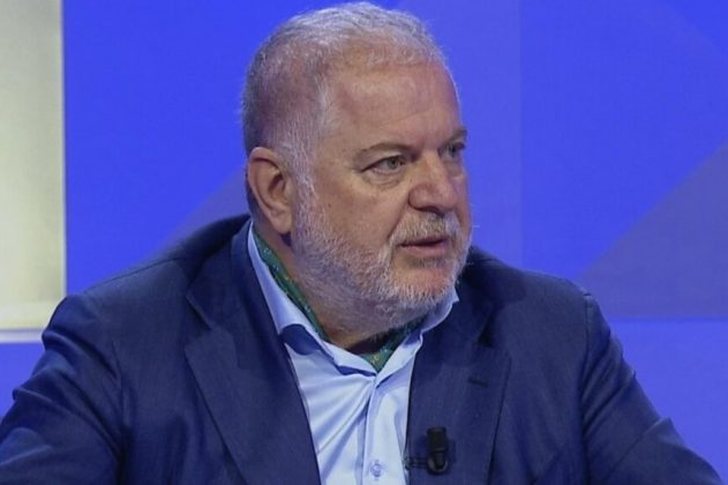
According to the New Testament, an apostle is a man who ha...
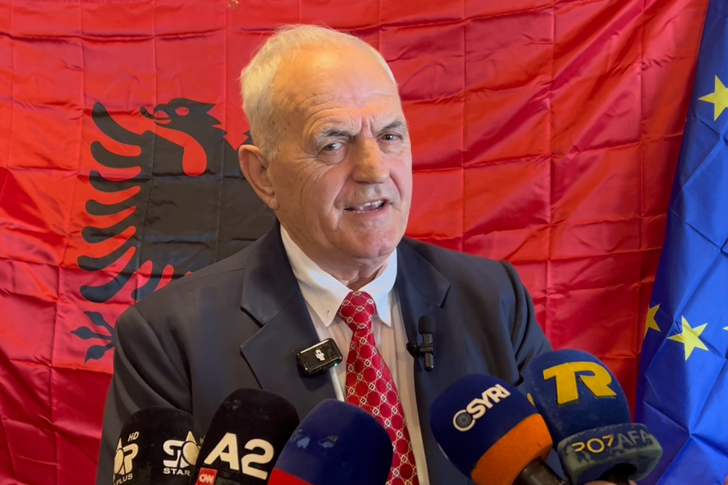
The 35-year silence of the SP & DP on the crimes of commun...
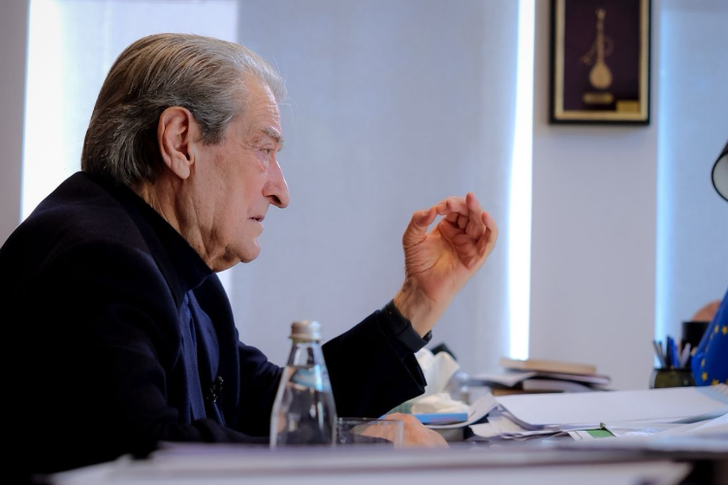
Berisha's persistence and Tirana's fatigue. Anyone else wo...
Erion Isufi is the man known in the media as Lulzim Basha'...
There have been 12 days of protests in the capital, which ...
Dritan Prençi is the SPAK prosecutor who is sleeping on th...
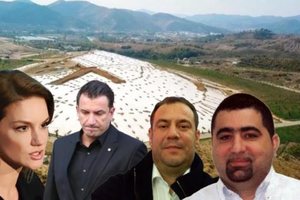
The in-depth investigations that SPAK conducted into Ajola...

The Special Board of Appeal (KPA) decided this Monday ...

The KPA vetting decided this Thursday to dismiss the p...

Suela Salavaçi, a prosecutor in the Prosecutor's Offic...

The Special Board of Appeal reinstated the prosecutor ...
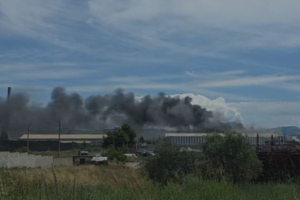
A large fire has engulfed the paper factory on the premise...
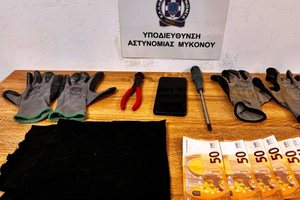
Police authorities on the Greek island of Mykonos arrested...
A gas station was robbed at gunpoint overnight. It is rep...
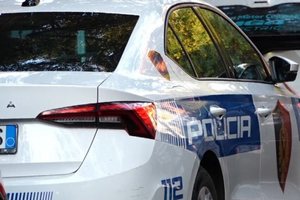
Other details have emerged from yesterday's assassination ...
Meteorologist Tanja Porja shared some predictions today re...
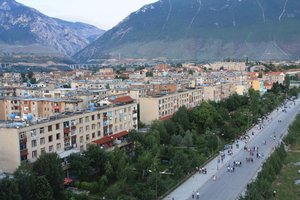
The large regions of Northern Albania are experiencing a s...
On Tuesday, our country will be affected by relatively sta...
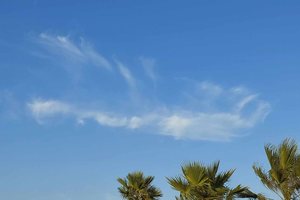
Today, our country will be affected by relatively stable w...
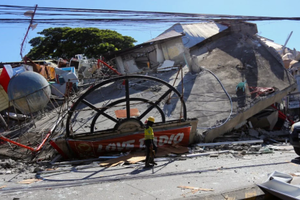
This Tuesday marked strong seismic tremors in two countrie...
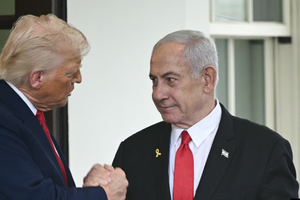
US President Donald Trump spoke at the G7 summit regarding...
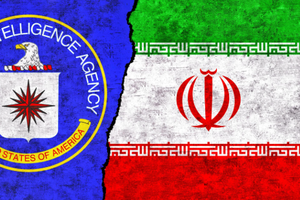
CIA Director John Ratcliffe has raised doubts about Iran's...
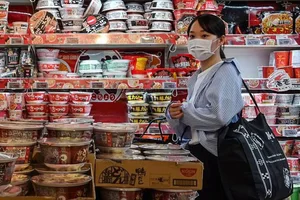
Japan's central bank has raised its key interest rate to a...
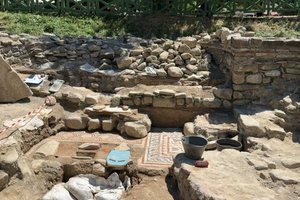
Several archaeological excavations conducted during this s...
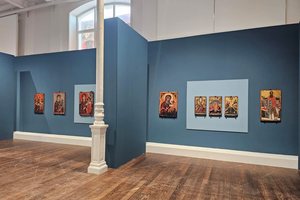
At the Museum of Fine Arts in Chambéry, France, an exhibit...
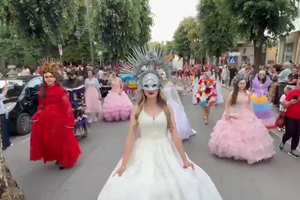
Korça has transformed this weekend into the capital of cel...
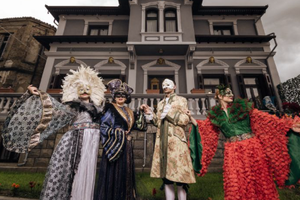
Korça is ready to open the summer season with one of the c...

Oil prices have fallen to their lowest level in nearly 15 ...

This Tuesday, one US dollar is bought for 81.3 lek and sol...

Seasonal changes, fluctuations in production and imports, ...

The dynamics of wages in the labor market continued their ...