


The last session of the parliamentary session on Thursday / On the agenda, a series of draft laws
The last plenary session of this parliamentary session wil...

The last plenary session of this parliamentary session wil...

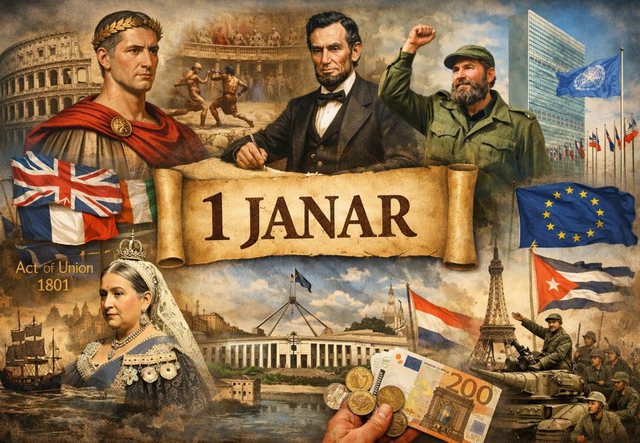
January 1 is globally recognized as the first day of the new year, but beyond the symbolism of beginnings and hope, it holds a special historical weight. At different times, this date has been the scene of decisions, reforms, and events that have profoundly influenced the political, social, and economic development of the world.
Beyond the celebrations and symbolism of New Year's, January 1 has often been a crucial date in world history. Over the centuries, this day has been chosen for the entry into force of laws, reforms, and changes that have directly impacted the lives of millions of people.
Since ancient times, this date has been associated with order and organization of time. In 45 BC, Julius Caesar's reform of the Julian Calendar established January 1 as the beginning of the year, a standard that gradually spread to the Western world. Meanwhile, in 404, Rome finally put an end to gladiatorial games, reflecting moral changes and the growing influence of Christianity.
In the Middle Ages and early modern eras, January 1 became a symbolic date for political transitions. In 1502, Portugal officially expelled Muslims from its territory, an act that marked the end of a multicultural era on the Iberian Peninsula. In 1651, Charles II was crowned King of Scotland, during a period of intense political tension in Britain.
Revolutions and social reforms strongly marked the 18th and 19th centuries. In 1804, Haiti declared independence from France, becoming the first republic ruled by former slaves and a symbol of the struggle against colonialism.
January 1, 1863 Abraham Lincoln signed the Emancipation Proclamation.
In 1863, in addition to the Emancipation Proclamation in the US, January 1 also marked the beginning of a new era for civil rights and racial equality.
In an effort to unite a nation engulfed in a bloody civil war, US President Abraham Lincoln makes a carefully calculated decision regarding the institution of slavery in the country. By the end of 1862, the situation was not looking good for the Union.
The Southern Confederate army had defeated Union troops in several important battles.
Lincoln hoped that declaring a national policy of emancipation would encourage southern slaves to join the Union army, reducing the Confederate manpower on which the southern states depended in the war against the North.
Although slaves in the South failed to revolt en masse after the signing of the Emancipation Proclamation, they gradually began to free themselves as Union armies marched into Confederate territory. At the end of the war, slaves abandoned their former masters. They fought and grew crops to feed the Union army, as well as performing other auxiliary work in the army.
The 20th century turned January 1 into a key date for international organization and social reforms.
In 1912, the Republic of China was officially declared after the fall of the Qing Dynasty. In 1939, Nazi Germany passed new discriminatory laws against Jews, signaling the escalation of persecution that would culminate in the Holocaust.
After World War II, this date was often used to mark the entry into force of international agreements. In 1945, the UN came into operation, while in 1958, the European Economic Community was founded, laying the foundations of the European Union. A year later, in 1959, the Cuban revolution brought Fidel Castro to power, changing the political balance in Latin America.
Even at the end of the 20th and beginning of the 21st centuries, January 1 remained a date of great reforms. In 1993, Czechoslovakia peacefully split into two independent states: the Czech Republic and Slovakia.
In 2002, the euro physically entered circulation in 12 European countries, replacing national currencies and marking one of the biggest economic changes on the continent.
Birth of personalities
In 1424, the German prince Ludwig IV was born.
In 1430, Pope Alexander VI was born.
In 1449, Lorenzo de Medici, an Italian politician from the city of Florence, was born.
In 1502, Gregory XIII, Pope and initiator of the Gregorian calendar, was born.
Separation from life
In 1515, the French king Louis XII died.
In 2003, Qerim Haxhiu, a prominent activist for the Albanian national cause, passed away.
In 2015 Omar Karami, Lebanese lawyer and politician, 58th Prime Minister of Lebanon./ CNA


The Rovaniemi Christmas Village is now one of the most pop...

Syria's President Ahmad al-Sharaa unveiled redesigned bank...

The first snowfall in Germany brings back Germans' favorit...

A study by Japanese and Egyptian researchers reveals the d...

NASA announced the discovery of a possible sign of life, k...

Christmas is one of the most important and celebrated holi...

A stunning new space image has captured two spiral galaxie...

Originally from Mexico, poinsettias are in the Euphorbia f...

A uniquely preserved prehistoric mud pit may hold the olde...

December 21, 2025 marks the winter solstice, one of the mo...
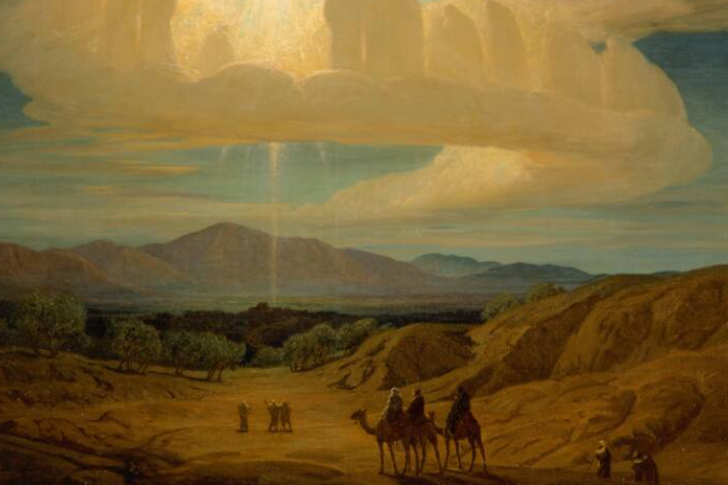
Based on biblical descriptions, the star that is said to h...

A new study suggests that Saturn's largest moon contains l...

Everyone knows the mysterious stories of the Bermuda Trian...
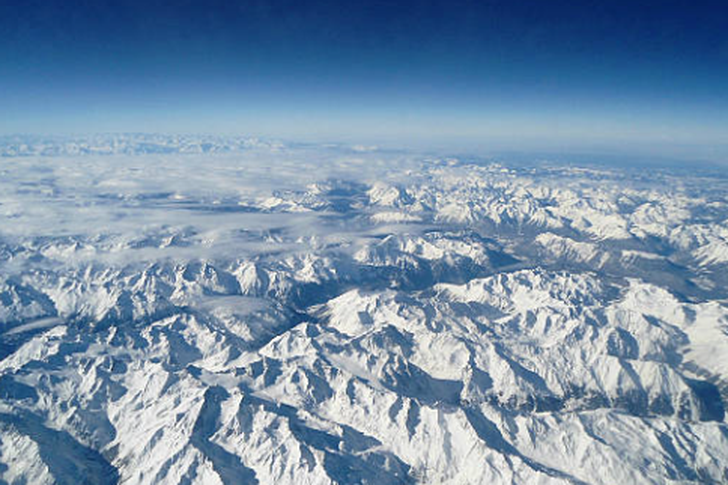
The number of glaciers disappearing each year worldwide wi...

Many people wear or own signet rings today. They are expre...
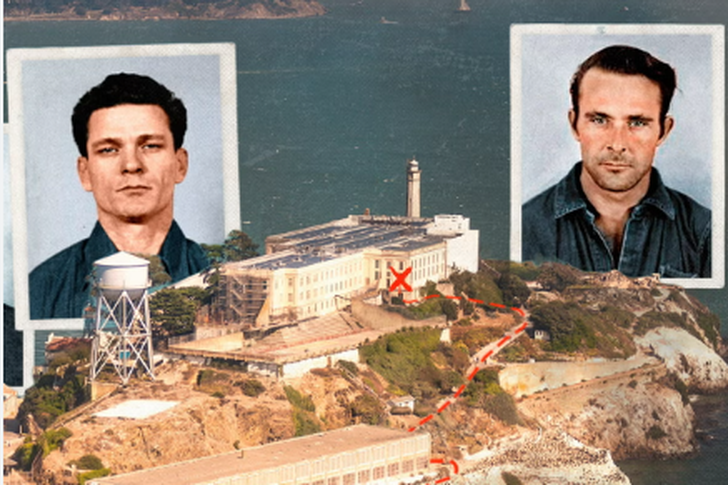
In June 1962, three Alcatraz prisoners fooled guards with ...

Every December, the medieval town of Gubbio in Italy light...
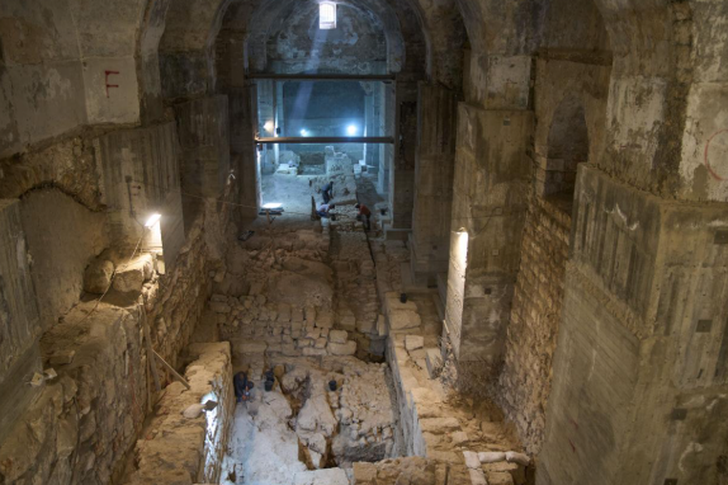
Archaeologists have completed the discovery of the longest...

Në një galaktikë shumë të largët, një vrimë e zezë po shka...

A Coast Guard MH-60T Jayhawk helicopter was in a festive m...

CNA has launched another investigation that could lead to ...

Irfan Hysenbelliu is a businessman that we call "Irfan the...

In March 2026, CNA launched another investigation centered...
The arrested mayor of Tirana, Erion Veliaj, with 13 charge...

The Special Board of Appeal (KPA) decided this Monday ...

The KPA vetting decided this Thursday to dismiss the p...

Suela Salavaçi, a prosecutor in the Prosecutor's Offic...

The Special Board of Appeal reinstated the prosecutor ...

A serious incident occurred this Tuesday in the Yrshek are...

An accident occurred this Tuesday on "Dituria" street in K...

A tourist has lost her life on Orikum beach, where she was...

Two people were arrested and two others were prosecuted af...

All of Southern Europe will face changing weather conditio...

Albania was hit by temperatures significantly higher than ...

For the first time, Pogradec welcomed the Inter-Lake Chess...

Albania has achieved a record for the employment of foreig...

An operation led by Europol, through authorities in severa...

US President Donald Trump hosted the Lebanese president at...
The European Union has criticized the decision of the acti...

An earthquake measuring 5.0 on the Richter scale struck so...

At a time when industrial products are increasingly taking...

Trust among people is not just a three-syllable word. It c...

Master of humor Todi Llupi has passed away at the age of 7...

The ninth edition of "MIK Festival" kicked off with one of...

The Centralized Purchasing Operator recently opened a tend...

The new draft law "On the Bank of Albania" provides that t...

This Tuesday, one US dollar is bought for 81.2 lek and sol...
Deputy Minister of Economy and Innovation, Enkelejd Musabe...