


'Suitcase Killer' deported from Bali after 11 years
Indonesia has deported an American man who spent 11 years ...


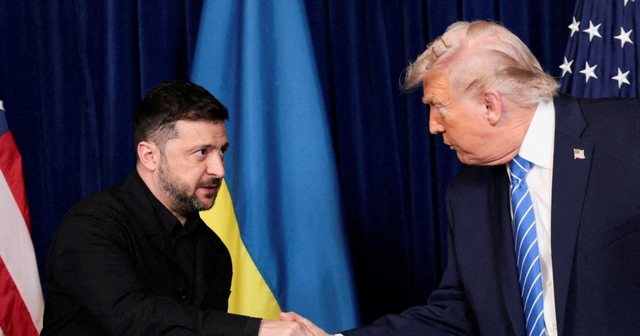
US President Donald Trump and Ukrainian President Volodymyr Zelensky spoke by phone on February 25, a conversation that was confirmed by both sides as diplomatic efforts are intensifying ahead of negotiations in Geneva.
This conversation precedes a key meeting on February 26 in Switzerland, where the secretary of Ukraine's National Security and Defense Council, Rustem Umerov, is expected to meet with US special envoy Steve Witkoff and Trump adviser Jared Kushner.
The talks in Geneva are expected to focus on a "prosperity package" designed for Ukraine's economic recovery, while steps will be taken to organize a potential trilateral summit with Russia, which could be held in March, according to Ukrainian and American officials.
In a post on social media after the call, Zelensky stressed that Trump's envoys participated in the discussion, which focused mainly on the agenda for upcoming rounds of diplomacy.
“We expect this meeting to create an opportunity to move the talks to the leadership level,” Zelensky wrote, adding that Trump “supports this sequence of steps.” He called a direct leaders’ summit “the only way to resolve all complex and sensitive issues and end the war.”
The diplomatic maneuvers come at a time when Kiev is highlighting the fundamental differences between the warring parties.
Earlier on Wednesday, to Norwegian Prime Minister Jonas Gahr Støre, Zelenskyy identified "political will" and "territorial integrity" as the main points of disagreement.
“The problem is related to the political will to stop this war and the issue of territories,” Zelensky said. While acknowledging the Trump administration’s desire for a quick end to the conflict, he expressed skepticism that lower-level working groups can resolve the most contentious issues.
"I'm not sure that tomorrow we will have exactly one result... on the territories," he said, reiterating the position that for such progress, talks must move to the leadership level.
While Kiev has signaled a pragmatic willingness to consider a cessation of hostilities along the current lines of control, officials have stressed that any ceasefire must be backed by "strong" security guarantees from Washington and European allies.
Moscow, however, continues to demand that Ukraine give up additional territories in the eastern Donetsk region, a demand that Kiev has categorically rejected.
Kremlin spokesman Dmitry Peskov recently cast doubt on a Putin-Zelensky meeting, raising questions about whether Ukraine's current negotiating position offers a "way forward."
Amid diplomatic efforts, Ukrainian officials and activists have warned that talks alone will not move the Kremlin from its stance.
In Washington, Ukrainian Ambassador Olha Stefanishyna told reporters on February 24 that diplomacy must be backed by "strength."
"The language the Russians understand is not dialogue or diplomatic efforts, it is pressure," Stefanishyna said, arguing that sanctions and battlefield resistance are effective tools to influence Moscow's calculations.
The call to increase pressure also gained momentum in Congress, where influential Republican lawmakers argued that the Trump administration should expand military support as a need to have the upper hand in negotiations.
On February 24, Senator Lindsey Graham of South Carolina called for the supply of Tomahawk cruise missiles to Ukraine. Graham argued that the ability to strike drone and missile factories deep inside Russian territory is essential, asserting that “at this point, Putin is not serious about ending the war.”
This sentiment was echoed in the Senate by Republican Senator Jerry Moran of Kansas, who described the Russian invasion as a “strategic failure” characterized by massive human losses. Moran joined the call for Tomahawk missiles and tougher sanctions, insisting that Moscow should not be allowed to declare victory “either on the battlefield or at the negotiating table.”
Representative Don Bacon (Republican of Nebraska), speaking at the American Foreign Policy Council on February 25, called support for Ukraine a matter of global precedent.
He argued that providing long-range precision weapons and "devastating" sanctions are necessary to show that the United States will not tolerate the "violent conquest of territories."
Despite several meetings between Ukrainian, Russian, and American officials this year, no decisive progress has been achieved.
While senior American officials have privately signaled a desire to maintain diplomatic momentum, the gap between Kiev's demand for security and Moscow's demand for territory remains wide.
Zelensky has expressed a willingness to meet with Putin on neutral ground, but the success of such a meeting is likely to depend on the outcome of the talks in Geneva and the proposed trilateral round in March./REL

Indonesia has deported an American man who spent 11 years ...
The four people shot dead by Cuban border guards on a US-r...
Iceland will hold a referendum on membership in the Europe...
Ukrainian President Volodymyr Zelensky has announced that ...
It's about balancing: The German chancellor wants to reduc...
A Florida-registered speedboat entered Cuban territorial w...
Members of the family of Kosovo hero Adem Jashari have den...
Ten civil society organizations in Kosovo have called on p...
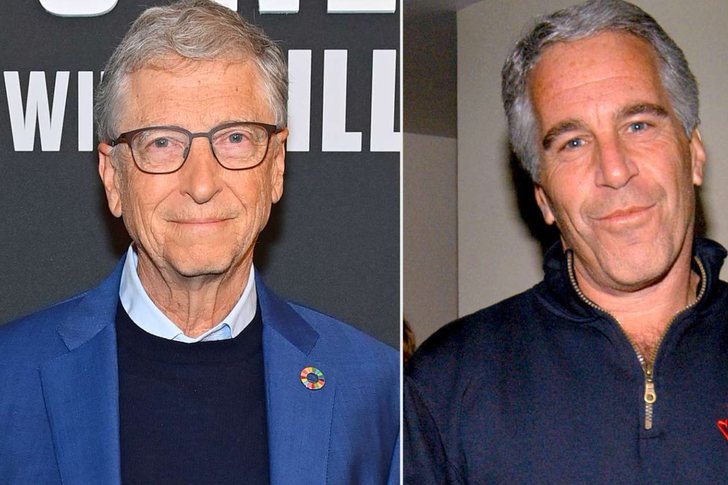
Billionaire Bill Gates admitted this week to having two af...
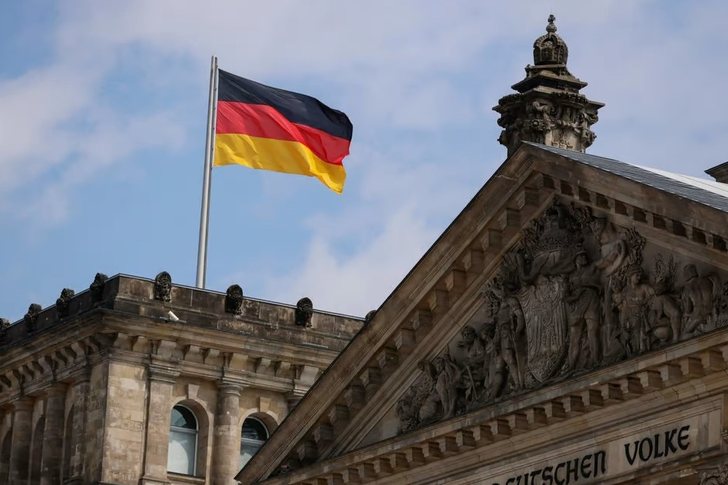
The German government has approved a new action plan aimed...
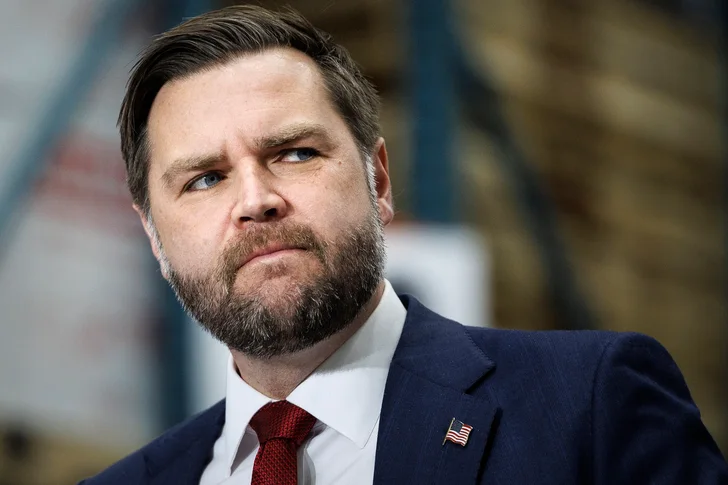
United States Vice President JD Vance has stated that Pres...

Have you vaccinated your children? Why, or why not? This q...

The Spanish government is moving forward with the approval...

Spain on Wednesday released 153 classified documents relat...
Iranian President Masoud Pezeshkian has stated that there ...
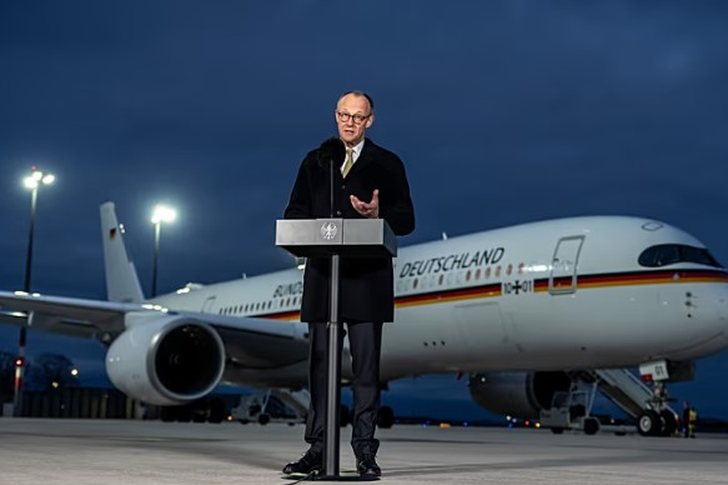
German Chancellor Friedrich Merz said China will buy up to...
Të paktën 60 persona janë vrarë nga dhuna që ka shpërt...

The Duke and Duchess of Sussex met children at a refugee c...
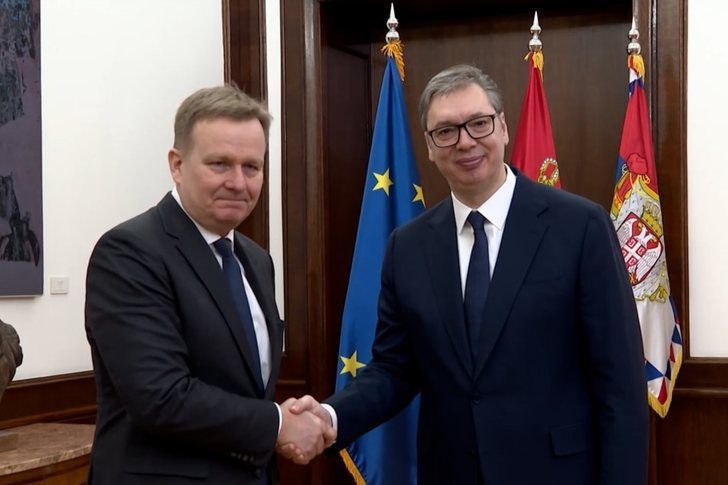
Serbian President Aleksandar Vučić announced that he met i...
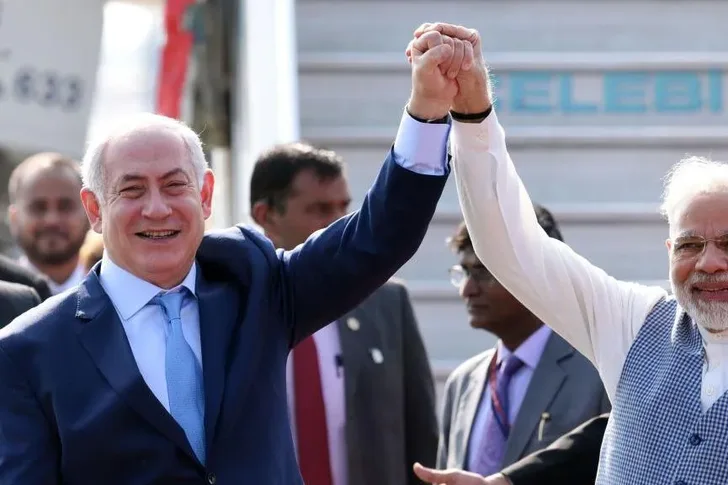
Indian Prime Minister Narendra Modi is visiting Israel for...

CNA has launched another investigation that could lead to ...

Irfan Hysenbelliu is a businessman that we call "Irfan the...

In March 2026, CNA launched another investigation centered...
The arrested mayor of Tirana, Erion Veliaj, with 13 charge...

The Special Board of Appeal (KPA) decided this Monday ...

The KPA vetting decided this Thursday to dismiss the p...

Suela Salavaçi, a prosecutor in the Prosecutor's Offic...

The Special Board of Appeal reinstated the prosecutor ...

A conflict occurred this Thursday evening in the toy area ...

A person has died today on Orikum beach. According to repo...

Footage emerges from the serious accident that occurred th...

A Shkodra traffic police officer was hit with hard objects...

Children without parental care, for whom alternative famil...

On Thursday, our country will be under the influence of st...

A serious accident that occurred this Wednesday with the c...

The Institute of Geosciences has shared a forecast for wea...

The European Union Office in Kosovo has called on all poli...
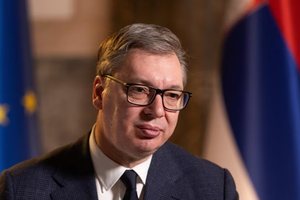
Serbian President Aleksandar Vučić, at a press conference ...

For the first time since the launch of the euro, European ...

Artificial intelligence (AI) models from the American comp...

At a time when industrial products are increasingly taking...

Trust among people is not just a three-syllable word. It c...

Master of humor Todi Llupi has passed away at the age of 7...

The ninth edition of "MIK Festival" kicked off with one of...

The average sale price of apartments in Tirana reaches rec...

This Thursday, one US dollar is bought for 81.5 lek and so...

The price of diesel reached 206 lek per liter from 198 lek...

Businesses will no longer be required to simply register t...