


Exchange rate, July 24, 2026
This Friday, one US dollar is bought for 81.7 lek and sold...

This Friday, one US dollar is bought for 81.7 lek and sold...

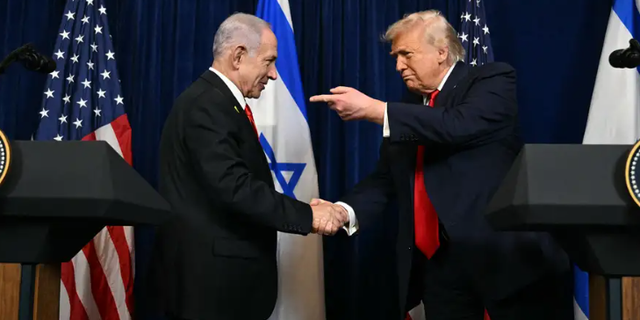
The US and Israel have differences over the Iran issue. While Washington relies on gradual pressure, Israel wants quick results.
Relations between the United States and Israel have been exceptionally close for decades. However, strategic and tactical differences are constantly emerging, especially regarding their relationship with the Islamic Republic of Iran.
Close cooperation between the two allies is essential for the US negotiations with Iran, which took place in Geneva on Tuesday, where the US special envoy for the Middle East, Steve Witkoff, and President Trump's son-in-law, Jared Kushner, were present. Iranian Foreign Minister Abbas Araghchi represented his country. The negotiations between the US and Iran in Geneva lasted about three hours. According to the Iranian foreign minister, both sides agreed on general principles. But rapid progress is not expected
While the US and Israel share a central goal – preventing Iran from becoming a nuclear power and further expanding its regional influence – their interests, timelines and preferred methods differ significantly.
These differences have recently become more apparent in the context of domestic developments in Iran, including mass protests in January and February, which were violently suppressed, tightening US sanctions, and intense diplomatic contacts between Donald Trump and Benjamin Netanyahu.
Agree on threat perception
Both the US and Israel consider Iran's nuclear program, missile program and the network of allied militias controlled by Tehran in the region to be major security threats. According to political analyst Reza Talebi, as the Leipzig-based expert emphasized in an interview with DW, there is no fundamental disagreement. Both countries want to prevent Iran from becoming a nuclear power and further expanding its influence in the Middle East.
However, the differences begin with the question of how this goal should be achieved and what risks are acceptable.
For the US, under President Donald Trump, reaching a new deal with Iran is a priority. Washington is pursuing this goal through a strategy of "maximum pressure," which combines economic sanctions with military deterrence.
Israel, on the other hand, places much less importance on a deal with Tehran and fundamentally doubts its sustainability. From the Israeli government's perspective, not only is the content of a potential deal problematic, but so is the assumption that Iran will adhere to the agreements in the long term.
US Strategy: Pressure as a Tool
According to Shokriya Bradost, an analyst on foreign policy and Middle East security, US policy towards Iran is clearly oriented towards a new deal.
"To force Tehran to sit at the negotiating table, Washington is relying on massive economic sanctions, especially on Iranian oil sales," the Washington-based expert told DW.
The goal is to systematically dry up the regime’s sources of revenue and deprive it of any economic “breathing space.” This policy aims to force Iran to capitulate or at least make broad concessions without provoking a major regional war.
Military means play a supporting role in this strategy. The deployment of aircraft carriers to the Middle East and the emphasis on military options serve mainly as a deterrent. While Donald Trump has publicly speculated about a "possible regime change," according to expert Bradost, a large-scale military attack is only a last resort for Washington. The US rejects prolonged wars and the invasion of Iran and, according to her, has no concrete plan for a forced change of power.
Israel's Perspective: Pressure and Demands
Israel is taking a tougher stance on Iran. Speaking at a conference in Jerusalem on Sunday, Netanyahu reiterated Israel's position that any deal with Iran must include dismantling Iran's nuclear infrastructure and removing its enriched uranium - not just limiting uranium enrichment.
Israel also stated that Iran's ballistic missiles and support for regional proxies must be addressed when the US negotiates with the Iranians.
"There should be no enrichment capacity whatsoever - not just to stop enrichment, but to dismantle the equipment and infrastructure that makes enrichment possible in the first place," he told the annual conference of presidents of major American Jewish organizations. Netanyahu added that he was "skeptical" that the Iranians would abide by any deal with Trump.
While Washington is leaning toward gradually increasing pressure, Israel is pushing for a quick decision. Netanyahu fears that a possible change of course under future US administrations could once again strengthen Iran's position. Israel therefore wants a more decisive and direct intervention from the US, even militarily if necessary.
Secondary political and strategic interests
The differences should also be seen in a broader context. Netanyahu's trips to Washington serve not only Iran policy, but also Israel's international image.
According to Talebi, Israel's international reputation in the US and Europe has been damaged, "which also reduces Washington's willingness to act as an unconditional supporter of a comprehensive Israeli military action against Iran," the expert told DW.
Moreover, regional and global stability plays a greater role for the US. Washington must keep an eye not only on Israel, but also on its European allies, the situation in energy markets, and the risk of regional escalation.
From the US perspective, a limited agreement with Iran could buy time and avoid larger conflicts, even if it does not address all of Israel's security concerns./ DW

US special envoy Steve Witkoff said talks between Ukraine ...

An Indian business conglomerate is making a massive invest...

An avalanche in California's Lake Tahoe region has left 10...
Today, the four former KLA leaders will deliver their clos...
Iranian President Masoud Pezeshkian declared that the stat...
Peru's president has been ousted from office after being c...
Historian Paskal Milo has spoken about the KLA commanders ...

In November 2025, the number of applications to the Europe...
Delegations from Ukraine and Russia met in Geneva on Tuesd...
Kosovo Police have discovered three separate cases in the ...
Ushtria amerikane goditi tre anije të dyshuara për trafik ...

At least three anti-government protesters were injured on ...
American officials have expressed positive sentiment after...
The Chairman of the Republican Party, Fatmir Mediu, congra...
French President Emmanuel Macron met Indian Prime Minister...
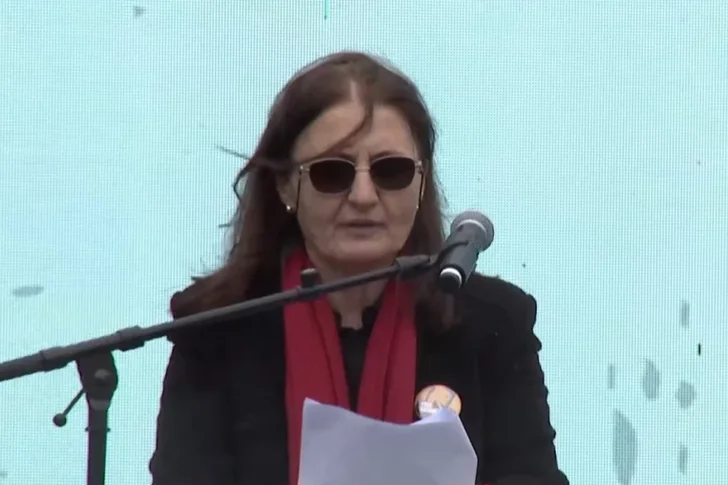
Former KLA fighter, Shqipe Krasniqi, was present today at ...

Ismail Tasholli, a member of the "Freedom has a name" plat...
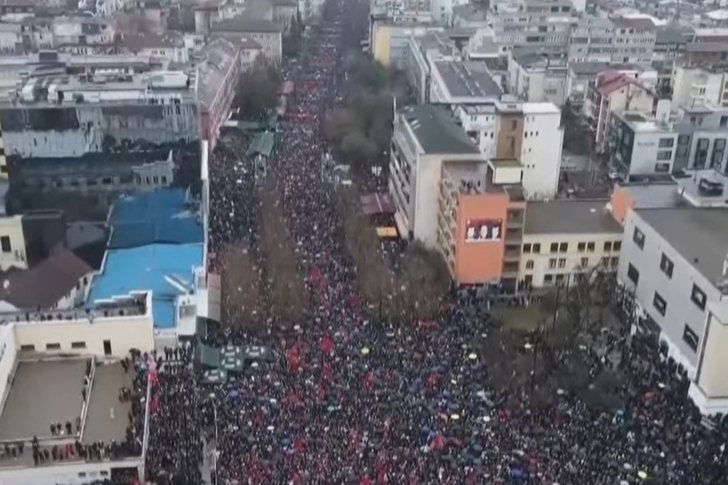
Thousands of citizens in Kosovo have gathered in Skanderbe...

The economic crisis is hitting German industry hard. As a ...
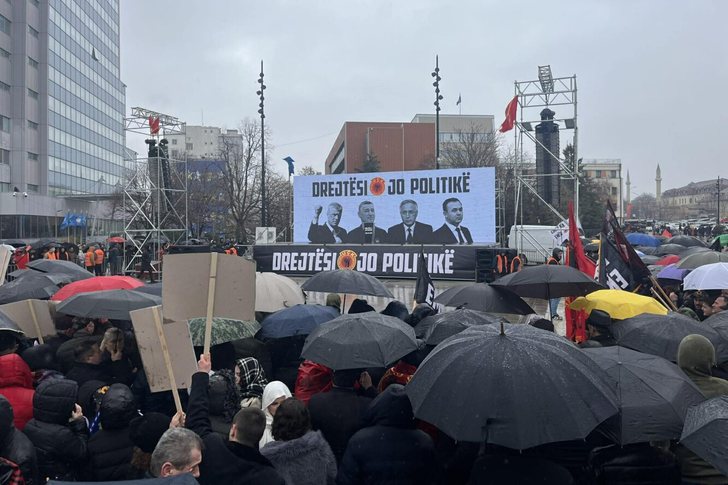
In a few minutes, a protest with the motto "Justice, not p...

CNA has launched another investigation that could lead to ...

Irfan Hysenbelliu is a businessman that we call "Irfan the...

In March 2026, CNA launched another investigation centered...
The arrested mayor of Tirana, Erion Veliaj, with 13 charge...

The Special Board of Appeal (KPA) decided this Monday ...

The KPA vetting decided this Thursday to dismiss the p...

Suela Salavaçi, a prosecutor in the Prosecutor's Offic...

The Special Board of Appeal reinstated the prosecutor ...

A conflict occurred this Thursday evening in the toy area ...

A person has died today on Orikum beach. According to repo...

Footage emerges from the serious accident that occurred th...

A Shkodra traffic police officer was hit with hard objects...

By noon, cloudiness is expected to prevail in almost all o...

Children without parental care, for whom alternative famil...

On Thursday, our country will be under the influence of st...

A serious accident that occurred this Wednesday with the c...

The European Union Office in Kosovo has called on all poli...
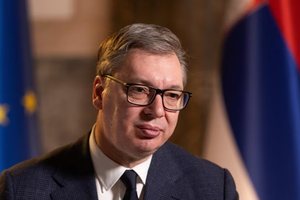
Serbian President Aleksandar Vučić, at a press conference ...

For the first time since the launch of the euro, European ...

Artificial intelligence (AI) models from the American comp...

At a time when industrial products are increasingly taking...

Trust among people is not just a three-syllable word. It c...

Master of humor Todi Llupi has passed away at the age of 7...

The ninth edition of "MIK Festival" kicked off with one of...

This Friday, one US dollar is bought for 81.7 lek and sold...

The average sale price of apartments in Tirana reaches rec...

This Thursday, one US dollar is bought for 81.5 lek and so...

The price of diesel reached 206 lek per liter from 198 lek...