


The Houthi group does not attack Chinese and Russian ships in the Red Sea
A senior official of the Iran-backed Houthi terrorist grou...



The liberalization of visas for Kosovo since January 1 of this year has been accompanied by concerns, fear and panic that the crisis with a lack of workers will worsen. Concrete figures have even begun to be given for the departure of workers.
Only this year it is said that Kosovo will be left without hundreds of thousands of workers.
"In 2024, there will be a shortage of around 150,000 workers. Only in March of this year, more than 25 thousand people are expected to leave", says with concern the head of the Union of Private Sector Workers, Jusuf Azemi, praying to God that these figures are not correct.
"God willing, our data will not turn out to be correct, because we think that in 2024 alone we will lack about 150 thousand workers. According to a statistic or some data, only one very large bus company in Kosovo, until March, says that there are over 25 thousand contracted people who will leave.
However, we are convinced that not everyone will stay outside, because a small number will go back".
Azemi estimates that it is too late for the state to react to the departure of young people from the country, according to him, even if he offers a salary of 1,000 euros to a worker who was paid 300 euros, it will not make him want to stay here.
Experts in the economy say that this year will be challenging for businesses in terms of labor force.
The executive director of the American Chamber of Commerce, Arian Zeka, has said that the biggest complaint of private sector enterprises is related to the available workforce.
"What we can say is that the complaints of private sector enterprises are related to the availability of labor force.
That is, even in 2023, but of course some of these concerns go beyond 2023, even inevitably with the liberalization of visas, they grow further, therefore, as concerns from the shyness of the trends of the population's flight already after January 1, 2024, when no there is no longer a visa regime for citizens of Kosovo, they can increase further, always taking into account the trends of population departure during the past years, even when we really had a visa regime".
Arian Vranica, from the Association of Gastronomists of Kosovo, said that this sector has faced difficulties since the time of the pandemic.
He said that businesses are worried about the flight of workers, after the liberalization of visas.
"I think that businesses have started to take measures for the escape of workers late. Some time ago we had a situation where we have more job seekers, now we see that there is a tendency to improve services to workers, including health insurance.
But I think it is too late to win the trust of the workers".
Kosovo businesses must raise wages
The president of the Kosovar Alliance of Businesses, Agim Shahini, has requested an increase in wages for workers in the private sector.
Shahini estimated that there should be dignified treatment for workers.
"Professional opinions are not taken into account, they don't have health insurance, they don't have intellectual space choked by political pressure, they are not treated or paid like the brains of an institution, but like workers and very much ignored".
Shahini said that the liberalization of visas brings many advantages, but also the departure of the diligent workers of Kosovo, as he called them the "brains of Kosovo".
"The brain drain from Kosovo is a national problem. Liberalization has taken place and brought many advantages for the free circulation of citizens in the EU, but the brain drain of Kosovo is a national problem, and this happened yesterday, today and will continue tomorrow. The professor, the engineer, the doctor, the nurse, the policeman and the soldier, the worker and the non-worker are gone.
According to AKB statistics, in the period 2020-2023, about 10 thousand professionals have left".
In order to combat the trend of workers fleeing from Kosovo, the president of the Chamber of Commerce of Kosovo, Lulzim Rafuna, says that the Government of Kosovo must urgently prepare a plan to prevent the migration of young people.
"To motivate those young men and women to start businesses, [starting] from a start-up business, family business and why not develop a big business in Kosovo, since youth has always been an asset with which Kosovo is always proud".
According to Rafuna, businesses have begun to find ways to improve working conditions, offering salary increases and bonuses.
He said that two sectors suffer more than all from the lack of workers.
"It is more pronounced in the construction and gastronomy sectors. These are the two sectors where the lack of labor force has been observed the most in recent years, but even now, the trend that is being felt, it is known that the power that is less qualified dominates here and they tend to for a higher salary good to move from Kosovo".
Doctors and teachers are also leaving Kosovo
The vice president of the United Union of Education, Science and Culture (SBASHK), Vjollca Shala, has indicated after the end of the first half of this school year, that about 600 teachers will leave their workplace.
"In 2023, over 300 teachers have requested unpaid leave at the municipal directorates of education.
While this year, since the first semester of the 2023-2024 school year ends at the end of this week, it is expected that the number of teachers who have applied for unpaid leave, but there are also teachers who have not applied for leave at all without pay, it is somewhere around 500 or 600 teachers, who will leave their workplace.
They too will mostly leave in different countries of Europe".
Doctors are also leaving their workplace in Kosovo
The President of the Chamber of Doctors of Kosovo, Pleurat Sejdiu, has stated that in Kosovo, every year around 173 doctors leave the country at different stages.
Speaking about the risk of workers leaving Kosovo, Sejdiu said that the age of the people leaving the country is somewhere around 30 years old, and that their absence, according to him, will continue to be noticed.
"We as an organization have been monitoring this phenomenon since 2019. It is a continuously stable trend, somewhere around the average of 173 people per year who leave at different stages.
Now we have only identified them through conversations from various surveys. We have an average age, about 30 years old. This means that it is the new generation, I can't say that their current absence is felt, because these would be the ones who would have to come after a few years".
Over 156 thousand inhabitants left Kosovo in four years
Within 4 years, more than 156 thousand inhabitants have left Kosovo, which is calculated at 8.85% of the country's population. It is estimated that by the end of 2022, over 949,000 people live abroad.
In the data recently published by the Ministry of Internal Affairs, "Migration 2018-2022", it is said that of the requests of citizens of Kosovo to be provided with visas of the Schengen area, 84% of them were positive, while 16% have been rejected.
According to the Statistics Agency, during 2021 over 42 thousand residents left Kosovo.
A survey by the International Republican Institute, based in the United States, published in November 2021, showed that 78% of Kosovars aged 18 to 35 would "probably" or "eventually" leave the country if they would have a chance.
On January 1, 2024, the visa regime and the several-year wait for Kosovo citizens to move freely without visas to European countries was ended.
Citizens of Kosovo will be able to travel up to 90 days, in a period within six months, in all countries that are members of the Schengen area. /CNA

A senior official of the Iran-backed Houthi terrorist grou...
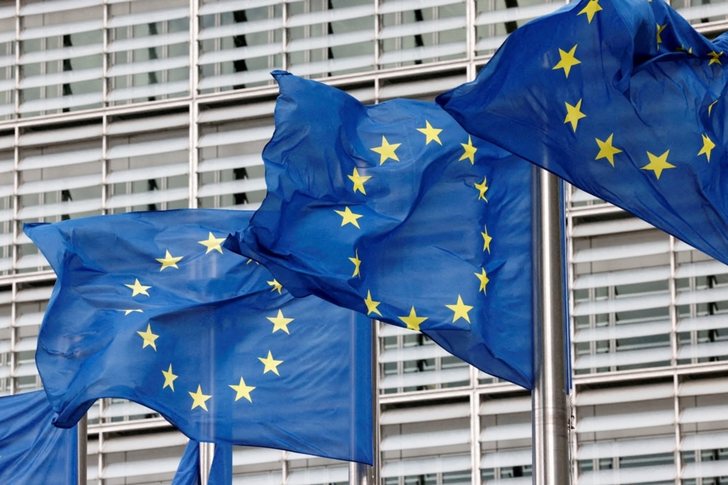
The European Union said on Friday that it is analyzing the...

Divisions are emerging among senior Israeli officials over...
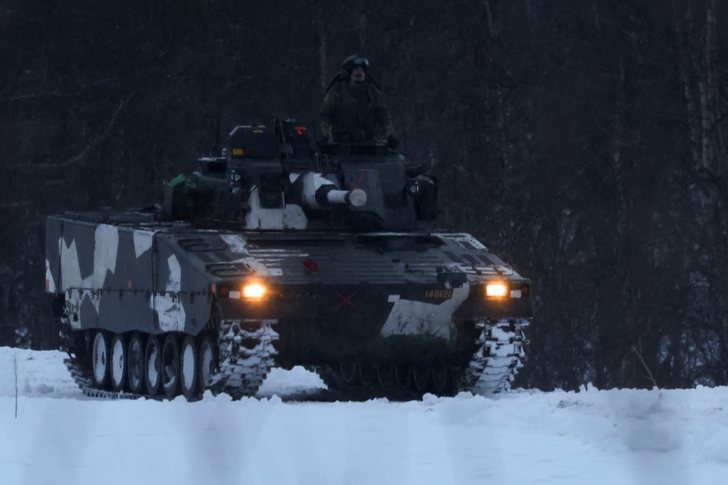
NATO will next week begin one of its biggest military exer...

Sulmet iraniane në Irak, Siri dhe madje edhe Pakistan janë s...

Italy wants to open two refugee camps on the territory...
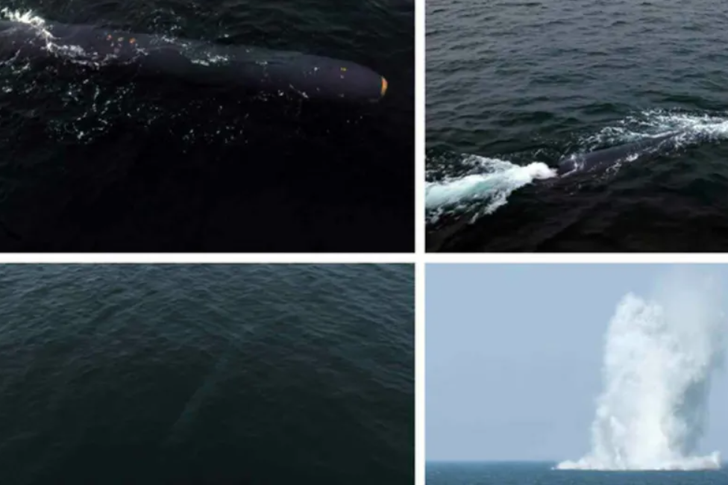
North Korea has conducted a test of its underwater nuclear...

Israeli Prime Minister Benjamin Netanyahu has responded to...
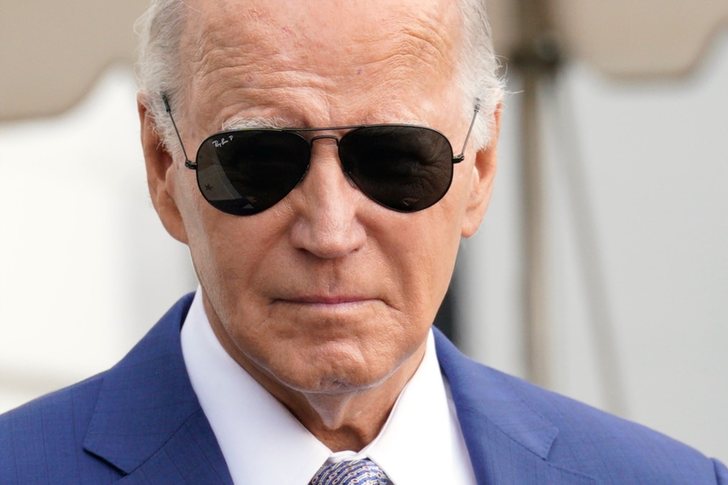
President Joe Biden said Thursday that US military strikes...

The state of the economy often affects how Americans vote ...

The Central Bank of Kosovo issued a new regulation accordi...
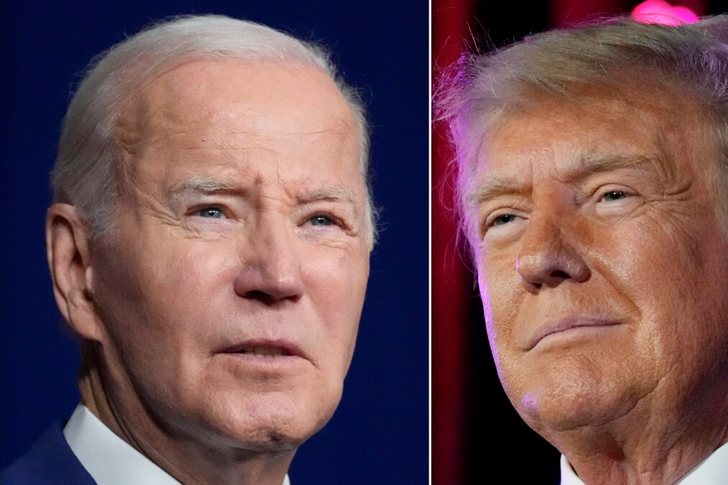
President Joe Biden and former President Donald Trump are ...
The European Union has asked Serbia to allow the visit...
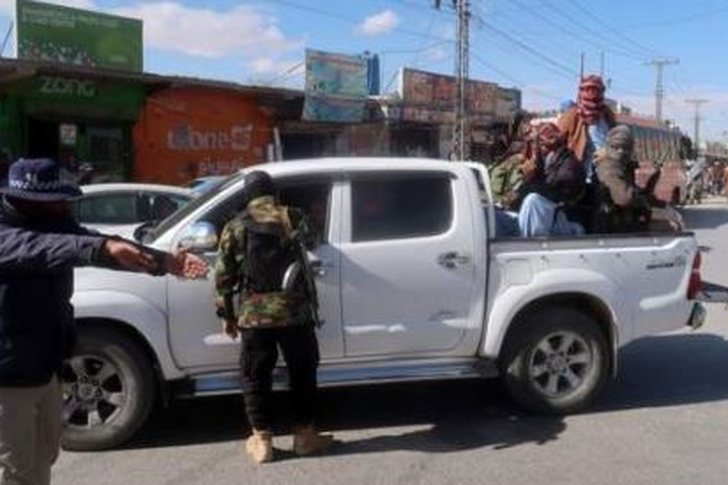
During the last few hours, Pakistan has carried out missil...
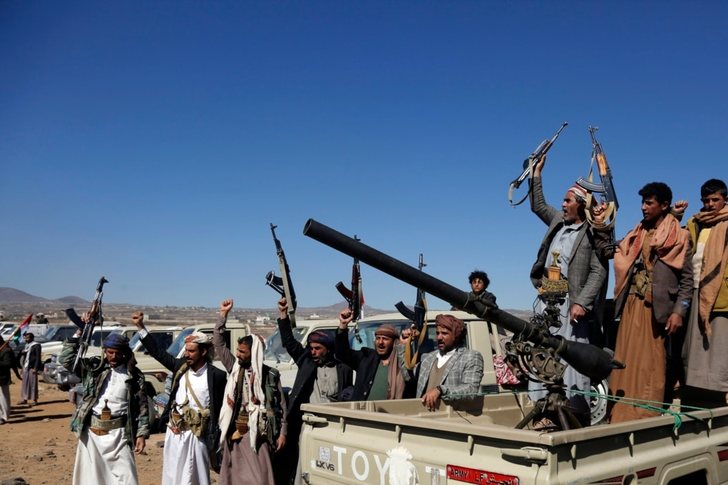
President Joe Biden's administration put the Yemen-based H...
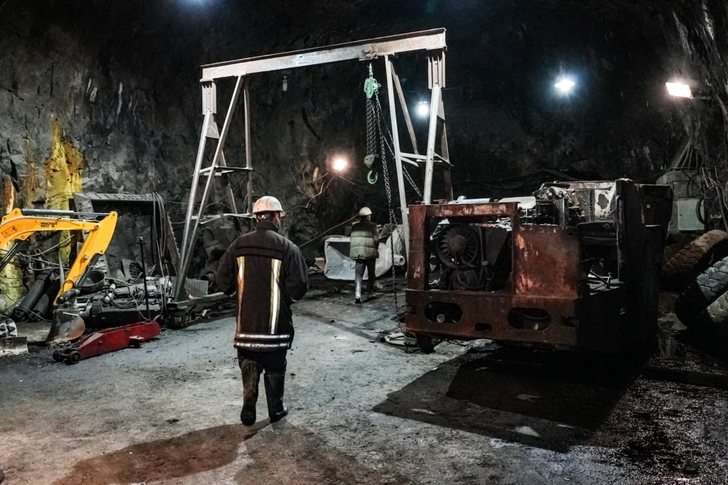
Twelve miners of the Trepça metallurgical plant were injur...

King Charles III is expected to be hospitalized next week ...
Washington is stepping up efforts to tighten sanctions on ...
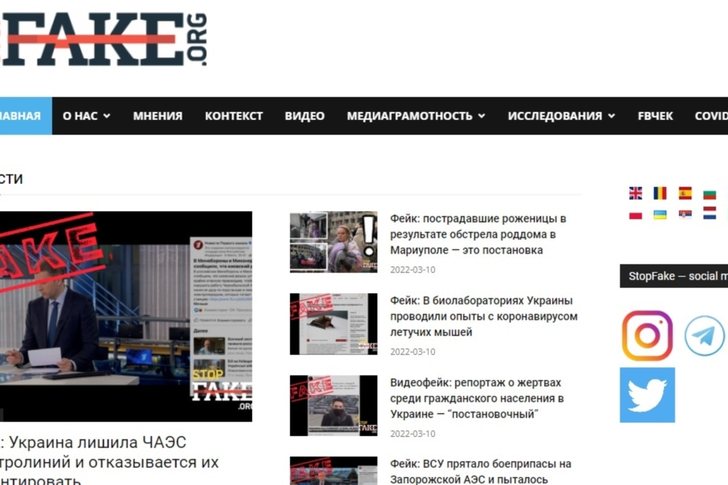
Since Russia launched its full-scale attack on Ukraine, ex...
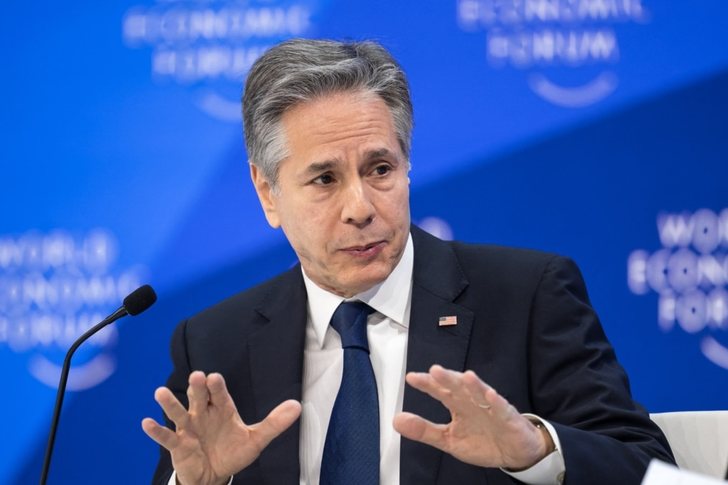
US Secretary of State Antony Blinken reiterated on Wednesd...

CNA has launched another investigation that could lead to ...

Irfan Hysenbelliu is a businessman that we call "Irfan the...

In March 2026, CNA launched another investigation centered...
The arrested mayor of Tirana, Erion Veliaj, with 13 charge...

The Special Board of Appeal (KPA) decided this Monday ...

The KPA vetting decided this Thursday to dismiss the p...

Suela Salavaçi, a prosecutor in the Prosecutor's Offic...

The Special Board of Appeal reinstated the prosecutor ...
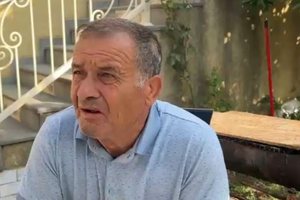
A serious incident occurred in Fier where citizen RB, 35 y...
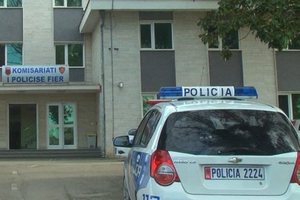
Roskovec/Preliminary information At around 06:00, in the ...

A serious incident occurred in Fier in the village of Vidh...

A conflict occurred this Thursday evening in the toy area ...

By noon, cloudiness is expected to prevail in almost all o...

Children without parental care, for whom alternative famil...

On Thursday, our country will be under the influence of st...
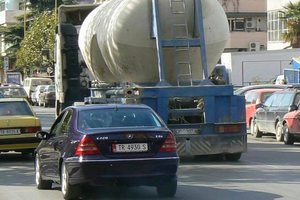
A serious accident that occurred this Wednesday with the c...

The European Union Office in Kosovo has called on all poli...
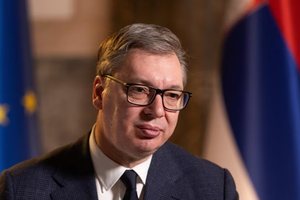
Serbian President Aleksandar Vučić, at a press conference ...

For the first time since the launch of the euro, European ...

Artificial intelligence (AI) models from the American comp...

At a time when industrial products are increasingly taking...

Trust among people is not just a three-syllable word. It c...

Master of humor Todi Llupi has passed away at the age of 7...

The ninth edition of "MIK Festival" kicked off with one of...
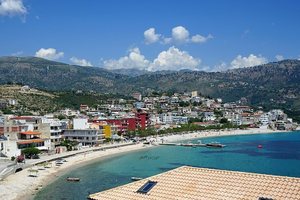
The number of active enterprises in Albania continued to g...
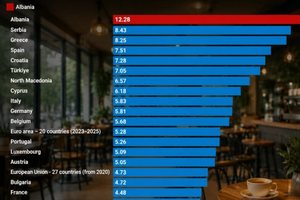
In Albania, the bar-cafe has long become an almost unique ...

This Friday, one US dollar is bought for 81.7 lek and sold...
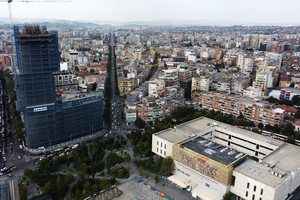
The average sale price of apartments in Tirana reaches rec...