

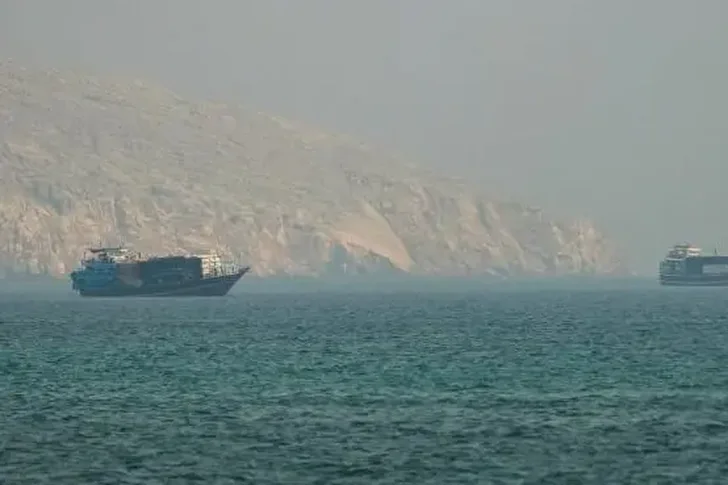
British maritime agency warns of hostile action in Hormuz
The threat level to maritime security in the Strait of Hor...


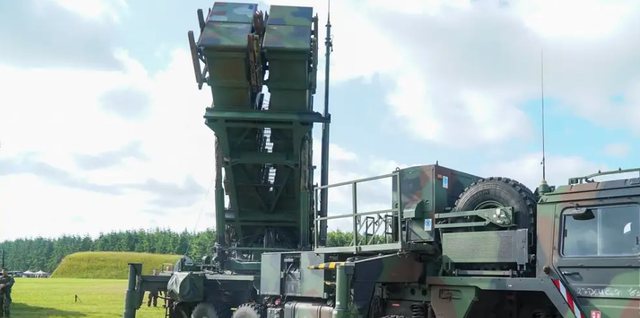
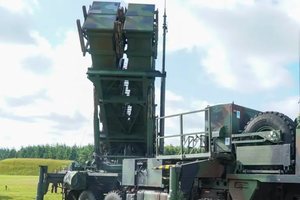
Patriot, Tomahawk, Starlink, F-35: Europe's security still depends heavily on US technology. With new weapons programs, the continent is trying to become more strategically independent. But the road is long.
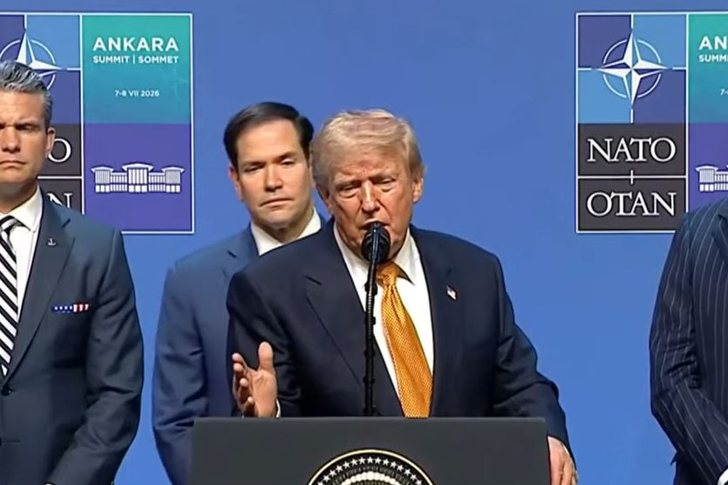
Europe continues to rely on American weapons for its rearmament. This was also evident at the NATO summit in Ankara, where an important defense industry forum was also held. American companies in particular benefited from lucrative contracts.
However, for missiles, which are vital for European defense, production and maintenance are expected to be partially transferred to Europe. Lockheed Martin and Rheinmetall have already signed a memorandum of understanding for the co-production of ATACMS missiles in Germany. The aim is to increase reserves without harming American industrial interests. In the long term, Europe aims for greater independence.
European Air Defense: The Patriot Issue
There is hardly a weapons system that symbolizes the European NATO countries' dependence on the United States more than the Patriot system. This American air defense system protects strategic targets in Ukraine and has been used for decades in many NATO countries.
The European response to this dependency does not consist of a single system. In the upper layer of air defense, where threats at high altitudes are intercepted, the Franco-Italian SAMP/T NG system aims to become the European alternative to the Patriot. The modernized version will also be able to fight ballistic missiles thanks to new sensors and missiles. The first units are expected to be delivered in 2027.
For medium-range defense, Germany relies on Diehl's IRIS-T system, which is already in service in Ukraine. It can operate at a range of up to 40 kilometers and at altitudes of up to 20 kilometers. The most advanced version, the IRIS-T SLX, is expected to enter service in 2029 and will have a range of about 80 kilometers and an altitude of up to 30 kilometers.
In the short term, Europe cannot replace the Patriot systems, but in the long term it aims to protect its airspace with self-developed systems.
ELSA: The European response to the lack of long-range capabilities
In the event of conflict, not only defensive capabilities are needed, but also offensive ones. Currently, when European armies plan precision strikes deep behind enemy lines, American systems such as Tomahawk cruise missiles dominate.
As seen at the NATO summit in Ankara, Germany is currently relying on this solution. The German government has reached a preliminary agreement with the US to purchase Tomahawk missiles and Typhoon ground-launched systems. The aim is to close the strategic gap with Russia.
However, this agreement highlights the fundamental problem of European defense policy: the necessary capabilities are being provided initially by the US, while European systems still need to be developed.
With the ELSA (European Long-Range Strike Approach) program, six European powers – including France, Germany and the United Kingdom – aim to create an industrial counterweight. The project envisages the development of new missile launchers, modern cruise missiles and drones with a long range of 500 to 2,000 kilometers.
True European independence in this area is expected to be achieved only in the early 2030s.
However, ammunition is only half the battle. The real dependence on Washington lies in identifying targets – the so-called "Kill Chain". Without an independent network of sensors, satellites and command structures, even European missiles cannot find their targets autonomously.
DECODER: The European lesson from drone warfare
The war in Ukraine has seen unprecedented use of drones. They dominate both front lines and attacks deep inside enemy territory.
This is where the DECODER (Drone and Counter-Drone European Resolve) program comes in. The EU project aims to equip European armed forces with drones and counter-drone systems, while making European industry less dependent on American developments.
Currently, most developments are being carried out at the national level. Even in Germany, new drone technology companies and the defense industry are benefiting from the demand created by the war in Ukraine and orders from the Bundeswehr.
With DECODER, these efforts can be joined at the European level. The project involves 26 EU countries, as well as Norway and Ukraine. Ukraine's involvement is considered particularly important due to its many years of experience in using drones in warfare.
The European Commission estimates that investments of 3.5 to 5 billion euros will be needed by 2033.
IRIS²: Secure satellite communication
The importance of the Starlink system on the battlefields of Ukraine has awakened Europeans.
With the IRIS² project, the European Union wants to create its own satellite service, independent of the US. The first contracts for the construction of the satellite constellation have already been signed.
Up to 290 satellites will provide secure communications between government institutions and will also be used for defense purposes. The project, worth over 10 billion euros, is expected to be built during 2029–2030 and become operational after 2030.
Saab GlobalEye: Key technology from Sweden
Before fighter jets take off or missiles are launched, Europe needs to know what is moving in the air, at sea, and on land.
To this end, NATO operates 14 AWACS aircraft, based on the American Boeing 707 model and stationed in Geilenkirchen near Aachen.
The next generation of airborne radar systems will no longer be based on American technology. At the NATO summit in Ankara, it was announced that negotiations with the Swedish company Saab for the purchase of up to ten GlobalEye early warning aircraft have begun.
If the contract is finalized quickly, the first aircraft could be delivered by 2030.
FCAS: The failed Franco-German dream
In recent years, many European countries have chosen the most modern Western fighter jet, the American fifth-generation F-35. These aircraft represent advanced technology, but also dependence on the United States.
The FCAS program (known in France as SCAF) was supposed to be the European answer. The project aimed to create the first sixth-generation fighter aircraft, integrated with accompanying drones, sensors, data networks and new weapons.
France, Germany and Spain participated in the project, with the main companies Dassault and Airbus.
However, the heart of the project – the next-generation joint jet – collapsed a few weeks ago after years of disagreement. Governments in Berlin and Paris failed to resolve a conflict between Dassault and Airbus over direction, division of labor and key technologies.
For European autonomy in the field of defense, this is a serious failure. Precisely where the dependence on American technology is most evident, the largest European defense project was derailed due to national and industrial interests./ DW

The threat level to maritime security in the Strait of Hor...
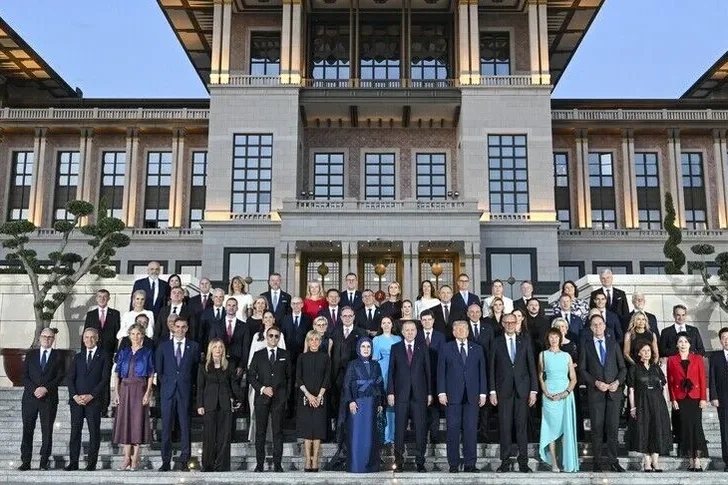
After the end of the NATO summit, Turkish President Recep ...

The Indian state of West Bengal has been gripped by protes...

San Francisco home prices have soared to record highs in 2...

In the court session, where the parties presented their op...
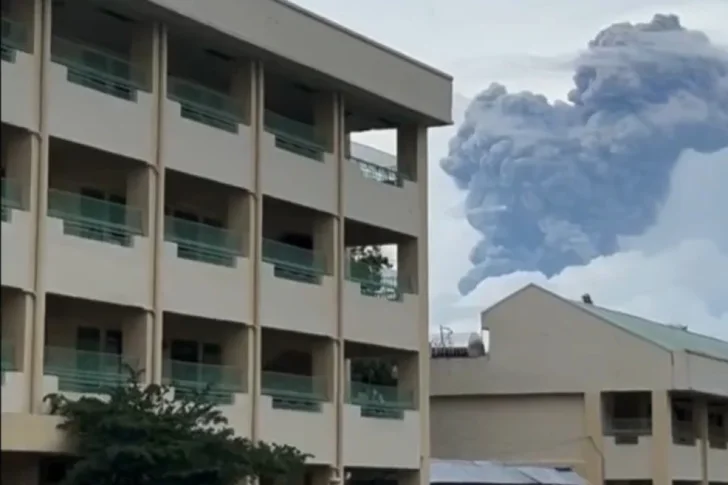
The eruption of the Kanlaon volcano on the island of Negro...
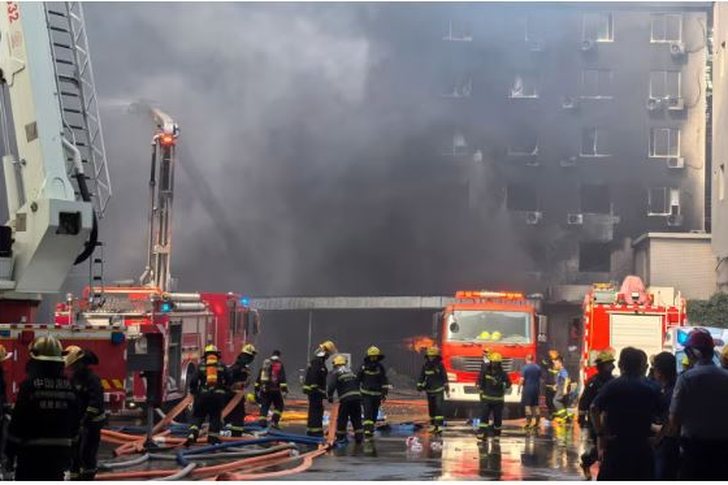
A fire at a shoe factory in southeastern China left four p...

France is facing a severe heatwave, which according to the...

As strikes are reported in Iran and Jordan, the final fune...
The acting Prime Minister of Kosovo, also the leader of th...
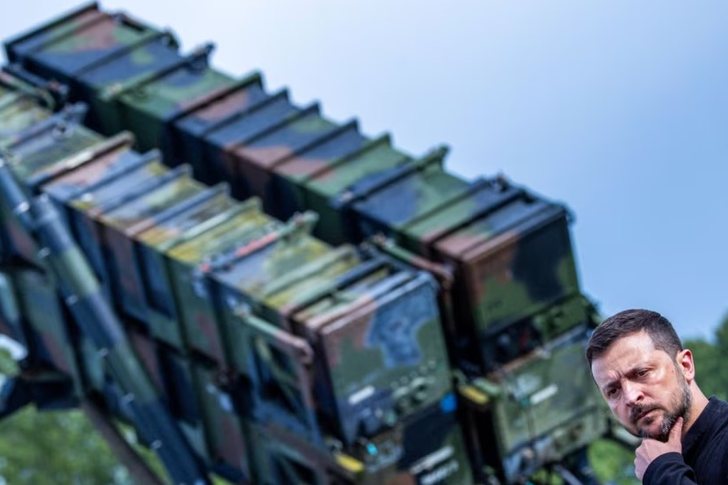
On the day Russia bombed Kiev for the third time in a week...
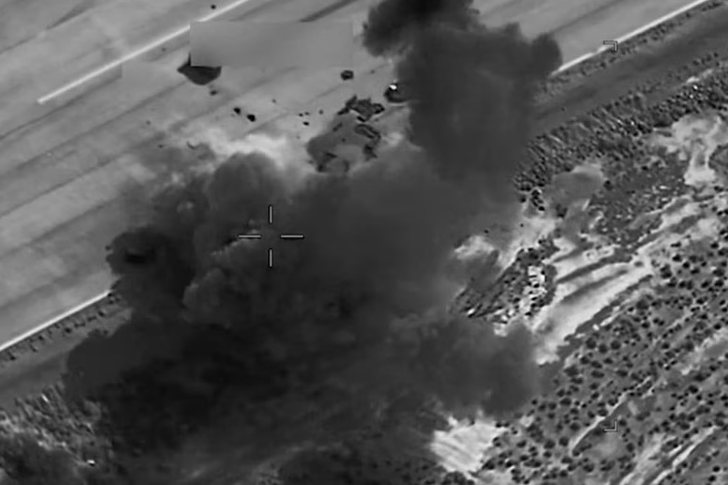
Ushtria amerikane njoftoi të mërkurën se ka kryer sulme të...

US President Donald Trump closed the NATO summit with a mo...
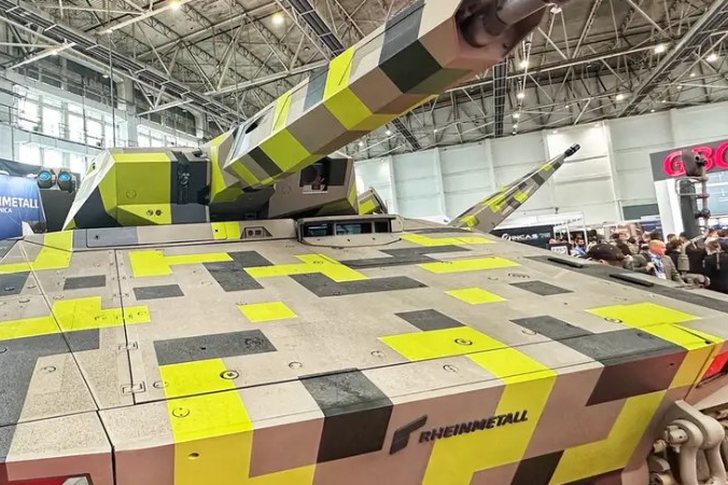
The trend of German companies moving abroad is weakening. ...

Heat waves don't affect everyone the same. According to he...
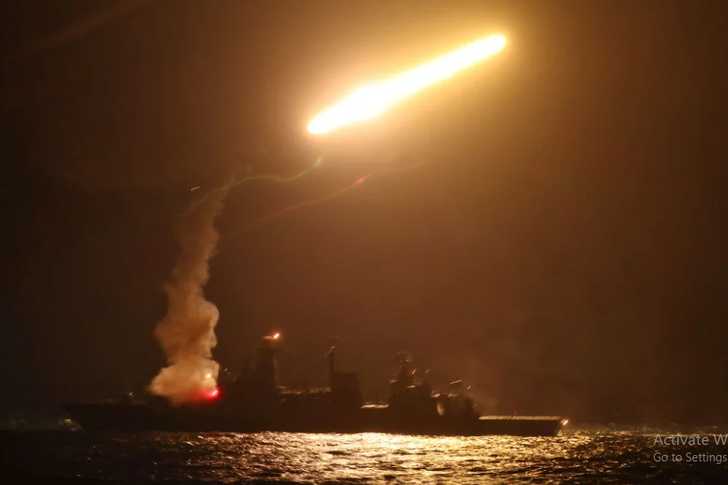
The US launched a round of air strikes against Iran this e...
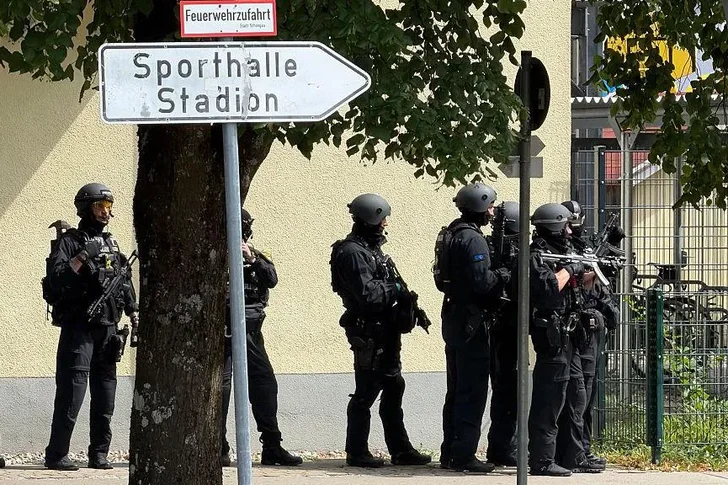
Two schoolgirls have been seriously injured after a 16-yea...
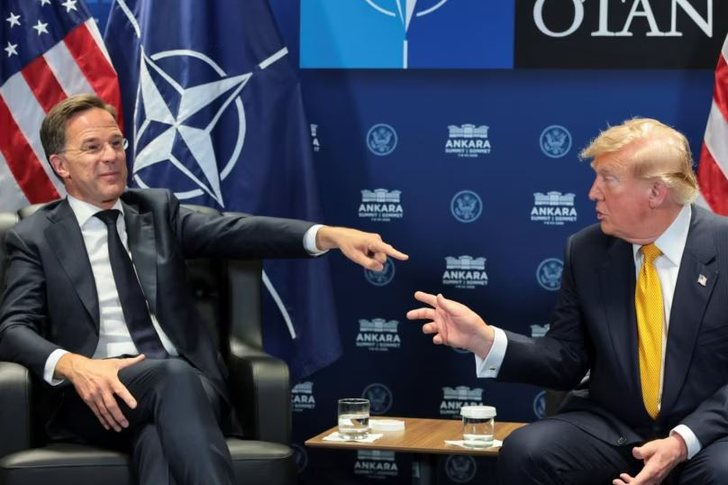
It can be said that the last day of the NATO summit in Ank...

United States Vice President JD Vance has stated that Iran...
United States President Donald Trump speaks at a news conf...

For 6 months now, CNA has been sending several letters to ...

The word "fatherland" with properties is not enough. The m...

The justice reform claimed that it would bring faster, fai...
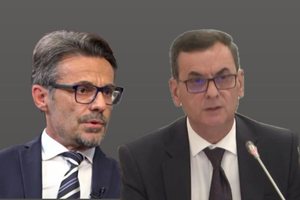
The Justice Reform and the vetting process were trumpeted ...

The Special Board of Appeal (KPA) decided this Monday ...

The KPA vetting decided this Thursday to dismiss the p...

Suela Salavaçi, a prosecutor in the Prosecutor's Offic...

The Special Board of Appeal reinstated the prosecutor ...

The murder of 40-year-old I.Gj in Laç is suspected to have...

It is reported that a few minutes ago, gunshots were recor...
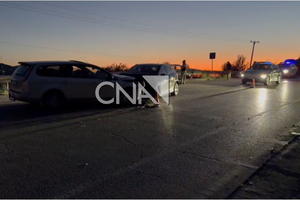
This evening, an accident occurred on the Levan-Tepelena h...

Police have provided details regarding the injury that occ...

Today our country will be affected by stable weather condi...

Emigration, an aging population, and low participation in ...
Today, our country will be affected by relatively stable w...

Albania has been awarded two medals of honor at the awards...

At least 11 people have died and six others have been inju...
Patriot, Tomahawk, Starlink, F-35: Europe's security still...

The threat level to maritime security in the Strait of Hor...
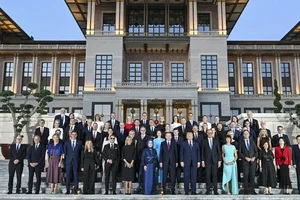
After the end of the NATO summit, Turkish President Recep ...

The German Embassy in Tirana has invited the Albanian publ...

Professor and literature scholar Ali Xhiku has passed away...

During my research into the life and artistic photographic...

This year's edition of the Gjon Mili International Video A...

In addition to food, household appliances, oil, and more, ...

The government has reduced the funds foreseen for rural de...

This Friday, one US dollar is bought for 81.4 lek and sold...

The Tax Directorate has announced that the process of auto...