


Photo-Fire in Voskopoja/ Difficult terrain for extinguishing the flames
A fire broke out this Wednesday in the village of Voskopoj...

A fire broke out this Wednesday in the village of Voskopoj...


The year 2024 was an election year. More than 70 electoral processes took place around the world, affecting more than half of the global population.
Elections this year took place in some of the largest countries in the world such as the United States, India, Indonesia and Bangladesh, as well as 27 European countries that elected the new Parliament of Europe.
The total number of votes cast in 71 electoral processes and the European Parliament elections was more than 1.6 billion, according to the International Institute for Democracy and Electoral Assistance, known as IDEA.
Changing the status quo
Elections in 2024 generally did not go in favor of the politicians in power. Every ruling party that has faced a national election in 2024 has suffered a decline, according to a November article in the Financial Times newspaper, citing the project of database of parliaments and governments 'ParlGov', linked to numerous universities in Europe.
This happened for the first time in almost 120 years, since the recording and grouping of data in this project began.
In more than 80 percent of countries, both rich and poor democracies, ruling parties lost or lost votes in recent elections, according to an ABC News analysis.
Changes in ruling parties hit the political left and right.
Conservatives scored victories in states and regions that included the United States, where former President Donald Trump won all the battleground states in the November election; Portugal, where the center-right Democratic Alliance surged in March; and the EU Parliament, where more far-right members won seats in June's elections than ever before, bringing their total to nearly a quarter of the legislative chamber.
The left capitalized on public discontent with power by surging in Britain's July parliamentary election, in which the ruling Conservative Party lost almost 20 percent of the vote compared to 2019. In South Korea, liberal opposition parties, led by from the Democratic Party, took power in the April parliamentary elections.
In some countries, ruling parties won elections but saw their parliamentary majorities shrink, including in India, where Narendra Modi's Hindu nationalist Bharatiya Janata Party lost an outright majority in parliament in June but retained power with the help of of the allies. Incumbent parties in Japan, South Africa and France saw similar trends on their way to re-election.
Another tendency is observed in less democratic countries, in which the parties in power manage the electoral process by ensuring their desired result. In Rwanda, President Paul Kagame, who was unopposed, won 99 percent of the vote. In Russia, President Vladimir Putin scored a landslide victory in March elections, which international observers said were not free or fair.
However, signs of discontent against the government have also been observed in less democratic countries. In Bangladesh, Prime Minister Sheikh Hasina was re-elected in January in elections boycotted by the opposition, but by a narrower margin than before. Seven months later, the government was overthrown in a popular uprising.
In Iran, where supreme leader Ayatollah Ali Khamenei has the final say on all state affairs, voters in July elected Masoud Pezeshkian, the most moderate presidential candidate, to replace Ebrahim Raisin, who died in a helicopter crash.
Why these changes?
Analysts say voter discontent is linked to the state of the global economy, including rising living costs.
One of the few places where the ruling party succeeded was Mexico, where Claudia Sheinbaum, handpicked by her predecessor, Andres Manuel Lopez Obrador, easily won the presidency in June. Voters there expressed satisfaction with the state of the economy, one of the few countries with that trend, according to a Pew Research Center poll in June.
Another issue faced by voters in 2024 was the increase in the number of immigrants in some countries and the ongoing consequences of the pandemic period.
In addition, the Pew research company's survey findings reveal that democracy itself has become less attractive to voters, an indication of citizens' disillusionment with government.
According to the February survey of residents of 24 democratic countries, while a large majority believe that representative democracy is a "good" system of government, an average of 59 percent told pollsters that they are dissatisfied with the way democracy works in their country. theirs.
In almost all the countries surveyed, the majority of participants said that elected officials do not care what citizens think of them. According to 42 percent of respondents, no party in their country adequately represents their views.
The year 2025 will not be as big an election year as the year 2024. However, the votes in this new year will determine if the tendencies against the incumbents will continue to grow, or if new factors will determine the results. Next year there will be elections in Argentina, Australia, Belarus, Canada, Japan, the Philippines and several other countries./VOA


Auckland is the first major city to welcome 2025, with tho...
Komisioni Qendror i Zgjedhjeve tha të martën se vendimi i ...

After New Zealand and Australia, the New Year has also str...

The 2024 US presidential election was the most importa...

New Zealand is the first country to host the New Year 2025...

It's just past 10am in London and the Pacific island natio...

A South Korean court on Tuesday issued an arrest warrant f...
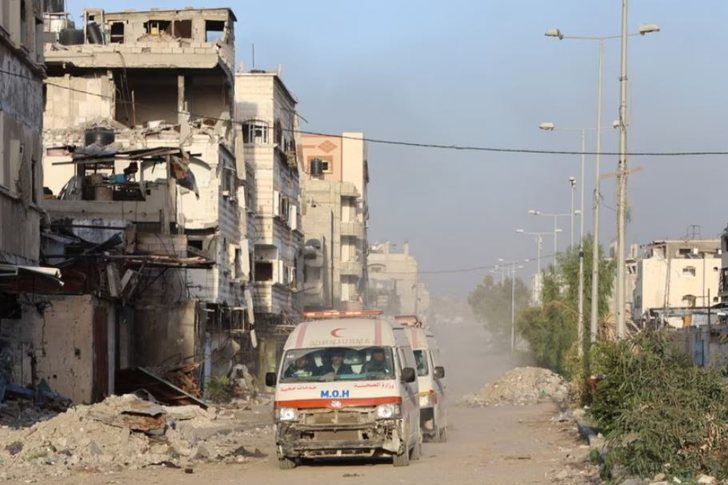
The Director-General of the World Health Organization (WHO...

Jimmy Carter, who has died aged 100, took office promi...

South Korean investigators on Monday sought an arrest warr...

Former President of the United States Jimmy Carter die...
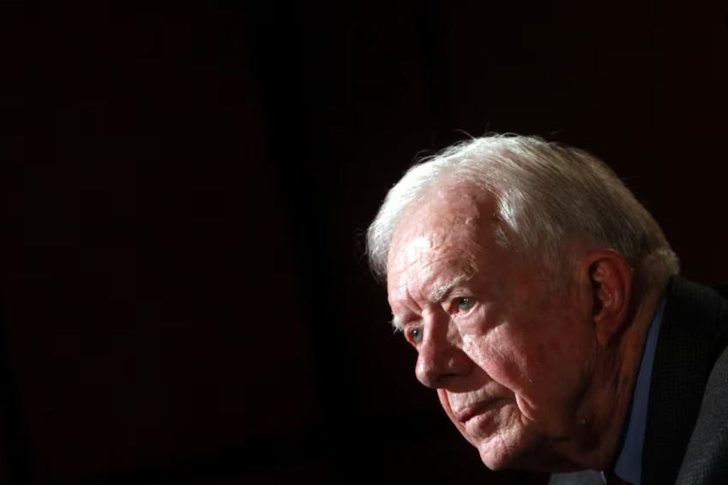
Former President of the United States Jimmy Carter die...

The former president of the USA, Jimmy Carter, died at...

Another air accident happened this afternoon, where a smal...
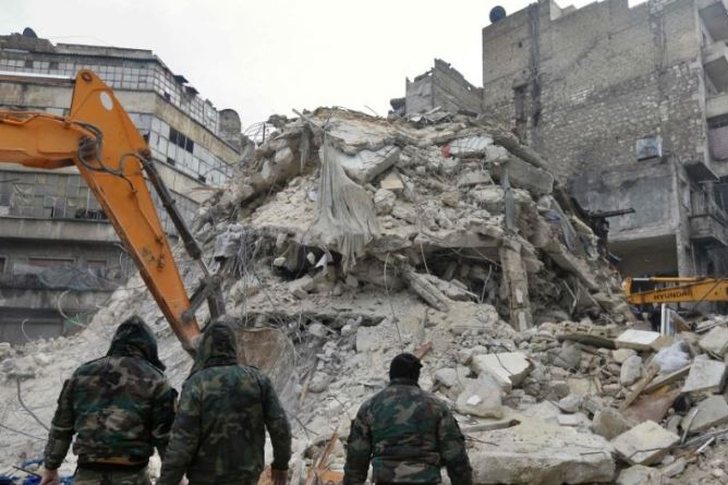
Eleven people were killed in an explosion at an arms depot...

During the campaign in August, Donald Trump made a big pro...

Austria is in negotiations to buy 12 M-346FA fighter jets ...

A Brightline train has collided with a fire station in Del...

President-elect Donald Trump appears to have sided with bi...

Azerbaijan's president, Ilham Aliyev, has accused Russ...

CNA has launched another investigation that could lead to ...

Irfan Hysenbelliu is a businessman that we call "Irfan the...

In March 2026, CNA launched another investigation centered...
The arrested mayor of Tirana, Erion Veliaj, with 13 charge...

The Special Board of Appeal (KPA) decided this Monday ...

The KPA vetting decided this Thursday to dismiss the p...

Suela Salavaçi, a prosecutor in the Prosecutor's Offic...

The Special Board of Appeal reinstated the prosecutor ...

New details have emerged regarding the accident that occur...

New details have emerged from the serious accident that oc...

A serious accident occurred this Wednesday on the Elbasan-...

Citizen MH, 61, a fisherman, was found dead near the islan...

The Institute of Geosciences has shared a forecast for wea...

Rising energy and fertilizer prices are expected to contin...

Over 18,000 foreign citizens from 140 countries have appli...

This Wednesday, our country will be under the influence of...

Prime Minister Andy Burnham has announced that most bus fa...

France's parliament has passed a law to ban social media f...

US Secretary of State Marco Rubio arrived in Manila on Jul...

In the space of a few days, Ukrainian President Volodymyr ...

At a time when industrial products are increasingly taking...

Trust among people is not just a three-syllable word. It c...

Master of humor Todi Llupi has passed away at the age of 7...

The ninth edition of "MIK Festival" kicked off with one of...

Businesses will no longer be required to simply register t...

Despite economic growth and income in recent years, Albani...

This Wednesday, one US dollar is bought for 81.4 lek and s...

Construction company licenses will have a validity period ...