

Taxes: During the first 5 months of 2025, revenues reached 188.4 billion lek
The General Directorate of Taxes has today shared data fro...


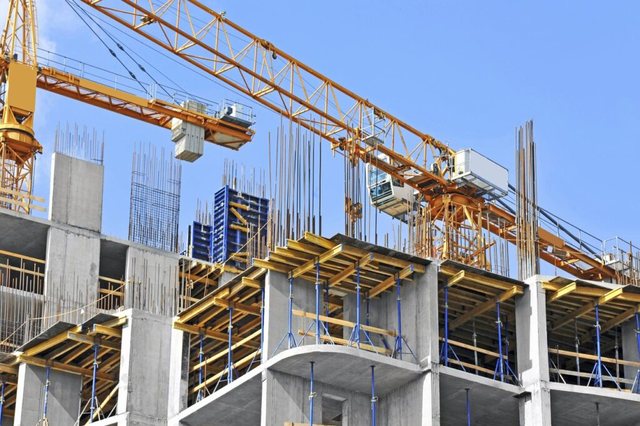
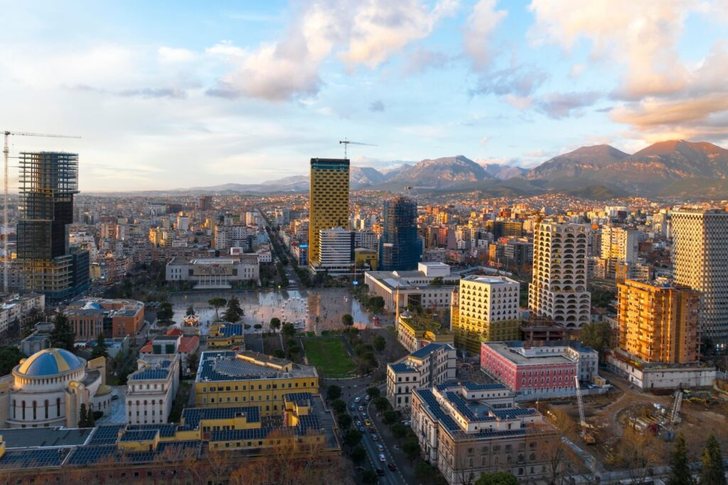
The construction sector contributed 14.4% to the creation of Albania's overall economic value in 2024, according to data published by Eurostat, with an increase of 0.6 percentage points, compared to the level of 13.8% that this sector occupied a year earlier.
Albania has the highest level of construction contribution in Europe, while in the European Union, the average share of this sector in gross value added[1] was 5.6%, or almost three times lower than in Albania.
The second country with the highest contribution of construction to the economy is Kosovo, with 9.8% in 2024, down from 10.7% the year before. In third place is Slovakia, with 8.7%, followed by Iceland, with 8.4%.
In the region, apart from Albania and Kosovo, the most construction is done in North Macedonia (6.6% of gross value added), followed by Serbia (5.9%), Bosnia and Herzegovina (5.5%) and the last is Montenegro with 3.9%. In Europe, the country that builds the least is Greece, where construction contributed 2.2% to the creation of the country's economic value.
Albania's dependence on construction has been on the rise again in recent years. In 2019, the earliest year for which Eurostat reports data, construction contributed 13% of the economy.
The high weight of construction in Albania reflects an excessive dependence of the economy on this sector and investments in real estate. With the sector accounting for almost 15% of gross value added, any movement in the property market or slowdown in construction could disproportionately hit employment, fiscal revenues and overall economic growth.
Second, the focus on the construction sector indicates a lack of diversification of the economy, especially towards innovative services. This makes the economy more sensitive to business cycles and geopolitical risks.
Construction has always been a companion of the economy, with two cycles. The first was after 1999, reached maturity in 2011 and then began to decline until 2015. From 2017, a new cycle began, initially driven by construction in the capital, and then on the coast. The second cycle has not yet reached maturity and it is not known when it will happen as construction permits, especially in the capital, are reaching a record every year, where new multi-story building projects are presented every day.
Cross-sectional data between income (wage) growth, real economic activity, bank credit, business structure and real demand suggest that part of this sector is financed by informal sources. For example, since 2014, apartment prices have increased 10 times more than the average salary, making it almost impossible for the middle class to buy an apartment, which today costs a minimum of 1500-2000 euros/m², while the average monthly salary is around 770 euros/month.
The significant strengthening of the Lek is another factor indicating the high presence of informal money. Since the end of 2016, when the second wave of construction began, the Euro has depreciated by about 27% (the common currency was exchanged for an average of 100.7 Lek in 2024, from 137.4 Lek in 2016). For the same period, the current account deficit (which measures the inflows and outflows of foreign exchange from the country) has not marked a significant improvement, as a result of the high level of imports in a country that almost no longer produces anything./ Monitor.al

The General Directorate of Taxes has today shared data fro...
The dollar rose on Monday as uncertainty over the Israel-I...

Today, in the foreign exchange market, one US dollar will ...

At a time when the internet has shifted the physical bound...

Today, in the foreign exchange market, one US dollar will ...
Albanian citizens, although paid less in Europe, at about ...

Today, in the foreign exchange market, one US dollar will ...

The National Business Center has today reminded all commer...
Today, in the foreign exchange market, one US dollar will ...
Austrian insurance group Uniqa announced the successful co...
Prices in Albania are rising very quickly, increasingly na...
Today, in the foreign exchange market, one US dollar will ...
The General Directorate of Road Transport Services (DGRTS)...
The Ministry of Finance has published a summary of the pre...
Today, in the foreign exchange market, one US dollar will ...
The real estate sector had the best performance in the ser...
The Albanian economy's income from work abroad increased a...

As Albania aims to join the EU in 2030, a large gap remain...
Today, in the foreign exchange market, one US dollar will ...
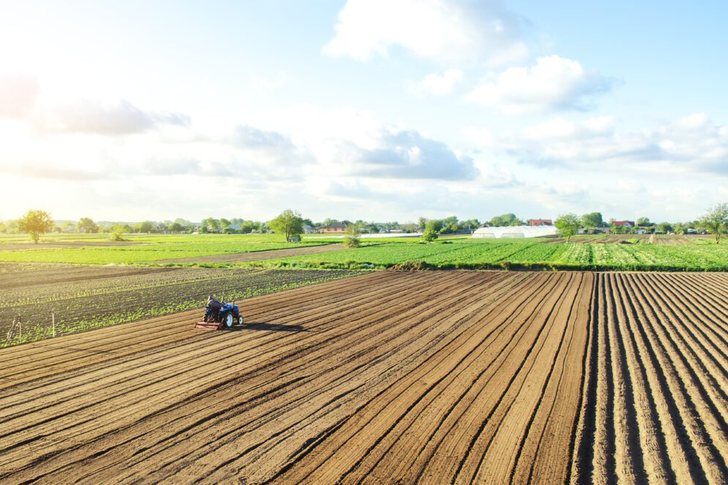
Although the agricultural sector accounts for nearly a qua...

CNA has launched another investigation that could lead to ...

Irfan Hysenbelliu is a businessman that we call "Irfan the...

In March 2026, CNA launched another investigation centered...
The arrested mayor of Tirana, Erion Veliaj, with 13 charge...

The Special Board of Appeal (KPA) decided this Monday ...

The KPA vetting decided this Thursday to dismiss the p...

Suela Salavaçi, a prosecutor in the Prosecutor's Offic...

The Special Board of Appeal reinstated the prosecutor ...
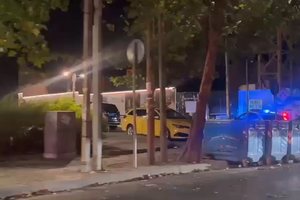
A road accident occurred this evening on Nikolla Zoraqi St...
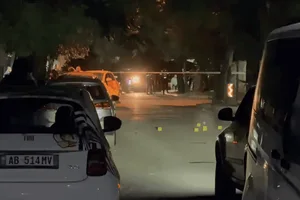
Three people were shot and wounded in Elbasan last night b...
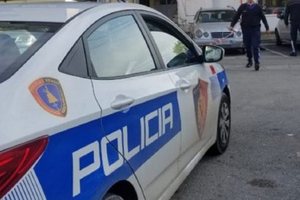
A serious incident occurred this Tuesday in the Yrshek are...

An accident occurred this Tuesday on "Dituria" street in K...
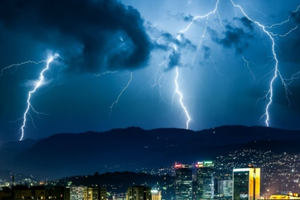
All of Southern Europe will face changing weather conditio...
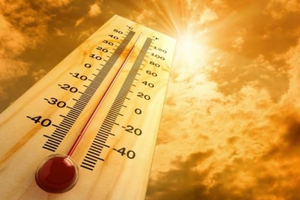
Albania was hit by temperatures significantly higher than ...
For the first time, Pogradec welcomed the Inter-Lake Chess...
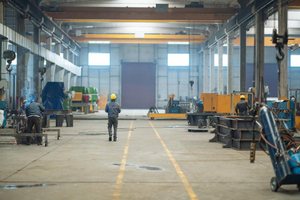
Albania has achieved a record for the employment of foreig...

US Secretary of State Marco Rubio arrived in Manila on Jul...

In the space of a few days, Ukrainian President Volodymyr ...
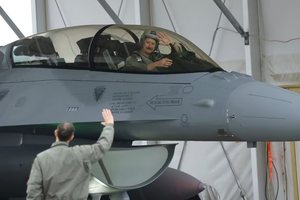
The spokesman for the Iranian Foreign Ministry warned Bulg...
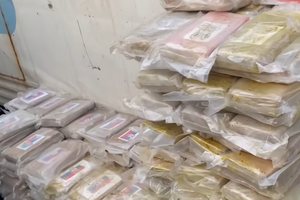
Autoritetet italiane sekuestruan pako me afër 800 kilogram...

At a time when industrial products are increasingly taking...

Trust among people is not just a three-syllable word. It c...

Master of humor Todi Llupi has passed away at the age of 7...

The ninth edition of "MIK Festival" kicked off with one of...
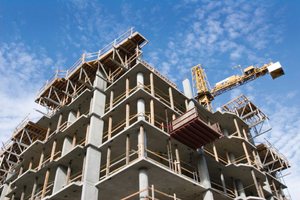
Construction company licenses will have a validity period ...
The Centralized Purchasing Operator recently opened a tend...
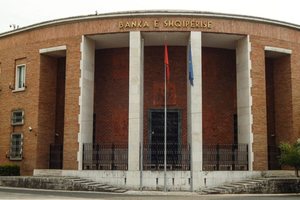
The new draft law "On the Bank of Albania" provides that t...
This Tuesday, one US dollar is bought for 81.2 lek and sol...