

Pound, at historic low/ Exchange rate, June 14, 2025
Today, in the foreign exchange market, one US dollar will ...



A poor country that pays like a rich one – to feed itself. A country where rising apartment prices are sold as an achievement and that turns a blind eye to imbalances in a market that is becoming less and less competitive.
In one of Europe's poorest countries, where agriculture represents about 16% of Gross Domestic Product – the highest percentage in Europe – Albania has paradoxically become increasingly dependent on food imports and its consumers are paying more than citizens of rich countries for basic products, even Germany.
According to Eurostat and INSTAT, Albanians spend over 40% of their monthly income on food alone, the highest percentage on the entire continent.
For comparison, in European Union countries, this percentage is around 13% and in the region it fluctuates between 25-35%.
A comparative analysis of 52 basic products, conducted by "Monitor" between Albania and Germany (see the article on the inside pages of the magazine) shows that prices in Albania are on average 25.6% higher for everyday items such as dairy products, powdered milk, detergents, baby products and processed foods – even though Germany has a per capita income about 5–6 times higher.
This situation makes many Albanians have a more expensive life than German citizens, despite a lower purchasing power of about 34% of the EU average, being not only an incentive for emigration, but also hindering the return of those who may want to reintegrate into the country's growing labor market.
Even tourists who are interested in trying traditional local food are being fed mostly with imports.
What's going wrong? First, Albania maintains one of the highest VAT rates for food in Europe, at 20%, while countries in the region and the EU apply reduced rates (from 5% in North Macedonia to 0% in Ireland).
This tax burden, combined with high transportation costs, poor logistics, and a lack of competition in the market, artificially increases prices for the consumer.
Second, although agriculture is a strategic sector, Albania has among the lowest subsidies in the region. In 2024, it allocated only 31 million euros to support agriculture, compared to 170 million euros in North Macedonia and over 400 million euros in Serbia.
Visionless policies – such as the removal of refundable VAT for farmers or the blocking of IPARD funds by the EU – have left domestic producers vulnerable, pushing them to abandon the sector.
The lack of subsidies, high land fragmentation, exclusion from support schemes, and declining investment in agricultural processing have made domestic production increasingly less competitive.
This has increased dependence on imports and has caused Albanians to pay more for the same products that we have the opportunity to produce ourselves.
Many agro-industrial sectors are either simply turning into packaging, or are importing raw materials.
One such example is the dairy processing industry, which has recently "bypassed" local farmers by sourcing from abroad. Or the beer industry, which is failing to benefit from increased demand from tourism, as it is failing to be competitive.
Albania is gradually losing its only advantage: cheap domestic production.
With rising agricultural input costs, labor shortages, and neglect of the agro-processing sector, the country is turning into a consumer of foreign products – which it buys more expensively than many other countries in Europe.
This is the essence of the paradox: a poor country that pays like a rich one – to feed itself.
A country where rising apartment prices are sold as an achievement and that turns a blind eye to imbalances in a market that is becoming less and less competitive.
In a country like Albania, where poverty is already a reality, it is absurd for citizens to pay more for basic food than citizens of more developed countries.
If politics does not prioritize attention towards supporting domestic production and easing the fiscal burden, Albania risks remaining an expensive consumer of foreign products – even for those products it can produce itself./ Monitor Magazine

Today, in the foreign exchange market, one US dollar will ...
The Tax Administration has published the reference salary ...
The Council of Ministers has approved several changes to t...

Today, in the foreign exchange market, one US dollar will ...
Albanian investments abroad suffered a slowdown in the fir...
The labor market in Albania is experiencing high dynamism ...
Today, in the foreign exchange market, one US dollar will ...
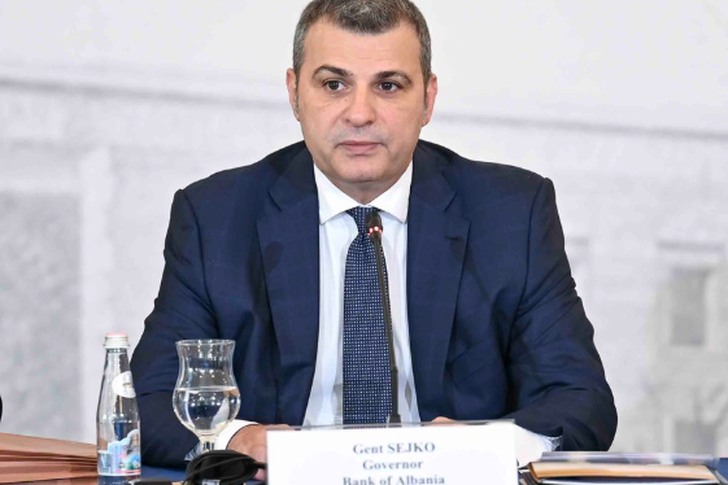
The Governor of the Bank of Albania, Gent Sejko, opened to...
Yields on 20-year bonds rose in this week's auction. Accor...
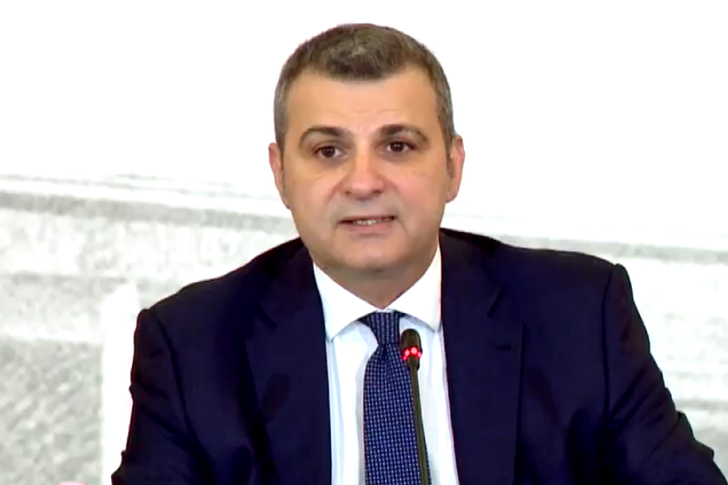
Within the framework of the 100th anniversary of its estab...

The number of Albanians who used roaming service in neighb...
Today, in the foreign exchange market, one US dollar will ...
The money that emigrants bring to their families in Albani...
Trade frictions and political uncertainty, particularly re...
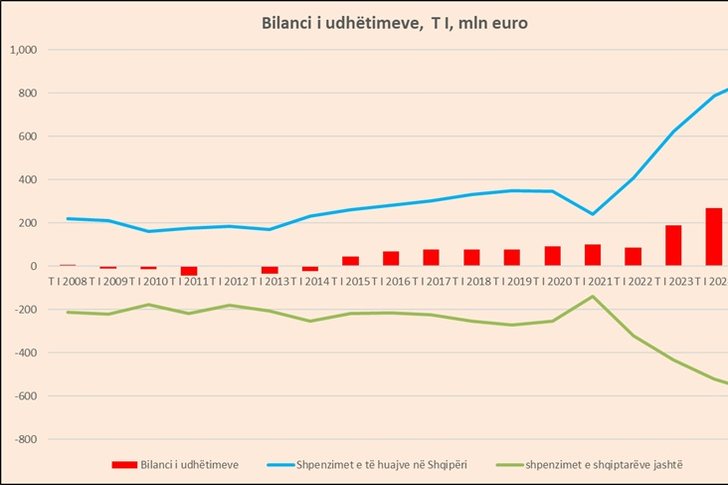
Foreigners who have traveled to Albania have recorded a re...

Today, in the foreign exchange market, one US dollar will ...
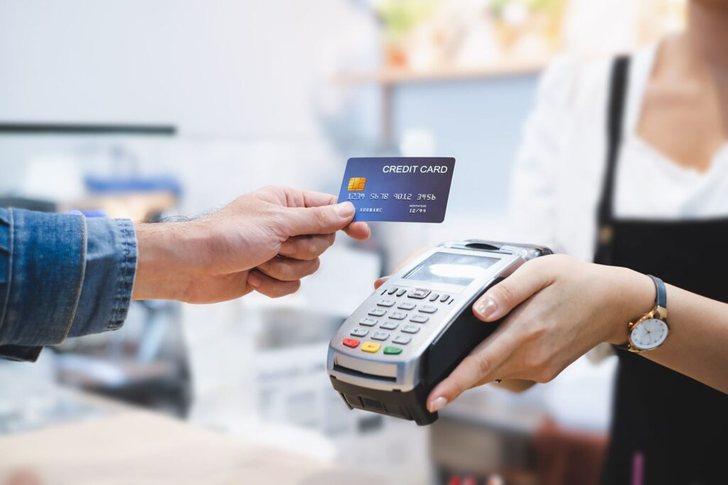
The payment card business also recorded growth in the firs...
Today, in the foreign exchange market, one US dollar will ...

Today, in the foreign exchange market, one US dollar will ...
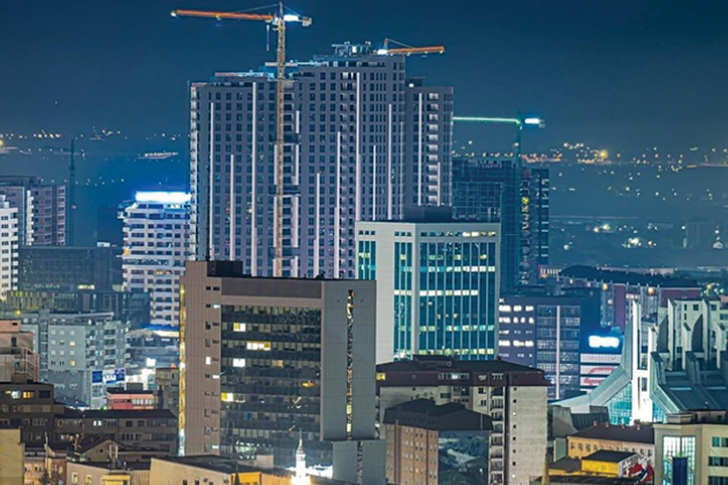
Data from the Central Bank of Kosovo (CBK) show that Alban...

CNA has launched another investigation that could lead to ...

Irfan Hysenbelliu is a businessman that we call "Irfan the...

In March 2026, CNA launched another investigation centered...
The arrested mayor of Tirana, Erion Veliaj, with 13 charge...

The Special Board of Appeal (KPA) decided this Monday ...

The KPA vetting decided this Thursday to dismiss the p...

Suela Salavaçi, a prosecutor in the Prosecutor's Offic...

The Special Board of Appeal reinstated the prosecutor ...

A road accident occurred this evening on Nikolla Zoraqi St...

Three people were shot and wounded in Elbasan last night b...
A serious incident occurred this Tuesday in the Yrshek are...

An accident occurred this Tuesday on "Dituria" street in K...
All of Southern Europe will face changing weather conditio...
Albania was hit by temperatures significantly higher than ...
For the first time, Pogradec welcomed the Inter-Lake Chess...
Albania has achieved a record for the employment of foreig...

US Secretary of State Marco Rubio arrived in Manila on Jul...

In the space of a few days, Ukrainian President Volodymyr ...
The spokesman for the Iranian Foreign Ministry warned Bulg...
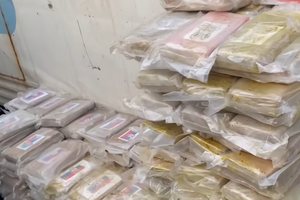
Autoritetet italiane sekuestruan pako me afër 800 kilogram...

At a time when industrial products are increasingly taking...

Trust among people is not just a three-syllable word. It c...

Master of humor Todi Llupi has passed away at the age of 7...

The ninth edition of "MIK Festival" kicked off with one of...
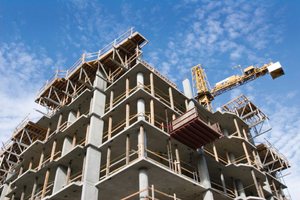
Construction company licenses will have a validity period ...
The Centralized Purchasing Operator recently opened a tend...
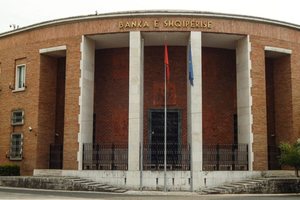
The new draft law "On the Bank of Albania" provides that t...
This Tuesday, one US dollar is bought for 81.2 lek and sol...