

The Bank of Albania does not change the interest rate
The Bank of Albania has left the basic interest rate f...


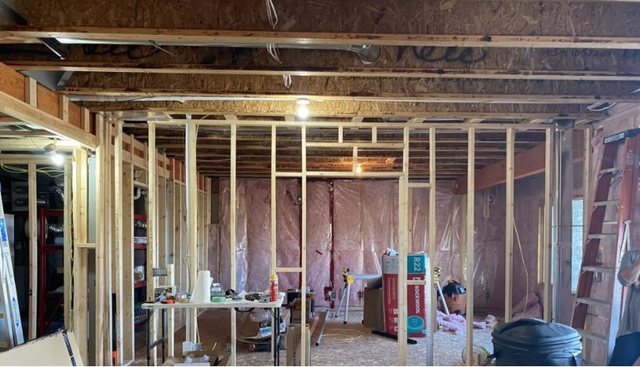
Interventions in housing in function of energy efficiency and supported by the Long-Term Strategy for the Renewal of the Building Stock, released for consultation recently, envisage several scenarios.
From the most basic to the most in-depth, the strategy analyzes the interventions in different typologies of buildings, where the main one is for residential ones.
In total, the intervention plan in the stock of buildings in the country envisages implementation until 2050, where it is calculated that the fund needed to meet the objectives of the strategy is calculated at 24 billion euros, where the most dominant part is held by residential buildings.
“Taking into account the specific renovation investment costs for the housing sector and the various EE/RE measures required to ensure highly efficient/zero emission buildings, the estimated expected investment should decarbonise the amount of residential building stock in Albania, approximately 16.5 billion euros until 2050," the strategy states.
Of the total investment needs by 2050, about 69% is required for the residential sector, 25% for the commercial/private services sector and about 6% for public sector buildings.
Three scenarios for interventions
The model that includes the strategy has made the simulations of the proposed interventions, also evaluating the energy saving that would bring each of the three scenarios from the simplest to the most in-depth and with normally higher costs.
Scenario 1
It corresponds to renovation that is not too ambitious and that relies on one or two energy efficiency measures (equipment and/or envelope) at a regulatory level (thermal regulation applied to the existing building);
Scenario 2
It is accompanied by energy efficiency measures that rely on at least two to three actions, which are: a. measures from scenario 1; b. improvement of the lighting system; c. the use of alternative systems with high energy efficiency as well as; d. the use of energy remaining from processes (waste energy) that integrates UNS production systems with HVAC.
Scenario 3
this scenario corresponds to an in-depth renovation that relies on at least three actions where the measures of scenario 1 and scenario 2 are included, adding also the inclusion of renewable energy sources on site, i.e. photovoltaic installations for energy and water heating.
The strategy analyzes several models for interventions in function of efficiency, but in this case we are separating that of a family building or an apartment.
"The individual building for a family, chosen to be part of the analysis, is a house for a family of the apartment type built in 2010, which consists of a living room and kitchen, 2 bedrooms, 1 corridor and 1 bathroom. The useful surface is 80 m2. The height between the floor and the ceiling is 2.6 m. The building will be positioned in the city of Tirana, which coincides with climate zone A of Albania", the strategy states.
Under this context, the architectural characteristics of this building are given, where it turns out that it is not thermally insulated and the heat losses and gains are large, respectively, in the cold and warm seasons. For this, the strategy provides measures according to three scenarios.
Scenario 1
Thermal insulation of walls with U = 0.3-0.4 W/m2K, thermal insulation of the roof or floor U = 0.35 and 0.5 W/m2K, replacement of windows with more efficient windows with a water transmission coefficient = 2.0-2.2 W/m2K according to requirements minimum of the legislation in force.
The optimal thickness of the thermal insulation material will be taken according to the recommendations obtained from study no. 13516017 according to the type of system, fuel and location of the reference building (within GDN). Unit costs of thermal insulation material and windows are taken from the study of the approved building price manual and the sources of the RETScreen Expert energy model database.
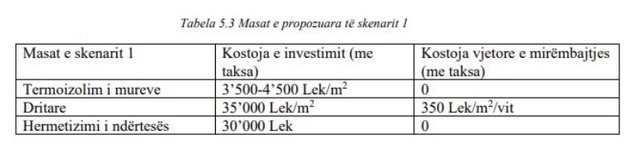
In implementing the measures provided by scenario 1, energy consumption is reduced to 46.8% compared to the base scenario.
Scenario 2
Thermal insulation of walls with U = 0.3-0.4 /m2K, thermal insulation of the roof or floor U = 0.3/0.5 W/m2K, replacement of windows with more efficient windows with transmission coefficient U =2.0-2.2 W/m2K according to the minimum requirements of the legislation in effect. Replacement of lighting system and heating system with Heat Pump system with high COP and unit cost provided by RETScreen model database, heat recovery and system management.
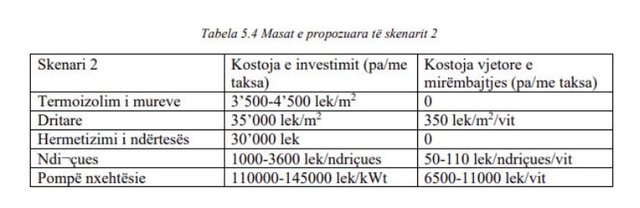
Following the measures according to scenario 2, energy consumption is reduced to 53% compared to the base scenario.
Scenario 3
(Combined scenario): Thermal insulation of walls with U = 0.3-0.4 W/m2K, thermal insulation of the roof or floor U = 0.3/0.5 W/m2K, replacement of windows with more efficient windows with transmission coefficient U = 2.0-2.2 W /m2K according to the minimum requirements of the legislation in force.
Replacement of the heating system with a Heat Pump system with high COP and unit cost provided by the RETScreen model database and process heat recovery for the production of domestic hot water (UNS) as well as the integration of on-site RES (Solar thermal panel with a thermal capacity of 2.4 kW and surface A= 3.7 m2+ Photovoltaic with a capacity of 5.5kWp and surface A= 26.3 m2.
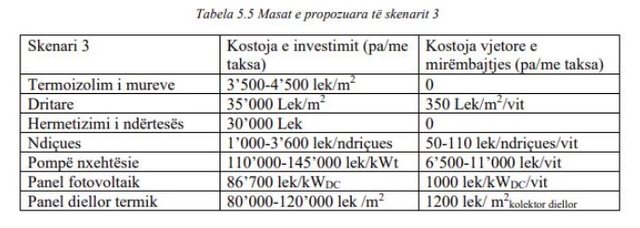
Following the measures according to scenario 3, energy consumption is reduced to 87.4% compared to the base scenario./ Monitor.al

The Bank of Albania has left the basic interest rate f...
The activities of factories producing clothing and shoes s...
An Italian couple in a video on social networks compared t...

Today, on December 18, 2024, in the foreign exchange marke...
Exports have continued with their shrinking trend in Novem...

Although salaries, especially in the state sector, are con...
The Albanian government will issue for the first time in 2...
Today, on December 17, 2024, in the foreign exchange marke...
In the conditions of the contraction of production in some...

The Albanian Association of Banks is finalizing the drafti...

The selling price of coffee on foreign exchanges is reachi...

Today, on December 16, 2024, the US dollar is bought a...
Today, on December 15, 2024, the US dollar is bought at 93...
China contributed two-thirds of global electric vehicle sa...

From April 1, 2023, the minimum wage increased from ALL 34...

Today, on December 14, 2024, the US dollar is bought at 92...
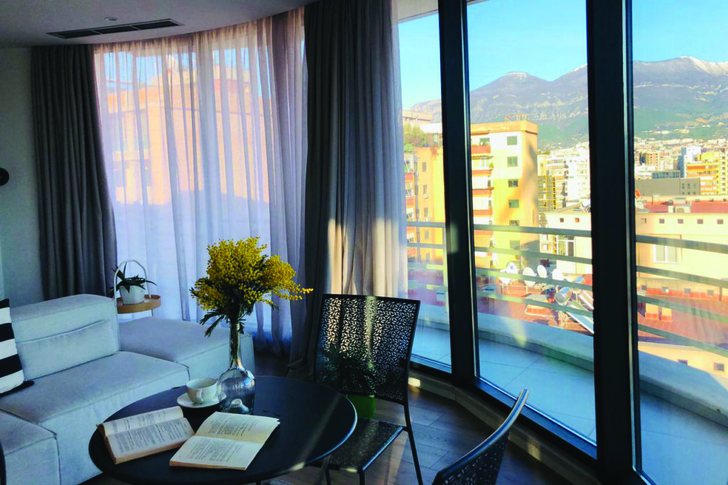
Calculated for the first time the average prices of the sa...

Today, on December 13, 2024, the US dollar is bought at 92...
After concluding the contract for the first phase of the i...
While the government two years ago entered into a feverish...

CNA has launched another investigation that could lead to ...

Irfan Hysenbelliu is a businessman that we call "Irfan the...

In March 2026, CNA launched another investigation centered...
The arrested mayor of Tirana, Erion Veliaj, with 13 charge...

The Special Board of Appeal (KPA) decided this Monday ...

The KPA vetting decided this Thursday to dismiss the p...

Suela Salavaçi, a prosecutor in the Prosecutor's Offic...

The Special Board of Appeal reinstated the prosecutor ...
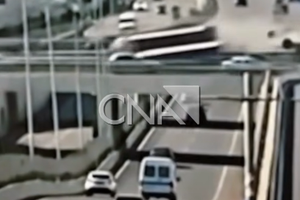
Footage emerges from the serious accident that occurred th...

A Shkodra traffic police officer was hit with hard objects...
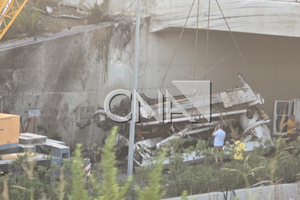
This Wednesday, around 4:00 PM, a serious accident occurre...

Tirana Police have shared details regarding the accident t...
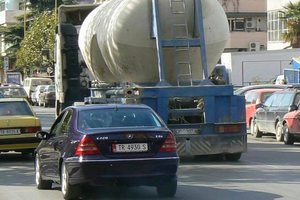
A serious accident that occurred this Wednesday with the c...

The Institute of Geosciences has shared a forecast for wea...
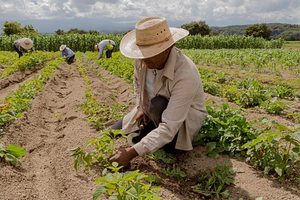
Rising energy and fertilizer prices are expected to contin...

Over 18,000 foreign citizens from 140 countries have appli...

The trial of ousted Venezuelan President Nicolas Maduro on...
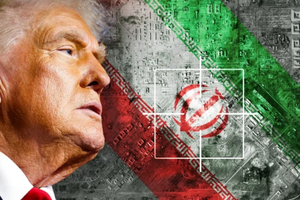
US President Donald Trump has issued another warning to Ir...

Prime Minister Andy Burnham has announced that most bus fa...

France's parliament has passed a law to ban social media f...

At a time when industrial products are increasingly taking...

Trust among people is not just a three-syllable word. It c...

Master of humor Todi Llupi has passed away at the age of 7...

The ninth edition of "MIK Festival" kicked off with one of...
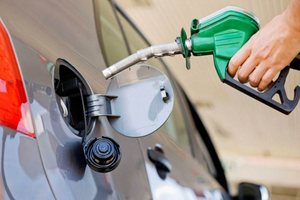
The price of diesel reached 206 lek per liter from 198 lek...

Businesses will no longer be required to simply register t...

Despite economic growth and income in recent years, Albani...

This Wednesday, one US dollar is bought for 81.4 lek and s...