

"Freeze" foreign currencies/ Exchange rate, May 26, 2024
Today, on May 26, 2024, in the foreign exchange market...


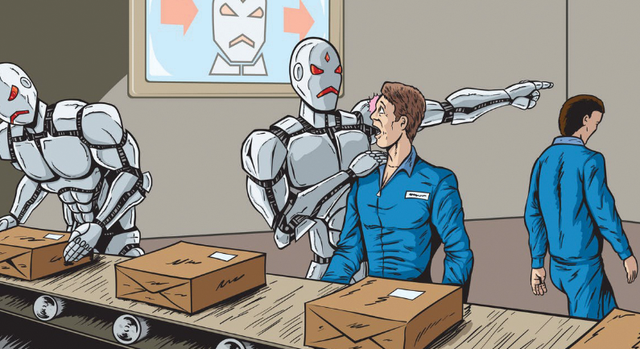
Artificial Intelligence will affect almost 40% of jobs worldwide, replacing some and complementing others. We need a balance of policies to harness the new potential, Kristalina Georgieva, Managing Director of the International Monetary Fund, said via blog.
She said the world is on the brink of a technological revolution that could boost productivity, global growth and raise incomes worldwide. However, it can replace jobs and deepen inequality.
The rapid advancement of Artificial Intelligence has stunned the world, raising important questions about its potential impact on the global economy. The net effect is difficult to predict, as AI will affect economies in complex ways.
The IMF suggests that countries should create a series of policies to safely harness the great potential of AI for the benefit of humanity.
Many studies have predicted the likelihood that jobs will be replaced by AI. However, in many cases, AI is likely to complement the work of humans. The findings of the IMF analysis are surprising.
First, almost 40% of global employment is exposed to AI.
Historically, automation and information technology have tended to impact routine tasks, but one of the things that sets AI apart is its ability to impact highly skilled work.
As a result, advanced economies face greater risks from AI, but also more opportunities to exploit its benefits, compared to emerging markets and emerging economies.
In advanced economies, about 60% of jobs could be affected by AI. Approximately half of the exposed jobs could benefit from the integration of AI, increasing productivity.
For the other half, AI applications can perform key tasks currently performed by humans, which can reduce the demand for labor, leading to lower wages and reduced employment. In the most extreme cases, some of these jobs may disappear.
In emerging markets and low-income countries, IA exposure is expected to be 40% and 26%, respectively. These findings suggest that emerging markets and developing economies face less immediate disruption from AI.
At the same time, many of these countries lack the infrastructure or workforce capable of harnessing the benefits of AI, raising the risk that over time the technology could exacerbate inequality between nations.
Artificial Intelligence can also affect income and wealth inequality within countries. It will create polarization within income groups, with employees who can leverage AI seeing an increase in their productivity and wages.
Research shows that AI can help less experienced workers increase their productivity faster. Younger workers may find it easier to take advantage of opportunities, while older workers may struggle to adapt.
The effect on labor income will largely depend on the extent to which AI will complement high-income workers. If AI significantly complements higher-income workers, it may lead to an uneven increase in their labor income. Furthermore, productivity gains from businesses applying AI are likely to increase returns to capital, which may also favor those who invite more. Both of these phenomena can exacerbate inequality.
In most scenarios, AI is likely to exacerbate overall inequality, a worrisome trend that policymakers must proactively address to prevent the technology from further fueling social tensions.
It is essential that countries create comprehensive social safety nets and provide retraining programs for vulnerable workers. By doing so, the AI ??transition can become more inclusive.
To help countries design the right policies, the IMF has developed an AI Readiness Index, which measures readiness in areas such as digital infrastructure, human capital and labor market policies, innovation and economic integration.
The human capital and labor market policy component, for example, assesses elements such as years of education and labor market mobility, as well as the proportion of the population covered by social safety nets.
The regulation and ethics component assesses the suitability to digital business models of a country's legal framework and the presence of strong governance for effective enforcement.
Using the index, IMF staff assessed the readiness of 125 countries. The findings reveal that wealthier economies, including advanced economies and some emerging market economies, tend to be better equipped to adopt AI than low-income countries, although there is considerable variation across countries.
Singapore, the United States and Denmark showed higher scores on the index, based on the four categories tracked.
The IMF advises that advanced economies should prioritize AI innovation and integration while developing robust regulatory frameworks.
For emerging markets and developing economies, the priority should be to establish a strong foundation through investments in digital infrastructure and a digitally competent workforce.
The era of Artificial Intelligence is upon us and it is still in our hands to ensure that it brings prosperity to all, the IMF analysis showed./ Monitor Magazine

Today, on May 26, 2024, in the foreign exchange market...
Today, on May 25, 2024, in the foreign exchange market...

Qeveria arkëtoi në buxhetin e shtetit gjatë muajit pri...

Human resources have become a big problem for sustaina...
Sot, më 24 maj 2024, në tregun valutor, dollari amerik...

For weeks, the exchange rate between the euro and the ...

The budget revenues in the first 4 months of the year reco...

Today, on May 23, 2024, in the foreign exchange market...

Today, on May 22, 2024, in the foreign exchange market, th...

Even throughout 2023, the main weight of the income co...
Today, on May 21, 2024, in the foreign exchange market...

The increase in labor costs for businesses is keeping ...

The Financial Intelligence Agency (AIF) has built seven ty...
Today, on May 20, 2024, in the foreign exchange market, th...

In Albania, the stability of the pension system is one of ...

Eduard Milushi, a software engineer by profession, unable ...

Tourism has become the sector that is feeding year after y...
Today, May 19, 2024, in the foreign exchange market, the A...

Albania has a history of transition characterized by high ...
Today, on May 18, 2024, in the foreign exchange market, th...

CNA has launched another investigation that could lead to ...

Irfan Hysenbelliu is a businessman that we call "Irfan the...

In March 2026, CNA launched another investigation centered...
The arrested mayor of Tirana, Erion Veliaj, with 13 charge...

The Special Board of Appeal (KPA) decided this Monday ...

The KPA vetting decided this Thursday to dismiss the p...

Suela Salavaçi, a prosecutor in the Prosecutor's Offic...

The Special Board of Appeal reinstated the prosecutor ...

A road accident occurred this evening on Nikolla Zoraqi St...

Three people were shot and wounded in Elbasan last night b...

A serious incident occurred this Tuesday in the Yrshek are...

An accident occurred this Tuesday on "Dituria" street in K...

All of Southern Europe will face changing weather conditio...

Albania was hit by temperatures significantly higher than ...

For the first time, Pogradec welcomed the Inter-Lake Chess...

Albania has achieved a record for the employment of foreig...

US Secretary of State Marco Rubio arrived in Manila on Jul...

In the space of a few days, Ukrainian President Volodymyr ...

The spokesman for the Iranian Foreign Ministry warned Bulg...

Autoritetet italiane sekuestruan pako me afër 800 kilogram...

At a time when industrial products are increasingly taking...

Trust among people is not just a three-syllable word. It c...

Master of humor Todi Llupi has passed away at the age of 7...

The ninth edition of "MIK Festival" kicked off with one of...

Construction company licenses will have a validity period ...

The Centralized Purchasing Operator recently opened a tend...

The new draft law "On the Bank of Albania" provides that t...

This Tuesday, one US dollar is bought for 81.2 lek and sol...