


From real estate to corruption, how money was laundered in 2023
The Financial Intelligence Agency (AIF) has built seven ty...


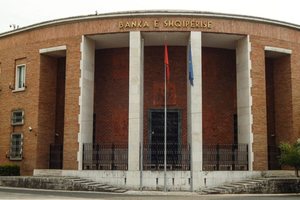
The increase in labor costs for businesses is keeping internal inflationary pressures high in the Albanian economy. According to information from the Bank of Albania, unit labor costs increased by 5.4% in the fourth quarter of 2023.
The growth of this indicator remains at high levels, but it is still in a slowing trend compared to the previous quarters.
According to the Bank of Albania, the slower growth of labor costs per unit is dictated both by the slowdown in the growth rate of the real wage, and by the gradual transition of productivity growth, from negative values ??to positive values ??during the last quarter of 2024.
However, it should be said that in average values ??for the entire year 2023, unit labor costs have expanded by 9.7%, significantly higher compared to the previous year when the increase was 2.3%.
Meanwhile, other manufacturing costs have continued the slowing trend during the fourth quarter of 2023. Producer prices increased by 3.1% from 5.2% in the third quarter of 2023.
Producer prices for the domestic market slowed more sharply than those for export, rising 4.2% from 7.2% a quarter earlier.
Since last year, the Bank of Albania has made it clear that the pressures coming from the domestic economy are gaining more and more weight in the structure of inflation.
After the meeting of the Supervisory Council, this month, the Governor, Gent Sejko, said that internal inflationary pressures, although decreasing, remain relatively high.
"These pressures are fueled by solid demand for goods and services, demand which is reflected in the rapid growth of employment, wages and production costs of the private sector," said Sejko.
The data of the Bank of Albania show that the high contribution of internal inflation to the structure of total inflation continued in the first quarter of this year.
The latest monetary policy report underlines that core and domestic inflation consolidated the convergence between them, marking the respective values ??of 2.8 and 2.9% in this quarter.
Although they decreased by about 0.6 percentage points compared to the previous quarter, they maintained higher rates than total inflation. Core net inflation also slowed, but more moderately, to 3.2 from 3.3% a quarter ago. Core net inflation continued to remain slightly above target and above the average of the last three years, reflecting the stability of inflation in services and other durable goods.
Core inflation is measured over about 69% of the CPI basket, while net core inflation excluding processed food subgroups (including bread and cereals) is measured over about 46% of it.
On the one hand, the short-term and foreign-origin components of inflation recorded a rapid decline. Non-core inflation and imported inflation marked 2.5% and 2.3%, respectively, these rates were halved compared to those of a quarter ago.
These declines mainly reflected the apparent slowdown in unprocessed food inflation, as a result of the drop in food prices in foreign markets as well as the appreciation of the exchange rate.
The formation of total inflation (2.7% for the first quarter of 2024) maintained the same profile as before, with a predominance of domestic contributions, with 2.3 percentage points.
According to the Bank of Albania, the intensity of internal inflationary pressures remained relatively high, precisely reflecting the relatively high demand for goods and services and the increase in unit labor costs. /Monitor

The Financial Intelligence Agency (AIF) has built seven ty...

Today, on May 20, 2024, in the foreign exchange market, th...

In Albania, the stability of the pension system is one of ...

Eduard Milushi, a software engineer by profession, unable ...

Tourism has become the sector that is feeding year after y...

Today, May 19, 2024, in the foreign exchange market, the A...

Albania has a history of transition characterized by high ...

Today, on May 18, 2024, in the foreign exchange market, th...
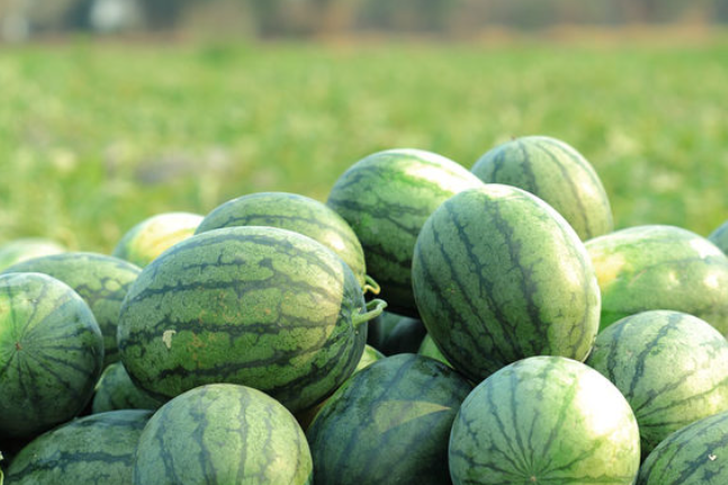
Medicinal plants, tomatoes, cucumbers, peppers, olives, wa...

The project for the construction of the Muriqan-Lezhë ...

Government work, although it continues to be a favorit...
Today, on May 17, 2024, in the foreign exchange market, th...

The yield of 15-year bonds fell significantly at this week...

Today, May 16, 2024, in the foreign exchange market, the A...

The Albanian economy is expected to grow by 3.3 percent in...
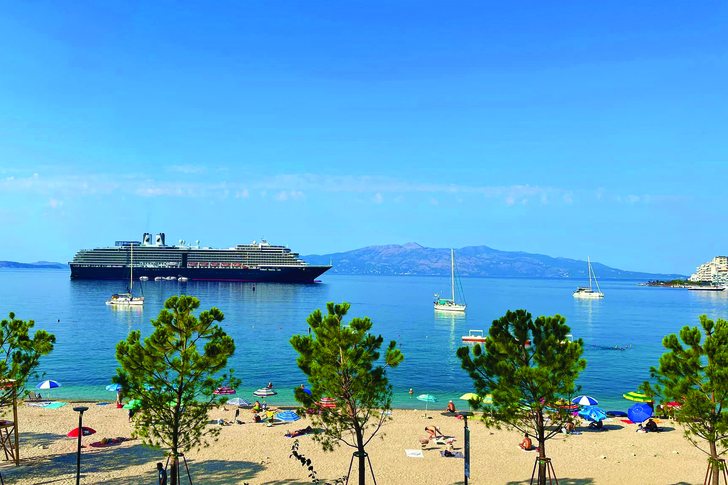
Albania is the country that had the best tourism perfo...

The majority of CEOs in Albania (62%) think that the local...

12-month bond yields fell at this week's auction. Accordi...

Today, on May 15, 2024, in the foreign exchange market, th...
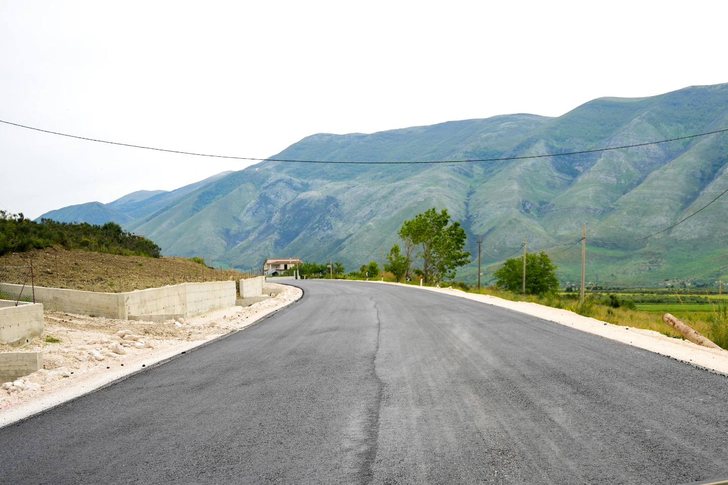
Among the most financed investment projects in 2023 were t...

CNA has launched another investigation that could lead to ...

Irfan Hysenbelliu is a businessman that we call "Irfan the...

In March 2026, CNA launched another investigation centered...
The arrested mayor of Tirana, Erion Veliaj, with 13 charge...

The Special Board of Appeal (KPA) decided this Monday ...

The KPA vetting decided this Thursday to dismiss the p...

Suela Salavaçi, a prosecutor in the Prosecutor's Offic...

The Special Board of Appeal reinstated the prosecutor ...

A road accident occurred this evening on Nikolla Zoraqi St...

Three people were shot and wounded in Elbasan last night b...

A serious incident occurred this Tuesday in the Yrshek are...

An accident occurred this Tuesday on "Dituria" street in K...

All of Southern Europe will face changing weather conditio...
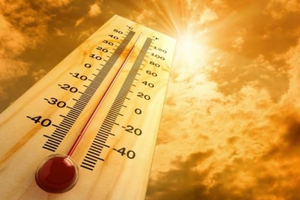
Albania was hit by temperatures significantly higher than ...

For the first time, Pogradec welcomed the Inter-Lake Chess...
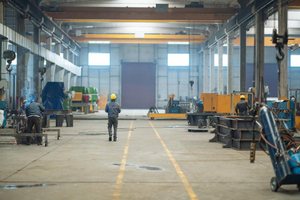
Albania has achieved a record for the employment of foreig...

US Secretary of State Marco Rubio arrived in Manila on Jul...

In the space of a few days, Ukrainian President Volodymyr ...

The spokesman for the Iranian Foreign Ministry warned Bulg...
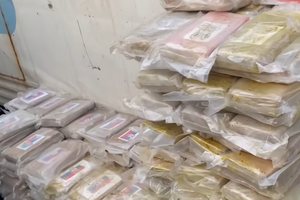
Autoritetet italiane sekuestruan pako me afër 800 kilogram...

At a time when industrial products are increasingly taking...

Trust among people is not just a three-syllable word. It c...

Master of humor Todi Llupi has passed away at the age of 7...

The ninth edition of "MIK Festival" kicked off with one of...

Construction company licenses will have a validity period ...
The Centralized Purchasing Operator recently opened a tend...
The new draft law "On the Bank of Albania" provides that t...

This Tuesday, one US dollar is bought for 81.2 lek and sol...