


12-month bond yields fell, touching the lowest level since January
12-month bond yields fell at this week's auction. Accordi...



The majority of CEOs in Albania (62%) think that the local economy will improve in the short term, but are not optimistic for the next 10 years.
A survey by "Price Water House Coopers" (PWC), a multinational brand of professional business services, found that 53% of executives in Albania expect the number of employees in their company to increase by 5% or more in the year 2024. Also, about 55% of CEOs in Kosovo have the same opinion.
However, trust is fragile, as in Albania almost half (44%) and in Kosovo more than half (55%) do not believe that their business will be sustainable in a decade, unless significant changes are made in business.
Almost half (44%) of CEOs in Albania say they do not believe their current business will be sustainable a decade from now, if it continues on its current trajectory – up from 46% in 2023. CEOs expressed uncertainty about how megatrends will be managed.
CEOs are more confident than last year in their plans to grow their companies' revenue in the next 12 months – from 24% to 38%.
The survey of 35 Albanian CEOs revealed that 38% of CEOs are optimistic about global economic growth prospects over the next 12 months, up from 24% in 2023.
CEOs' expectations of an economic downturn have also fallen from a record high last year (76%) to 32%, as perceived exposure to inflation fell by 20 percentage points (to 29%) and macroeconomic stability increased by 6 percentage points (to 35%) respectively.
The percentage of executives who felt their company was very or extremely exposed to the risk of geopolitical conflict increased by 1 percentage point (to 21%).
CEOs increasingly see Artificial Intelligence as a catalyst for efficiency, innovation and transformational change. 50% of CEOs believe that Artificial Intelligence will significantly change the way their company creates, delivers and adds value in the next three years.
But in terms of short-term impact, CEOs are not so optimistic about the role of Artificial Intelligence.
Over the next 12 months, only a third (32%) expect it to improve the quality of their products or services, and 24% say it will increase their ability to build trust with stakeholders.
Some also expect good results for their business – 15% expect it to positively impact business revenue and 26% expect it to positively impact profit.
But while CEOs are increasingly seeking the transformative benefits of AI, a large majority say application will require upskilling the workforce (50%).
They also expressed concern about cybersecurity risk (53%), misinformation (41%), legal liability and reputational risk (29%).m beyond the next decade without innovation – up from 39% in 2023.
But as CEOs take action, they face a number of challenges. Two-thirds (58%) cite the regulatory environment as impeding their ability to bring innovation and newness to their business model to at least a moderate extent, 44% point to competitive operational concerns, and 41% point to a lack of skills in their company's workforce.
Another obstacle is inefficiency. CEOs perceive significant inefficiency in a variety of their companies' routine activities – everything from decision-making meetings to emails – seeing approximately 36% of time spent on these tasks as inefficient./ Monitor.al

12-month bond yields fell at this week's auction. Accordi...

Today, on May 15, 2024, in the foreign exchange market, th...

Among the most financed investment projects in 2023 were t...
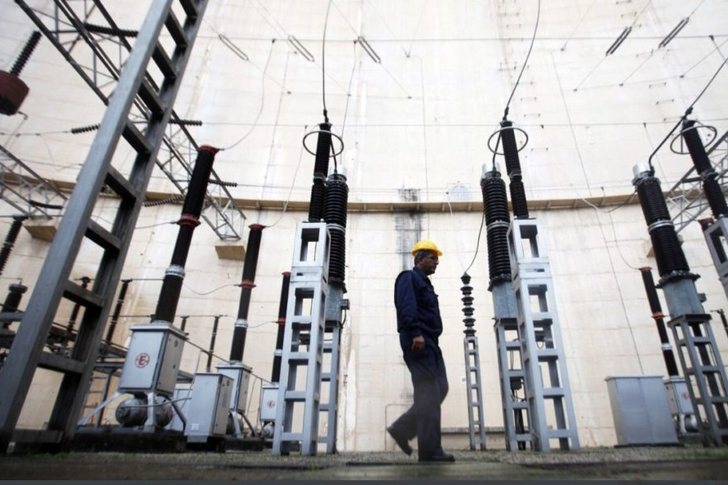
The Energy Regulatory Authority (ERE) announced that there...

Remote banking (home banking), via the Internet or mobile ...

Chronic diseases are increasing rapidly, as funds for reim...

Today, on May 14, 2024, in the foreign exchange market, th...

Farmers in Albania, Montenegro and North Macedonia face si...

Individuals' investments in bonds and bonds of the Albania...

Today, on May 13, 2024, in the foreign exchange market, th...

A person living in Albania needs to spend 4.4 USD per day ...

Young people belonging to Generation Z place more importan...

Today, on May 12, 2024, in the foreign exchange market...
Kredo Finance and ABI Bank successfully completed the proc...
Today, on May 11, 2024, in the foreign exchange market...

In addition to the debates about the incorrect applica...

Today, on May 10, 2024, in the foreign exchange market, th...

Commercial banks have fully repaid the sixth year's contri...

The first greenhouse tomato season is at peak production, ...

The number of Albanian bank customers who choose to in...

CNA has launched another investigation that could lead to ...

Irfan Hysenbelliu is a businessman that we call "Irfan the...

In March 2026, CNA launched another investigation centered...
The arrested mayor of Tirana, Erion Veliaj, with 13 charge...

The Special Board of Appeal (KPA) decided this Monday ...

The KPA vetting decided this Thursday to dismiss the p...

Suela Salavaçi, a prosecutor in the Prosecutor's Offic...

The Special Board of Appeal reinstated the prosecutor ...

A road accident occurred this evening on Nikolla Zoraqi St...

Three people were shot and wounded in Elbasan last night b...

A serious incident occurred this Tuesday in the Yrshek are...

An accident occurred this Tuesday on "Dituria" street in K...

All of Southern Europe will face changing weather conditio...

Albania was hit by temperatures significantly higher than ...

For the first time, Pogradec welcomed the Inter-Lake Chess...

Albania has achieved a record for the employment of foreig...

US Secretary of State Marco Rubio arrived in Manila on Jul...

In the space of a few days, Ukrainian President Volodymyr ...

The spokesman for the Iranian Foreign Ministry warned Bulg...

Autoritetet italiane sekuestruan pako me afër 800 kilogram...

At a time when industrial products are increasingly taking...

Trust among people is not just a three-syllable word. It c...

Master of humor Todi Llupi has passed away at the age of 7...

The ninth edition of "MIK Festival" kicked off with one of...

Construction company licenses will have a validity period ...
The Centralized Purchasing Operator recently opened a tend...
The new draft law "On the Bank of Albania" provides that t...

This Tuesday, one US dollar is bought for 81.2 lek and sol...