


Foreign currencies do not come out of the "abyss"/ Foreign exchange, October 6, 2024
Today, on October 6, 2024, in the foreign exchange market,...


Decarbonizing the world's electricity supply chain will require more than solar panels and wind turbines, which rely on sunlight and a steady wind to generate power.
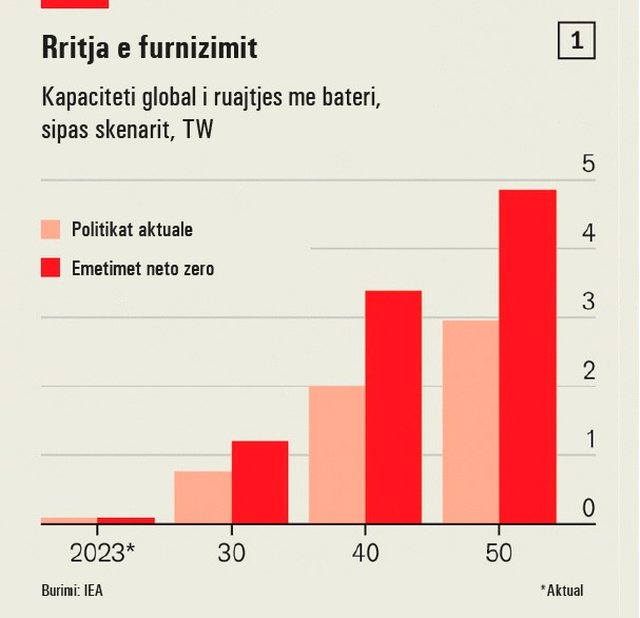
One solution to this problem is network-scale storage, but there aren't enough of them. The International Energy Agency (IEA) estimates that global battery storage capacity will need to grow from less than 200 gigawatts (GW) last year to more than a terawatt (TW) by the end of the decade and nearly 5TW by 2050, if the world is to achieve net zero emissions (see chart 1).
Fortunately, however, the grid energy storage business is finally gaining momentum.
Traditionally, grid-scale storage relied on hydroelectric systems that moved water between reservoirs at the top and bottom of a slope. Nowadays, the method of giant stationary batteries placed in rows is increasingly being chosen.
According to the IEA, 90 GW of batteries were installed worldwide last year, double the amount in 2022. Of this, about two-thirds were for the grid and the remainder for other applications such as solar or residential. .
Prices are falling and new methods are being developed. Consulting firm Bain estimates that the market for grid-scale energy storage could expand from about $15 billion in 2023, to $200 billion, to $700 billion by 2030, and to $1-3 trillion thereafter. dollars by 2040.
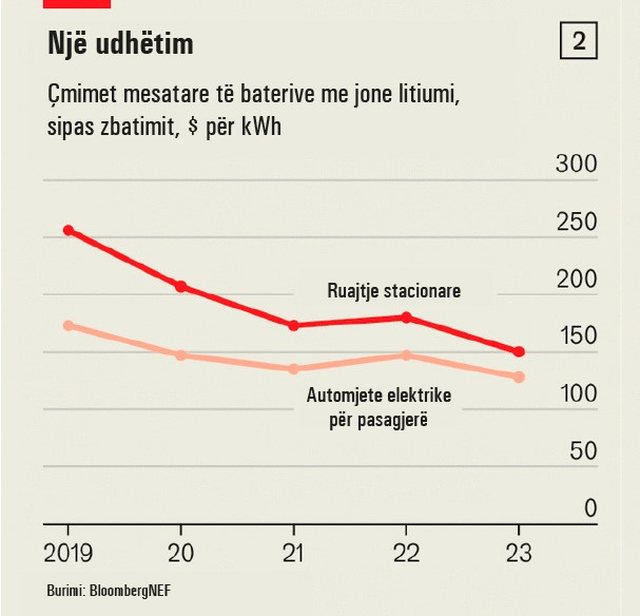
The falling price of lithium batteries is driving their use in the grid. According to research group BloombergNEF, the average price of stationary lithium storage batteries measured in kilowatt-hours fell by about 40% between 2019 and 2023.
The slowing pace of purchase of electric vehicles, which run on similar technology, has made battery manufacturers take a greater interest in grid energy storage.
In 2019, stationary lithium batteries were almost 50% more expensive than those used in electric vehicles. This difference has now fallen to less than 20% as manufacturers have been added (see chart 2).
The IEA calculates that solar power combined with batteries is now competitive with coal-fired electricity in India and is on track to become cheaper than gas-fired power in America within a few years.
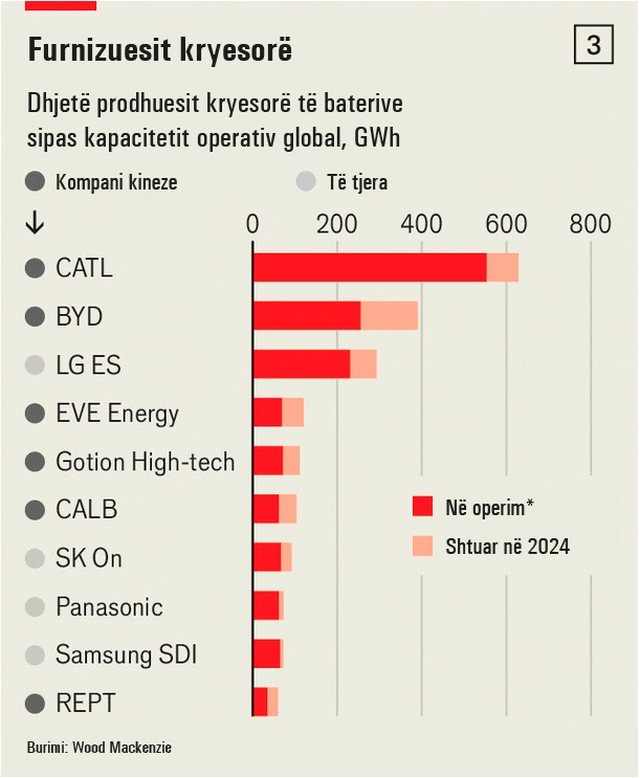
Qendra e prodhimit global të baterive është Kina. Ajo është shtëpia e katër nga pesë prodhuesit më të mëdhenj në botë, duke përfshirë kompanitë e mëdha CATL dhe BYD (shih grafikun 3). Pjesa globale e Kinës në prodhimin e baterive të krijuara për ruajtje stacionare, është rritur nga pothuajse zero në vitin 2020, në rreth një të pestën vitin e kaluar.
Rritja është ndihmuar nga politikat vendase që kanë vendosur që projektet e mëdha të energjisë diellore dhe të erës të instalojnë gjithashtu hapësirën e magazinimit.
Kompanitë e baterive të Kinës janë jashtëzakonisht inovative. Për shembull, kompania CATL, ka rritur me tetëfish investimet në kërkim dhe zhvillim që nga viti 2018, duke arritur në 2.5 miliardë dollarë vitin e kaluar. Kompania BYD, e cila ka investuar shumë në robotikë dhe inteligjencë artificiale, ka ndërtuar një strukturë baterish në qytetin kinez Hefei.
Kjo strukturë është pothuajse tërësisht e automatizuar. Por industria ka gjithashtu kapacitet të tepërt. Sipas BloombergNEF, Kina prodhon tashmë mjaftueshëm bateri litiumi për të kënaqur kërkesën globale të të gjitha llojeve. Industria e saj ka njoftuar planet për një kapacitet të mëtejshëm prej 5.8 teravat/orë (TWh) deri në vitin 2025, më shumë se dyfishi i kapacitetit të tanishëm global prej 2.6 TWh.
Kjo do të jetë katastrofike për shumë firma në industrinë e baterive, përfshirë ato që prodhojnë për rrjetin. Sipas grupit kërkimor Benchmark Mineral Intelligence, ndërtimi i 19 fabrikave të baterive në Kinë, u anulua ose u shty në shtatë muajt e parë të vitit 2024.
Rënia e çmimeve ka goditur gjithashtu shumë firma perëndimore startup që merren me prodhimin e baterive. Një shembull është firma suedeze Northvolt, që ishte konsideruar nga disa si përgjigjja e Europës ndaj kampionëve të Kinës.
Vitin e kaluar, ajo raportoi një humbje prej 1.2 miliardë dollarësh, nga 285 milionë dollarë në vitin 2022. Pasoja e gjithë kësaj ka të ngjarë të jetë një valë konsolidimi, siç parashikoi në fillim të këtij viti Robin Zeng, shefi i firmës CATL.
Megjithatë, dështimet e disa prodhuesve të baterive janë diçka që mund të ndihmojë, në vend që të dëmtojë. Çmimet mund të bien më tepër teksa kompanitë më produktive marrin një pjesë më të madhe të tregut.
Konkurrenca e ashpër tashmë po nxit risinë, pasi kompanitë po kërkojnë teknologji të reja për t’i ndihmuar ato të jenë konkurruese. Bateritë me jone natriumi janë një alternativë mjaft premtuese. Ato nuk kanë nevojë për litium të kushtueshëm dhe megjithëse kanë një densitet më të ulët të energjisë, ky nuk është ndonjë problem i madh për bateritë e palëvizshme.
Prodhuesit po nxitojnë të zhvillojnë teknologjinë për rrjetin. Disa firma startup po ndërmarrin nisma guximtare. Natron, një firmë amerikane e mbështetur nga gjiganti i naftës Chevron, do të investojë 1.4 miliardë dollarë për të ndërtuar një fabrikë baterish me jone natriumi në Karolinën e Veriut, e cila është planifikuar të hapet në vitin 2027.
Landon Mossburg, CEO of Peak Energy, a sodium ion startup company, says he wants his firm to become the American version of China's CATL.
Tom Jensen, head of startup Freyr Battery, thinks the only way Western battery companies can compete is through new technologies. The list of innovative approaches is growing.
Startup firm EnerVenue is launching a nickel-hydrogen battery. The firm has raised over $400 million and will build a factory in Kentucky that it hopes will produce inexpensive batteries that can store energy for long periods.
These new technologies are well-suited to meet the increased power demand from data centers, which tech giants want to power with renewable energy.
The fact that sodium-ion batteries are less prone to catching fire than lithium-based ones makes them particularly attractive to technology companies because it lowers safety costs, notes Jeff Chamberlain, head of investment firm Volta Energy Technologies, which focuses on in the energy storage business. Colin Wessels, CEO of startup firm Natron, notes that the firm plans to supply batteries primarily to data centers.
The huge needs of data centers are also leading to gaps in the grid infrastructure, which is needed to generate and transmit power. Longer battery life like EnerVenue's can solve this problem.
Aaron Zubaty, CEO of the energy company Eolian, predicts major innovations in energy storage methods to meet the growing demand on power grids over the next decade.
So network-scale storage is advancing rapidly. "Batteries have done in five years what solar energy took 15 years to do," notes one analyst. As Fatih Birol, head of the IEA agency, says: "Batteries are changing the game before our eyes"./ Monitor.al

Today, on October 6, 2024, in the foreign exchange market,...

Europe has finally realized that it has a problem with eco...

There is an increasing trend for restaurants, hotels, furn...

Today, on October 5, 2024, in the foreign exchange mar...

Today, on October 4, 2024, in the foreign exchange market,...

According to the Balkan Barometer 2024 report, Albania...
Wheat crop has been one of the most widely planted crops i...
Today, on October 3, 2024, in the foreign exchange market,...
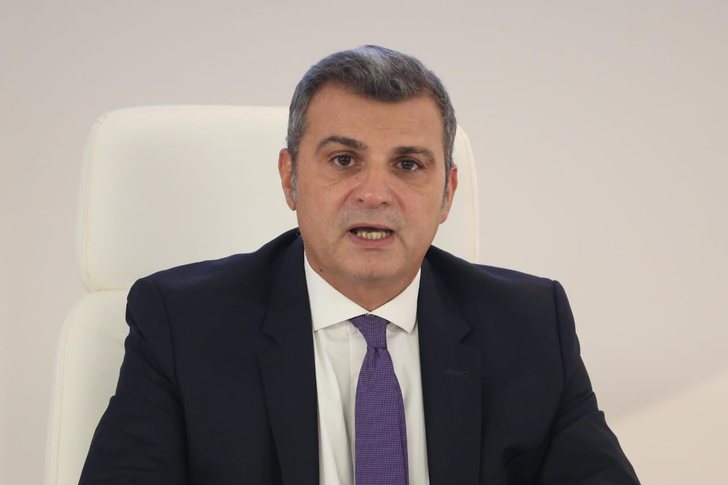
The governor of the Bank of Albania, Gent Sejko, in a ...

INSTAT has corrected the contribution of economic activiti...
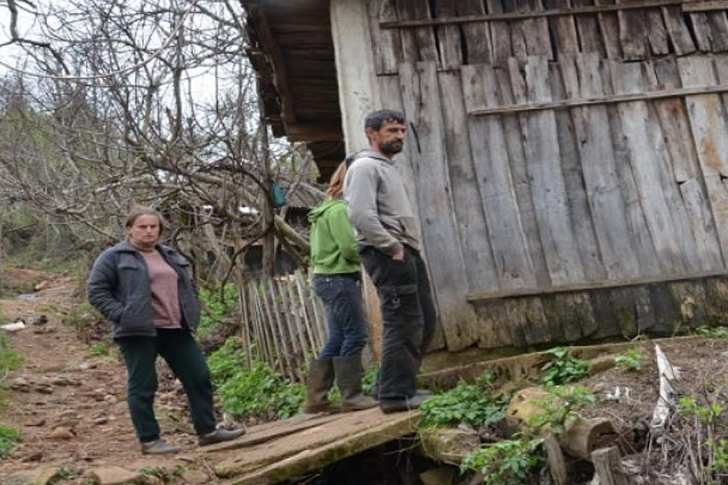
Northern Albania together with the Van Region in Turkey tu...

After a year of poor production, a high amount of olives f...

Today, on October 2, 2024, in the foreign exchange mar...

Statistics show that the rapid growth of credit is proceed...
There is a trend of lifestyle change, where entertainment ...

Today, on October 1, 2024, in the foreign exchange market,...
The fall of the euro beyond the government's projections s...
Businesses in the country are increasingly suffering from ...

In recent years, Albanian businesses are considering the l...

Today, on September 30, 2024, in the foreign exchange mark...

CNA has launched another investigation that could lead to ...

Irfan Hysenbelliu is a businessman that we call "Irfan the...

In March 2026, CNA launched another investigation centered...
The arrested mayor of Tirana, Erion Veliaj, with 13 charge...

The Special Board of Appeal (KPA) decided this Monday ...

The KPA vetting decided this Thursday to dismiss the p...

Suela Salavaçi, a prosecutor in the Prosecutor's Offic...

The Special Board of Appeal reinstated the prosecutor ...

A road accident occurred this evening on Nikolla Zoraqi St...

Three people were shot and wounded in Elbasan last night b...

A serious incident occurred this Tuesday in the Yrshek are...

An accident occurred this Tuesday on "Dituria" street in K...
All of Southern Europe will face changing weather conditio...
Albania was hit by temperatures significantly higher than ...

For the first time, Pogradec welcomed the Inter-Lake Chess...
Albania has achieved a record for the employment of foreig...

US Secretary of State Marco Rubio arrived in Manila on Jul...

In the space of a few days, Ukrainian President Volodymyr ...

The spokesman for the Iranian Foreign Ministry warned Bulg...

Autoritetet italiane sekuestruan pako me afër 800 kilogram...

At a time when industrial products are increasingly taking...

Trust among people is not just a three-syllable word. It c...

Master of humor Todi Llupi has passed away at the age of 7...

The ninth edition of "MIK Festival" kicked off with one of...

Construction company licenses will have a validity period ...
The Centralized Purchasing Operator recently opened a tend...

The new draft law "On the Bank of Albania" provides that t...
This Tuesday, one US dollar is bought for 81.2 lek and sol...