


Record in Europe/ Even in 2023, Albanian families spent almost 40% of the budget on food
There is an increasing trend for restaurants, hotels, furn...


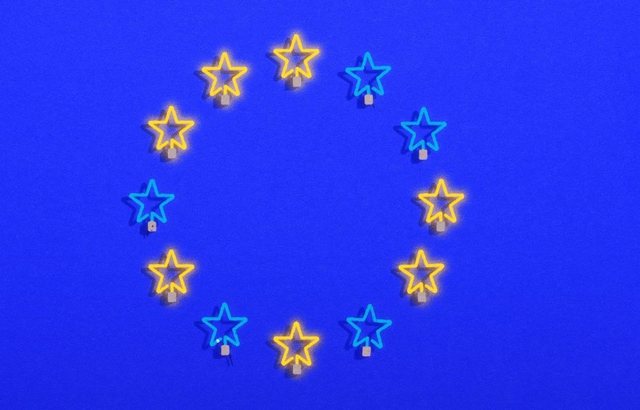
Europe has finally realized that it has a problem with economic growth. Can he find a solution?
A report recently published by Mario Draghi, former president of the European Central Bank and former prime minister of Italy, tries to provide a solution to the problem of the European economic decline. In the 400-page report, Mr. Draghi outlines a plan to revive Europe's economy.
Ursula von der Leyen, the recently re-elected president of the European Commission, usually takes his advice. Even Elon Musk, the owner of the Tesla and X companies, who has often opposed the EU, praised Draghi's "criticism".
This report follows another published in April, by Enrico Letta, another former Italian prime minister, which examined the common market. Both reports focus on how to make Europe more competitive.
The authors want to spur innovation, remove funding for riskier ventures, and unite fragmented markets. In short, they want to make Europe more European, which is desirable, at least in these areas.
The main questions are: Will European countries be ready to integrate in sensitive sectors such as defense? Will they be able to overcome small differences? And will they be willing to spend on demand?
Although Europe has long been poorer than America, European citizens didn't give a damn about it. Americans were gunned down while they enjoyed coq au vin in prosperous Europe.
But as Mr. Draghi states in the report, the world around Europe has changed, and the lack of economic growth and innovation may become a threat to the high standard of living enjoyed by the continent. "The EU has reached a point where, if no action is taken, it will be forced to compromise its well-being, environment or freedom," he writes.
There are many developments in the world that support Mr. Draghi's claims, including the fact that the rest of the world is no longer playing by the EU's rules. Taking a cue from America and China, countries are using protectionist policies in an attempt to favor their own companies. Europe fears it will lose out economically if its companies cannot compete.
It also risks becoming dependent on foreign supply chains that China wants to dominate, or being harmed by a future US administration that, perhaps in a time of crisis, could restrict access to advanced technology.
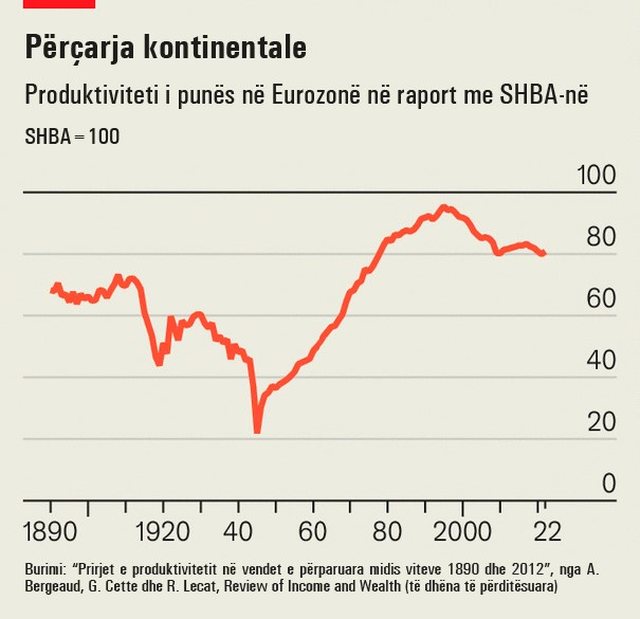
Moreover, Europe's economic decline is becoming more painful. In 1995, European productivity was 95% of America's. Today it's less than 80%, a gap big enough for vacationers to notice.
In the field of technology, such as Artificial Intelligence, Europe seems to be lagging even further behind. And as this technology spreads to more and more sectors (like self-driving cars), Europe's potential for innovation will further decline. Expensive energy will make it even harder to attract more advanced companies in the future.
Moreover, it is becoming more and more difficult to use the common market in the interest of Europe, while other countries of the world are developing at faster rates.
"In the 1980s, when the European common market was taking shape, Italy's economy was as large as the economies of China and India combined," notes Letta.
Back then, it didn't matter if industries like defense, energy, finance and telecommunications were national affairs. This is no longer true.
Mr. Draghi has focused above all on encouraging innovation, arguing that it should become "an essential tool". He advises that European countries unify decision-making and funding in the research sector, while also agreeing on spending.
He also supports the creation of the European Advanced Research Projects Agency (ARPA), similar to the famous American agency of the same name, which played an important role in the creation of technologies such as GPS and the Internet. Draghi also advises spending more on "world-leading research institutions" through a competitive process.
Then, he addressed in the report the support for those who take risks. Bank financing is readily available for reputable firms that have assets as collateral and sufficient revenue to repay debts.
But the system is less suitable for younger firms that have none of these advantages and whose prospects are uncertain. However, in Europe, fully three-quarters of corporate borrowing comes from banks, compared to just one-quarter in America.
Deeper and more liquid capital markets are therefore essential for economic growth. Many officials, bosses and leaders in Europe agree with this idea. "The green deal will not work without the unification of the capital markets," says Christian Sewing, head of Deutsche Bank.
To create such a union, the problem of fragmentation, such as the fact that there are 27 different approaches to bankruptcy, must be solved.
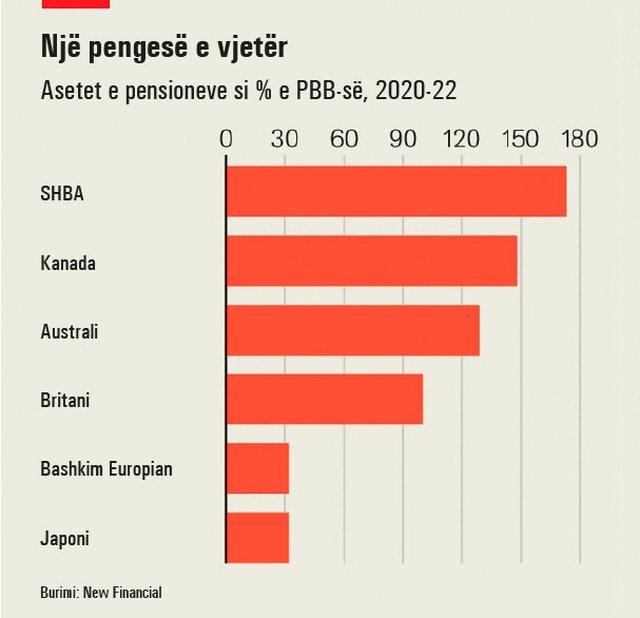
It is also necessary to move from unfunded public pension systems to better funded and market-supported schemes. According to the New Financial company, pension assets amount to only 32% of European GDP, compared to 173% in America.
"We need a cultural change in the way we finance businesses, given all the investments required. In this regard, we also need regulatory changes in Europe, to allow the financing of economic growth", argues Sewing. Draghi advises the creation of a European watchdog for capital markets, similar to the US Securities and Exchange Commission.
In terms of regulation more broadly, Mr. Draghi has been careful not to challenge the basic economic idea that competition is the surest drive for innovation.
But he points to certain changes that could be made in technology and markets, arguing that regulators need to have a better, more agile staff that considers opportunities for innovation and supply chain sustainability.
For example, perhaps the two European train manufacturers, Alstom and Siemens, should have been allowed to merge in 2019, to better compete against Chinese companies. Draghi also wants European state aid to be less fragmented and more focused on common continental interests.
Mr Draghi's report has been well received by leading EU leaders and analysts and will remain popular until the time comes to implement it. Take as an example a proposal in the report that should not cause controversy: having a competitive process for funding research institutes.
Germany introduced a similar scheme in the 2000s. But since most of the money ended up in two wealthy German states in the south of the country, the program was adapted to be beneficial for each region. The American agency ARPA flourished thanks to the lack of bureaucracy. But it is hard to imagine that European governments would manage to overcome their bureaucratic instincts in these cases.
Implementing many of Mr. Draghi's plans, such as creating a single capital markets watchdog, also requires shifting power away from national governments, which want influence over their countries' most important companies. "Every head of government wants the heads of national energy firms, banks or telecommunications companies to respond quickly in case of crises," says Mr. Letta.
On September 11, Italy's second largest bank, UniCredit, announced that it had taken a 9% stake in Commerzbank, Germany's second largest bank, and that it would seek to buy even more shares. It remains to be seen whether Germany will allow unification, and it will be an example that will show whether European or national instincts will prevail.
In the analysis of the industries, Mr. Draghi has imagined inter-European markets where they do not yet exist. For example, in the telecommunications sector, he wants to facilitate company mergers, to increase investment.
However, Margrethe Vestager, the outgoing head of the Competition Commission, is against the idea. "Telecommunications is probably the worst example of the need for mergers," says Zach Meyers of the Center for European Reform, a think tank. If there were fewer operators, prices would increase and quality would decrease, but there would be no more investment.
Similarly, Draghi's plans to reform competition rules in the name of sovereignty or sustainability could rub the wrong people.
He also did not dwell much on the question of why some free market-oriented countries, such as the Netherlands and the Nordic countries, which are small even by European standards, have become centers of the latest technology. Or why in Germany, after the planning rules were liberalized, renewable energy is growing without European help.
There is also the issue of money. According to European Commission estimates, to fulfill Mr. Draghi's plans, additional spending worth 750-800 billion euros per year would be needed, bringing the share of investments in the continent's GDP from 22% to 27%, an increase remarkable after several decades of decline.
If we take the past as a guide, four-fifths of this value must come from the private sector, which will not happen, even if the unification of capital markets is successfully achieved.
That would mean EU spending would have to be financed by debt, which Mr Draghi says would be useful but does not immediately demand. He knows that the leaders of the Northern European countries have little or no desire for another joint debt initiative.
"Never in the past, the potential of our countries has seemed so small and insufficient in relation to the size of the challenges", writes Draghi. And he is right. Now he faces a much more difficult job than analyzing these problems: he has to convince national governments to give up some power./ Monitor.al

There is an increasing trend for restaurants, hotels, furn...

Today, on October 5, 2024, in the foreign exchange mar...

Today, on October 4, 2024, in the foreign exchange market,...

According to the Balkan Barometer 2024 report, Albania...
Wheat crop has been one of the most widely planted crops i...
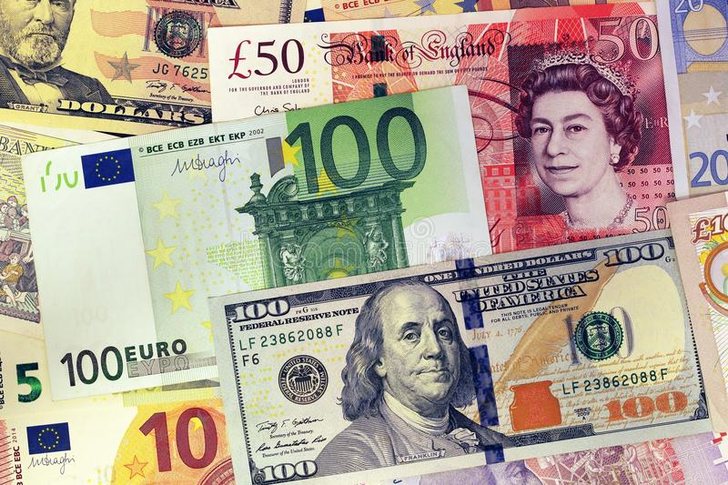
Today, on October 3, 2024, in the foreign exchange market,...
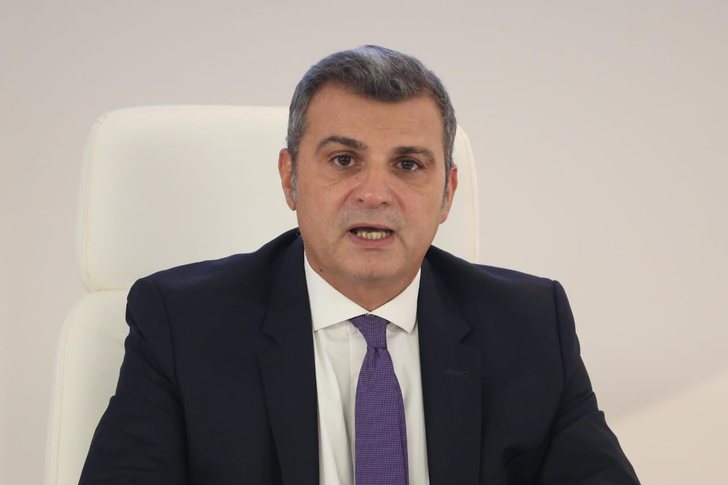
The governor of the Bank of Albania, Gent Sejko, in a ...

INSTAT has corrected the contribution of economic activiti...
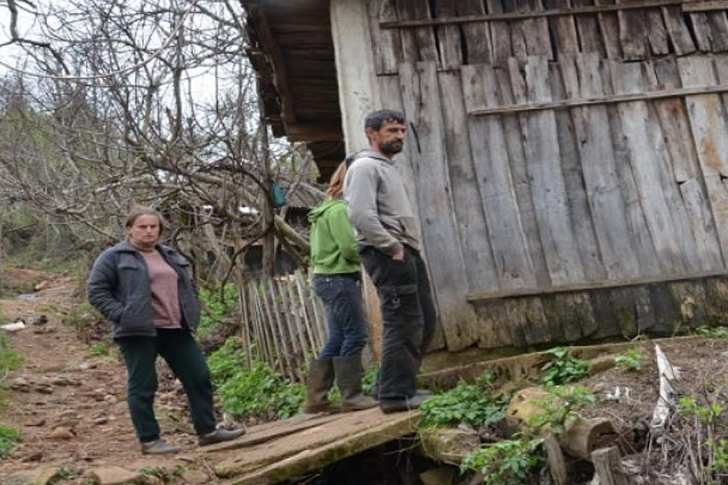
Northern Albania together with the Van Region in Turkey tu...

After a year of poor production, a high amount of olives f...
Today, on October 2, 2024, in the foreign exchange mar...

Statistics show that the rapid growth of credit is proceed...

There is a trend of lifestyle change, where entertainment ...
Today, on October 1, 2024, in the foreign exchange market,...
The fall of the euro beyond the government's projections s...

Businesses in the country are increasingly suffering from ...
In recent years, Albanian businesses are considering the l...
Today, on September 30, 2024, in the foreign exchange mark...
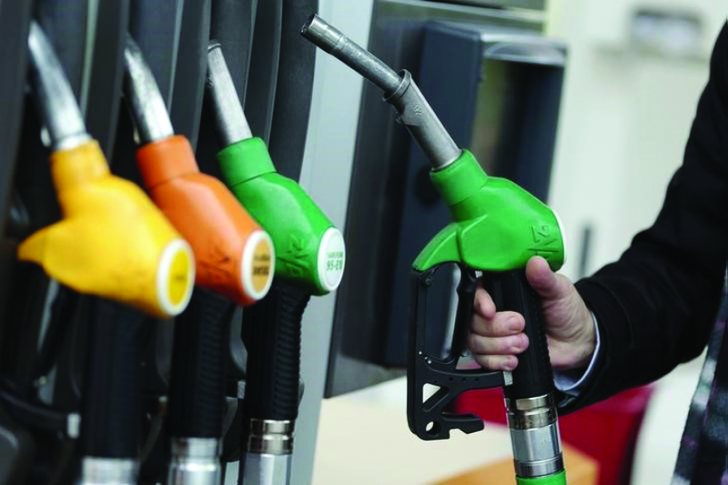
Albania is the first country in the Region, the fifth ...
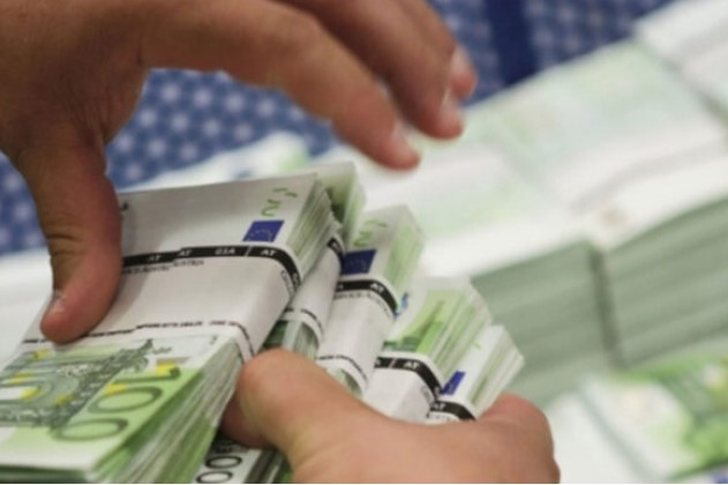
The Bank of Albania has bought almost 272 million euros in...

CNA has launched another investigation that could lead to ...

Irfan Hysenbelliu is a businessman that we call "Irfan the...

In March 2026, CNA launched another investigation centered...
The arrested mayor of Tirana, Erion Veliaj, with 13 charge...

The Special Board of Appeal (KPA) decided this Monday ...

The KPA vetting decided this Thursday to dismiss the p...

Suela Salavaçi, a prosecutor in the Prosecutor's Offic...

The Special Board of Appeal reinstated the prosecutor ...

A road accident occurred this evening on Nikolla Zoraqi St...

Three people were shot and wounded in Elbasan last night b...

A serious incident occurred this Tuesday in the Yrshek are...

An accident occurred this Tuesday on "Dituria" street in K...

All of Southern Europe will face changing weather conditio...
Albania was hit by temperatures significantly higher than ...
For the first time, Pogradec welcomed the Inter-Lake Chess...
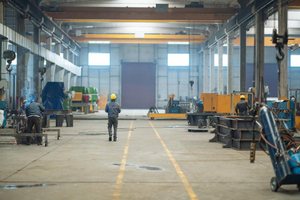
Albania has achieved a record for the employment of foreig...

US Secretary of State Marco Rubio arrived in Manila on Jul...
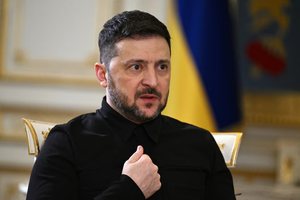
In the space of a few days, Ukrainian President Volodymyr ...
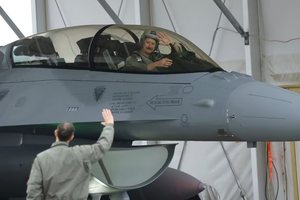
The spokesman for the Iranian Foreign Ministry warned Bulg...

Autoritetet italiane sekuestruan pako me afër 800 kilogram...

At a time when industrial products are increasingly taking...

Trust among people is not just a three-syllable word. It c...

Master of humor Todi Llupi has passed away at the age of 7...

The ninth edition of "MIK Festival" kicked off with one of...

Construction company licenses will have a validity period ...
The Centralized Purchasing Operator recently opened a tend...
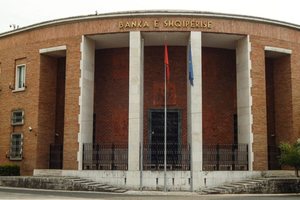
The new draft law "On the Bank of Albania" provides that t...
This Tuesday, one US dollar is bought for 81.2 lek and sol...