

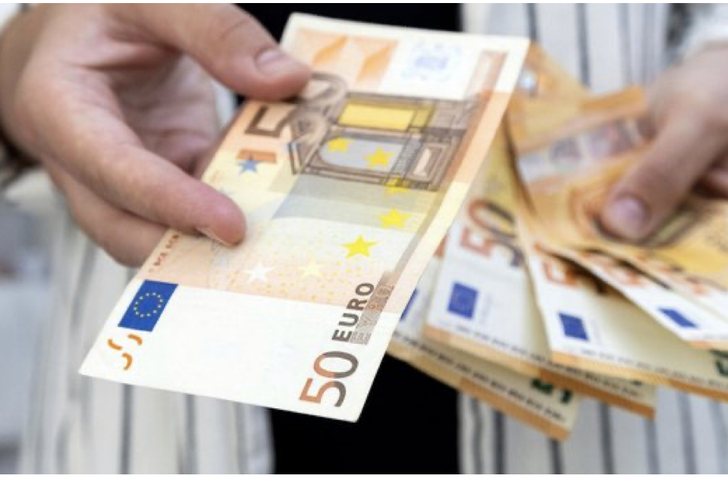
Foreign currencies fluctuate/Foreign exchange, October 9, 2024
In the foreign exchange market today, the US dollar is bou...



The opinion of the minority of judges of the Constitutional Court on the lawsuit of the Association of Producers of Alcoholic Beverages, which requested the repeal of the law on the unification of the excise duty, is clarified.
In the position against the majority that decided to overturn the producers' request and left in force the legal changes for the doubling of the excise tax, the two judges first argue that the Constitutional Court does not respect the principle of the rule of law in two cases with the same typology of consequences, the violation of proportionality.
"Taking into account the similarity of the two cases, we appreciate that the specific case should have the same conclusion as the result reached for the Tax Law - that of accepting the request, since the treatment in this case also has to do with examining the proportionality of the excise tax for small producers, for whom it immediately doubled due to unification. In this view, two diametrically opposed solutions, given in constitutional cases examined at the same time by the Court and with the same typology of consequences, do not respect the principle of the rule of law, in the sense of respecting the rule of continuity of jurisprudence" , cited in the minority opinion.
From January 1, 2023, after a 15-year period of differentiated excise duty depending on the amount of production, with the entry into force of the new excise law, the excise duty is unified, doubling it for beer producers under 200,000 HL per year , from the value of 360 ALL/HL to 710 ALL/HL.
For the two judges of the Constitutional Court who make up the minority opinion, the doubling of the excise duty is opposed for several reasons.
First, according to the opinion of the minority, the level of the imposed excise duty has not been chosen in the measure used by the vast majority of EU and Balkan countries, but has preferred to be ranked among those countries with the highest excise duty.
Secondly, in terms of the categorization of the production quantity, the reduced fee is not applied in support of small beers according to the EC directive.
"Despite the fact that European directives do not present an obligation for states to apply reduced tariffs, this practice is known and applicable and aims to differentiate beer producers depending on their capacities", the minority opinion states, among other things.
The two judges also argue that the doubling of the excise duty does not justify the avoidance of fiscal evasion as long as the brewing and trading industry is monitored by a tax stamp tracking system.
So in the decision of July 16, the Constitutional Court appreciated that during the trial it was not proven that the legal changes have violated the essence of the freedom of economic activity or put it at risk to the extent that its existence is questioned. In this perspective, the unification of the excise duty does not constitute a disproportionate tool. At the end of the examination of the case, for the above reasons, the Court decided, with a majority of votes, to dismiss the request.
Some of the minority opinion points on the brewers' lawsuit
Therefore, it is important at this point to reiterate the position taken by the Court in its last decision regarding the Tax Law, and the sub-criterion of necessity is related to the use of the least harmful means for the subjects whose rights are violated and liberties, which means that it must be analyzed whether the legislator had at his disposal less harsh means to achieve his goal. The court stated that the implementation of the new tax schemes should be accompanied by appropriate transitional measures. Among these measures, giving time to taxpayers gives them the opportunity not only to familiarize themselves with the calculation formulas of the tax applied to them, but also to take measures that the tax-paying entities themselves consider necessary to adapt their activity in order to cope with the consequences of the applicable scheme (see decision no. 52, dated 27.06.2024 of the Constitutional Court). In that case, the Court examined the proportionality of the new tax scheme (15% from 0%) for the self-employed and entities with taxable income up to 14 million ALL per year, concluding that the scheme was not in accordance with the Constitution, because it interfered with the freedom of economic activity, guaranteed by Article 11 of the Constitution, without respecting the principle of proportionality in terms of the necessity/severity of the selected means.
Taking into consideration the similarity of the two cases, we consider that the concrete case should have the same conclusion as the result reached for the Law on Taxes - that of accepting the request, since the treatment in this case also has to do with examining the proportionality of the excise tax for small producers, for whom it immediately doubled due to unification. In this view, two diametrically opposed solutions, given in constitutional cases examined at the same time by the Court and with the same typology of consequences, do not respect the principle of the rule of law, in the sense of respecting the rule of continuity of jurisprudence. The obligation to make the same and consistent decisions in similar cases, which the Court has imposed in a number of cases on ordinary courts (see decisions no. 8, dated 19.03.2018; no. 26, dated 22.05.2015; no. 6, dated 17.02.2012 of the Constitutional Court) must be respected by it itself. 10. Based on the premise above, below we present the reasons why we think that the new value of the unified excise tax for beer producers under 200,000 HL per year does not meet the sub-criterion of necessity, in terms of the severity of the measure.
With the entry into force of the law no. 81/2022, after a 15-year period of differentiated excise duty depending on the amount of production, the legislator has implemented the unification of the excise duty by doubling it for beer producers under 200,000 HL per year, from the value of 360 ALL/HL to 710 ALL/HL (which then, with Law No. 94/2023 due to indexation, reached the value of ALL 744.4/HL). In order to prove the effects of the application of this new scheme, the petitioner presented a series of concrete data during the plenary hearing, which were not contested by the interested parties, however the data were not taken into consideration by the majority in its analysis on proportionality of intervention, which makes the majority's assessment abstract, that is, unrelated to the concrete circumstances of the case.
In contrast to the majority, we judges in the minority, stopping and analyzing the concrete data examined in the constitutional trial, estimate that the contested legal changes are harsh for the following four reasons.
First, as regards the value of the new measure foreseen, from the data presented by the petitioner in the plenary session, it results that in a comparative analysis of the EU countries, 10 states apply a higher level of excise duty than in Albania (Estonia, Finland, France, Greece, Ireland, Lithuania, Latvia, Netherlands, Sweden and Slovakia), while 17 other countries have a lower level (such as: Austria, Germany, Spain, Croatia, Romania, etc. .). Even in terms of the Balkan countries, Albania is in second place for the highest excise duty of 0.12 euros for 1 bottle of 330 ml, compared to other countries. The above data, which have not been questioned by the interested parties, highlight that the legislator did not choose the measure used by the vast majority of EU and Balkan countries, but preferred to be listed among those countries with the highest excise duty.
Also, as claimed by the petitioner, the level of the current excise duty is 3 times more than the minimum level provided for in directives no. 92/84/EC and no. 92/83/EC. At this point, without questioning the fact that the directives are not part of the Albanian legal order and as such the claims related to them cannot enter the constitutional jurisdiction, one cannot fail to accept their value in the approximation of the legislation, within of the obligations of the SAA, which the Republic of Albania has entered into for the European integration process. In this view, although the legislation on excise taxes aimed to align with EC directives, including the two directives in question, the subsequent amendments to this law, which are the subject of control in this constitutional trial, seem to have departed from the purpose of to the legislator in 2012. That being said, despite the fact that the alignment of existing and future laws with EU legislation is of primary importance for Albania, embodied in the obligations assumed through the SAA (see Article 70 of the SAA), in the present case, it seems that the legislator was not guided by this perspective.
Secondly, in terms of the categorization of the amount of production, from the data presented at the hearing by the petitioner, it results that the differentiation of excise duty depending on the amount of production is a phenomenon known in many European countries and also supported in the directive 92 /84/EC, where different countries apply different excise duty bands for small independent breweries. Despite the fact that European directives do not present an obligation for states to apply reduced tariffs, this practice is known and applicable and aims to differentiate beer producers depending on their capacities. While the legislator, as it was emphasized above, with the new law unified the excise duty regardless of the amount of production, equating in this sense producers with higher production to those with lower production.
Thirdly, as regards the existence of other less harsh means, based on the explanations and arguments of the interested parties during the constitutional trial, it was not proven that the unification of the excise duty immediately was the only means that could be used by the legislator to achieve his goal. Based on the premise that producers of less than 200,000 HL of beer per year even before the contested intervention were not exempted from paying the excise duty, it cannot be considered that there are other means, such as the progressive and gradual increase of the excise duty, which it would give manufacturers time and opportunity to adjust to these changes and the new fiscal burden. Regarding this situation, we point out the importance of the clarity of legal norms in the fiscal field, including excise duties. In this perspective, the time period that is determined for each concrete situation must be evaluated taking into account a number of circumstances, such as the purpose of the law in the legal system and the character of the social relations regulated by it: the circle of subjects to which it applies and their possibilities to adapt to the new norms; the need for the new norms to enter into force as quickly as possible; as well as the public interest and the protection of constitutional values ??that outweigh the interest of an individual to have more time available to adjust.
At this point, we emphasize that the rapid entry into force of laws imposing obligations and/or restrictions should be an exception, based and justified in specific objective circumstances. This means that when changes are made in the fiscal field, such as the Anticipation of new obligations: or existing obligations, the time period left available for their entry into force must be justified only on the basis of the premise of guaranteeing a significant interest public, such as the stability of public finances.
In this direction and in the context of the constitutional principle of the rule of law, the legislator, in the cases of laws pertaining to the fiscal system, is obliged to provide for a sufficient period of time for the entry into force of the law, during which the subjects will to be able to prepare for the implementation of the requirements arising from the new legal rules. This gives the guarantee to them not only to familiarize themselves in advance with the new legal requirements, but also to adjust their property interests and prospects of economic activity in accordance with the new legal requirements. Despite this, in the present case, the legislator chose to immediately double the value of the excise duty. Seen under this lens, another milder tool selected by the legislator would be to reduce the threshold of 200,000 HL to a lower amount, similar to European models, or even to change the tariff proportionally for producers with over 200 000 HL per year.
Fourth, we estimate that the goal of the interested parties to avoid tax evasion does not justify the intervention of the legislator, as long as the members of the association presented arguments that the beer production and trading industry is monitored by a tracking system with a tax stamp and in practice it exists the possibility that precisely the increase in excise duty motivated producers to avoid it. Moreover, the lack of control capacities of state institutions and the efficiency of monitoring the production and trade of beer could not constitute a sufficient reason for the restriction of economic freedom, to the extent that it does not fulfill the criterion of proportionality.
In conclusion, based on the above arguments, we, the judges in the minority, estimate that the Court should have accepted the petitioner's request and decided to repeal the disputed laws in terms of the part that provided for the unification of the excise tax for 1 beer product, according to the above reasoning./ Monitor magazine

In the foreign exchange market today, the US dollar is bou...

Today, on October 8, 2024, in the foreign exchange market,...

The Bank of Albania has decided to keep unchanged at 0...

Today, on October 7, 2024, in the foreign exchange market,...

The economy of the country is moving faster than the f...

Decarbonizing the world's electricity supply chain will re...

Today, on October 6, 2024, in the foreign exchange market,...

Europe has finally realized that it has a problem with eco...

There is an increasing trend for restaurants, hotels, furn...

Today, on October 5, 2024, in the foreign exchange mar...

Today, on October 4, 2024, in the foreign exchange market,...

According to the Balkan Barometer 2024 report, Albania...
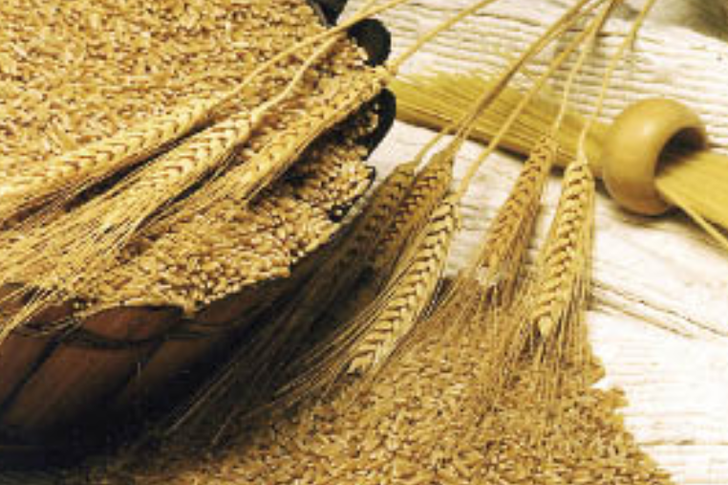
Wheat crop has been one of the most widely planted crops i...

Today, on October 3, 2024, in the foreign exchange market,...

The governor of the Bank of Albania, Gent Sejko, in a ...

INSTAT has corrected the contribution of economic activiti...

Northern Albania together with the Van Region in Turkey tu...

After a year of poor production, a high amount of olives f...

Today, on October 2, 2024, in the foreign exchange mar...

Statistics show that the rapid growth of credit is proceed...

CNA has launched another investigation that could lead to ...

Irfan Hysenbelliu is a businessman that we call "Irfan the...

In March 2026, CNA launched another investigation centered...
The arrested mayor of Tirana, Erion Veliaj, with 13 charge...

The Special Board of Appeal (KPA) decided this Monday ...

The KPA vetting decided this Thursday to dismiss the p...

Suela Salavaçi, a prosecutor in the Prosecutor's Offic...

The Special Board of Appeal reinstated the prosecutor ...

A road accident occurred this evening on Nikolla Zoraqi St...

Three people were shot and wounded in Elbasan last night b...

A serious incident occurred this Tuesday in the Yrshek are...

An accident occurred this Tuesday on "Dituria" street in K...

All of Southern Europe will face changing weather conditio...

Albania was hit by temperatures significantly higher than ...

For the first time, Pogradec welcomed the Inter-Lake Chess...

Albania has achieved a record for the employment of foreig...

US Secretary of State Marco Rubio arrived in Manila on Jul...

In the space of a few days, Ukrainian President Volodymyr ...

The spokesman for the Iranian Foreign Ministry warned Bulg...

Autoritetet italiane sekuestruan pako me afër 800 kilogram...

At a time when industrial products are increasingly taking...

Trust among people is not just a three-syllable word. It c...

Master of humor Todi Llupi has passed away at the age of 7...

The ninth edition of "MIK Festival" kicked off with one of...

Construction company licenses will have a validity period ...

The Centralized Purchasing Operator recently opened a tend...

The new draft law "On the Bank of Albania" provides that t...

This Tuesday, one US dollar is bought for 81.2 lek and sol...