

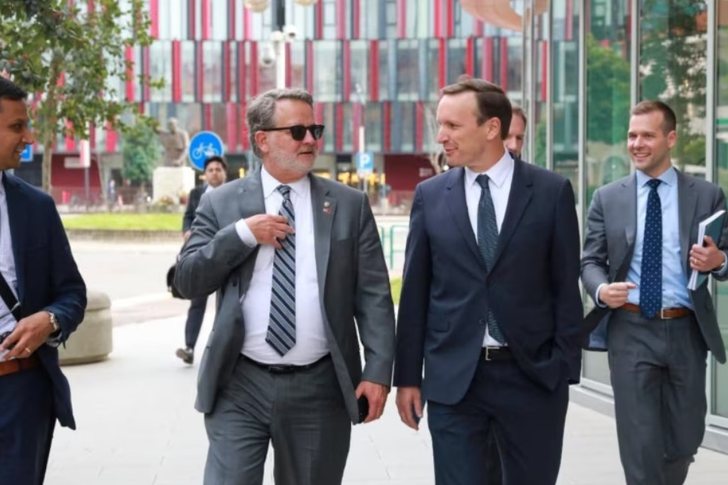
American senators Murphy and Peters meeting in Tirana
US Senators Chris Murphy, a member of the US Senate Foreig...


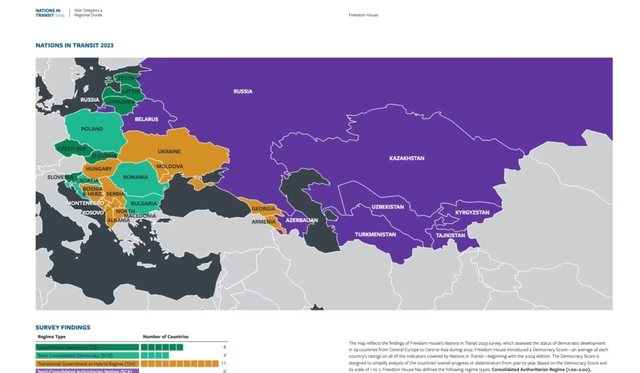
The organization Freedom House says that the impact of the war in Ukraine, as a result of Russian aggression, was felt last year in the 29 countries from Central Europe to Central Asia that are analyzed in its report "Countries in Transition".
In this year's report titled "War deepens regional divisions" that analyzes developments in 2022 and was made public on Wednesday, it is said that instead of strengthening ties in the region, "security threats, the historic refugee crisis and problems economic problems related to the conflict have deepened the gap between autocracies and democracies and caused disruptive changes in the foreign policies of individual governments".
"Although some countries made clear choices in favor of a more democratic future during 2022, the overall result was a 19th consecutive year of declining democracy in the region," the report said.
The state of democracy in Albania
Even in 2022, Albania was in the category of hybrid regimes/democracies in transition. The overall rating for Albania marked a slight improvement in 2022 compared to 2021, thanks to an increase in the rating in the fight against corruption.
"The rating for the fight against corruption increased from 2.75 to 3.00 points, thanks to a series of high-profile indictments and convictions of former officials by the Special Structure Against Corruption and Organized Crime (SPAK), as well as its proactive role in promoting of the fight against corruption and organized crime", the report states.
This caused the overall rating to increase from 3.75 to 3.79, on a rating scale of 1 to 7 points, where 1 is the lowest level of democracy and 7 is the highest.
However, other indicators of democracy remained unchanged and the report says that Albania's democratic institutions are challenged by clientelistic party politics, the procrastination of the vetting process in justice and rampant corruption.
"Corruption remains widespread, contributing to the dysfunction of the public institution and limiting its ability to provide effective services. Although new law enforcement agencies such as SPAK, created in 2019, show promising signs in the fight against corruption and organized crime at the highest levels, political influence on the judiciary in corruption cases still continues to be a concern," the chapter on Albania says. of the "Countries in Transition 2023" report, provided by the Voice of America.
"Basic justice for many Albanian citizens is really missing. And it's also an environment, like much of the region, where independent media is shrinking, civil society actors are in a difficult position, adding more and more obstacles and threats," Alexandra tells VOA Karppi, one of the authors of the report.
Despite the modest improvement in the corruption indicator, the report says there was little scope for further reforms before local elections on May 14 this year.
Mrs. Karppi says for the Voice of America that the local elections of May 14 reinforced this trend.
"I think the local elections that were just held in May were another example that unfortunately, because of the state capture networks by certain parties, makes you think we're going to see the same thing. I think the political status quo is likely to continue," she says.
In the chapter on Albania, it is said that in 2022, Albania's democracy resisted numerous challenges, especially during the special local elections of March, as well as the internal reorganization of political parties and inter-party cooperation for the election of President Bajram Begaj.
“However, the country made little steady progress towards becoming a true liberal democracy and is still classified as a hybrid democracy. Most Albanian political leaders remained hostile to liberal democratic values ??and have shown little appreciation for the fact that equality under the law and respect for the rule of law are important democratic values," the report states.
According to Freedom House's assessment, "most political parties are dominated by iron-fisted leaders, and this lack of internal party democracy was demonstrated in the way candidates for local special elections, local party branch leaders, and election candidates were selected." local of May 2023 (the report includes only the developments of 2022).
According to the report, the political clashes in the Democratic Party (PD) that saw the return of former Prime Minister Sali Berisha to the political scene and the departure of Lulzim Basha from the leadership of the DP after the March 6 partial local elections where he won in five of the six contests The ruling Socialist Party (SP) of Prime Minister Edi Rama dominated Albania's political scene in 2022 and the major rifts between the respective party factions continue.
"The public debate and the media focused more on the internal dynamics of the Democratic Party than on the social and economic problems facing the country and the need to hold Prime Minister Rama's government to account," says the chapter on Albania.
During 2022, a number of political journalists faced verbal abuse, bans from attending press conferences, intimidation, large fines and even lawsuits, the report says.
The report appreciates the fact that the European Union opened accession talks with Albania in July 2022, described by the President of the European Commission, Ursula von der Leyen as a "historic moment", and Albania organized in December for the first time outside the EU, the meeting high-level EU-Western Balkans.
"Both cases represent important foreign policy successes for Albania. However, despite the progress made since the fall of communism – including the convictions of high-level officials for abuse of power and corruption in 2022, thanks to SPAK's commitment, many public institutions remain dysfunctional due to widespread corruption and culture of impunity, undermining democracy and the rule of law", says the chapter on Albania provided by the Voice of America.
According to the report, although Albania generally respects international human rights instruments, the country still fails to protect fundamental rights as essential values ??that support a liberal democratic society, citing the BIRN study, according to which "about 320 cases of sexual abuse took place in the period 2020-2022 and the identities, families, personal information and home addresses of the victims were widely published in the media” leading to several suicides and targeting by human traffickers.
The report also mentions the murder of 10 women by their partners and discrimination against individuals from the LGBT+ community, Roma and Egyptian minorities.
"Instead of holding abusers accountable, public authorities and local politicians often blame the victims and even reveal their names and identities to the media, leading to their double victimization. As such, Albania has so far neglected its institutional responsibilities to protect basic human rights and civil liberties, values ??that are fundamental to a true liberal democracy," the report states.
Democratic National Government and the Electoral Process
Considering the elections and the dynamics within the main political parties, including the return of Mr. Berisha, the end of the mandate of former president Ilir Meta and his return to active politics, as well as the elections in the Socialist Party, the report highlights the role of leaders.
"Observers claim that these internal elections in Albania's three main political parties (PD, PL and SP) were predetermined and heavily influenced by party leaders, rather than being the result of genuine internal party competition. This highlights Albania's limited internal party democracy, where party leaders maintain control with an iron fist, with autocratic rule," the report states.
Regarding the election of President Bajram Begaj, the report points out that although initially there seemed to be an effort for a consensual president, eventually "despite the fact that (he) was considered an apolitical candidate, the SP in power elected Begaj", with the votes her.
"Given that the EU has asked Albania to show more commitment to inter-party cooperation, experts argued that both sides missed an opportunity to demonstrate cooperation in choosing a common presidential candidate," the report states.
Prime Minister Rama reorganized the cabinet in July, replacing Arben Ahmetaj with Belinda Balluk as deputy prime minister. Ahmetaj's dismissal raised concerns about the government's process for awarding public procurement contracts.
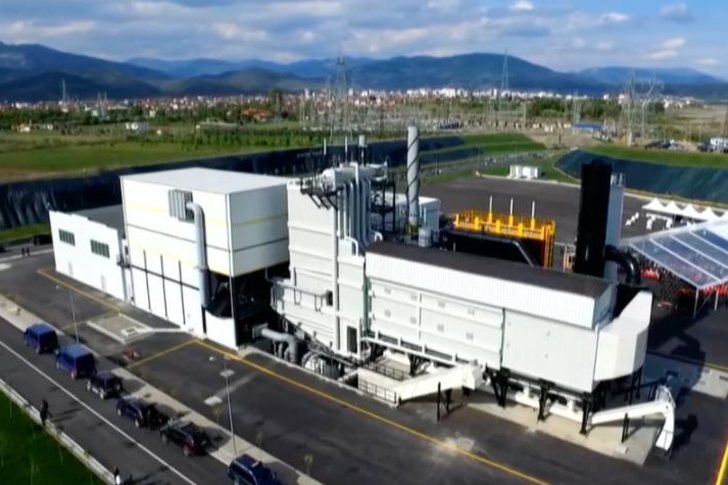
Speaking about the incinerators case, the report states that according to observers, if SPAK could prove the allegations, it would likely expose the corrupt activities of various high-ranking politicians, including links to dubious interests and organized crime networks.
The report states that the race before the election of Altin Duman as the new head of SPAK was characterized by concerns about possible political interference.
"On the eve of the vote, the ambassador of Albania to the United States, Yuri Kim, expressed concern about the political pressure in the election of the head of SPAK, which the Albanian government rejected", the report states.
Corruption and Independence of the Judiciary
Thanks to the activity of SPAK, the fight against corruption was the only direction where Albania marked a slight improvement.
The report mentions the sentencing of former interior minister Saimir Tahiri to three and a half years in prison for abuse of office—the highest-profile case SPAK has successfully pursued since its establishment in 2019.
It is also mentioned the arrest of the deputy of the SP, Alqi Blako, under the charge of accepting a bribe of €120,000 while he was secretary general of the Ministry of Environment.
He is accused by SPAK of helping a company to win a public contract for incinerators. Blako was released from prison in October and is under house arrest while SPAK investigates three contracts for incinerators.
The report also mentions the arrest of several public officials related to these ongoing issues, who are already the subject of SPAK investigations for corruption and abuse of office.
Among those arrested is the former Minister of Environment Lefter Koka.
"Waste incinerators were the main subject of accusations of corruption in Albania during the year", says the report, which mentions that the accusations were first raised by Endri Shabani, of the #Thurje Initiative, and then by MP Monika Kryemadhi, former chairperson of LSI- now the Freedom Party, as well as the Democratic Party, which also opened the parliamentary investigation in March headed by the member of the Assembly Jorida Tabaku.
The investigation examined the legal process by which the government had awarded contracts for the construction of three waste incinerators in the municipalities of Elbasan (2014), Fier (2016) and Tirana (2017) - with a total value of 178 million euros.
"During the hearing, a government spokesperson indirectly admitted to some irregularities in the contract award criteria, where the companies that received the contracts were the only ones to bid," the report said.
"Given that public procurement contracts extend up to 30 years, it is estimated that these irregularities have cost Albanian taxpayers around 50 million euros. The exact amount of misused taxpayer money may never be known, making this procurement scandal one of the most controversial political issues in the country," the Freedom House report said.
As far as justice and the judiciary are concerned, the report mentions concerns about the delay of the vetting process, adding that under the pressure of the EU and the USA, the Assembly agreed to extend the verification process until December 31, 2024.
"The pressure from civil society and the political one on the process of judicial vetting has increased as delays in the justice system have caused legal, social, economic and political challenges in Albania. Access to justice has worsened and according to experts, it now takes more than three and a half years to start or finish proceedings due to a lack of judges," the report states, which continues that "since the 2017 reform, the judicial system has not has managed to attract new recruits and is on the verge of collapse".
Regarding the new judicial map, Freedom House says that while the international actors who defended judicial reform in Albania praised the map, it has been severely criticized by numerous lawyers' associations and civil society, which say that "reducing the number of courts will harm citizens' access to justice and will increase the cost of the judicial process as some citizens will have to travel over 200 kilometers to reach the court".
In protest of the new judicial map, the Albanian Bar Association instructed its members to boycott all court proceedings in July 2022, and lawyers across the country have refused to provide legal services.
"Despite the government's claims of increasing judicial effectiveness, rule of law observers argue that the reforms prioritize practicality over judicial effectiveness," the report states.
According to Freedom House, all these problems "have created distrust in justice".
The State of the Media and Civil Society
The report expresses concern about the state of the media, citing pressure from political interests to curb media surveillance and manipulate the media narrative to serve partisan agendas. Freedom House mentions Albania's drop by several positions in the Reporters Without Borders Index.
"Most of the media in Albania are owned by business people with close ties to politicians and/or organized crime networks and serve as mouthpieces for these interests," the report says.
Some journalists were verbally and/or physically attacked for their coverage. According to the report, the Albanian General Directorate of Taxation imposed high fines on various television networks and media, as well as the companies that own them, for coverage critical of the government.
"Given the ambiguous nature of media ownership and financing in Albania, it is difficult to analyze the exact motives behind such large fines or any possible connection between politics and media ownership," the report states.
The report mentions the defamation suit against the journalist Isa Myzyraj, after he reported on the unexplained wealth of former prosecutor Elizabeta Imeraj, her failure to pass the judicial vetting process and her dismissal.
Elvis Hila was threatened for publishing news about forged court documents in Lezha and he and his wife were physically attacked the day after he broke the news.
The Union of Albanian Journalists and Reporters Without Borders confirmed that Myzyraj, Hila and other journalists have been targeted by organized crime groups, politically connected individuals and corrupt officers within the police and justice system.
The Rapid Response Organization for Media Freedom (MFRR) notes that Albania is failing to protect journalists and the free press.
According to the report, in 2022, opinion-format TV shows became the main vehicle for disinformation driven by political interests and the connections of the owners rather than facts — "as seen in the coverage of the Basha-Berisha power struggle, allegations of corruption against officials government officials for abuse in the management of public contracts, and the role of organized crime in human trafficking and the migration of Albanians to Britain.
One example the report cites is the one following the US disclosure report on Russian money, which included the case of $500,000 of DP linked to Russia in the run-up to the 2017 general election.
"Journalists asked former DP leader Lulzim Basha if he would resign and take responsibility for the allegations about Russian money. Basha responded with disparaging comments and then several journalists were banned from future press conferences," the report states.
Also, some journalists were verbally attacked while covering the protests and violent clashes outside the DP headquarters and the rifts between Basha and Berisha for the leadership of the party.
"Senior members of the government also barred some journalists from their press conferences when their questions were deemed too strong, as happened in one case with questions to Foreign Minister Olta Xhaçka," the report said.
In response to this crackdown on press freedom, journalists protested outside the prime minister's office in July demanding better treatment of journalists by politicians across the political spectrum.
As for civil society, in 2022, citizen movements in Albania became more organized in support of issues that traditional non-governmental and civil society organizations have usually ignored.
The case of "Diaspora for a Free Albania" is mentioned here, which raised a case against the Assembly in the Constitutional Court, demanding recognition of the right of Albanians living abroad to vote in parliamentary elections.
"In December, the court ruled that the parliament had violated the constitution by not allowing Albanians living abroad to vote in the 2021 parliamentary elections and ordered that the diaspora be allowed to vote from abroad in future parliamentary elections," says the Albanian chapter that read the Albanian service of the Voice of America.
Also, the report states, researcher Fabian Zhilla organized a petition with over 10,000 signatures asking the Assembly to regulate "reality show" programs and order the Audiovisual Media Authority to strengthen and enforce current legislation on television programs that spread hate speech.
"These movements show that members of civil society are becoming more organized as the Albanian public becomes more aware of how to use democratic tools, in part due to social media platforms and technological advances," the report says.
According to the report, one of the key preconditions of EU membership for Albania is that Non-Governmental Organizations and Civil Society Organizations are included in consultations when laws are drafted.
However, according to the report, their concerns about the new judicial map even when the Ministry of Justice and the Supreme Judicial Council finally included them after initial neglect were dismissed.
The Albanian Helsinki Committee has repeatedly exposed how the Assembly and the newly reformed Supreme Judicial Council have not taken into account the proposals of NGOs and civil society, or citizens' concerns about access to justice, including the high costs and logistical challenges resulting from court reorganizations.
According to observers, these failures are a recurring theme in Albania.
Kosovo and the Negotiation Process
Kosovo scored a slight improvement from 3.25 last year to 3.29 this year.
"The long-strained relationship between Serbia and Kosovo continued to undermine democratic progress in both countries, albeit in different ways. Extraordinary efforts by Kosovo civil society to effect positive policy changes on gender-based violence and ethnic divisions were overshadowed during the year by an increase in violence in the Serb-majority North, where the influence and actions of the Serbian government continue to violate Kosovo's authority over its territory", the report states.
"We were greatly impressed by the role played by civil society in Kosovo during the last year", said Mrs. Karppi, adding that she can play an active role in resolving the situation with Serbia.
"We see that there are two people who lead this process: Prime Minister Albin Kurti and Serbian President Aleksandër. I think that the EU can do much more in the direction of these negotiations, to bring the voices of civil society and the perspective of ordinary citizens, especially those in the North," says Mrs. Karppi.
The report also mentions the lack of success in the negotiations between Kosovo Prime Minister Albin Kurti and Serbian President Aleksandar Vucic, despite the efforts of the European Union and the United States.
The Western Balkans between Hope and Disappointment
All Western Balkan non-EU countries were hybrid regimes/transitional democracies and democratic institutions continued to be fragile in 2022. According to the report, in Western Balkan countries, the voices of civil society and citizens have been excluded.
"Across the Western Balkans, elite-centered politics and diplomacy have excluded the voices of civil society and ordinary citizens, allowing anti-democratic and authoritarian leaders to control the country's future," the report says.
Modest improvements in Albania, Kosovo and North Macedonia were balanced by declines in Montenegro and Bosnia and Herzegovina, while Serbia's score remained unchanged.
Although the results in the report place Albania next to North Macedonia and Montenegro in terms of democratic development, polls suggest that Albanians are more optimistic that EU membership will provide not only economic well-being, but also an improvement in democratic standards.
Alexandra Karppi of the organization Freedom House says that the increased engagement of the EU and the US, both in the Kosovo-Serbia talks, and more broadly in the region is something positive.
"Yet these are elite-driven processes that could do more to reflect the perspective of citizens and non-governmental actors," she says.
Citizens of EU candidate countries continued to overwhelmingly support membership in the bloc. However, they doubt that membership will come soon.
Serbs are a clear exception, with the highest skepticism about the benefits of membership.
According to the report, hopelessness has contributed to the exodus from the region. One fifth of those born in the Western Balkans have left their countries.
The report suggests the need for a vigorous re-commitment by the EU to integration and warns that abandonment by the West paves the way for intervention and influence by authoritarian powers.
"This is evident from Moscow's ongoing efforts to spread disinformation and create political connections in the region," the report said.
But Freedom House emphasizes that it is the leaders of the countries who must bring democratic progress to their citizens./ Voa

US Senators Chris Murphy, a member of the US Senate Foreig...
The Freedom House organization in its report has addressed...
The "Albania" mosaic, as Prime Minister Rama calls it,...
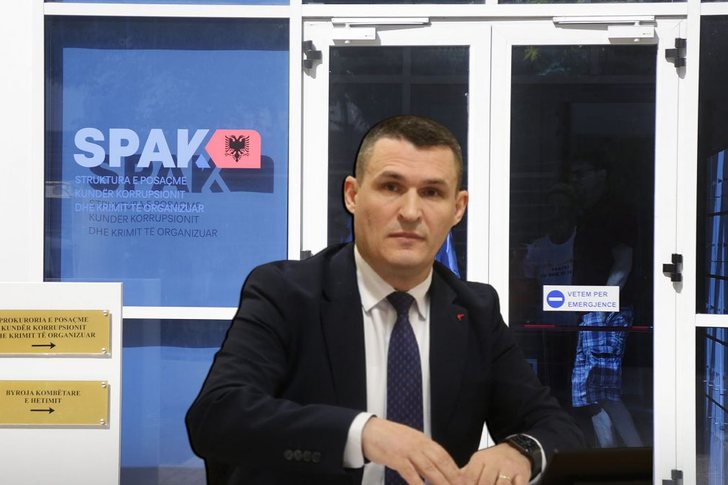
The incinerators are a corrupt affair that starts in E...
Blendi Fevziu i është përgjigjur ofendimeve të Arjan Ç...
Academician Artan Fuga has described the approval of s...
Ekspertja e Komunikimit, Jonila Godole ka reaguar ashpër p...
The Minister of Tourism and Environment, Mirela Kumbaro, a...
Shoqata e Himariotëve i ka bërë thirrje bashkëkombësve të ...
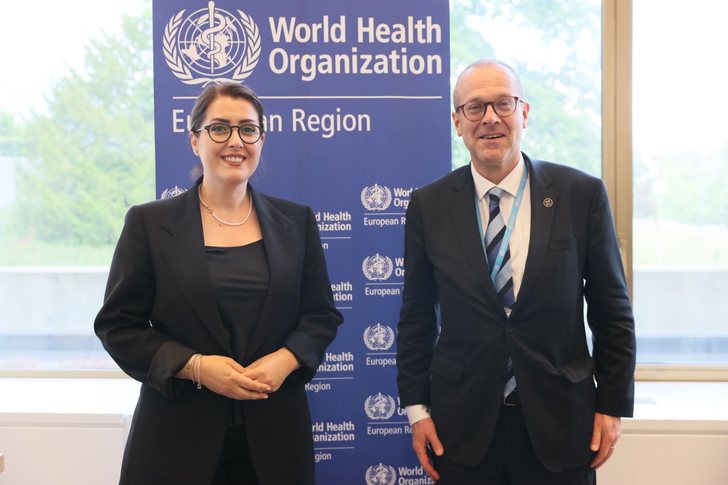
WHO Director for Europe, Dr. Hans Kluge evaluated Albania'...
Deputeti i PS-së, Erion Braçe ka luajtur sërish rolin ...
Ministri i Jashtëm i Greqisë, Nikos Dendias ka zbardhu...
The Shkodër Prosecutor's Office sends 10 people to cou...

The deputy of the Democratic Party, Flamur Noka, has infor...
Sot, Deputeti i Partisë Demokratikë Flamur Noka është para...
Mirel Mërtiri is often considered in the media as the "sha...
Nesër fillon ndërhyrja për rehabilitimin e shtresave a...
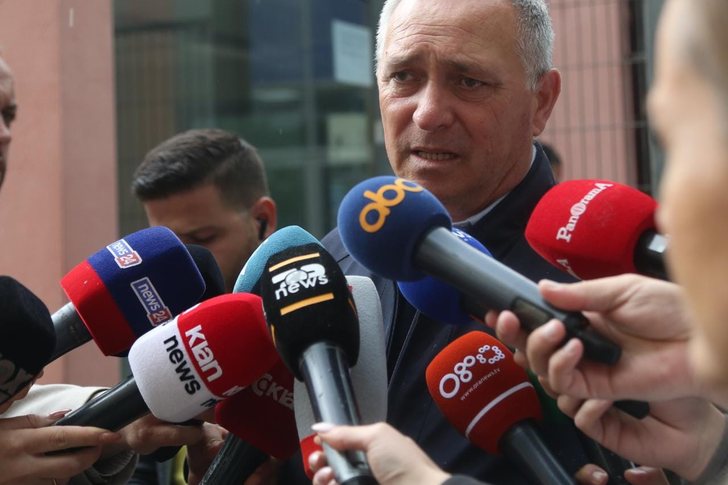
Just like the Vlora court, the GJKKO decided the secur...
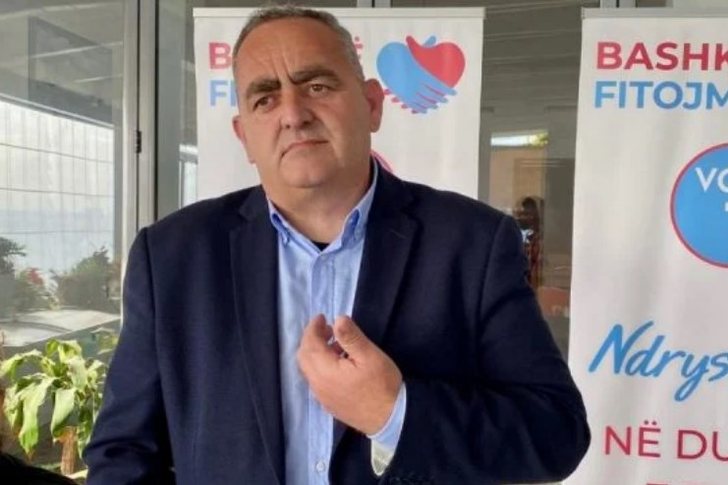
The winning candidate of the coalition "We win together" f...
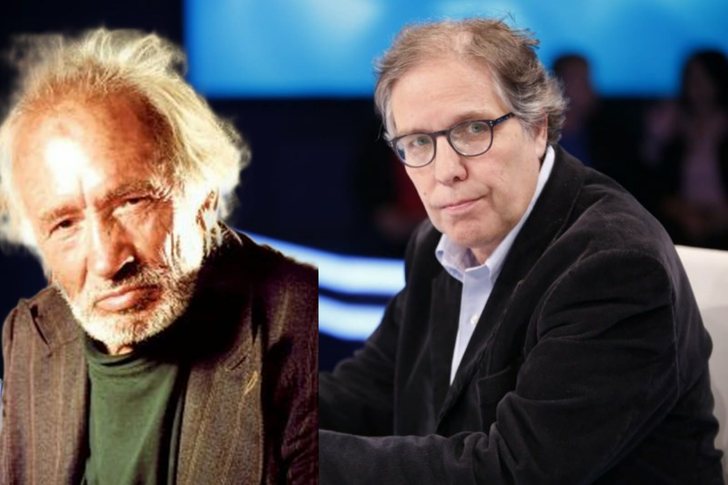
Pandi Gjiza is an iconic character in the city of Korç...

CNA has launched another investigation that could lead to ...

Irfan Hysenbelliu is a businessman that we call "Irfan the...

In March 2026, CNA launched another investigation centered...
The arrested mayor of Tirana, Erion Veliaj, with 13 charge...

The Special Board of Appeal (KPA) decided this Monday ...

The KPA vetting decided this Thursday to dismiss the p...

Suela Salavaçi, a prosecutor in the Prosecutor's Offic...

The Special Board of Appeal reinstated the prosecutor ...
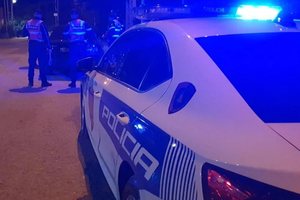
A conflict occurred this Thursday evening in the toy area ...
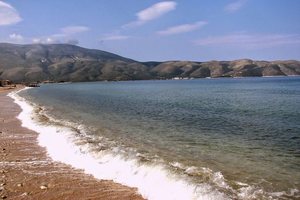
A person has died today on Orikum beach. According to repo...
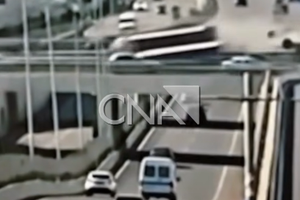
Footage emerges from the serious accident that occurred th...
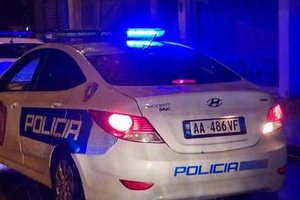
A Shkodra traffic police officer was hit with hard objects...

Children without parental care, for whom alternative famil...

On Thursday, our country will be under the influence of st...
A serious accident that occurred this Wednesday with the c...

The Institute of Geosciences has shared a forecast for wea...
The European Union Office in Kosovo has called on all poli...
Serbian President Aleksandar Vučić, at a press conference ...
For the first time since the launch of the euro, European ...

Artificial intelligence (AI) models from the American comp...

At a time when industrial products are increasingly taking...

Trust among people is not just a three-syllable word. It c...

Master of humor Todi Llupi has passed away at the age of 7...

The ninth edition of "MIK Festival" kicked off with one of...
The average sale price of apartments in Tirana reaches rec...
This Thursday, one US dollar is bought for 81.5 lek and so...
The price of diesel reached 206 lek per liter from 198 lek...

Businesses will no longer be required to simply register t...