

Gjykata dënon televizionin ABC News për shpifje ndaj kandidatit të opozitës
Gjykata e Shkallës së Parë në Kukës ka shpallur fajtor...


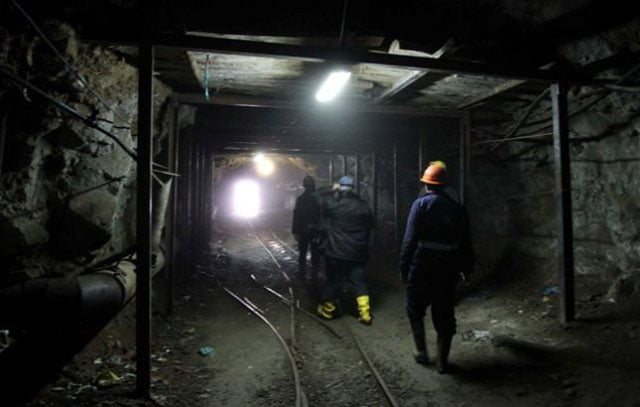
Geological fieldwork occasionally takes place in dangerous places, from the slopes of erupting volcanoes to the depths of the frigid Antarctic abyss. However, they tend not to occur inside exploding mines.
However, this is exactly where a team of scientists went to explore: the Bulqiza chrome mine in Albania, northeast of the capital Tirana. And instead of looking for valuable minerals or deceptive rock formations, they were looking for the source of those explosions: near-pure hydrogen gas—a potentially renewable energy source that could transform the world.
As reported in a recent study in the journal Science, deep underground, they encountered a small "pool" boiling like a raging Jacuzzi.
"The gas was really intense," says Bardhyl Muceku, a geologist at the Polytechnic University of Tirana and one of the authors of the study. About 84 percent of the gas was hydrogen, and this was one of several spills at the Bulqiza mine that, in total, produced at least 200 tons of hydrogen each year.
The world is years away from being able to extract significant volumes of natural hydrogen gas from the ground cheaply, cleanly and efficiently. First, those reservoirs must be found.
"There's a lot of work to be done," says Geoffrey Ellis, a petroleum geochemist with the US Geological Survey who was not involved in the work. But discoveries like Bulqiza are cause for optimism that there may be enough hydrogen trapped underground to power the planet. "It could work," he adds.
Hydrogen growth
Hydrogen is the most common element in the cosmos, but it is hard to find on Earth. When not bound into other compounds, it is a colorless gas that likes to escape into the sky. That's a shame, because if we could catch it, it could help wean the world off fossil fuel heating.
"It could be used as a low-carbon energy reserve," says Katriona Edlmann, a geoenergy expert at the University of Edinburgh who was not involved in the work.
Today, in some environments, hydrogen is used as a small source of energy or electricity, but it must be produced. There are a number of ways to do this, from using solar energy to electrically separate hydrogen from water molecules, to using steam to extract hydrogen from methane gas.
But these methods are either prohibitively expensive, prone to emitting greenhouse gases, or both. "Free hydrogen is the main step towards a hydrogen economy," says Ali Hassanpouryouzband, a sustainable energy scientist at the University of Edinburgh, who was not involved in the work. And currently, this does not exist.
In an ideal world, pure hydrogen gas extracted from underground would be the most economical way to obtain the valuable substance. But that world for a long time seemed imaginary – that is, until 2012, when a significant reservoir of hydrogen gas was found in Mali. Since then more hydrogen pockets have been found, including some in Europe and South America.
Hydrogen hunters
Where else can hydrogen be "trapped"? Searchers cannot randomly search for it. First, they look for clues about where it's made, and that means they need to know how Earth makes it.
Although some microbes are known to produce the gas, hydrogen hunters tend to focus on geological producers. Volcanic rocks rich in iron or magnesium in the presence of (ideally hot) water, which can release hydrogen. Natural radiation emanating from certain rocks can also split water to forge hydrogen. And Earth's deepest organs, including its putty-like mantle, may hold stores of "primordial hydrogen that's been trapped since Earth first formed," Ellis says—and deep fractures that tear in the crust can release it. that on the surface.
The Bulqiza mine in Albania was a prime target for prospectors for two main reasons. First, it rests on an ancient seabed dating back to the time of the dinosaurs—one that's filled with fluids and iron-rich volcanic rocks, making it a promising hydrogen factory.
Second, it has erupted on several occasions - in 2011, 2017 and 2023. Flammable gas was first reported in 1992, but even after the first few explosions, methane was assumed to be the culprit. "At the beginning of these accidents, they didn't know it was hydrogen", says Muceku. /National Geographic

Gjykata e Shkallës së Parë në Kukës ka shpallur fajtor...

Dosja e dhunës brenda familjes mbretërore i ka kaluar për ...
The Tirana police managed to save an Italian tourist, who ...

Në podcastin "Flasim" të kryeministrit Edi Rama, aktor...

This Saturday we are introducing you to some of the ma...
Edvin Kullurin, the secretary in Lulzim Basha's group, the...
During the weekend, it is expected that the atmospheric co...
This evening dozens of women and girls marched towards the...
Today, the Supreme Court upheld the decision to seize 39 h...
The elected mayor of Himara, Fredi Beleri, has appreciated...
Leonard Hide, the head of the Libohova Municipality, h...
The head of the Freedom Party, Ilir Meta, during a mee...
A number of journalists, local and foreign organizatio...
Former Prime Minister Sali Berisha has reacted to the ...
DP MP, Saimir Korreshi, has published a photo of Lulzim Ba...
The former minister Ilir Beqaj appeared today in SPAK ...
Increasing the quality of Albanian products will make it p...
Former Prime Minister Aleksandër Meksi celebrates his ...
The abuses at the 62nd Song Festival on Albanian Radio...
Former deputy Myslim Murrizi has reacted to the decora...

CNA has launched another investigation that could lead to ...

Irfan Hysenbelliu is a businessman that we call "Irfan the...

In March 2026, CNA launched another investigation centered...
The arrested mayor of Tirana, Erion Veliaj, with 13 charge...

The Special Board of Appeal (KPA) decided this Monday ...

The KPA vetting decided this Thursday to dismiss the p...

Suela Salavaçi, a prosecutor in the Prosecutor's Offic...

The Special Board of Appeal reinstated the prosecutor ...

A conflict occurred this Thursday evening in the toy area ...
A person has died today on Orikum beach. According to repo...

Footage emerges from the serious accident that occurred th...

A Shkodra traffic police officer was hit with hard objects...

Children without parental care, for whom alternative famil...

On Thursday, our country will be under the influence of st...
A serious accident that occurred this Wednesday with the c...

The Institute of Geosciences has shared a forecast for wea...

The European Union Office in Kosovo has called on all poli...

Serbian President Aleksandar Vučić, at a press conference ...

For the first time since the launch of the euro, European ...

Artificial intelligence (AI) models from the American comp...

At a time when industrial products are increasingly taking...

Trust among people is not just a three-syllable word. It c...

Master of humor Todi Llupi has passed away at the age of 7...

The ninth edition of "MIK Festival" kicked off with one of...
The average sale price of apartments in Tirana reaches rec...

This Thursday, one US dollar is bought for 81.5 lek and so...
The price of diesel reached 206 lek per liter from 198 lek...

Businesses will no longer be required to simply register t...