


Fire at the waste field in Kruja/ Toxic smoke covers the area
The waste field in Kruja has been engulfed in flames since...

The waste field in Kruja has been engulfed in flames since...

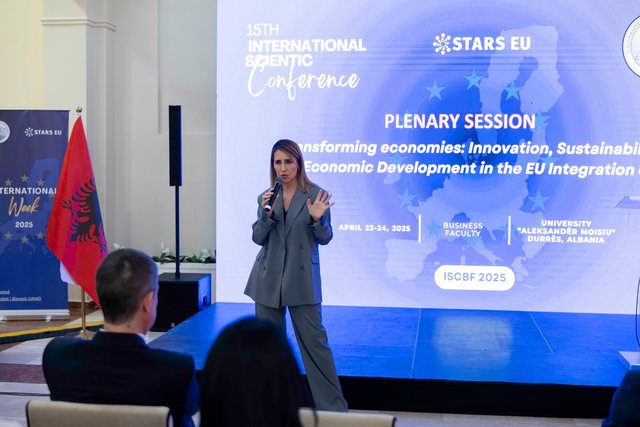
Former Minister of Integration, Majlinda Bregu, was part of a conference at Aleksandër Moisu University in Durrës on the topic "Transforming Economies: Innovation, Sustainability and Economic Development in the Era of European Integration", which she calls a current and urgent topic.
Bregu emphasized that today the best investment that can be made for the future is the investment you make in yourself.
She highlights that in 2030 there will most likely be no need for administrative assistants, secretaries, archivists, legal clerks, drivers, postal workers, etc. Almost all new professions will be based on information technology.
Bregu raises the question: Are we prepared for this upheaval in the labor market, where skills, not titles or diplomas, are becoming the main currency of the modern economy?
Majlinda Bregu's speech
"Dear participants,
It's a pleasure to be here—not just at a university event, but in a space of thinking. Because today, more than ever, we need not titles or handshakes, but ideas. Bold, thoughtful, and often inappropriate ideas.
Like the process we all know: -transformation
The theme of this conference—“Transforming Economies: Innovation, Sustainability and Economic Development in the Age of European Integration”—could not be more timely and urgent.
I'm trying to focus on some of the main elements.
“The main assets in the past were material—like gold mines or wheat fields,” says Yuval Harari. These were assets that could be seized by force.
Today, the best investment you can make for the future is the investment you make in yourself.
The last half century has seen a profound global economic transformation. The countries that dominated the world economy in the 1970s have gradually lost influence, while emerging economies have risen at a rapid pace.
How? By moving from a material economy to a knowledge-based economy, and by responding rapidly to challenges such as climate change, new patterns of globalization, and disruptive technologies.
I'm posing some uncomfortable questions—not to be answered here, but to be confronted. They are questions I ask myself and I believe should be central to any electoral, economic, and development agenda.
The World Economic Forum has published a list of occupations that will dominate the job market in 2030—leaving out many occupations that still make up the majority of the job market in the Balkans and Albania.
In 2030, there will likely be no need for administrative assistants, secretaries, archivists, legal clerks, drivers, postal workers, etc.
Almost all new professions will be based on information technology.
We already know this. But my question is:
Are we prepared for this upheaval in the job market—where skills, not titles or diplomas, are becoming the primary currency of the modern economy?
For example:
Only 2.6% of employees in the region are IT specialists;
Research and innovation spending accounts for only 0.4% of GDP, while in Albania it was only 0.08% in 2023 (OECD);
Albania ranks 21st out of 23 in an assessment composed of four dimensions: Talent, IT Infrastructure, Economic Impact, and Business Environment.
The list is long.
From education reform (recall the PISA results), to targeted digital retraining—especially for groups most at risk of job displacement; from support for startups and entrepreneurship that attract young people and stop emigration, to the creation of financial schemes for IT specialists—including those from the diaspora who want to return not just to vote, but to build—these are not options. They are essential needs.
The second question is:
What future do we want to enter—not as “guests,” but as equals?
Here, part of the conference theme sounds painfully familiar to me: the era of European integration.
Let's be honest. This "era" has lasted longer than some empires. For the Balkans, it is no longer a passing phase. It has become a permanent state in a world that has changed—fundamentally.
Ukraine is fighting a war that is also for the future of Europe.
The US and the EU are about to enter a trade war.
The Global South is creating new alliances.
And the Western Balkans? It risks remaining a passive periphery in an era when everyone is creating partnerships for survival.
I have spent two decades dealing with European integration and relations between countries. I have seen firsthand how enlargement has transformed from a vision of unification into a complex, contested process. Today, this complexity is compounded by the challenges of defense and security. The war in Ukraine, global instability, the need for a more autonomous Europe—they have turned enlargement into a strategic imperative.
We need to ask ourselves—based on experience, not wishful thinking: what kind of expansion or strategic partnership do we want to build?
What practical benefits—stronger defense cooperation, energy security, cyber resilience—can we realize through deeper integration?
And most urgently: what are the risks if this process stalls, leaving our region vulnerable and insecure at a time when clarity and unity are needed?
Europe is not a date on the calendar. It is a model of governance, a set of values, a discipline of reform.
EU membership is not a trophy. It is an exam. And it is not an exam for governments—but for societies.
EU membership is, yes, an extraordinary opportunity, if it is based on:
internal reforms,
deeper regional integration,
economic rapprochement with the EU through:
education and skills for economic transformation,
digitalization as a priority,
social cohesion,
energy, environment and health,
diaspora, migration and brain drain,
the rule of law and good governance.
And as with all truths in life, the most meaningful words are often paradoxical.
Governance is a delicate balance between leadership and institutions. Change starts with individuals, but only strong institutions ensure that progress is sustainable.
And here comes the third question:
Are we building institutions that truly serve people—or do we still rely too much on individuals, rather than processes?
Historical examples show the dangers of relying on authoritarian leaders. Without strong institutions, countries risk falling into political instability, economic decline, and weakening social cohesion.
The Balkan Barometer, commissioned by the RCC (the institution I led for 6 years), shows a consistent fact: the most untrustworthy institutions are political parties—with 74% distrust.
This political disillusionment is not unique to the Balkans, but understanding the causes is crucial for democratic legitimacy, stable governance, and progress towards the EU.
To finish:
Economic transformation requires people, skills and institutions that are not simply “EU-fit”, but that have the trust of citizens.
It requires technological advancement—not to digitize bureaucracy, but to keep young people in place.
Sustainable development is not a utopian alternative. It is a realistic perspective.
Depopulation is not a triumph of freedom of movement. It is an alarming signal—one that points to political, social, and economic challenges. We are reaching a point where we will have more retirees than people of working age. And that means less foreign investment.
Dear friends,
Transformation takes time. But it also requires honesty, focus, and the will to do differently.
It took me longer than I planned, but as James Baldwin said:
"Not everything that is faced can be changed, but nothing can be changed without being faced."
This is the task before us: to change stubborn realities—because if we ignore them, paralysis is guaranteed.
Thank you for listening to me. Thank you for standing where ideas matter.


Today, the Special Court held a hearing on the "Partizani"...
The Council of Ministers has decided today to declare Apri...
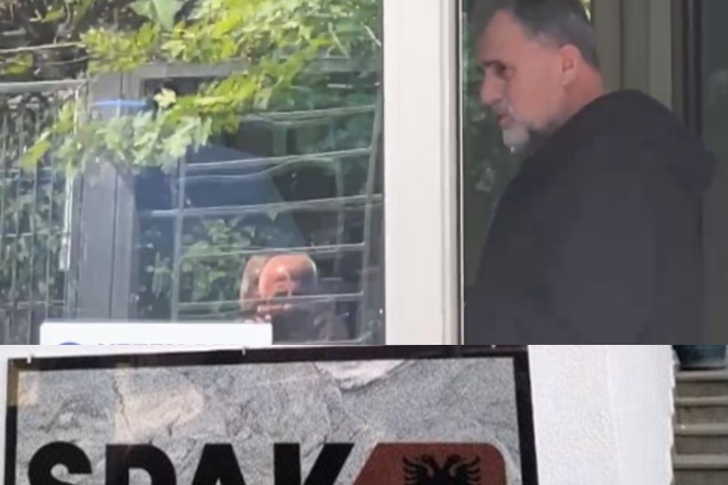
Businessman Shkelqim Fusha appeared before SPAK today. Fus...
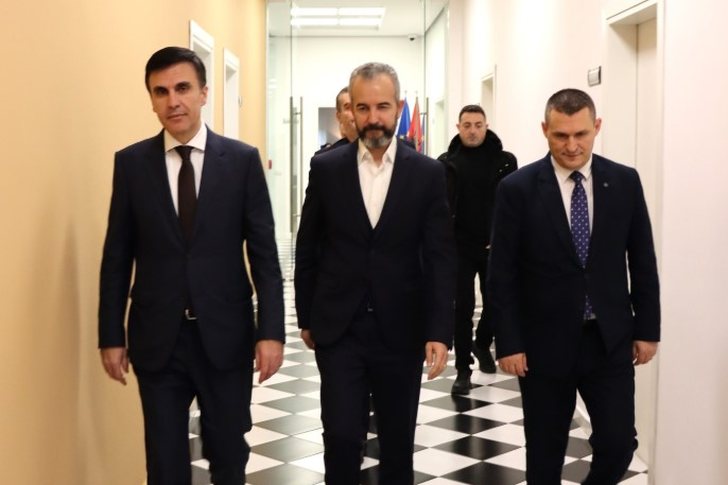
According to information, the head of SPAK, Altin Dumani, ...
Following the arrest of Roven Zeka, detained by SPAK on su...
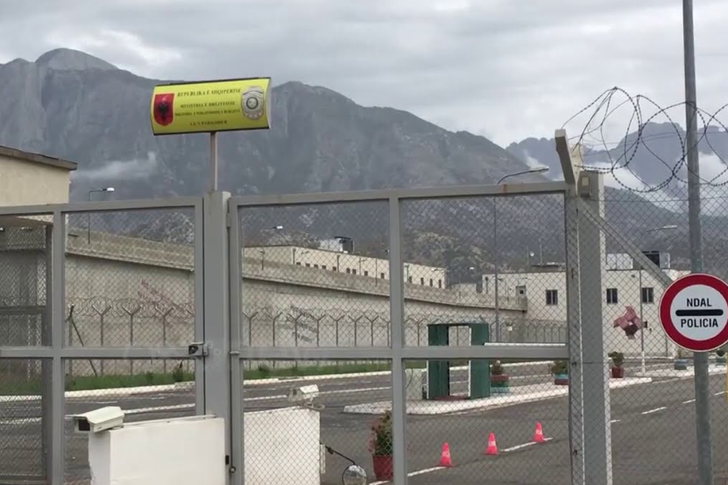
The director of Peqin prison, Florenc Doka, resigns. Doka ...
Ditën e sotme është zhvilluar votimi për drejtuesin e RTSH...

The Helsinki Committee, in a reaction made yesterday, said...
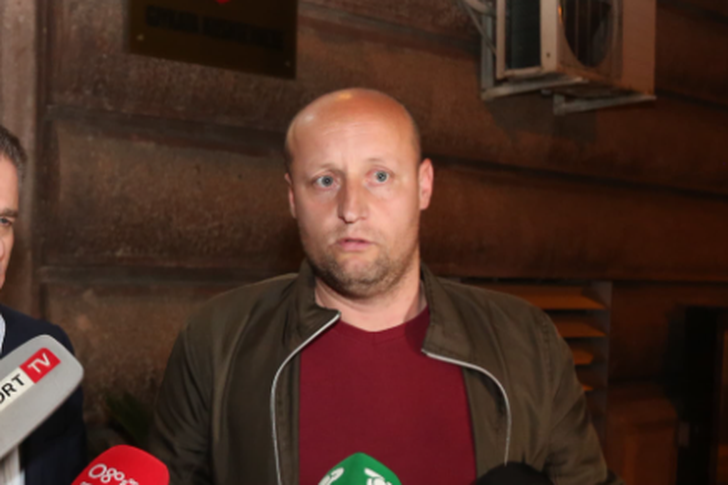
A hearing on the seizure of journalist Elton Qyno's belong...
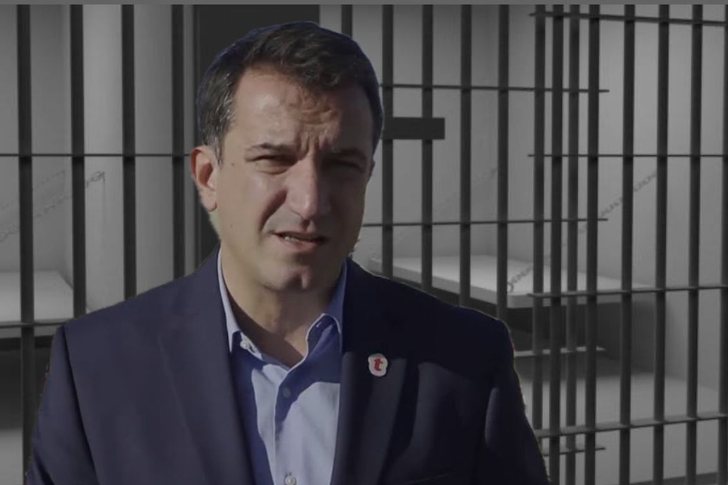
The appeal of the GJKKO has rejected Mayor Veliaj's reques...

This Thursday, we are introducing you to some of the main ...
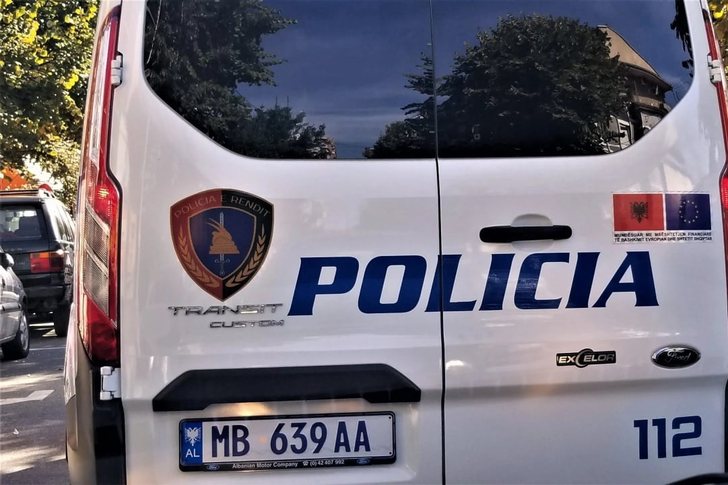
Police have arrested the former Director of the Dibër Regi...
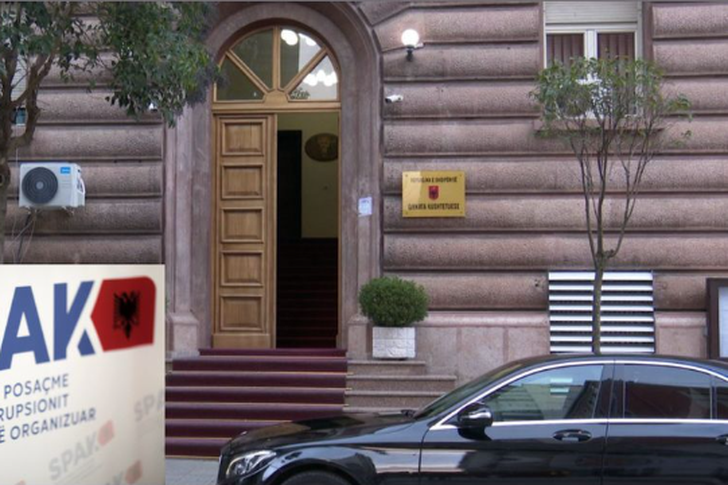
The Constitutional Court has rejected the request of sever...
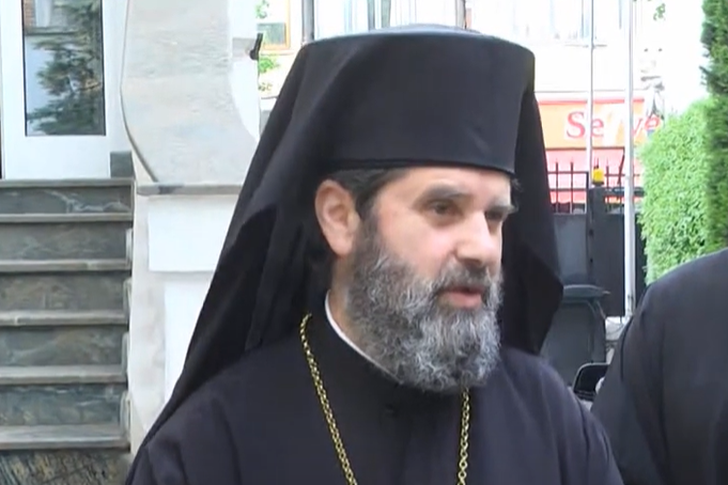
The Archbishop of Tirana, Durrës and All Albania, Joani, f...
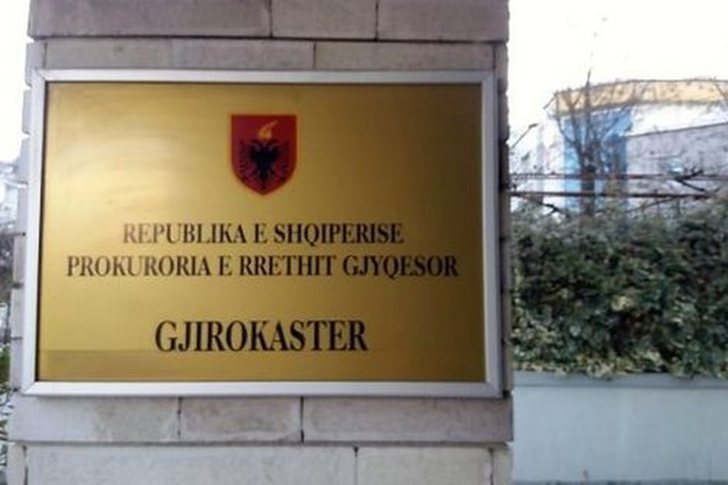
The Prosecutor's Office at the First Instance Court of Gen...
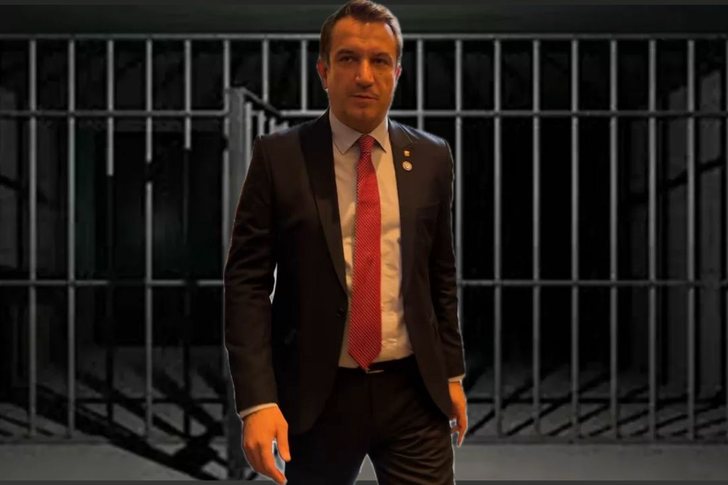
The Special Court today reviewed the appeal of Mayor Erion...
The Special Court has withdrawn to make a decision regardi...

The Special Prosecution has requested a one-year prison se...
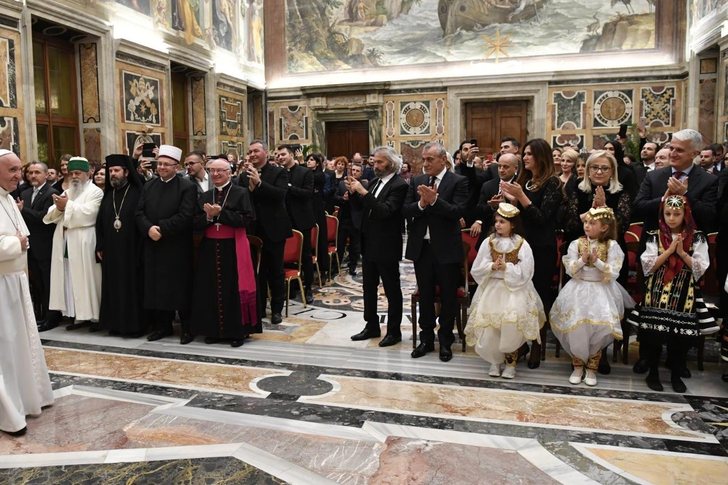
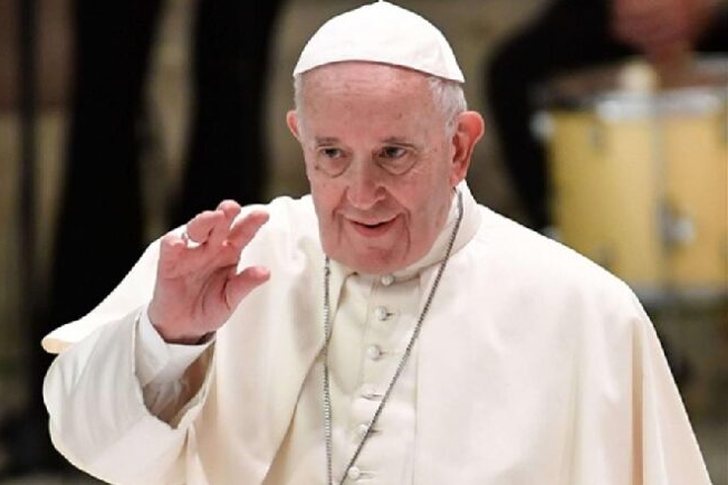
The funeral of Pope Francis will take place at the Vatican...
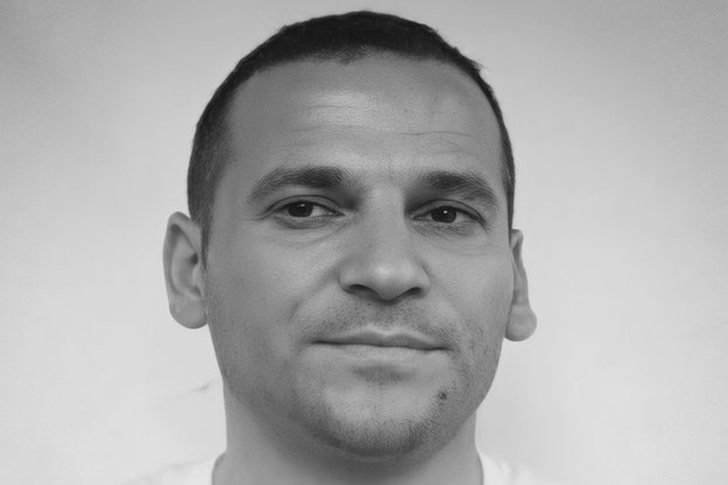
In the Special Court, Dritan Rexhepi testified for the fir...

CNA has launched another investigation that could lead to ...

Irfan Hysenbelliu is a businessman that we call "Irfan the...

In March 2026, CNA launched another investigation centered...
The arrested mayor of Tirana, Erion Veliaj, with 13 charge...

The Special Board of Appeal (KPA) decided this Monday ...

The KPA vetting decided this Thursday to dismiss the p...

Suela Salavaçi, a prosecutor in the Prosecutor's Offic...

The Special Board of Appeal reinstated the prosecutor ...
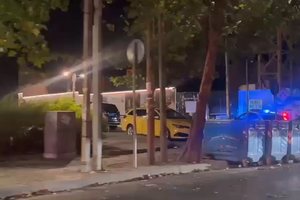
A road accident occurred this evening on Nikolla Zoraqi St...
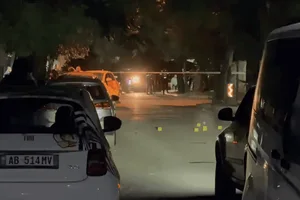
Three people were shot and wounded in Elbasan last night b...
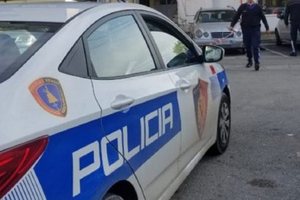
A serious incident occurred this Tuesday in the Yrshek are...
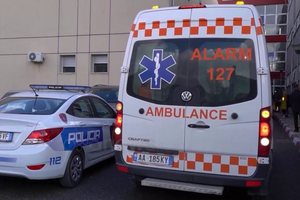
An accident occurred this Tuesday on "Dituria" street in K...
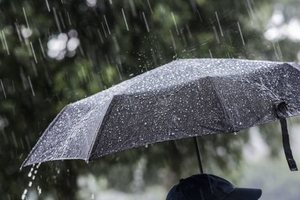
This Wednesday, our country will be under the influence of...
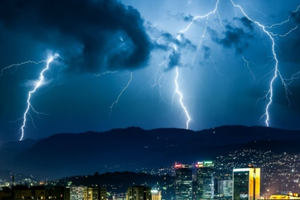
All of Southern Europe will face changing weather conditio...
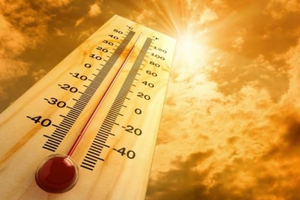
Albania was hit by temperatures significantly higher than ...
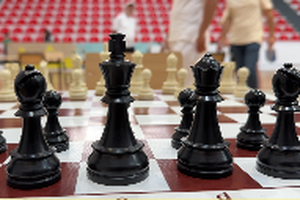
For the first time, Pogradec welcomed the Inter-Lake Chess...
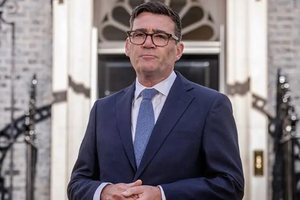
Prime Minister Andy Burnham has announced that most bus fa...

France's parliament has passed a law to ban social media f...
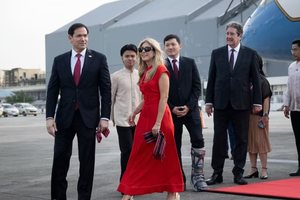
US Secretary of State Marco Rubio arrived in Manila on Jul...
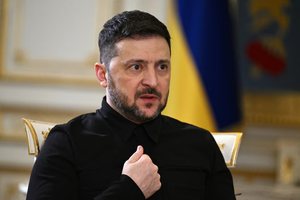
In the space of a few days, Ukrainian President Volodymyr ...

At a time when industrial products are increasingly taking...

Trust among people is not just a three-syllable word. It c...

Master of humor Todi Llupi has passed away at the age of 7...

The ninth edition of "MIK Festival" kicked off with one of...
Businesses will no longer be required to simply register t...

Despite economic growth and income in recent years, Albani...

This Wednesday, one US dollar is bought for 81.4 lek and s...

Construction company licenses will have a validity period ...