

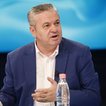


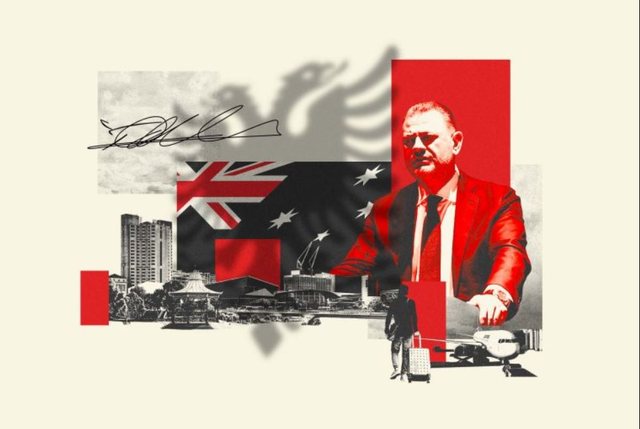
The Australian Criminal Intelligence Agency has written that the Albanian businessman and politician, Tom Doshi, is suspected of being the head of a criminal group in Australia, which commits immigration fraud, drug trafficking and money laundering.
According to the Australian agency, the documents, produced by the Australian Criminal Intelligence Commission (ACIC) and distributed to local and foreign police agencies, are based on numerous reports from local police forces and information from foreign law enforcement agencies.
After this publication, Tom Doshi also reacted, stating that he has no connection with any criminal clan.
"In fact, as a member of the Parliament of Albania, I have been a strong supporter of the fight against these activities. I have no connection with any Albanian 'criminal clan' based in Australia, or any Albanian criminals anywhere. My siblings and their children total 33. I have little or no contact with them other than seeing them at funerals or family celebrations.” , said Doshi.
The files describe how, since 2000, Albanian clans have used identity fraud and family ties to migration agents to move their people to Australia, setting up cells in Adelaide, Melbourne, Perth and elsewhere.
Doshi is described in the file as the "head" of a syndicate "consisting mainly of his extended family".
Tom Doshi, a powerful Albanian businessman and politician linked to the country's prime minister, is suspected of running an organized crime group involved in money laundering, drug trafficking and other offenses in Australia, according to confidential intelligence assessments.
This clan is among others from Shkodra, a county in northwestern Albania, who have systematically abused Australia's immigration system to build "an entire Albanian organized crime structure" across South Australia, according to reports.
The documents, produced by the Australian Criminal Intelligence Commission (ACIC) and distributed to domestic and foreign police agencies, are based on numerous reports from local police forces and information from foreign law enforcement agencies. They were seen by reporters from OCCRP and the Australian newspapers The Age and Sydney Morning Herald.
The files describe how, since 2000, Albanian clans have used identity fraud and family ties to migration agents to move their people to Australia, setting up cells in Adelaide, Melbourne, Perth and elsewhere.
Doshi is described in the file as the "head" of a syndicate "consisting mainly of his extended family". While the documents do not contain details about his specific activities, they note that eight of his relatives have been "implicated" in "drug and money laundering investigations", in some cases as "primary targets". His relatives are reported to have obtained Australian visas using false documentation. One faces charges of drug trafficking.
Doshi, who spent years in both countries, has not been charged with any crime in Australia. Back home, he had built a business empire that has benefited greatly from government contracts. He was designated persona non grata by the United States in 2018 for "involvement in significant corruption" and was forced to leave his parliamentary seat in 2021 after years of high-profile scandals. His alleged involvement in the Australian criminal network has never been revealed before.
"Never in my life have I been involved in any way with drug smuggling, human trafficking, arms trafficking, money laundering, or illegal immigration to Australia, or Albania, or anywhere else," Doshi wrote in response to journalists' questions. "In fact, as a member of the Parliament of Albania, I have been a strong supporter of the fight against these activities.
"I have no connection with any Albanian 'criminal clan' based in Australia, or with any Albanian criminal anywhere," he wrote. "My siblings and their children total 33. I have little or no contact with them other than seeing them at funerals or family celebrations."
"They like to dominate"
Albanian criminal groups are very active in the drug trade in the United Kingdom, Italy and many other countries on many continents.
Their well-organized and systematic operations in Australia highlight the threat posed by their international expansion.
Among their main skills, current and former law enforcement officials say, is using immigration rules to smuggle their members into the countries where they operate.
"Often applicants will apply for a particular visa knowing that it will be refused," says one of the Australian intelligence files, "but [they] use the lengthy appeals process so that they can generate evidence for support another visa application."
"They have facilitators, professional facilitators, to help them, whether it's visa migration, legal or other means," Victoria Police Commander Paul O'Halloran said. "They are very capable."
Albanian gangsters in Australia "can show extreme violence", O'Halloran said, and are considered by his detectives to be "very dangerous".
Tony Saggers, a former high-ranking officer in Britain's National Crime Agency, has spent years tracking Albanian criminals.
"Just doing it is not enough for them, they like to dominate," he said of their involvement in the drug trade. "They put a lot of emphasis on respecting what they do and doing it well. And just doing it is not enough for them. They like to dominate by gaining control of volume activity, proving they are the best, and satisfying customer demands.”
A criminal 'life cycle'
Australian intelligence documents seen by journalists outline what they call the five-stage "life cycle" of Albanian organized crime groups.
First, they say, people are recruited in their own regions in Albania, sometimes with the false promise of finding work abroad. Second, they are brought into the country using false visa claims and fraudulent documents. Third, they manage to stay in Australia by taking advantage of lengthy visa reviews and trusted registered migration agents (some Albanians apply to stay in Australia claiming blood feuds at home would endanger them if they return). Fourth, they commit criminal activity. Fifth, they are arrested, sentenced and their visas are revoked.
Shkodra has been identified as an epicenter from which many of these criminal groups originate, with five out of seven South Australian ACIC investigations between 2015 and 2020 showing a "primary target" from the Albanian county.
Doshi, a political ruler in Shkodër, appears in the documents as the suspected leader of an organized crime group made up of his extended relatives, referred to as the "Doshi family syndicate". Investigators believe the clan engages in money laundering and exploits Australia's immigration system to facilitate its criminal activities.
Members of the clan, the documents say, were placed by Australian officials on a "list of persons of interest" of Albanian organized crime. This list was then shared with law enforcement agencies in many European countries. The document suggests that these agencies have identified members of the Doshi clan in the list from their investigations.
The documents also include a "case study" describing a woman with "family ties to Dosh" working as a "registered migration agent" in Australia who "can facilitate [criminal] activity by achieving migration outcomes for union members of arrested for cannabis cultivation and/or are closely related to cocaine trafficking."
The files do not mention any criminal charges against the woman and indicate that there are "no grounds to cancel her registration [as a migration agent] based on criminal intelligence surrounding members of her immediate family."
The files go into detail about Dosh's two nephews. The two men are said to be members of the Lleshi drug-trafficking syndicate, a gang named after another family, which, according to the documents, uses funds from the sale of cannabis grow houses to import cocaine and meth into Australia.
Police arrested one of Dosh's nephews in Adelaide in March 2022 and charged him with drug trafficking and money laundering after finding AU$1.6 million worth of cocaine hidden inside a smoke machine.
The nephew had started visiting Europe frequently after taking up Australian citizenship almost a decade ago, intelligence files say. Along the way, he and his family bought expensive Australian property, raising questions for investigators about his income. Court officials did not respond to questions about the current status of the case.
Dosh's other nephew is no longer in Australia, but is suspected of still being involved in Albanian organized crime and high-level drug trafficking. He too has had a number of brushes with the law. According to his Australian immigration case file seen by reporters, he has a history of criminal convictions in the country dating back to 2012. The file quotes a minister who rejected his visa application as saying: “I reasonably suspect that [he] has been or is a member of a group or organization … involved in criminal conduct.”
In Albania, he was accused in 2016 of assaulting a traffic police officer. The officer declined to press charges and the outcome of the case is unknown.
Rising of Doshi
Although the Australian allegations against Dosh are new, he has long been a controversial figure in his homeland. He made a fortune in the pharmaceutical and construction industries and enjoyed high-level political connections. But his career has been marked by violence, run-ins with the law and allegations of corruption.
In a 2009 embassy cable released by WikiLeaks, an American diplomat serving in Albania included Doshi at the top of a list of lawmakers "with ties to organized crime," describing him as the country's "richest lawmaker" and adding that he was "suspected of drug trafficking".
Dosh's first known encounter with the law occurred in his early 20s. In 1990, while serving his mandatory military service, he was sentenced to a year in prison for misconduct after a drunken brawl in the coastal town of Durrës ended with one of his cohorts stabbing a man.
The sentence did not hinder Doshi's rise. By the mid-1990s, he had entered the construction and fuel sectors as Albania underwent a rapid transition to free-market capitalism.
Doshi made a home in Australia in 1997, buying multiple properties in the southern city of Adelaide and living between the two countries for several years. It was during this period that he allegedly created the criminal syndicate identified by Australian investigators.
But he remained active in his homeland. His career took the biggest step in 2000 when his firm Aldosch Sh.pk won the tenders to buy two large state-owned companies in the dairy and pharmaceutical sectors.
Teuta Shamku, a longtime business journalist at Albanian Public Television, described the victory as a "surprise," especially since Aldosch was allowed to privatize two companies operating in very different areas.
Furthermore, Aldosch was not a big name in Albanian business at the time. "They were unknown," said Shamku about Doshi's firm. "The activity of this company was a bit of a puzzle."
In response to journalists' questions, Doshi wrote that these purchases "were the result of a public privatization process with an open tender. I made the highest bid in each case. There was no favoritism.”
Meanwhile, Doshi became active in politics. He secured his first term in parliament in 2005 as a candidate with the Socialists, one of Albania's main political parties, to represent his hometown of Shkodra.
In a scandalous, widely reported incident three years later, Doshi allegedly assaulted a journalist who sought an interview about his fake university degree. A US embassy cable from the time described how bystanders in the hotel cafe, perhaps overwhelmed by Dosh's notoriously violent streak, simply let the attack happen.
The journalist did not press charges and Doshi's political rise continued unabated. In 2009, a US embassy cable quoted a disgruntled Socialist lawmaker who complained that Doshi - whom he called a "batak" - had gained influence over the party's leader, Edi Rama, after investing half a million euros in its last parliament. campaign.
The Socialists did not win that year. But in the next election in 2013, their improved performance in Shkodër helped them secure a national victory – and once again put local power player Doshi in a position of influence.
Fatos Lubonja, an Albanian writer and political commentator, described Doshi as a strong ally of the Socialist Party "both for the Shkodra and Tirana elections", referring to the two politically important regions.
"For many years, [Doshi] has been one of the most important allies of the ruling party of Edi Rama, a party that works for and with a [Albanian] minority."
But Doshi's rise was not without trouble.
His Australian visa was canceled on character grounds in 2015 and he is not known to have been in the country since then. The most recent publicly available documents show that a 2020 appeal by Doshi to overturn his visa cancellation was unsuccessful. He told reporters he continues to fight the decision and "hopes very much for a positive outcome." Australian Home Affairs officials did not respond to questions about Dosh's current status.
Back home, 2015 also saw him expelled from the Socialist Party after falling out with Rama over local political appointees. For years, Doshi and a parliamentary ally of his were under investigation for the false claim that the Speaker of the Assembly had ordered Doshi's murder. Doshi was later acquitted.
Also in 2015, Albanian authorities accused Doshi of under-declaring his assets in the amount of 14 million euros in his official asset declarations between 2005 and 2013. But although investigators investigated mansions, warehouses, apartments, factories and luxury cars in both Australia and Albania, he was acquitted. A set of charges for money laundering in the amount of nine million euros was dropped.
The agency involved, known as the ILDKPKI, issued a statement at the time saying that the violations involving Doshin had been found before this point, but "previous leaders of the ILDKPKI kept them hidden."
Meanwhile, Doshi had become an independent deputy and then the leader of a smaller party under whose banner he won the fourth parliamentary mandate in 2017.
A year later, the United States sanctioned Doshi for "engaging in significant corruption," and with the April 2021 election approaching, mounting pressure—including public statements by then-US ambassador Yuri Kim—finally forced him out. him to resign. But he still has considerable power. In the videos posted on Facebook that year, while declaring his support for Rama's Socialist Party, he said that its candidates were his own choices.
In May 2021, the opposition demanded that prosecutors open criminal proceedings against Doshi and a suspected accomplice for what they described as "electoral corruption" – involving buying votes with cash or other favors – and being part of of a "structured criminal group".
The case was sent to the capital Tirana, where an investigation is ongoing - although prosecutors are choosing not to specifically investigate Dosh and his accomplice, focusing on the general phenomenon of vote buying in Albania.
In response to requests for comment, Doshi's alleged associate Pëllumb Gjoka said he had "absolutely no connection with Mr. Doshi, either personal or business, and ... was never involved in vote-buying or voter intimidation." .
Gjoka was arrested in Albania on July 26, but the authorities have not yet disclosed the reason.
In response to journalists' questions, Doshi said that he "has never engaged in buying votes - I don't need to". His supporters, he said, are loyal to him in part because of their admiration for his family.
He described his designation by the United States as a "tremendous shock" given his "unwavering support for the US-sponsored judicial reform and anti-corruption agenda" and said it was based on "false media rumours". planted by his political opponents.
He also volunteered that he had been " declared non grata and expelled from the UK", where he said he was " currently pursuing legal remedies".
A spokesman for Prime Minister Rama distanced his Socialist Party from Doshi.
Doshi's newest party, he said, " has never been in a coalition with the Socialist Party, neither at the central nor at the local level".
"Albania is a model country in terms of the new justice system it has built," he added.
"Of course, Albania still has a lot to do and for this reason it has opened membership negotiations with the European Union, to become a worthy country of the European family, continuing reforms and the fight against corruption and organized crime./ CNA .co.uk


Gazment Bardhi, after the meeting of the National Council ...
The MP, Arben Pëllumbi says that the changes in the govern...
Former Prime Minister Sali Berisha has published a photo o...
New details have been revealed from the SPAK mega-operatio...
Today, SPAK carried out a wide-ranging operation with abou...
Today, SPAK has arrested the former director of Operations...
Former Prime Minister Sali Berisha has stated that former ...
Ish kryeministri Sali Berisha ka lëshuar deklarata shumë t...
The US Department of State has published its annual report...
Prokuroria e Posaçme po kryen kontrolle në shtëpitë e Ervi...
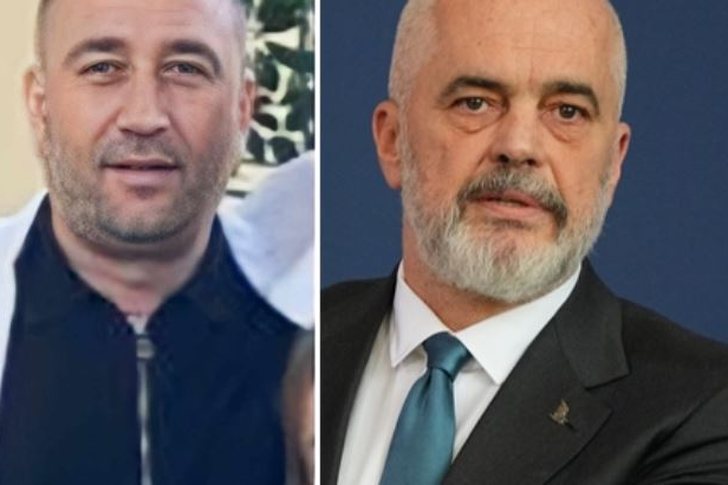
The State Police has today launched a mega-operation in co...

The former candidate of "BF" for the municipality of Kuçov...
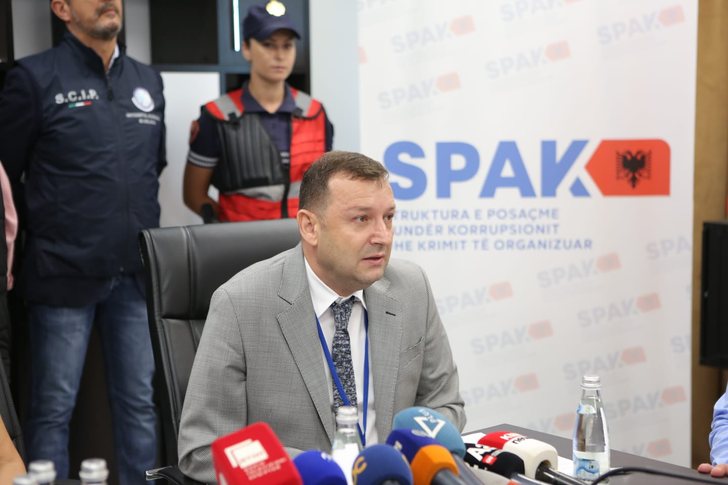
Procurator Eneid Nakuçi has stated that the money benefite...
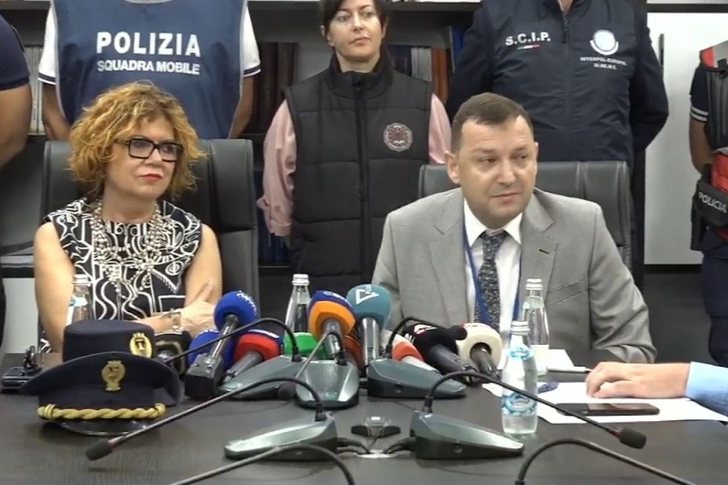
In a communication with the media on the mega-operation to...
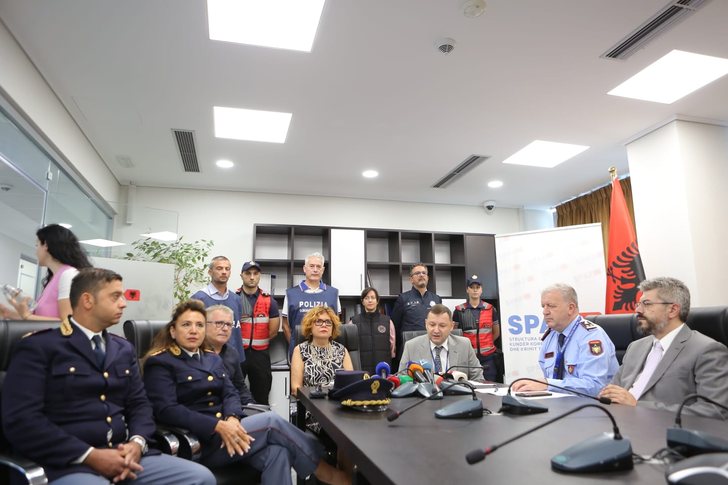
Italian prosecutors have given details about the operation...
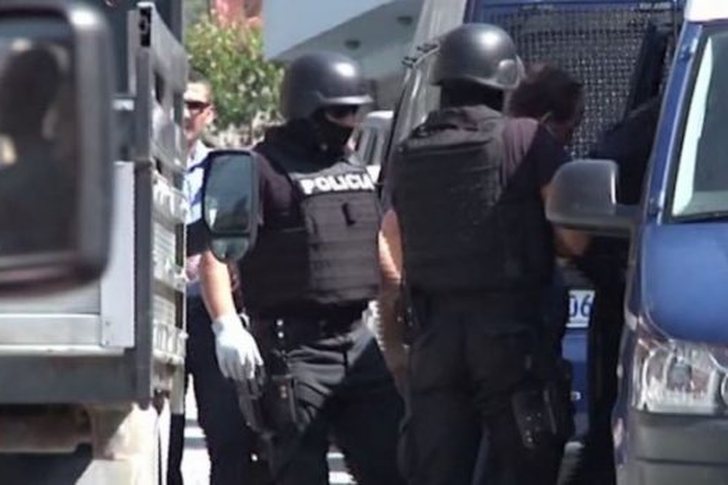
Autoritetet italiane në bashkëpunim me ato shqiptare kanë ...
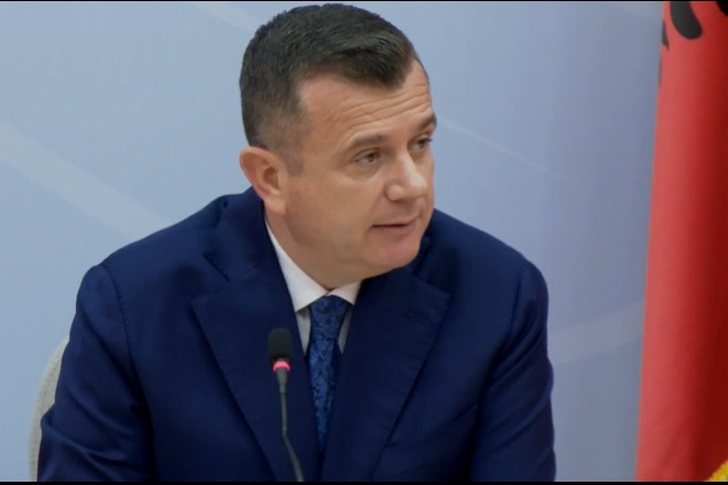
The Minister of the Interior Taulant Balla has congratulat...
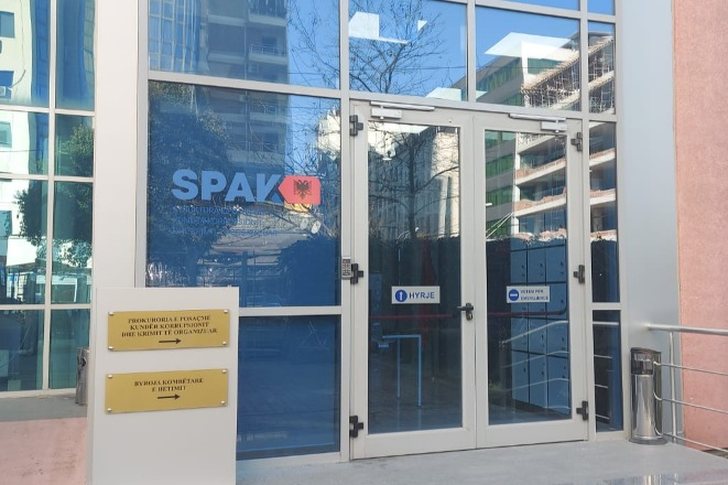
After the mega-operation, where businessmen, prosecutors a...
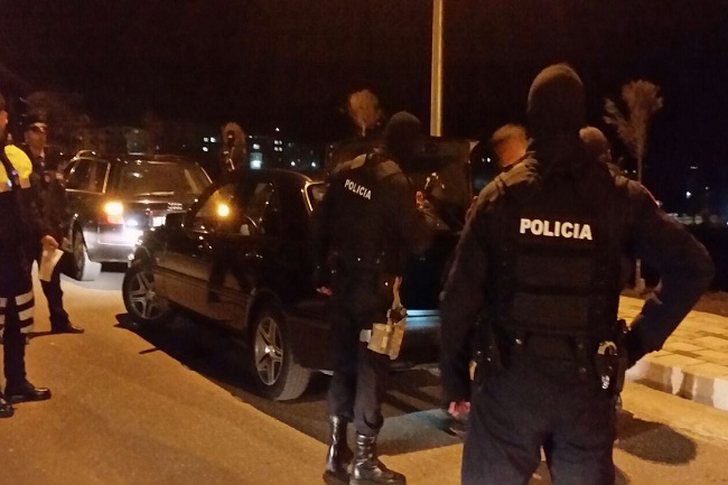
Policia e Shtetit ka zhvilluar një megaoperacion në disa q...

The United Nations has warned of the dangers of using smar...

CNA has launched another investigation that could lead to ...

Irfan Hysenbelliu is a businessman that we call "Irfan the...

In March 2026, CNA launched another investigation centered...
The arrested mayor of Tirana, Erion Veliaj, with 13 charge...

The Special Board of Appeal (KPA) decided this Monday ...

The KPA vetting decided this Thursday to dismiss the p...

Suela Salavaçi, a prosecutor in the Prosecutor's Offic...

The Special Board of Appeal reinstated the prosecutor ...
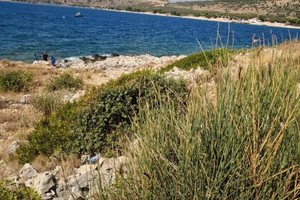
Citizen MH, 61, a fisherman, was found dead near the islan...
Another phase of the international operation, codenamed "T...
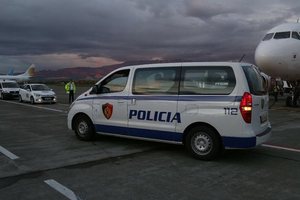
Police have arrested a 34-year-old woman at Rinas Airport ...
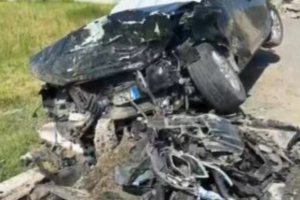
A serious accident has occurred on the Lezhë-Shëngjin axis...

The Institute of Geosciences has shared a forecast for wea...
Rising energy and fertilizer prices are expected to contin...
Over 18,000 foreign citizens from 140 countries have appli...
This Wednesday, our country will be under the influence of...
Prime Minister Andy Burnham has announced that most bus fa...

France's parliament has passed a law to ban social media f...
US Secretary of State Marco Rubio arrived in Manila on Jul...
In the space of a few days, Ukrainian President Volodymyr ...

At a time when industrial products are increasingly taking...

Trust among people is not just a three-syllable word. It c...
Master of humor Todi Llupi has passed away at the age of 7...
The ninth edition of "MIK Festival" kicked off with one of...
Businesses will no longer be required to simply register t...

Despite economic growth and income in recent years, Albani...

This Wednesday, one US dollar is bought for 81.4 lek and s...
Construction company licenses will have a validity period ...