


Thunderstorms/Today's weather
Today, our country will be under the influence of relative...


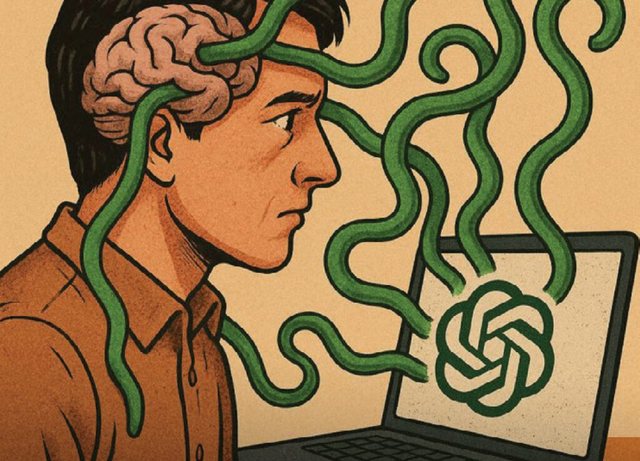
If the 20th century consumer was shaped by advertising, the 21st century consumer is being shaped by conversations with algorithms. Quietly and efficiently, ChatGPT is becoming an invisible partner in users’ personal and economic decision-making, from how they organize their day to career, spending, and financial decisions. What started as a tool to generate text is now influencing the way people feel, think, and consume…
If we used to start the day with a cup of coffee and a page of the newspaper, today we increasingly start it with a message with an Artificial Intelligence. It's called ChatGPT.
It's not a friend, it's not a therapist, it's not a colleague, but for millions of users it's a little bit of all of these. Instead of philosophical questions about being and existence, today's digital world raises more direct questions:
“Does AI understand me?” “Does it judge me?” “Does it make me feel good about myself?” These questions were once reserved for humans. Now we direct them at a “machine.”
A recent study of 732 individuals published in Springer Nature reveals a thin but strong thread connecting how we perceive ChatGPT to our mental health.
People who trust this digital tool more report higher self-esteem. Meanwhile, those who feel that the chatbot responds to them with prejudices or stereotypes experience insecurity and anxiety.
Technology is no longer just a tool. It has become a mirror. And sometimes, the mirror gives back more than we expected.
These new relationships, between human and algorithm, are quietly but steadily taking root. ChatGPT conversations are no longer just requests for information, they are interactions with emotional impact.
At the heart of these changes is a new phenomenon: the internalization of a relationship with a nonhuman entity. What happens when a machine becomes part of our mechanisms for building self-confidence, coping with anxiety, or seeking approval?
This is the question of the century. And for the first time, the answer comes not from classical psychology, but from an algorithm that learns every day from billions of interactions.
For AI developers, these findings are a call to action. The tone, the nuance, the way a chatbot responds to an emotional concern or personal question are no longer a matter of style, they are a matter of psychological impact.
Because, for today's user, a conversation with AI is no longer just a quick search. It's a moment of reflection. And apparently, a factor in mental well-being.
In an era where the boundaries between humans and technology are becoming increasingly blurred, one thing is certain: the way we talk to machines is shaping the way we talk to ourselves.
And perhaps, for the first time in history, we need to ask not just what technology says, but how it makes us feel.
What's going on?
On the surface, a conversation with Artificial Intelligence may seem simple: one question, one answer. But behind the scenes, something more subtle happens: people begin to project feelings, create emotional dependencies, seek solace in the machine's neutral tone.
ChatGPT doesn't know its users, but they feel increasingly understood by it.
The phenomenon is arousing interest in academic and psychological circles. Some researchers are calling it the “soft mirror effect”: when AI doesn’t react like a human, doesn’t interrupt, doesn’t contradict, but simply returns an elaborate and accurate reflection of what you’ve said. And this, at a time when communication with people is often fraught with tension, is proving surprisingly liberating.
There is another side to the coin: a chatbot that always gives you the right answer, that responds according to your way of thinking, can reinforce a false sense of security.
It can leave people without challenge, without debate, without confronting the opposite. And for someone suffering from anxiety or loneliness, this can be more of a refuge than a solution.
Meanwhile, Artificial Intelligence developers are facing a new dilemma: when creating a chatbot that sounds empathetic, where does assistance end and psychological intervention begin?
Should a technological tool be careful in how it interacts emotionally? And if so, how is this ethics measured in the language of algorithms?
To be heard more by AI
The frequent use of ChatGPT has begun to significantly impact the way individuals make decisions in their lives, from the simplest ones, like choosing an outfit, to the most important decisions.
Psychologist Ermela Shllaku notes that this impact is related to the way Artificial Intelligence provides immediate and accessible support. “ChatGPT functions as a kind of external support.
"You can log in at any time and get information about what you're looking for, but unlike Google or Wikipedia, the information here is more concrete and understandable," she explains.
This clarity and emotional connection to the content can create a sense of security for users. “Individuals feel more secure about what they read because they get exactly what they are looking for, in simple, non-judgmental language,” psychologist Shllaku emphasizes.
However, it raises the alarm that excessive use can have serious consequences for the mental development and autonomy of the individual.
"When everything comes to you, you are no longer forced to use your cognitive functions, intelligence, information processing or reasoning. And this leads to a weakening of mental capacities," she says.
Psychology sees this as a new form of digital addiction, comparable to social networks like Instagram or TikTok, but fundamentally different.
"In this case, we don't have comparative dependence, where you follow others, but an internal, more intimate relationship, with a digital entity that responds only to you," she explains.
This direct relationship with a medium that does not judge you, does not reject you, and always listens to you, becomes even stronger in adolescence.
According to her, teenagers are particularly at risk, as they often feel more accepted and freer to express themselves through ChatGPT.
"Teenagers feel heard. There, no one judges them, interrupts them, or rejects them. This is something that many of them feel they lack in the real world," adds Ms. Shllaku.
But what happens when this relationship with a digital tool becomes intense and frequent?
"If a teenager constantly communicates with a chatbot, they risk replacing real human relationships with an artificial form of security and love," warns psychology.
She calls this "a relationship with a robotic device," which in extreme cases can lead to self-isolation or social isolation, creating a false sense that emotional needs are being met.
The impact goes even further, affecting self-confidence and a sense of self-realization.
"When everything is offered to them ready-made, teenagers no longer have the space to test themselves, to make mistakes or to learn from them. This makes them feel incapable of making independent decisions," emphasizes Ms. Shllaku.
She adds that consumer behavior is also affected, as "AI has the ability to suggest products that users may not need, but that they buy just because 'Chat told them to'."
Despite the challenges, psychology emphasizes that technology should not be seen as the enemy.
"We cannot attack technology just because it brings risks. It also has a positive side, it helps in many situations, but the challenge is to learn how to use it consciously," Shllaku underlines.
According to her, this education should start in the family: "We as parents have the responsibility to talk about ChatGPT with our children every day, not only about the positive sides, but also about the negative ones. This is the way to build a healthy relationship with Artificial Intelligence."
To avoid addiction, she suggests that children be pushed towards creating real, emotionally rich relationships.
"We need to help them understand that AI cannot replace humans, with all their colors, love, empathy, fears, and tolerance," she says.
And above all, parents should show understanding: "Teenagers are going through a very delicate phase and it is natural for them to make mistakes. Let's let them make mistakes, so they can learn and build their self-confidence."
dependence
Psychologist Ermela Shllaku sees this as a new form of digital addiction, comparable to social networks like Instagram or TikTok, but fundamentally different. “In this case, we don’t have a comparative addiction, where you follow others, but an internal, more intimate relationship, with a digital entity that responds only to you,” she explains. This direct relationship with a tool that doesn’t judge you, doesn’t reject you and always listens to you, becomes even stronger in adolescence.
The economic side
For the first time, Artificial Intelligence is intervening not in production or data analysis, but in a delicate terrain: consumer psychology.
ChatGPT conversations are replacing tedious Google searches, spontaneous advice with friends, and often even consultations with professionals.
And this is not without consequences. When users feel understood or emotionally reinforced by a chatbot, they tend to make faster, sometimes more impulsive decisions, according to recent studies, in areas ranging from online shopping to career choices to relationships and finances.
For example, psychologists claim that an employee who feels constant stress at work may use ChatGPT as a quick form of "ventilation," but in the absence of human interaction, virtual support can translate into drastic decisions: hasty resignations, career changes, or orientation towards independent work.
All of this happens without a deep economic analysis, but as a result of a subjective feeling that the chatbot inadvertently feeds.
On the other hand, there are also positive effects. Users who feel more confident and supported after interactions with AI are more likely to take economic initiatives, open a business, ask for a raise, or better manage their personal budget.
In this context, ChatGPT is not simply a communication tool, but a psychological catalyst for new economic behaviors.
This raises a new question for modern times: if Artificial Intelligence affects the way we think and feel, should we start counting it as a new actor in consumer and labor market behavior patterns?
ChatGPT use by students, challenges and consequences in the labor market
The use of ChatGPT by students is seen with concern, not only in completing their assignments or academic responsibilities, but also when facing the job market. This is stated by Fatjona Murati, director of "Cancri Marketing".
According to her, a new generation is being created, an "army" of people who in the future may have serious problems with critical thinking, logic, problem solving, and the process of creating ideas, "brainstorming", which is essential in many workplaces.
"ChatGPT is used for brainstorming, but it has been misused: for everything, every thesis, every exam, students leave it to the platform. You just have to give a well-structured prompt and tell it that you are a student in a certain field and AI gives you all the content."
"In this way, teachers and the education system are no longer able to truly understand what a student's true abilities are. This creates a huge gap between real knowledge and what is presented on paper," says Ms. Murati.
In the labor market, according to her, there is a clear risk for information technology professions.
"Many think that IT is not at risk, but in fact, it is junior positions, especially those involving routine work such as data entry or simple coding, that can be easily replaced by Artificial Intelligence."
For companies that recruit, there is no longer a need for students to do internships for simple jobs.
These tasks can be performed by an experienced employee, who manages and produces more in less time. Students face difficulties in integrating into the labor market, because they no longer have the first “entry”, namely the internship.
"This is a big challenge. On the one hand, we have professions that are disappearing, on the other hand, new professions are opening up for which there is neither education nor structured training. Everything is being done in a self-taught manner," says the marketer.
Risk to young people
Fatjona Murati, head of “Cancri Marketing”, claims that a new generation is being created, an “army” of people who in the future may have serious problems with critical thinking, logic, problem solving and the process of creating ideas, “brainstorming”, which is essential in many workplaces. “ChatGPT is used to stimulate ideas, but it has gone into a wrong use: for everything, every thesis, every exam, students leave it to the platform. It is enough to give a well-structured prompt and tell it that you are a student in a certain field and AI gives you all the content. In this way, teachers and the education system are no longer able to really understand what a student’s true abilities are. This creates a huge gap between real knowledge and what is presented on paper”, says Ms. Murati./ Monitor

Today, our country will be under the influence of relative...

A heartfelt message has been expressed by the school of th...

Today, our country will be under the influence of relative...

The number of births in Albania has suffered a significant...

Today, our country will be under the influence of relative...

Some administrative units and small municipalities will ri...

Today our country will be affected by stable weather condi...

The number of students in schools is declining, due to the...
The African heat has gripped our country. According to th...

On Monday, our country will be affected by stable weather ...

Residents of the village of Zvezda protested this Sunday m...
Creativity and critical thinking may be affected. But ther...
Today, our country will be under the influence of stable w...

On Saturday, our country will be under the influence of st...
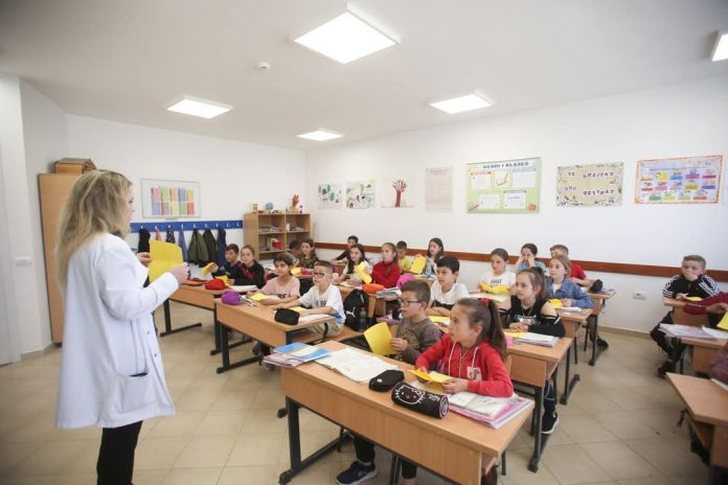
The number of students enrolled in the entire education sy...

Digitalization, as measured by the number of households wi...

On Friday, our country will be under the influence of stab...

Many farmers cannot benefit from the national schemes of t...

On Thursday, our country will be affected by stable weathe...

Europe, and especially Germany, have significantly increas...

CNA has launched another investigation that could lead to ...

Irfan Hysenbelliu is a businessman that we call "Irfan the...

In March 2026, CNA launched another investigation centered...
The arrested mayor of Tirana, Erion Veliaj, with 13 charge...

The Special Board of Appeal (KPA) decided this Monday ...

The KPA vetting decided this Thursday to dismiss the p...

Suela Salavaçi, a prosecutor in the Prosecutor's Offic...

The Special Board of Appeal reinstated the prosecutor ...

A road accident occurred this evening on Nikolla Zoraqi St...

Three people were shot and wounded in Elbasan last night b...

A serious incident occurred this Tuesday in the Yrshek are...

An accident occurred this Tuesday on "Dituria" street in K...

All of Southern Europe will face changing weather conditio...

Albania was hit by temperatures significantly higher than ...

For the first time, Pogradec welcomed the Inter-Lake Chess...

Albania has achieved a record for the employment of foreig...

US Secretary of State Marco Rubio arrived in Manila on Jul...

In the space of a few days, Ukrainian President Volodymyr ...

The spokesman for the Iranian Foreign Ministry warned Bulg...

Autoritetet italiane sekuestruan pako me afër 800 kilogram...

At a time when industrial products are increasingly taking...

Trust among people is not just a three-syllable word. It c...

Master of humor Todi Llupi has passed away at the age of 7...

The ninth edition of "MIK Festival" kicked off with one of...

Construction company licenses will have a validity period ...

The Centralized Purchasing Operator recently opened a tend...

The new draft law "On the Bank of Albania" provides that t...

This Tuesday, one US dollar is bought for 81.2 lek and sol...