


The Supreme Court publishes candidates for members of the Supreme Court, here's when the elections will be held
The Supreme Court has announced the official candidates fo...

The Supreme Court has announced the official candidates fo...

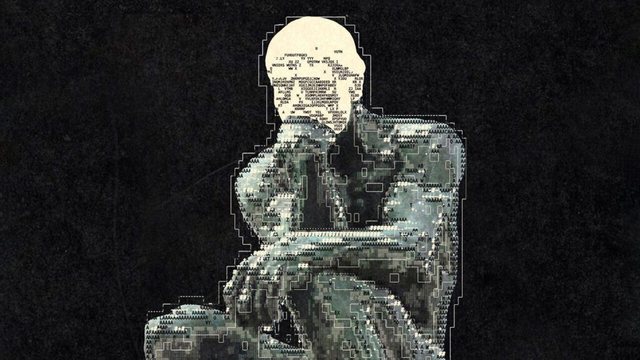
Creativity and critical thinking may be affected. But there are ways to mitigate the consequences, writes The Economist
As anyone who has taken an exam at least once can tell you, writing an essay in less than 20 minutes really requires a lot of concentration.
Having unlimited access to Artificial Intelligence (AI) would significantly ease this mental burden.
But, as a recent study by researchers at the Massachusetts Institute of Technology (MIT) suggests, this help may come at a cost.
During several essay writing sessions, students working with (and without) the help of ChatGPT were connected to electroencephalograms (EEGs) to measure brain activity while working.
In all cases, IA users showed significantly less activity in brain areas associated with creative functions and concentration.
Students who wrote with the help of the chatbot also found it more difficult to accurately quote any part of the essay they had just written.
These findings are part of a growing body of studies examining the potentially harmful effects of AI use on creativity and the learning process.
The research raises important questions about whether the impressive short-term benefits of generative AI may come with a hidden long-term cost.
The MIT study complements the panorama of two other high-profile research on the relationship between AI use and critical thinking.
The first, by researchers at Microsoft Research, involved 319 knowledge workers (individuals who perform work that requires analysis, critical thinking, decision-making, creativity, or information processing) who used generative AI at least once a week.
Respondents described over 900 tasks they had completed with the help of AI, from summarizing long documents to creating marketing campaigns.
By their own estimates, only 555 of these tasks required critical thinking, such as reviewing AI results before sending them to the client, or reformulating a request after an unsatisfactory result the first time around.
The rest of the tasks were considered essentially insignificant.
Overall, most employees reported needing less or much less mental effort to complete tasks when using tools like ChatGPT, Google Gemini, or Microsoft's Copilot, compared to completing them without the help of AI.
Another study, by Professor Michael Gerlich at SBS Swiss Business School, involved 666 individuals in Britain who were asked how often they used AI and how much they trusted it, before being presented with questions based on a critical thinking test.
Participants who used AI more scored lower in all areas.
Gerlich says that after the study was published, he was contacted by hundreds of high school and university teachers who are grappling with the increasing use of AI by students. According to him, they “felt that this study accurately described what they are currently experiencing.”
An open question
Whether AI will make people with weaker mental capacity in the long run still remains an open question.
Researchers in all three studies emphasize that further research is needed to determine a cause-and-effect relationship between high AI use and impaired mental function.
In the case of Gerlich's study, for example, it may be that people with greater critical thinking skills are less likely to rely on AI.
While the MIT study had a very small sample (only 54 participants) and focused on a single task.
Furthermore, generative AI tools clearly aim to ease the mental load on users, just like many other technologies before them.
As early as the 5th century BC, Socrates complained that writing is not “an elixir for remembering, but only for remembering.” Calculating machines help cashiers with calculations.
Navigation apps have removed the need to read maps. And yet, few would argue that these tools have made us less capable.
There's not much evidence to suggest that allowing machines to perform users' mental functions alters the brain's natural capacity for thinking, says Evan Risko, a psychology professor at the University of Waterloo who, along with colleague Sam Gilbert, coined the term "cognitive offloading," or offloading mental tasks to an external helper.
What is worrying, according to Risko, is that generative AI allows humans to “offload a much more complex set of processes.”
Downloading an arithmetic task, with limited applications, is not the same as downloading a process like writing or solving a problem. And once the brain learns to do this, it's hard to forget.
The tendency to look for the easiest way to solve a problem, known as “cognitive miserliness,” can create what Gerlich calls a reinforcing cycle.
Individuals who depend on AI will find it increasingly difficult to think critically, and their brains will become more "stingy," leading to more task overload.
One participant in his study, a frequent AI user, said: “I depend so much on AI that I don’t think I would know how to solve some problems without it.”
Many companies expect productivity gains from the large-scale use of AI. But there could be unintended consequences.
"The long-term decline in critical thinking is likely to lead to a decline in competitiveness," says Barbara Larson, a management professor at Northeastern University.
Prolonged use of AI may make employees less creative.
In a University of Toronto study, 460 participants were instructed to suggest creative uses for everyday objects, such as a car tire or a pair of pants.
Those who had previously seen AI-generated ideas offered less creative and less varied responses than those who worked without assistance.
For example, for the pants, the chatbot suggested stuffing them with straw to create half of a scarecrow, essentially reusing them as pants.
While one participant without help from AI suggested placing nuts in pockets to make a special feeder for birds.
There are ways to keep your brain in shape. Larson suggests that the smartest way to benefit from AI is to treat it as “an enthusiastic but slightly naive helper.”
Gerlich recommends that, instead of asking the chatbot to immediately generate the final result, the user guide it step by step on the path to the solution.
Instead of asking "Where should I go for a sunny vacation?", you can start with the question "Where does it rain the least?" and develop it from there.
The Microsoft team has also tested AI assistants that occasionally intervene with "provocations" to encourage deeper thinking.
In a similar vein, researchers from Emory and Stanford Universities have proposed that chatbots be reprogrammed to act as “thinking assistants” that ask deep questions, rather than simply provide answers. Perhaps Socrates would happily approve of this.
Compliance with the program
However, these strategies may not be very useful in practice, even if AI models were changed to be more clumsy or slower.
They can also have unintended consequences. A study from Abilene Christian University in Texas found that AI assistants that repeatedly interrupted users with provocations worsened the performance of poor programmers on a simple coding task.
Other possible measures to keep the brain active are more direct, although more compelling.
Overzealous AI users may be forced to provide an answer to a question themselves or wait several minutes before accessing the AI.
This "cognitive forcing" can improve user performance, according to Zana Buçinca, a researcher at Microsoft who deals with these techniques, but it will be less popular.
"People don't like being pushed to engage," she says. The demand for ways to circumvent this would be high.
In a representative survey across 16 countries conducted by consultancy Oliver Wyman, 47% of respondents said they would use generative AI even if their employer banned it.
The technology is so new that for many tasks, the human brain is still the sharpest tool to use.
But over time, AI users and regulators will need to assess whether the broad benefits are worth the mental costs.
If there were any hard evidence that AI makes people less sharp, would they care?/ Monitor


Today, our country will be under the influence of stable w...

On Saturday, our country will be under the influence of st...
The number of students enrolled in the entire education sy...

Digitalization, as measured by the number of households wi...

On Friday, our country will be under the influence of stab...

Many farmers cannot benefit from the national schemes of t...

On Thursday, our country will be affected by stable weathe...

Europe, and especially Germany, have significantly increas...
On Wednesday, our country will be affected by relatively s...

On Tuesday, our country will be under the influence of rel...

On Monday, our country will be under the influence of unst...
On Sunday, our country will be under the influence of stab...

Today, our country will be under the influence of relative...

Today our country will be under the influence of stable we...

The government, at today's meeting, decided to provide 150...

The movement of Albanian and foreign citizens by air has s...

Today our country will be under the influence of unstable ...
Today, our country will be under the influence of relative...
Today our country will be under the influence of unstable ...
Today, our country will be under the influence of relative...

CNA has launched another investigation that could lead to ...

Irfan Hysenbelliu is a businessman that we call "Irfan the...

In March 2026, CNA launched another investigation centered...
The arrested mayor of Tirana, Erion Veliaj, with 13 charge...

The Special Board of Appeal (KPA) decided this Monday ...

The KPA vetting decided this Thursday to dismiss the p...

Suela Salavaçi, a prosecutor in the Prosecutor's Offic...

The Special Board of Appeal reinstated the prosecutor ...

A tourist has lost her life on Orikum beach, where she was...

Two people were arrested and two others were prosecuted af...

At around 08:40, in neighborhood no. 10, Korça, a "Benz" t...

New details are being learned regarding the incident that ...

For the first time, Pogradec welcomed the Inter-Lake Chess...

Albania has achieved a record for the employment of foreig...

Today our country will be under the influence of relativel...

Another humanitarian aid shipment from Germany has arrived...

The United Kingdom's new Prime Minister, Andy Burnham, has...

United States President Donald Trump has imposed 50% tarif...

US President Donald Trump responded with harsh rhetoric to...

US President Donald Trump said on Monday that Israeli Prim...

At a time when industrial products are increasingly taking...

Trust among people is not just a three-syllable word. It c...

Master of humor Todi Llupi has passed away at the age of 7...

The ninth edition of "MIK Festival" kicked off with one of...

The new draft law "On the Bank of Albania" provides that t...

This Tuesday, one US dollar is bought for 81.2 lek and sol...

Deputy Minister of Economy and Innovation, Enkelejd Musabe...

This Monday, one US dollar is bought for 81 lek and sold f...