


From the cradle to the office, life experiences in the decisions of bosses
Early experiences, from the fetus to the first job, can in...



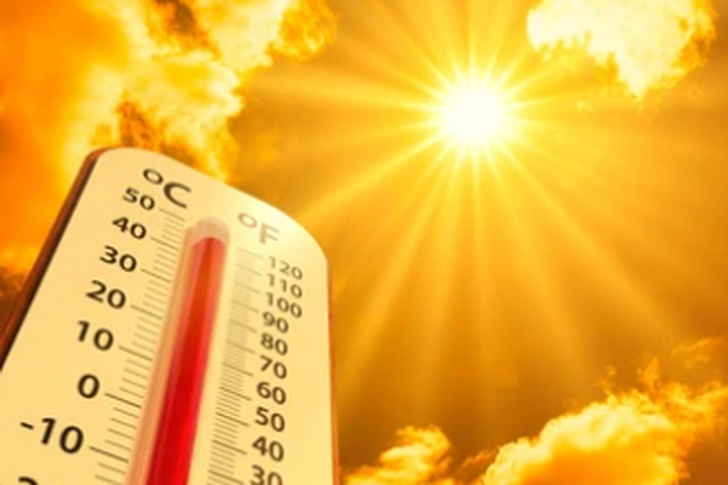
Half of the world's population experienced an additional month of extreme heat last year compared to the 1991-2020 average.
According to a study, this happened due to human-caused global warming. The consequences of the continued use of fossil fuels.
The study results highlight how harmful the continued use of fossil fuels is to the health and well-being of people on all continents, with the consequences being particularly unknown in developing countries, according to the researchers.
“With every barrel of oil burned, every ton of carbon dioxide released, and every fraction of a degree of warming, heat waves will affect more and more people,” notes Friederike Otto, a climatologist at Imperial College London and author of the report.
The analysis, conducted by scientists from World Weather Attribution, the non-governmental organization Climate Central and the Red Cross and Red Crescent's Climate Change Directorate, was published ahead of World Heat Action Day on June 2, which this year is dedicated to the risks of heat exhaustion caused by heat waves.
Time period analyzed by researchers
To assess the impact of climate change, the researchers analyzed the period from May 1, 2024 to May 1, 2025.
"Extremely hot days" were defined as those days when the temperature exceeded 90% of the average temperatures recorded at a specific location in the period 1991-2020.
The researchers compared the number of these days to a hypothetical world without anthropogenic warming. The results are indisputable: about four billion people, or 49% of the world's population, experienced at least 30 additional days of extreme heat last year compared to the hypothetical world.
All extreme heat events have the imprint of climate change
The study recorded 67 episodes of extreme heat during the period studied, all of which bear the hallmarks of climate change.
The Caribbean island of Aruba was hit hardest, with 187 days of extreme heat, 45 more than would be expected in a world without climate change.
The year 2024 was the warmest year ever recorded, surpassing 2023, while 2025 began with the warmest January since records began.
On average over the past five years, global temperatures have been 1.3° Celsius above pre-industrial levels. In 2024, it surpassed the 1.5° Celsius threshold – the symbolic upper limit set by the Paris Climate Agreement.
The report also highlights the apparent lack of data on the health impacts of heat in poorer areas.
While Europe recorded over 61,000 heat-related deaths in the summer of 2022, there is little data available for other regions. Many heat-related deaths were wrongly attributed to heart or lung disease./ CNA

Early experiences, from the fetus to the first job, can in...

On Saturday, our country will be under the influence of st...

On Friday, our country will be under the influence of stab...

On Thursday, our country will be affected by unstable weat...
Scientists are warning that the next five years could see ...

Official data shows that road accidents decreased in April...

A group of major Hollywood representatives, Warner Brother...

The Military Meteorological Service announced that on Tues...

The Mayor of Gramsh, Besian Ajazi, has given a statement t...

Today, the parents of children at the kindergarten who tes...

The Water and Sewerage Authority in Vlorë has announced th...

Shqipëria do të karakterizohet nga kthjellime dhe vranësir...

Our country will continue to be affected by unstable weath...

Earlier today, it was reported that several children at a ...
Today, our country will be affected by relatively unstable...

In bars and restaurants, wages continue to increase due to...

Traditions, economic level, and urbanization fragment the ...

Today our country will be affected by relatively unstable ...

Although the number of vehicles is increasing and the popu...
Today our country will be affected by relatively unstable ...

CNA has launched another investigation that could lead to ...

Irfan Hysenbelliu is a businessman that we call "Irfan the...

In March 2026, CNA launched another investigation centered...
The arrested mayor of Tirana, Erion Veliaj, with 13 charge...

The Special Board of Appeal (KPA) decided this Monday ...

The KPA vetting decided this Thursday to dismiss the p...

Suela Salavaçi, a prosecutor in the Prosecutor's Offic...

The Special Board of Appeal reinstated the prosecutor ...

A road accident occurred this evening on Nikolla Zoraqi St...

Three people were shot and wounded in Elbasan last night b...

A serious incident occurred this Tuesday in the Yrshek are...

An accident occurred this Tuesday on "Dituria" street in K...

All of Southern Europe will face changing weather conditio...
Albania was hit by temperatures significantly higher than ...

For the first time, Pogradec welcomed the Inter-Lake Chess...

Albania has achieved a record for the employment of foreig...

US Secretary of State Marco Rubio arrived in Manila on Jul...

In the space of a few days, Ukrainian President Volodymyr ...

The spokesman for the Iranian Foreign Ministry warned Bulg...

Autoritetet italiane sekuestruan pako me afër 800 kilogram...

At a time when industrial products are increasingly taking...

Trust among people is not just a three-syllable word. It c...

Master of humor Todi Llupi has passed away at the age of 7...

The ninth edition of "MIK Festival" kicked off with one of...

Construction company licenses will have a validity period ...

The Centralized Purchasing Operator recently opened a tend...

The new draft law "On the Bank of Albania" provides that t...

This Tuesday, one US dollar is bought for 81.2 lek and sol...