

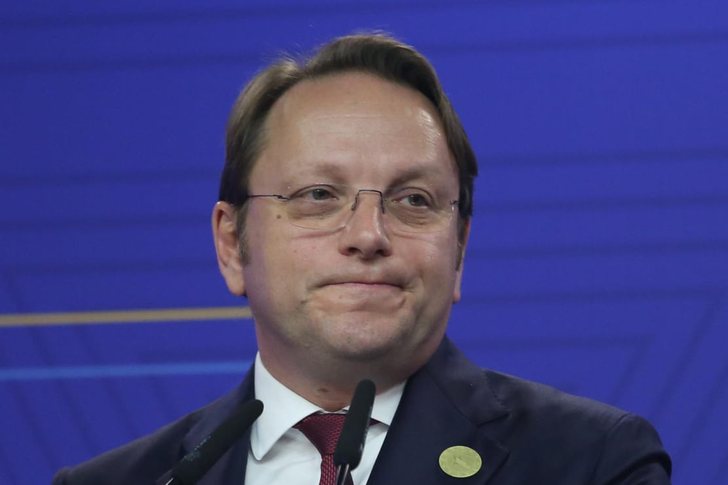
Oliver Varhelyi says it openly: I do not understand why the EU is not opening negotiations with Albania
The EU Enlargement Commissioner, Oliver Varhelyi, during a...


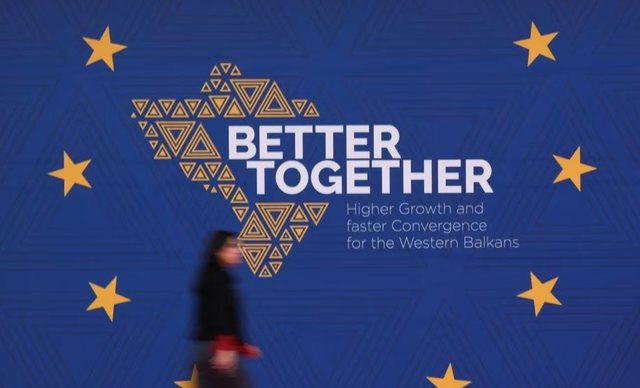
Six billion euros - this is the fund that the European Union has planned to allocate to Kosovo, Albania, North Macedonia, Montenegro, Bosnia and Herzegovina and Serbia for the period 2024-2027, to accelerate the European integration of the Western Balkans.
The plan, more or less, says this: Whoever carries out the planned reforms, gets the funds. Those who do not work are left behind.
Moreover, no country will be able to block the other in this process. Even if attempts are noticed, they can be punished.
Among the main goals of the so-called "Growth Plan for the Western Balkans" is to strengthen a common regional market, gradually integrated with that of the EU.
How will the Plan work?
It was introduced in November 2023, and foresees that two billion euros will be non-refundable funds, while the other four billion will be given in the form of affordable loans.
Each country is expected to prepare a reform agenda, based on the preliminary recommendations of the EU bodies, before its evaluation and approval by the European Commission.
Reforms in the field of order and rule of law are essential to benefit from funds from this Plan.
Expectations are that the European Parliament will finalize all procedures by April this year, to enable the release of funds as soon as possible.
Payments are expected to be made twice a year, depending on the results in fulfilling the criteria.
The EU has said that the funds, in principle, will be allocated depending on the Gross Domestic Product (GDP) of a country. But if a country does not carry out the reforms after 1-2 years, then the amount is distributed to other countries.
What should Kosovo do?
According to the Kosovar Deputy Prime Minister, Besnik Bislimi, Kosovo is expected to benefit from 950 million euros - at the same time the largest fund ever allocated by the bloc for it, in a relatively short period.
Bislimi said that on January 11, Kosovo submitted to the EU the list of reforms, through which the further advancement of public administration, the advancement of public finance management and the establishment of a focus on the green agenda and digitalization are aimed.
"In the private sector, the focus is on improving the environment for doing business, through access to finance and support for small and medium enterprises", Bislimi said during a report to a parliamentary committee in January.
In the initial presentation, in addition to the criteria that apply to all countries, as a specific precondition for Kosovo and Serbia is to make progress on the road to the normalization of relations, implementing all the agreements reached in the past.
Kosovo has requested several times that the dialogue process with Serbia does not have an impact on its path towards European integration.
But, the EU said months ago that it no longer has time to wait for the countries of the region to normalize relations, and ordered them to act quickly in this direction.
Benefits of freedom of movement
A World Bank group has estimated that a common regional market could increase the region's GDP by 10 percent.
For the EU, such a market is essential, for two reasons:
unlocks the economic potential of the region,
creates opportunities for local companies, making the region more attractive for European investors.
The movement of goods is expected to reduce the waiting time by three hours, which would then reduce the cost of tariffs by 2 percent.
Currently, the EU economy is worth over 15 trillion euros, while the economy of the Balkan countries constitutes only 0.06 percent of the bloc's economy, or about 100 billion euros.
The road to the EU
Kosovo has applied for EU membership in 2022 and now only has a Stabilization-Association Agreement with the bloc. Other countries of the Western Balkans have the status of a candidate country for EU membership.
In some cases, it has been mentioned that the EU should prepare to accept new members by 2030. According to a survey conducted by an agency of the European bloc, the majority of residents of the Western Balkans believe that EU membership would be good news.
The possibility of exchanging services and the recognition of some professional qualifications of Balkan citizens by the EU is also mentioned.
Facilitation is also expected for young people to study in the bloc, while the removal of roaming fees for mobile phones and the Internet between the countries of the Western Balkans and the EU is also foreseen./REL

The EU Enlargement Commissioner, Oliver Varhelyi, during a...
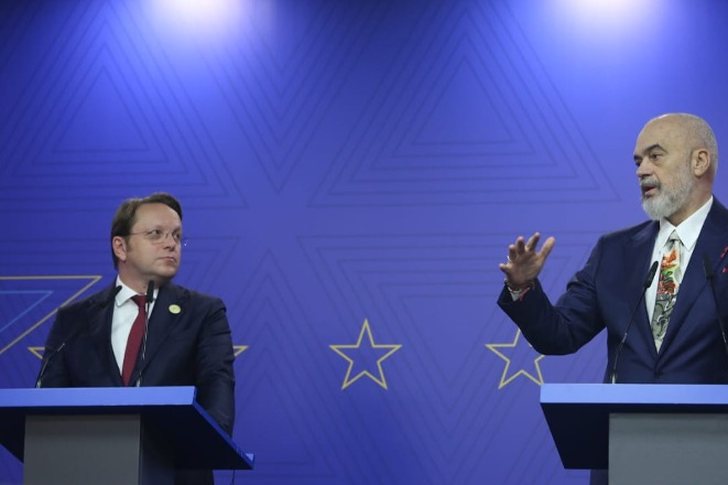
The EU Enlargement Commissioner, Oliver Varhelyi, gave det...
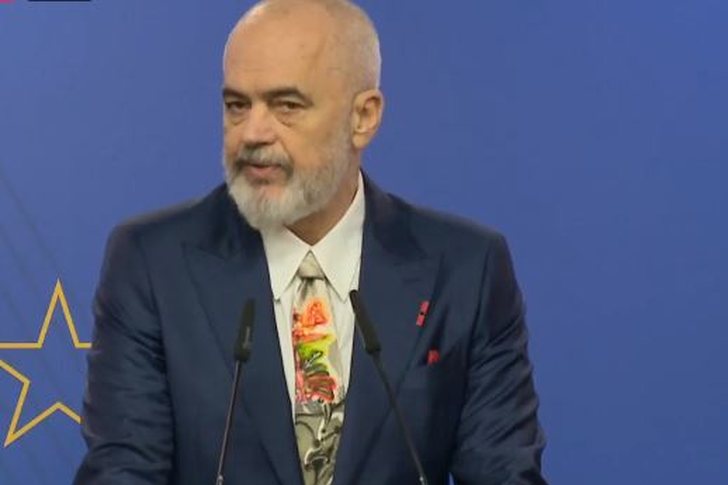
Kryeministri Edi Rama gjatë konferencës së përbashkët ...
The head of PBDNJ Vangjel Dule, in a statement to the ...
Since 10:00, the EU-Western Balkans summit is taking p...
Today in the Palace of Congresses, the EU-Western Balkans ...
The former Foreign Minister of Albania, Ditmir Bushati...
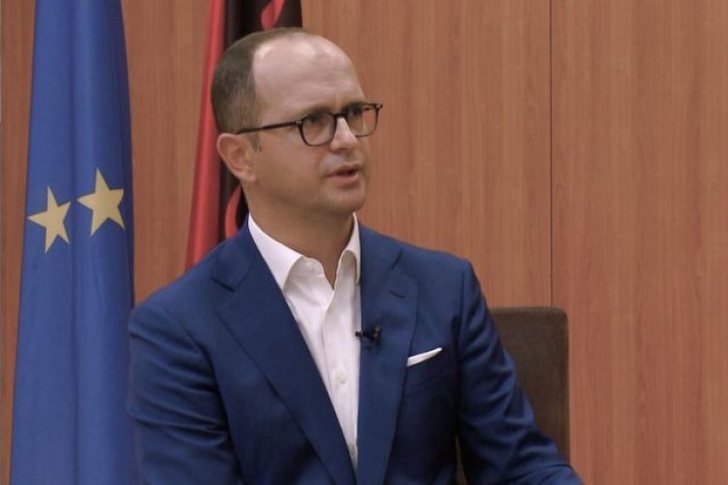
The former Foreign Minister of Albania, Ditmir Bushati...
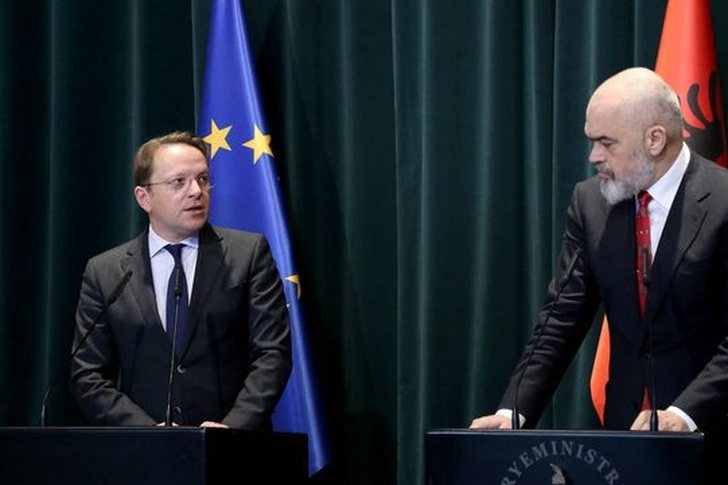
The next day, on February 29, the Regional Summit on the G...
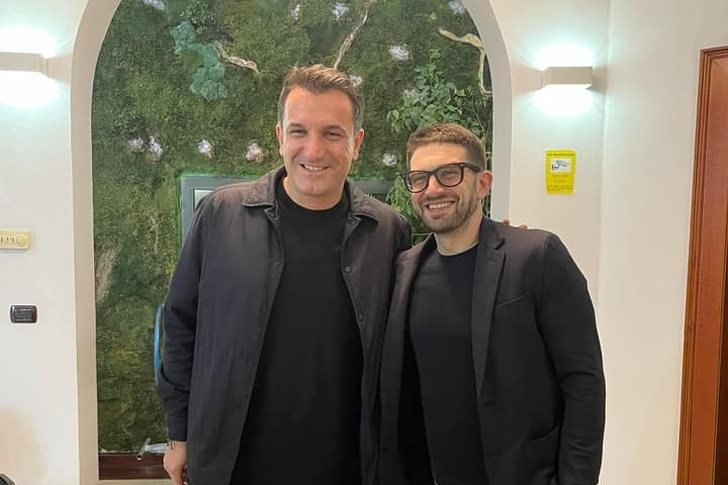
The head of the Municipality of Tirana, Erion Veliaj, ...
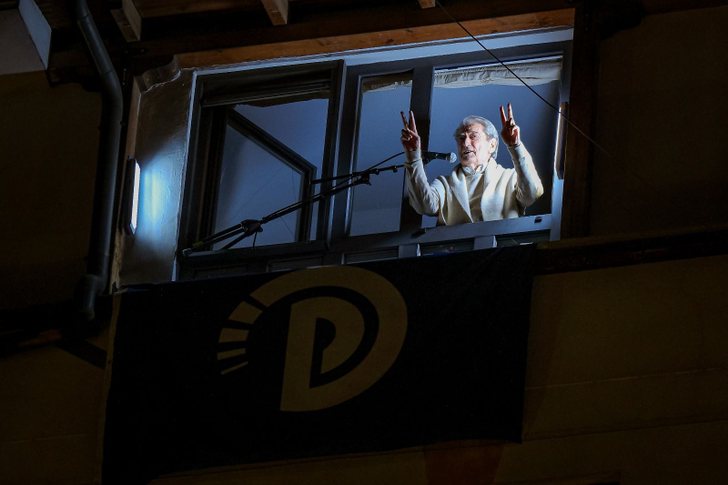
The chairman of the Democratic Party, Sali Berisha, re...
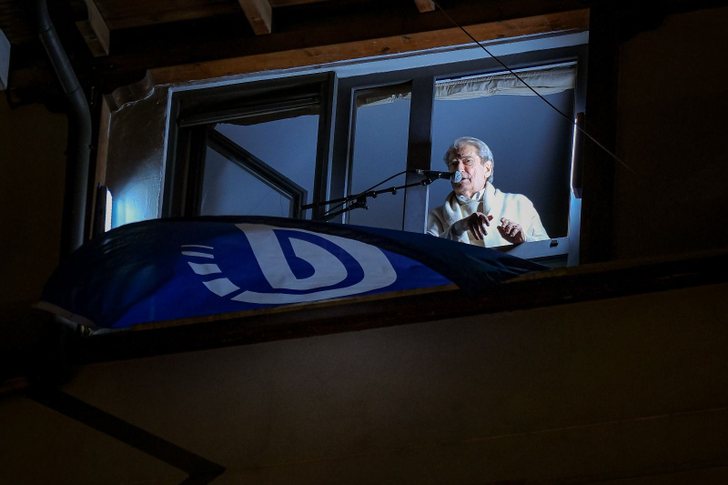
The chairman of the Democratic Party, Sali Berisha, greete...
Former MP Myslim Murrizi wrote a letter to the President o...
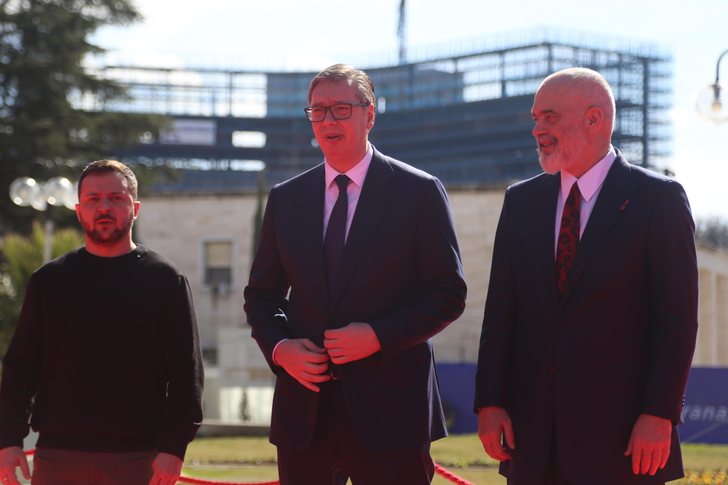
After the summit, Prime Minister Edi Rama and the Presiden...

Në konferencën e përbashkët me presidentin ukrainas, V...
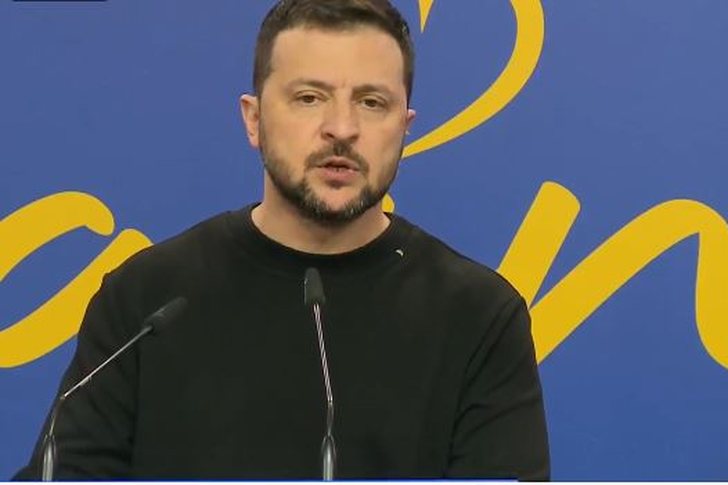
Presidenti Volodymyr Zelensky gjatë konferencës së për...
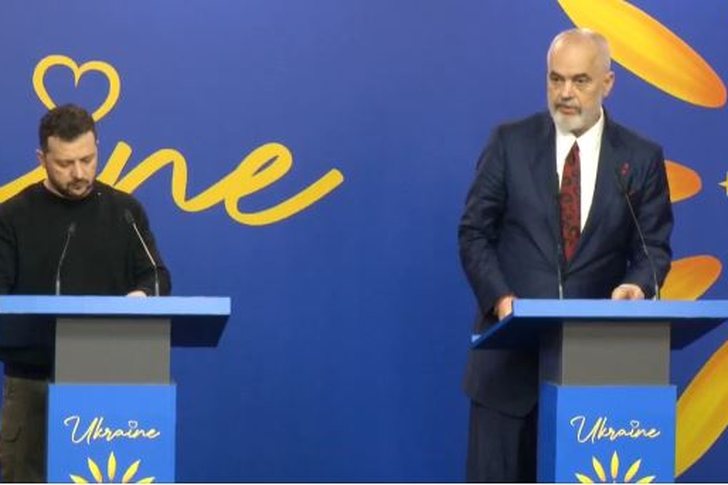
Kryeministri Edi Rama në konferencën e përbashkët me presi...
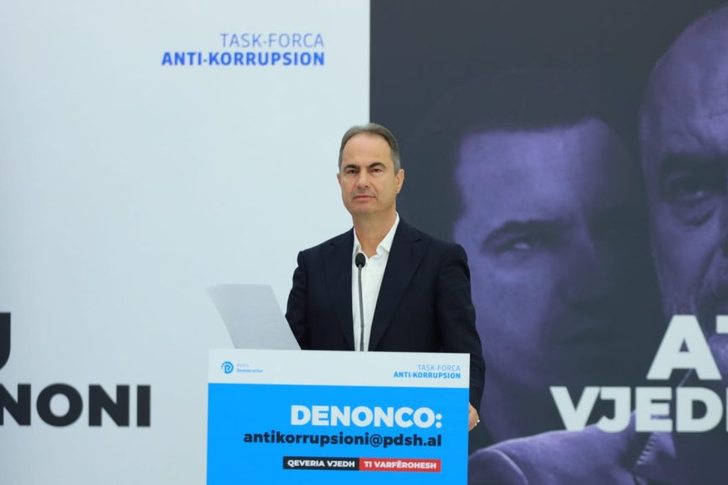
Një ditë më parë Gjykata e Posaçme vendosi masën “arre...

Ukrainian President Volodymyr Zelensky, during his speech ...
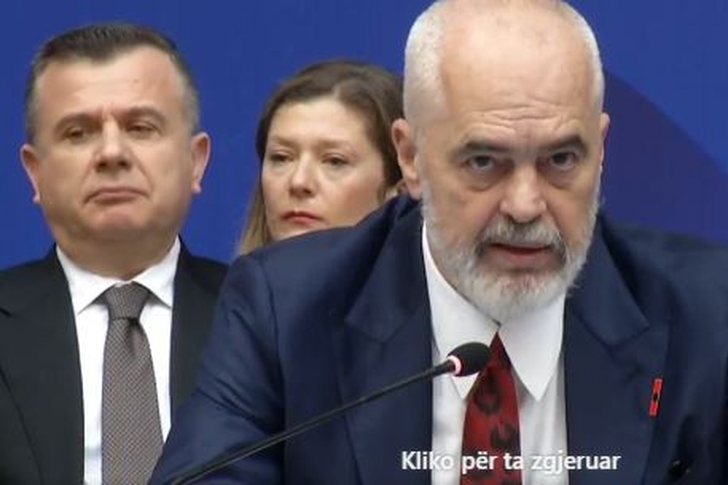
The Summit for Ukraine starts at the Palace of Congresses....

CNA has launched another investigation that could lead to ...

Irfan Hysenbelliu is a businessman that we call "Irfan the...

In March 2026, CNA launched another investigation centered...
The arrested mayor of Tirana, Erion Veliaj, with 13 charge...

The Special Board of Appeal (KPA) decided this Monday ...

The KPA vetting decided this Thursday to dismiss the p...

Suela Salavaçi, a prosecutor in the Prosecutor's Offic...

The Special Board of Appeal reinstated the prosecutor ...
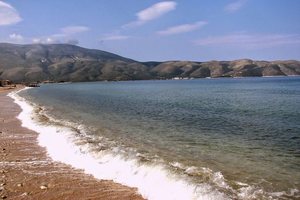
A person has died today on Orikum beach. According to repo...
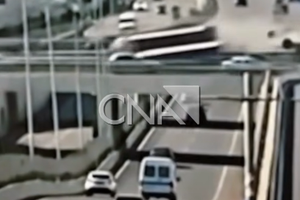
Footage emerges from the serious accident that occurred th...
A Shkodra traffic police officer was hit with hard objects...
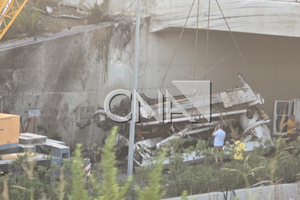
This Wednesday, around 4:00 PM, a serious accident occurre...

Children without parental care, for whom alternative famil...

On Thursday, our country will be under the influence of st...
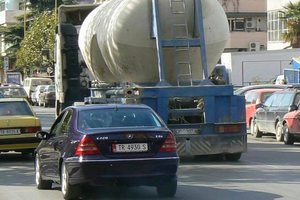
A serious accident that occurred this Wednesday with the c...

The Institute of Geosciences has shared a forecast for wea...
For the first time since the launch of the euro, European ...
Artificial intelligence (AI) models from the American comp...
At least 10 people have died after a fire broke out in a h...
Yemen's Houthis have claimed to have attacked two Saudi oi...

At a time when industrial products are increasingly taking...

Trust among people is not just a three-syllable word. It c...

Master of humor Todi Llupi has passed away at the age of 7...

The ninth edition of "MIK Festival" kicked off with one of...
The average sale price of apartments in Tirana reaches rec...
This Thursday, one US dollar is bought for 81.5 lek and so...
The price of diesel reached 206 lek per liter from 198 lek...

Businesses will no longer be required to simply register t...