


YES, POVERTY OF A COUNTRY IS TO BE BLAMED BY POLICY, just as politics is to blame for its enrichment. It is the political will, objectives, vision, ingenuity, etc., features of the group of individuals collectively united in the country's political institutions that result in its enrichment or impoverishment.
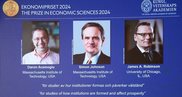
On October 14, 2024, the three economists, baptized in the media as "inequality researchers", Daron Acemoglu (Daron Axhemollu), Simon Johnson (Sajmen Jhonson) and James Robinson (James Robinson) were announced as the winners of the popular language award ” as the Nobel Prize in Honor of Economic Sciences (officially known as the Swedish central bank prize for economic sciences, which is awarded in honor of Alfred Nobel).
The award itself, in addition to confirming the appreciation for the work and achievements in each of the fields where it is given: chemistry, literature, peace, physics, physiology / medicine, including the award given for the field of economy, also contains strong messages.
It is no coincidence that the Nobel Peace Prize for 2024 was awarded to the Japanese movement of survivors of the nuclear bombings of Hiroshima and Nagasaki at the end of World War II.
Nowadays, when the rhetoric of threats of nuclear explosions has become frequent in at least two major conflicts: Ukraine and the Middle East, the Peace Prize goes to the very group of people who have tried to prove why such weapons should not be used. are never used again.
Even the award for the field of economics seems to want to convey more messages than just being an appreciation for the three scholars of inequality.
But let's not be too hasty and read the message about this awarding as support for socialist theories or leftist movements, since the impetus for many years of research work has been taken from the inequality in the world and the deepening of this inequality. The study is anything but a conduit for this message.
The study offers quantitative assessments carried out in almost experimental circumstances on why there is still today inequality at the global level and why it is difficult to reduce the gap with rich countries, especially in countries immersed in corruption and dictatorship.
The most meaningful conclusion of the study is that in the community of influencing factors in different times and circumstances (including geographical, cultural, climatic factors, etc.), there is one prominent factor that is almost the only important determinant, the institutions. So it confirms the importance of institutions for the prosperity of the country.
The three American researchers have confirmed the hypothesis that it is the institutions, the way they are built and how they affect the progress of a country, that also affect the level of inequality and its stability over time.
Their basic doctrine is that the wealth of nations is fundamentally formed by political institutions, which have an impact on economic institutions and the latter convey the impact on the country's economic results, i.e. wealth or poverty.

Expressed in simple language, it is proven that YES, THE BLAME FOR THE POVERTY OF A COUNTRY IS ON POLICY, just as the credit for its enrichment is on politics. It is the political will, objectives, vision, ingenuity, etc., features of the group of individuals collectively united in the country's political institutions that result in its enrichment or impoverishment.
The impact of political institutions on economic development (or the lack of it) further suggests that the objectives to fight poverty and promote economic development should be based on a strategy that strengthens democracy and inclusive institutions.
Institutions of an exclusionary and exploitative nature, even when operating for short-term periods, have long-term detrimental consequences on a country's progress. It is not by chance that the study shows that countries immersed in corruption and dictatorial or autocratic regimes, i.e. with institutions of an exclusionary and exploitative nature, are those that have low incomes and poverty, compared to countries that are based on the rule of law and basic freedom economic.
For this reason, the study evidences that the accompanying feature of the transition to democracy is "conflict in distribution" and therefore democratic reforms require large-scale mobilization of the population, while further weakening the belief in the theory of modernization, i.e. that democratization comes naturally from socio-economic development. The study shows that development comes from the construction of inclusive institutions, and for this construction, imposition from the population is required.
The model according to which political institutions are built and changed contains three components: the conflict over the distribution of resources and decision-making power in society (the elite or the mass of people), the opportunity presented to the mass of people to exercise their power, mobilizing and threatening the ruling elite, i.e. when the power of the society exceeds that of the decision-makers, as well as the commitment problem which means that the only alternative is for the elite to hand over the decision-making power to the population.
Without going too far into the early history of the territory where the Albanian population lived, it is enough for us to remember the history after the Second World War until today, to understand how well this study matches and explains the degree of lack of development and sustainability of development in Albania.
It is the political institutions that have persistently pursued exclusionary, discriminatory, exploiting and concentrating resources and decision-making power, with the consequence of the backwardness of the country. As in other dictatorial and autocratic countries, the exception has been applied even to the institution of politics itself.
From 1944, the opposition and oppositionism were completely excluded in Albania, and after 1990, a weakened form of this institution was allowed. Today, Albania has 20% of the population in poverty, according to the World Bank standard, surpassing even Kosovo (19.2%), while in other countries of the region, such as in Serbia and Montenegro, poverty is below 10%. Albania ranks 98th in the corruption index of " Transparency International ", among the highest in Europe.
In the ranking of PISA (the international test for educational knowledge for 15-year-olds), Albania had the largest decline in knowledge in the world in the period 2018-2023. Although there is an improvement in the Democracy Index (according to " The Economist "), it still remains in the group of democracies with problems.


Today in the country there is a concentration of powers and a weakening of the action of independent institutions, which culminated in the refusal to implement the decisions of the Constitutional Court. Every day we witness the decline of the institution of transparency, as one of the supporting pillars of democracy and the fight against corruption. Not only that, but it seems that Albania is involved in a stalemate situation without room for action to change the political institutions.
The decision-making power in society is extremely concentrated in the one-way political institution; the power of society and its absolute measure (especially in the conditions of disturbing emigration) is quite weakened in the face of political power and in counter-propaganda action, the commitment remains weakened.
In such circumstances, especially with the shrinking of the size of society (including the absolute number of the population), the path of inducing change and improving institutions will be long and slow, and can only be imposed through commitment. Starting from the smallest and most insignificant things.
Not believing the propaganda and not blindly passing it on to others; starting not to become accomplices of corruption and wrongdoing; daily increasing contempt and disdain for the corrupt and narrow-minded elite; gradually replacing the cult of ill-gotten money with the cult of integrity, dignity and ethics.
Let's not forget that even the Emperors of Rome, while running the powerful empire immersed in corruption, were forced to surrender in the face of morality and human dignity. So we need to raise our cult of human respect and ethics. Daily and sustained resistance, non-cooperation with evil will dictate change.
Otherwise, it is clear that we will remain poor as long as we are poor in institutions!/ Monitor.al

The member of the Municipal Council of Tirana, Doria...
The head of the Democrats, Sali Berisha said that toda...
The President of the European Commission, Ursula von d...
Public transport continues to remain problematic in th...
Plarent Ndreca is a socialist exponent, who joins thos...
The Chairperson of the Education Commission, Ina Zhupa...

FRPD young people protested at the Tirana Marathon wea...
The head of the FRPD, Besart Xhaferri, has published p...
Former president Alfred Moisiu says that Albania and K...
The head of the PD parliamentary group Gazmend Bardhi has ...

The head of the Democratic Party, Sali Berisha, in his speec...
Journalist Robert Pope has stated that the alarm bell ...
Journalist Robert Pope has spoken about the Presidenti...
PD MP Saimir Korreshi spoke about the tensions in front of...
The deputy of the Democratic Party, Tritan Shehu, has crit...
Lawyer Genc Gjokutaj has analyzed the latest cooperati...
The political leader of the DP for Tirana, Belind Këlliçi,...
The member of the Presidency of the Democratic Party Enno ...
Prime Minister Edi Rama in this Saturday's podcast, du...

The so-called Anticorruption Commission led by Fatmir ...

CNA has launched another investigation that could lead to ...

Irfan Hysenbelliu is a businessman that we call "Irfan the...

In March 2026, CNA launched another investigation centered...
The arrested mayor of Tirana, Erion Veliaj, with 13 charge...

The Special Board of Appeal (KPA) decided this Monday ...

The KPA vetting decided this Thursday to dismiss the p...

Suela Salavaçi, a prosecutor in the Prosecutor's Offic...

The Special Board of Appeal reinstated the prosecutor ...
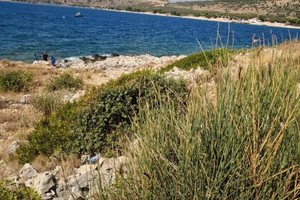
Citizen MH, 61, a fisherman, was found dead near the islan...

Another phase of the international operation, codenamed "T...

Police have arrested a 34-year-old woman at Rinas Airport ...

A serious accident has occurred on the Lezhë-Shëngjin axis...
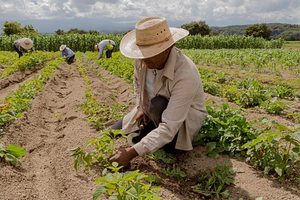
Rising energy and fertilizer prices are expected to contin...
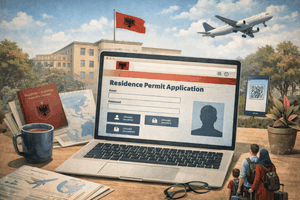
Over 18,000 foreign citizens from 140 countries have appli...

This Wednesday, our country will be under the influence of...
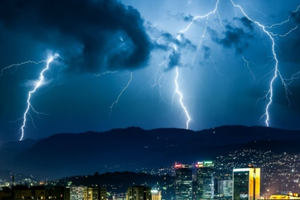
All of Southern Europe will face changing weather conditio...
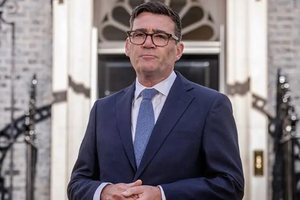
Prime Minister Andy Burnham has announced that most bus fa...

France's parliament has passed a law to ban social media f...

US Secretary of State Marco Rubio arrived in Manila on Jul...
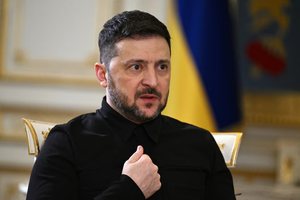
In the space of a few days, Ukrainian President Volodymyr ...

At a time when industrial products are increasingly taking...

Trust among people is not just a three-syllable word. It c...

Master of humor Todi Llupi has passed away at the age of 7...

The ninth edition of "MIK Festival" kicked off with one of...

Businesses will no longer be required to simply register t...

Despite economic growth and income in recent years, Albani...

This Wednesday, one US dollar is bought for 81.4 lek and s...

Construction company licenses will have a validity period ...