

Party for yourself
A few weeks ago in the USA, anyone who gets a little wind ...


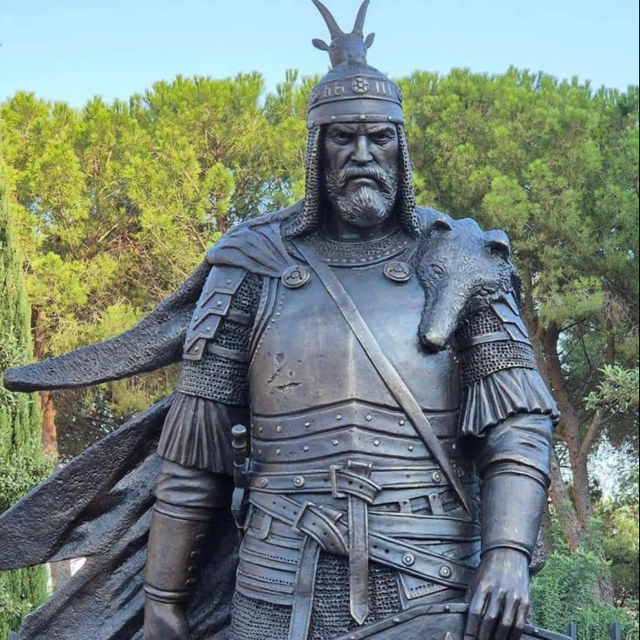
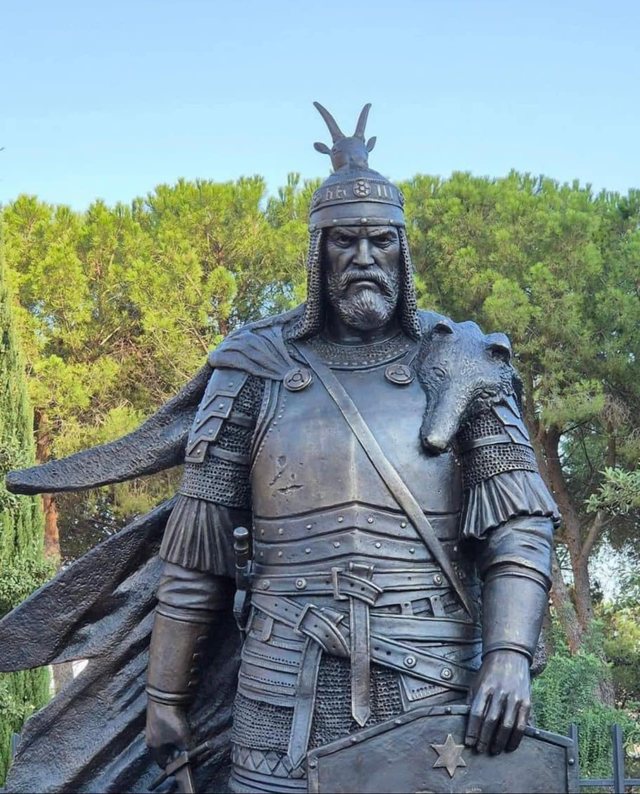
To wrap up this summer, it took an event that sparked a public debate that was as funny as it was serious. It is about the debate on the newest statue of our national hero, which was placed in Hora Arbëreshe in Sicily.
The debate broke out because Skënderbey's portrait resembles that of Prime Minister Edi Rama (when he is frowning). Contrary to what we are used to seeing Skenderbeu, with a big "vulture" nose, with a long beard, this time he appears with a frowning face, a smaller nose (not of a vulture), with a beard that has been trimmed to some extent trendy designer, a fox's head and skin on the shoulder, like a 19th century English aristocratic woman, and with a six-pointed star above the heads of the shield...
I dare not go into the artistic side, as I do not know it.
I don't know if the portrait of this Skanderbeg really resembles Edi Rama, or if the painter had Edi Rama as his muse and may have been influenced. In the end, this is the comical and funny part of this debate. The serious part is that the man in the statue does not look like Skanderbeg.
But here there is a very big problem: What was Skanderbeg really like?
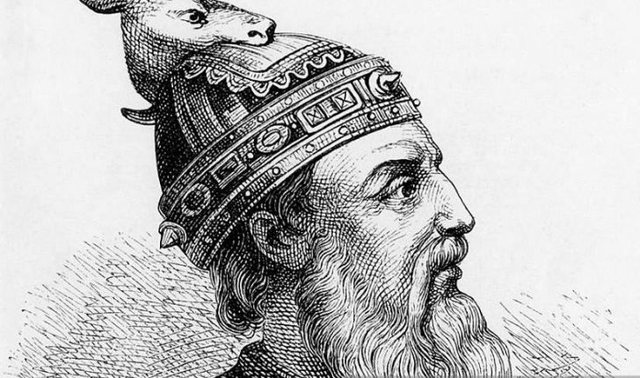
There is no picture for our hero (it was invented some 400 or so years later). But there is not even a scientific and technological reconstruction of the image, based on his skeleton, since there are no bones either, because the Turks took them as talismans after they exhumed him 13 years after his death.
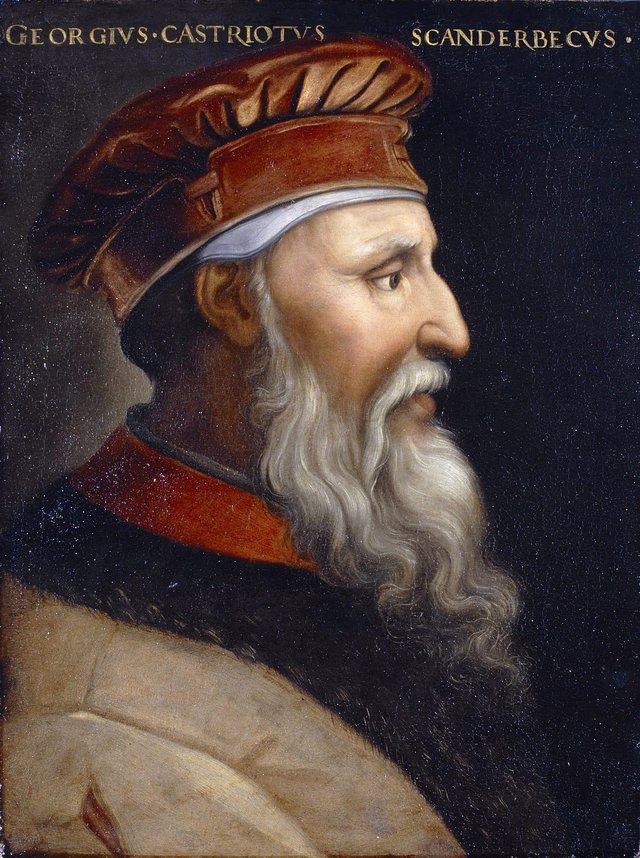
All that we imagine today in his image are the engravings, drawings and paintings of the time. Many European painters, in the 15th, 16th centuries and beyond, have drawn and painted the image of Skanderbeg in different stages of life. The images were first created based on the descriptions of the hero's contemporary, Marin Barleti.
This artistic heritage, century after century, served to "agree" in history on the image and portrait of Gjergj Kastriot. Then he was embedded in our historical and national memory, through the monumental works that were first placed in Krujë (1949, author Janaq Paço), and in Tirana (1968, author Odise Paskali, Andrea Mano and Janaq Paço).
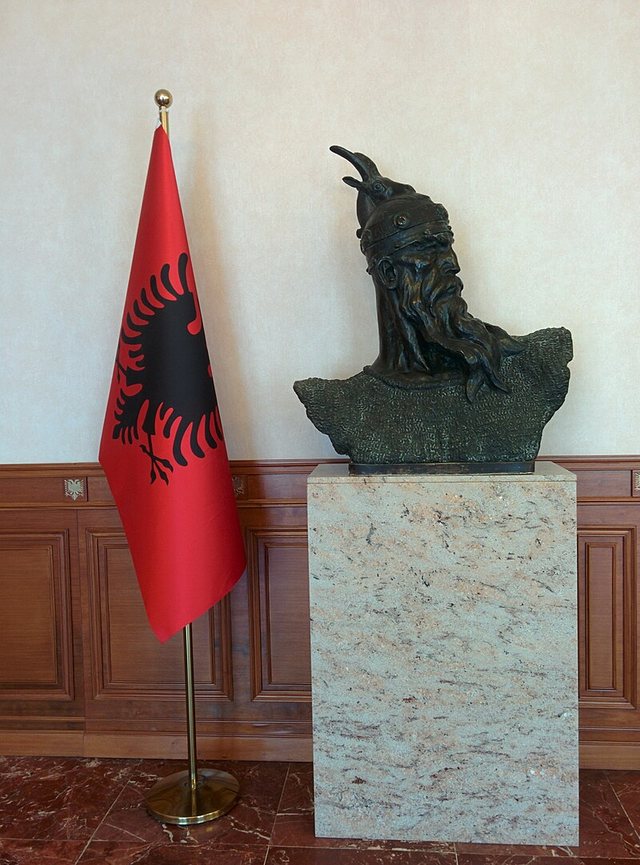
His official bust, placed in the most important offices of the market, is the work of Odise Paskali and this has "stamped" our image of the National Hero. This image is poured into decorations, stamped on official documents, holiday logos, etc. This image was not a fantasy, but a product inherited century after century, from one author to another.
Undoubtedly, after Odise Paskali, Andrea Manos and Janaq Paço, other artists can carve statues of the hero. Fantasy in art has no limits.
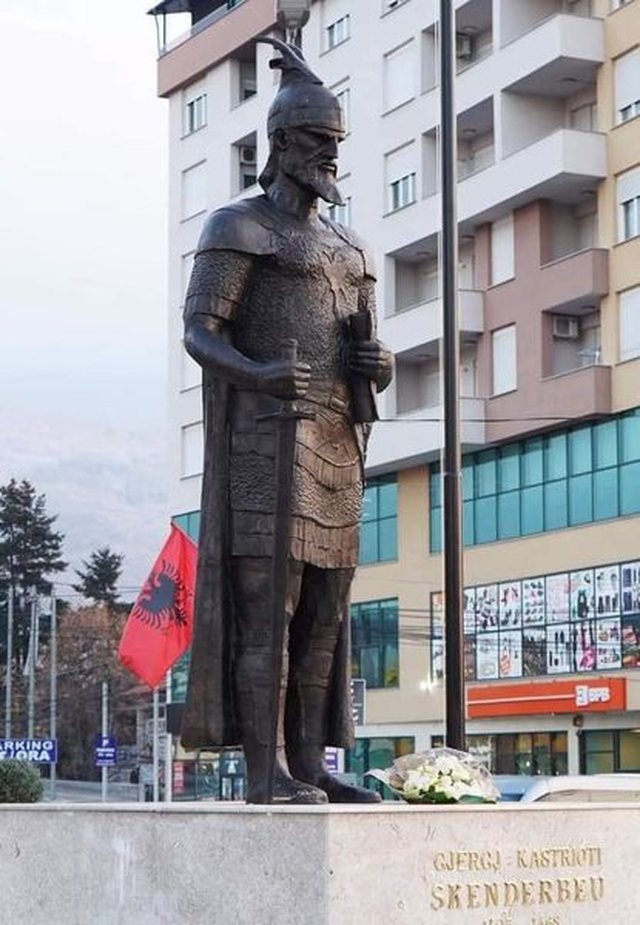
But the image of heroes and great men of a nation cannot be the product of the imagination of artists. The same debate took place in 2020, about the not at all dignified statue of the hero that was placed in Prizren.
Let's be clear: Any man, but you put a helmet with goat horns on your head, a sword in your hand, an armor on your chest and tie it around the middle with belts, will look like Skanderbeg. But he is not Skanderbeg. Artists can have their fantasy, but the image of heroes is not deformed at will.
Not every artist can have his Skanderbeg. The work of sculptor Gëzim Muriqi could be any Albanian soldier of the 15th century, but not Skënderbeu.
This artist stands out for his extravagant experiments with the statues of Mother Teresa, transforming her image to the point of transfiguration.
We don't know how your queen has been. But the depiction of him is based on a statue head discovered centuries ago. She has reproduced by "changing her dresses", but fanatically preserving her charm and physical image. Someone can go out today and make Teuta look like Jennifer Lopez. She will be beautiful, but she will not be the Queen of Illyria.
There are hundreds of paintings and sculptures of Alexander the Great, in different shapes, sizes and artistic approaches, but all have preserved the same image. Someone can come out today and make him look like Cristiano Ronaldo, but it won't be Alexander.
There are thousands of paintings by Napoleon Bonoparte. Regardless of the talent and approach of the artists, what does not change is the image. No one dares to make Bonoparte with a mustache or a beard, they cannot curl his "licked" hair, or dress him in a Scottish dress. Someone can come out today and make a painting where Bonoparti looks like Macron, but that would be an artistic travesty.
Art practitioners do not need a state permit or license. They have carved "Skënderbenj" all over the roads and rocks in Albania.
A few years ago, somewhere on the side of the road in Kashar, a monstrous heor statue appeared to us, which the police removed, it was so derogatory. Somewhere, a Skenderbe appears on the roof of a private building, which seems to be dancing like a rope.
"Popular" sculptors melt the imagination, but official wines placed in public squares should not be experiments or street installations. There are some things that should be inviolable, inviolable and inalienable, because they are the genes of this nation, they are our passport with which we boast even when we are in dark days.
Photo 1: September located in Sicily
Photo 2: September located in Prizren
Photo 3: Skanderbeg's official bust
Photo 4 and 5: Engraving of Skanderbeg

A few weeks ago in the USA, anyone who gets a little wind ...
What is being sold as a protracted institutional crisi...
These days the Albanian society has been shocked by a ...
In his letter sent in 1930 to Dhimitër Pasko or as we know...
Bajraktari i Hotit Mul Deli Bajraktari i përket brezit të ...
Some hounds, some carrion, some muzzles, some failures...
Will this history of directors with their subordinates...
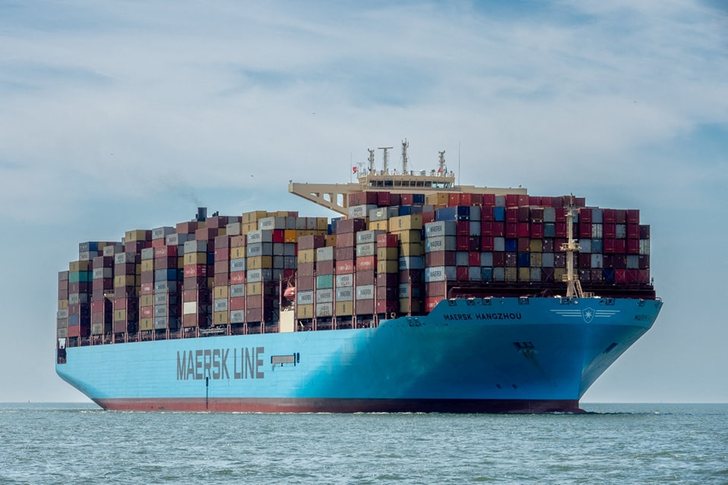
According to the Basel Action Network (BAN), a global ...
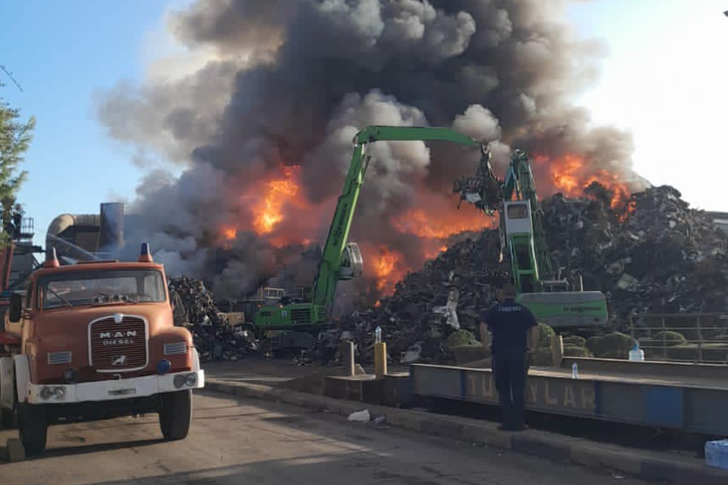
The waste, which is being debated a lot these days, is dus...
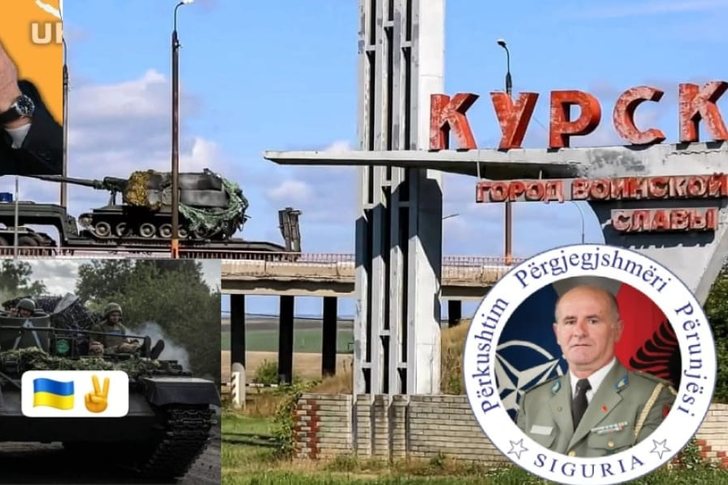
In the capacity of Expert in the field of National Securit...
OFFICIAL & PUBLIC REACTION Dear friends, acquaintance...
The Albanian government has admitted that on July 4, a...
It's August 18, 2024, like every day you open your social ...
Considering the increasing number of serious crimes, i...
Here is what the prosecutor says: (as evidenced, the ...
Do you remember the study from which the figure 1 mill...

On July 4 of this year, in the middle of the day in th...
While there are 90 days left, the political establishment,...
"The tower built in the center of Tirana is owne...
The small lake town that is experiencing renaissance in ev...

CNA has launched another investigation that could lead to ...

Irfan Hysenbelliu is a businessman that we call "Irfan the...

In March 2026, CNA launched another investigation centered...
The arrested mayor of Tirana, Erion Veliaj, with 13 charge...

The Special Board of Appeal (KPA) decided this Monday ...

The KPA vetting decided this Thursday to dismiss the p...

Suela Salavaçi, a prosecutor in the Prosecutor's Offic...

The Special Board of Appeal reinstated the prosecutor ...
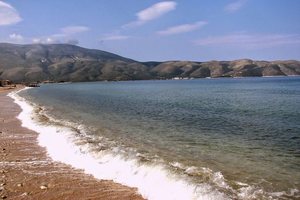
A person has died today on Orikum beach. According to repo...
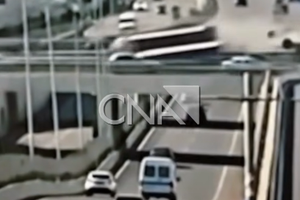
Footage emerges from the serious accident that occurred th...
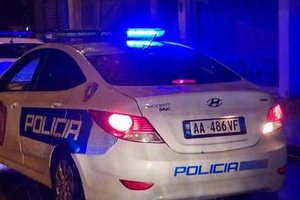
A Shkodra traffic police officer was hit with hard objects...
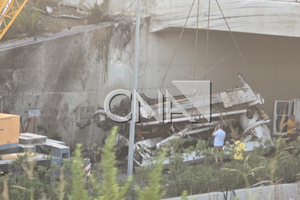
This Wednesday, around 4:00 PM, a serious accident occurre...
Children without parental care, for whom alternative famil...
On Thursday, our country will be under the influence of st...
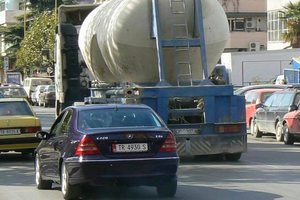
A serious accident that occurred this Wednesday with the c...

The Institute of Geosciences has shared a forecast for wea...
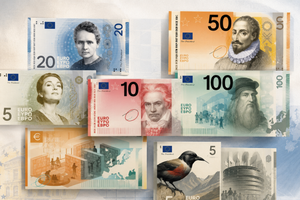
For the first time since the launch of the euro, European ...

Artificial intelligence (AI) models from the American comp...
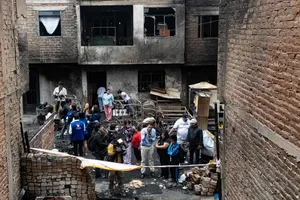
At least 10 people have died after a fire broke out in a h...
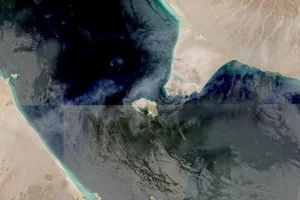
Yemen's Houthis have claimed to have attacked two Saudi oi...

At a time when industrial products are increasingly taking...

Trust among people is not just a three-syllable word. It c...

Master of humor Todi Llupi has passed away at the age of 7...

The ninth edition of "MIK Festival" kicked off with one of...
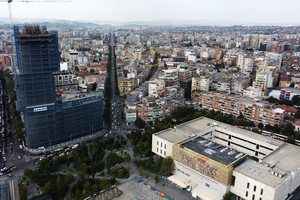
The average sale price of apartments in Tirana reaches rec...
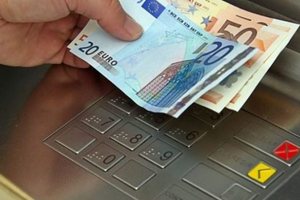
This Thursday, one US dollar is bought for 81.5 lek and so...
The price of diesel reached 206 lek per liter from 198 lek...
Businesses will no longer be required to simply register t...