


Elon Musk's $1 trillion salary deal approved by Tesla shareholders
Shareholders have approved a record pay package that could...



October 2025 was the third warmest month ever recorded globally, according to data from the EU's Copernicus Climate Change Service (C3S).
The month recorded an average surface air temperature of 15.14°C, 0.70°C above the 1991-2020 October average, according to ERA5 data, which uses billions of measurements from satellites, ships, aircraft and weather stations around the world.
C3S now says that 2025 is virtually certain to end up as the second or third warmest year on record, possibly equaling 2023, the current second warmest year, and trailing 2024, the warmest year on record.
Copernicus says the findings reflect the accelerating pace of climate change, which is raising global temperatures as the burning of fossil fuels releases greenhouse gases that trap heat in the atmosphere. Global warming is also reducing low-level cloud cover, which is causing temperatures to rise.
'We are now in the decade where the 1.5°C limit is likely to be exceeded'
October 2025 was only 0.16°C colder than the warmest October ever recorded, in 2023, and 0.11°C colder than October 2024.
The month was 1.55°C above the estimated 1850-1900 average used to define the pre-industrial level. This makes it the first month above 1.50°C since April 2025.
While 2025 may not reach 1.5°C above pre-industrial levels, the global average temperature for 2023–2025 is likely to exceed 1.5°C. According to Copernicus, this would make it the first three-year average to reach this since the beginning of weather records, a time frame known as the instrumental period that begins in the 18th century when climate information began to be collected using scientific instruments.
“We are now in the decade where the 1.5°C limit is likely to be exceeded, highlighting the accelerating pace of climate change and the urgent need for action,” said Samantha Burgess, Strategic Lead for Climate at Copernicus.
Fennoscandia had the highest above-average air temperatures in Europe.
The average European land surface temperature for October 2025 was 10.19°C, 0.60°C above the 1991-2020 October average, ranking outside the top ten warmest places ever recorded.
The most pronounced above-average air temperatures for Europe were recorded over Fennoscandia and the southern Iberian Peninsula.
Below-average temperatures were experienced mainly in Southeastern Europe.
Outside Europe, temperatures were higher than average in polar regions, particularly over northeastern Canada, the central Arctic Ocean and East Antarctica.
A large region with pronounced negative temperature anomalies covered most of southern and eastern Russia and Mongolia, as well as eastern parts of Kazakhstan and northernmost China.
Europe experienced record sea surface temperatures
The average sea surface temperature (SST) for October 2025, excluding polar regions, was 20.54°C, the third highest value ever recorded for this month.
Much of the North Pacific continued to experience above-average SSTs, with record levels in the west. In contrast, SSTs were near or below the 1991-2020 average in the central and eastern equatorial Pacific, reflecting a shift toward weak La Niña conditions.
The European sector of the Arctic Ocean saw SSTs much higher than the record-breaking ones, as did the eastern Indian Ocean, off the coast of Indonesia.
In the Arctic, the average sea ice extent in October was 12 percent below average, ranking eighth lowest for the month.
At the regional level, sea ice concentrations were below average in the Eurasian sector of the Arctic Ocean, particularly north of Franz Josef Land and Severnaya Zemlya, coinciding with well-above-average surface air temperatures.
In the Antarctic region, monthly sea ice extent was the third lowest for October, at 6 percent below average.
Sea ice concentrations around Antarctica were below average in the Bellingshausen Sea and in the Indian Ocean sector, the latter coinciding with well-above-average surface air temperatures in the adjacent East Antarctica./ CNA

Shareholders have approved a record pay package that could...

Extremely high temperatures have put 2025 on track to be a...

Two adult brothers were shot dead on Thursday in a village...

Israel attacked Hezbollah targets in southern Lebanon on N...

US President Donald Trump has reacted to Nancy Pelosi's an...

Pope Leo XIV received the President of Palestine, Mahmoud ...

Autoritetet austriake kanë sekuestruar disa armë në Vjenë ...

Nancy Pelosi, the first and only woman to serve as Speaker...

Avionët luftarakë izraelitë goditën tre qytete në Libanin ...

The diet plan that the former president of the French Repu...
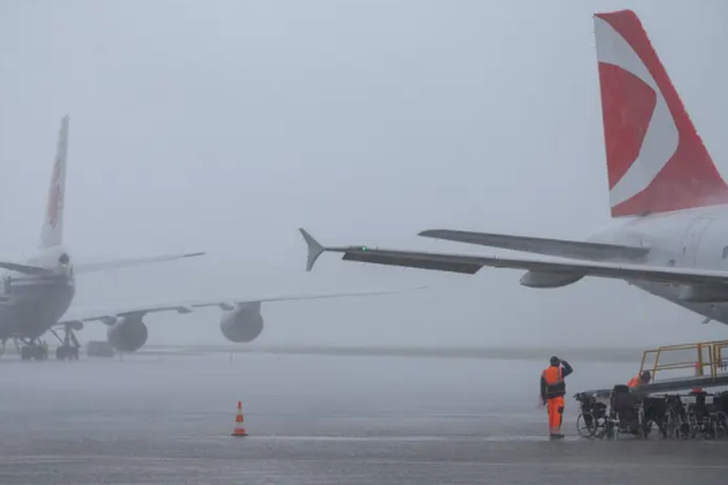
Bad weather conditions have disrupted air travel in northe...
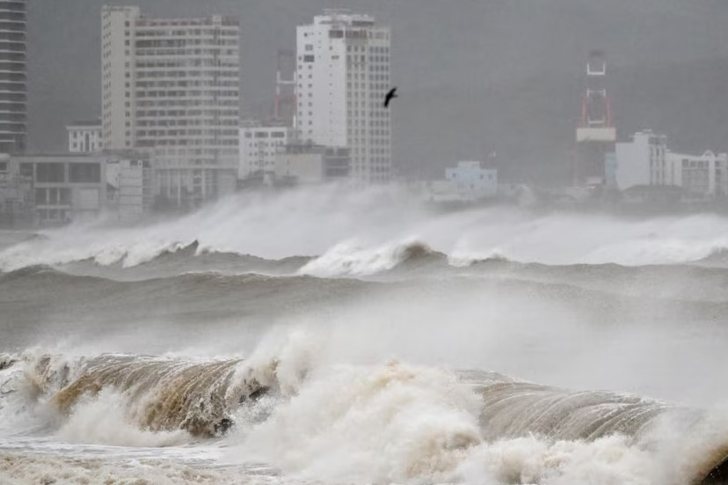
Typhoon Kalmaegi hit central Vietnam on Thursday, forcing ...

Seven firefighters were injured, including some with serio...

A serious incident occurred today in the village of Gollub...

Poland will begin implementing a new military training pro...

A resident of the commune of Neuville-sur-Saine near Lyon ...

The South African government announced on Thursday that it...

Transportation Secretary Sean Duffy warned that there will...

Ukraine denied Russian claims that its forces are surround...

Limited progress in the field of justice, significant stag...

CNA has launched another investigation that could lead to ...

Irfan Hysenbelliu is a businessman that we call "Irfan the...

In March 2026, CNA launched another investigation centered...
The arrested mayor of Tirana, Erion Veliaj, with 13 charge...

The Special Board of Appeal (KPA) decided this Monday ...

The KPA vetting decided this Thursday to dismiss the p...

Suela Salavaçi, a prosecutor in the Prosecutor's Offic...

The Special Board of Appeal reinstated the prosecutor ...

Footage emerges from the serious accident that occurred th...

A Shkodra traffic police officer was hit with hard objects...

This Wednesday, around 4:00 PM, a serious accident occurre...

Tirana Police have shared details regarding the accident t...

On Thursday, our country will be under the influence of st...

A serious accident that occurred this Wednesday with the c...

The Institute of Geosciences has shared a forecast for wea...

Rising energy and fertilizer prices are expected to contin...

Artificial intelligence (AI) models from the American comp...

At least 10 people have died after a fire broke out in a h...

Yemen's Houthis have claimed to have attacked two Saudi oi...

The trial of ousted Venezuelan President Nicolas Maduro on...

At a time when industrial products are increasingly taking...

Trust among people is not just a three-syllable word. It c...

Master of humor Todi Llupi has passed away at the age of 7...

The ninth edition of "MIK Festival" kicked off with one of...

The average sale price of apartments in Tirana reaches rec...

This Thursday, one US dollar is bought for 81.5 lek and so...

The price of diesel reached 206 lek per liter from 198 lek...

Businesses will no longer be required to simply register t...