


China: An American plane flew over the Taiwan Strait
China's military said on Wednesday it sent fighter jets to...


The fall of communism in Romania decades ago lifted the curtain on the notorious network of orphanages, shocking the world with images of malnourished and dirty children in old clothes, some even chained to beds.
A special Romanian committee has launched investigations into crimes in the era of dictator Nicolae Ceausescu, who was in power from 1965 to 1989, and has learned that more than 15,000 children - orphans, children with physical and mental disorders, and some unwanted by their parents - died in orphanages and other centers.
According to the committee, formally known as the Institute for the Investigation of Crimes of Communism and Memory of the Romanian Exile (IICCMER), many deaths were the result of neglect, including starvation, although there was no information that they were seriously ill when they were admitted. in hospitals.
Analyzing the documents related to the investigations, the Romanian Radio Free Europe Service has revealed new details of how some children ended up in state care homes or orphanages.
In some cases, it is understood that children have been used to finance residential centers, as state authorities have demanded that parents pay for the "treatment" of their children, according to historian Cosmin Popa.
In October 2022, the Institute for the Investigation of the Crimes of Communism and Memory of the Romanian Exile (IICCMER) found that more than 15,000 minors died in 26 facilities in Romania for children with mental disorders in the period 1967-1990. when the institutions are closed.
According to the IICCMER report, starvation, poor living conditions, abuse and lack of health care were among the reasons for the thousands of deaths.
"There was a cult to reduce unnecessary expenses, then these children were declared as incorrigible and this meant long-term assistance throughout their lives, and they could no longer be equal members of the socialist society," he said. Pop.
The institute said the highest number of deaths was recorded at the Cighid centre, based in Giorak, near the border with Hungary, where 138 children are believed to have died between October 1987 and April 1990.
The institute has noticed that during that period only 183 children were admitted.
More than 300,000 children were sent to Romania's network of orphanages, children's hospitals and other youth facilities in the period 1954-1989.
They are known as "Ceausescu's children" as a reference to the Stalinist leader, who led one of the most repressive regimes in Eastern Europe until his overthrow in 1989, along with many Eastern Bloc states in the region.
During more than two decades in power, Ceausescu created one of the world's most radical policies on women's childbirth, making abortion illegal for women under 40 with fewer than four children.
Although these measures have resulted in an increase in the number of births, most of the children born in poor families have ended up in orphanages and other centers.
After the fall of communism, the harsh conditions in these institutions have been revealed and the images of the children of that country have received worldwide attention.
Despite the IICCMER's work to find out the exact number of victims who have faced the same fate in these institutions, no one has yet been held responsible, although the Institute has sent many cases to the prosecution against individuals.
Despite this, no person associated with these institutions has been tried, let alone found guilty of the murders.
The Romanian service of Radio Free Europe has analyzed documents related to the Cighid children's home, which operated for 30 months in the period 1987-1989.
The house was built because the facilities in the region, which treated sick children, were full, that world.
The documents show that, of the 138 children who died there, 84 were three years old, the minimum age at which they could be legally taken from their families.
The most frequent cause of death was a type of pneumonia that affects the bronchi in the lungs.
"Think of an elite family in communist Romania, where one child studies well, and the other is less blessed. Most of them - because the lists also include children from completely normal families - have become artists, teachers, generals. They have also been to these institutions", said Popa.
An analysis by Radio Free Europe of these documents found that at that time it was normal for these institutions to demand payments from families for the children they had there.
"Of course, this sounds ridiculous, but then there were thousands of schools, thousands of orphanages, which were left without funds, and which were simply forced to sell the work of the employees", explained Popa.
Rarely, if ever, was the health of the children taken as a basis when the authorities decided who should be sent to the homes of infamy.
Children from the poorest families, some of them with physical and mental problems, were sent there, Popa said.
Even the children of Romanians with nam have not been spared on occasion.
According to the historian, the communist authorities of Romania acted with the desire to "exterminate different categories of society"./ Radio Europa e Lire

China's military said on Wednesday it sent fighter jets to...
November is the sixth month in a row this year to set a re...

French President Emmanuel Macron's aim is to reach a n...
On October 7, Hamas attacked Israel, killing 1,200 people ...

Two weeks before the elections, it is clear that the issue...

The tense situation ahead of the EU-China summit on 7 ...
Ukrainian President Volodymyr Zelensky canceled plans ...

The Minister of Internal Affairs of North Macedonia, O...

Besian Beha, Kosovar journalist in an interview for "O...

The perpetrator of Liridona's murder Ademaj had dinner...
Analyst Ardian Demiri says that in North Macedonia the...
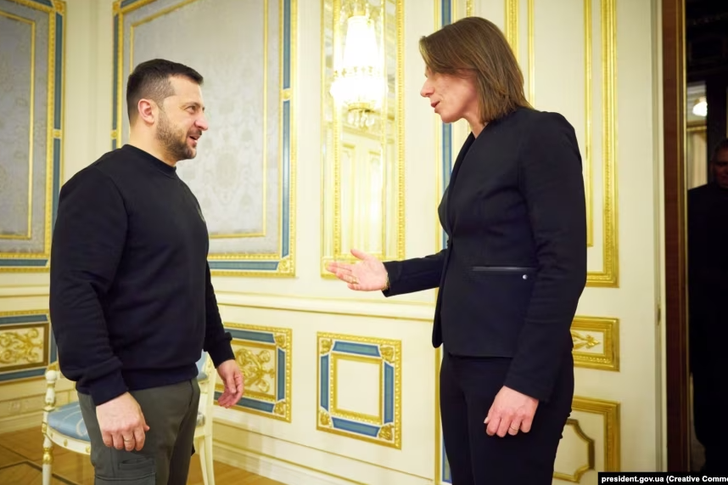
Deputy Oerd Bylykbashi has spoken about the opposition...

On the eve of the parliamentary elections in Serbia, G...

Tonight, a protest is taking place in Zahir Pajaziti S...

Former US Deputy Assistant Secretary of Defense for Eu...

Home Secretary James Cleverly has signed a new treaty ...
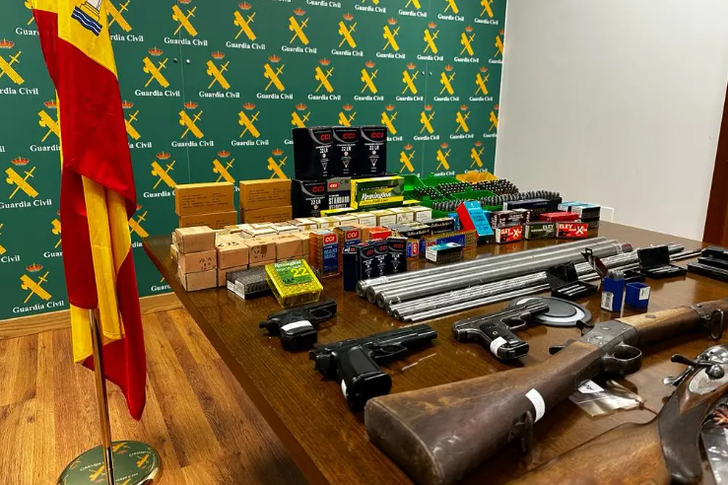
Europol, together with the Spanish authorities, have c...

Six children will be returned to Ukraine from Russia under...

The Council of the European Union will call on Kosovo to d...
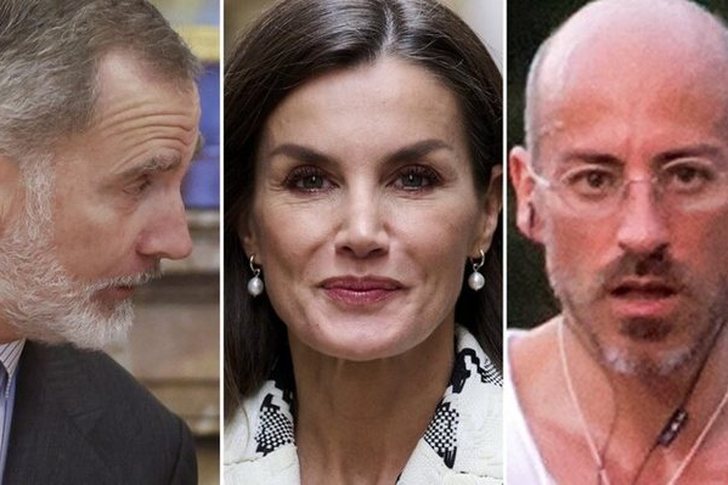
Mbretëresha e Spanjës Letizia akuzohet se ka pasur një...
A 39-year-old citizen has been arrested in Lezha, after se...

CNA has launched another investigation that could lead to ...

Irfan Hysenbelliu is a businessman that we call "Irfan the...

In March 2026, CNA launched another investigation centered...

The Special Board of Appeal (KPA) decided this Monday ...

The KPA vetting decided this Thursday to dismiss the p...

Suela Salavaçi, a prosecutor in the Prosecutor's Offic...

The Special Board of Appeal reinstated the prosecutor ...

As a result of the investigative and procedural actions ca...
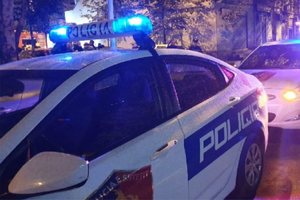
A conflict for weak motives was recorded today in the vill...

An accident involving three vehicles occurred a few minute...
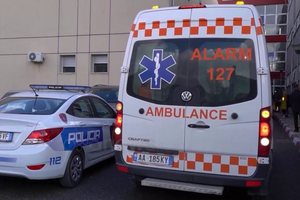
55-year-old Belere Plaka, who was injured today with a sho...

Today, our country will be under the influence of stable a...

By noon, cloudiness is expected to prevail in almost all o...

Children without parental care, for whom alternative famil...
On Thursday, our country will be under the influence of st...

Marine Le Pen is entering the decisive phase of the presid...
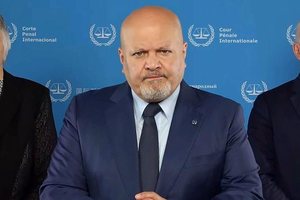
Member states of the International Criminal Court voted to...

From the declining role of exports to new public investmen...
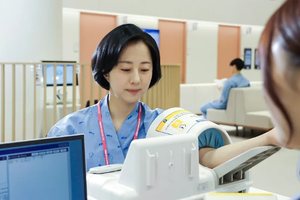
South Korea is becoming one of the most sought-after desti...
Two windows, a century of history and the metaphysics of p...
In my research at the Central State Archives, specifically...

At a time when industrial products are increasingly taking...

Trust among people is not just a three-syllable word. It c...

This Saturday, one US dollar is bought for 81.7 lek and so...

War, weather and supply disruptions could send gas prices ...
The number of active enterprises in Albania continued to g...
In Albania, the bar-cafe has long become an almost unique ...