


Scientists in Peru discover a 12-million-year-old crocodile fossil
Paleontologists have announced that they have discovered a...


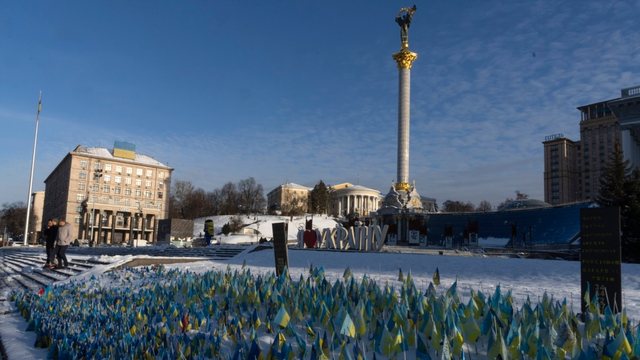
Ukraine's population has been shrinking for the past 30 years, and officials say the decline has accelerated as a result of the war with Russia. Voice of America correspondent Anna Chernikova brings us details from Kiev.
Nina Marynenko and Artem Marynenko live in Kiev with their two dogs. They married in November 2022, nine months after Russia's aggression against Ukraine. They dream of becoming parents, but say that the uncertainty and dangers that war brings are obstacles to having children.
"The context of war makes you think about something else. The thoughts focus on how I imagined pregnancy in peacetime and how it would go during wartime. This is something that hinders me".
Nina says she is worried about security, but also about living conditions in Ukraine.
"I'm already at that stage of life when I'm ready to have a child, but the war is an important factor that prevents this," she tells the Voice of America.
Ukraine's government says the country's birth rate has dropped by 30 percent during the war, from 130,000 babies born in 2021 to 86,000 in the same period from early 2023 to early 2024.
The deputy director of the Institute of Demography and Social Studies of Ukraine, Oleksandr Hladun, told VOA that the country's population at the beginning of 2022 was 42 million. This year, he says, it is down to 35 million.
"The forecast for the demographic situation made by our institute is quite pessimistic. Maybe after 15 years we will have 10 million less people. We are making different predictions, based on different scenarios", he says.
Hladun says the Ukrainian government must address the issue urgently. He cites economic insecurity as the main issue preventing couples from having children.
To address the problem, the Ukrainian government adopted this year a Demographic Development Strategy, a plan to improve economic and social conditions.
It aims to increase the birth rate, reduce infant mortality and encourage the return of Ukrainians who fled to other countries during the war.
Tetiana Narytnyk, a doctor at one of Kyiv's main maternity hospitals, says many of her patients are now internally displaced persons.
"These women have some complications during pregnancy due to stress factors. Also, many women did not have the opportunity to visit a doctor, to be checked by a doctor and undergo certain examinations and consultations", she says.
Anastasia recently gave birth to Olivia. With her husband and eldest son, Anastasia, who declined to give her full name, escaped Russian aggression in the Luhansk region in March 2022. A second child was the family's longtime dream. Anastasia chose not to wait.
"The war will end in a moment and children are happiness. Why not? When would it happen if not now?” she asked.
But Nina and Artemi do not have the confidence and optimism of Anastasia and her husband.
"Nowadays only reckless and desperate people are having children. One day we can be in these categories", says Artemi.
Many young couples like Nina and Artemi are at a crossroads./ VOA

Paleontologists have announced that they have discovered a...

Four people, including two children, have died after a shi...
The United States is urging Ukraine to mobilize more soldi...
The US president-elect, Donald Trump, said he has managed ...

A popular Netflix model was sentenced to 20 months in ...

Four Hezbollah militants were arrested after entering a re...

A number of top nominees and appointees for US Preside...

This Thanksgiving, solar storms may produce faint auroras ...

US President-elect Donald Trump has nominated retired ...

The FBI has confirmed the news that there has been a b...
The Macedonian Minister of Justice, Igor Filkov, said ...

A poll shows Germans are preparing to tighten their pocket...
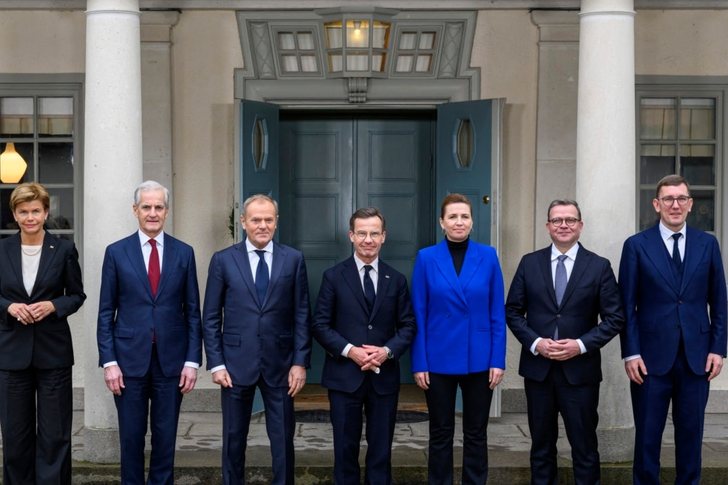
The Nordic and Baltic states as well as Poland said on Wed...

US President Joe Biden welcomed the ceasefire agreement be...
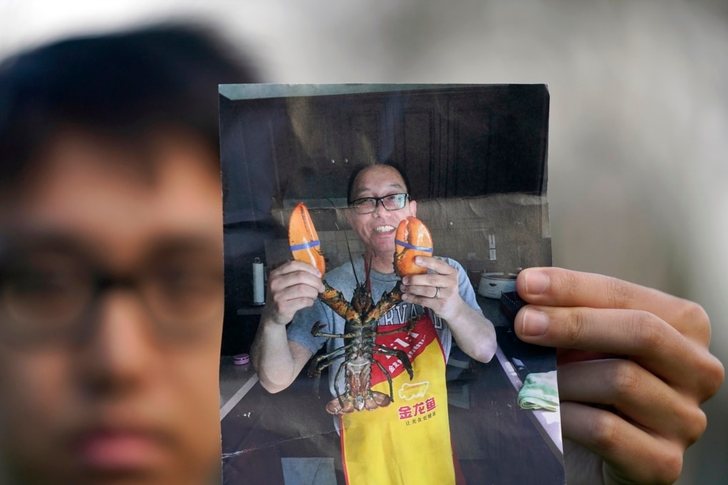
The White House announced Wednesday that three American ci...

According to the "Financial Times" newspaper, Russia will ...

The Ifo index is the most important business barometer in ...

President-elect Donald Trump signed a necessary agreement ...

A small plane crashed into a tree near Fullerton Airport i...
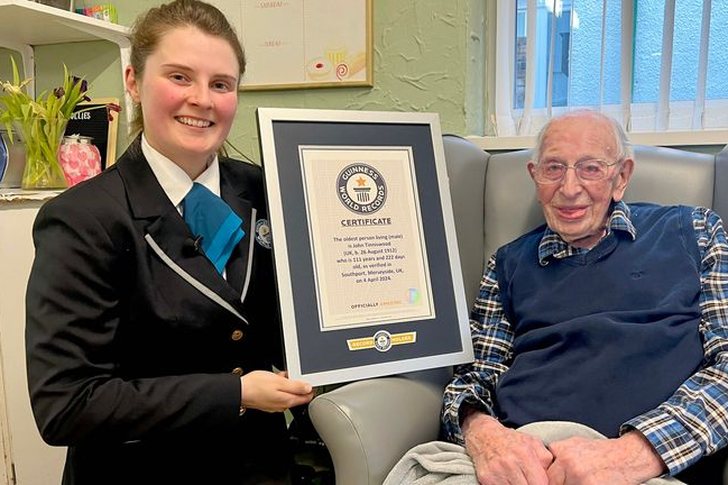
The oldest man in the world has passed away at the age...

CNA has launched another investigation that could lead to ...

Irfan Hysenbelliu is a businessman that we call "Irfan the...

In March 2026, CNA launched another investigation centered...
The arrested mayor of Tirana, Erion Veliaj, with 13 charge...

The Special Board of Appeal (KPA) decided this Monday ...

The KPA vetting decided this Thursday to dismiss the p...

Suela Salavaçi, a prosecutor in the Prosecutor's Offic...

The Special Board of Appeal reinstated the prosecutor ...

A conflict occurred this Thursday evening in the toy area ...

A person has died today on Orikum beach. According to repo...

Footage emerges from the serious accident that occurred th...

A Shkodra traffic police officer was hit with hard objects...

Children without parental care, for whom alternative famil...

On Thursday, our country will be under the influence of st...

A serious accident that occurred this Wednesday with the c...

The Institute of Geosciences has shared a forecast for wea...

The European Union Office in Kosovo has called on all poli...

Serbian President Aleksandar Vučić, at a press conference ...

For the first time since the launch of the euro, European ...

Artificial intelligence (AI) models from the American comp...

At a time when industrial products are increasingly taking...

Trust among people is not just a three-syllable word. It c...

Master of humor Todi Llupi has passed away at the age of 7...

The ninth edition of "MIK Festival" kicked off with one of...

The average sale price of apartments in Tirana reaches rec...

This Thursday, one US dollar is bought for 81.5 lek and so...

The price of diesel reached 206 lek per liter from 198 lek...

Businesses will no longer be required to simply register t...