

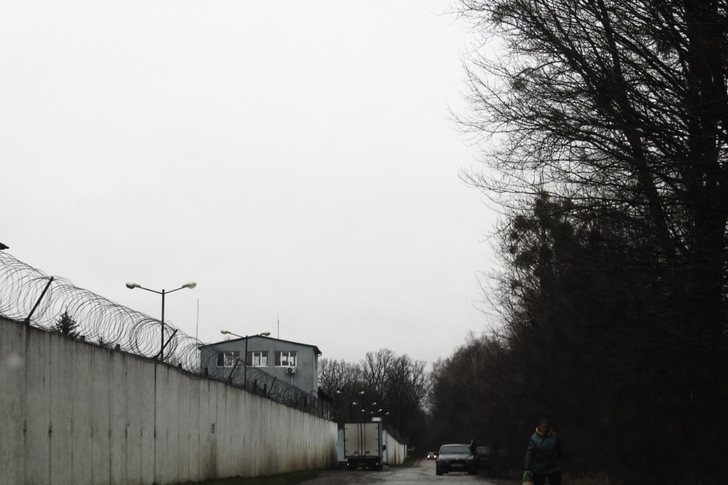
Russian forces eliminate hostage-takers
Russian security forces have killed the kidnappers of ...


Israeli Prime Minister Benjamin Netanyahu criticized plans announced by the Israeli military on Sunday to stop fighting during daylight hours along a road in southern Gaza to allow a large amount of humanitarian aid to enter the Palestinians.
The military said the pause, which began at 8:00 a.m., will be in effect until 7:00 p.m. and will be enforced daily until further notice.
"When the prime minister heard the announcements of an 11-hour humanitarian pause, he turned to his military secretary and made it clear that this was unacceptable to him," an Israeli official said.
The army clarified that normal operations will continue in the town of Rafah, the main target of its operation in southern Gaza, where eight Israeli soldiers were killed on Saturday.
Prime Minister Netanyahu's reaction highlights political tensions over the issue of aid entering Gaza, where international organizations have warned of a growing humanitarian crisis.
National Security Minister Itamar Ben-Gvir, who heads one of the religious nationalist parties in Mr Netanyahu's ruling coalition, rejected the idea of ??a tactical pause, saying whoever imposed it was a "moron" who should be fired. .

The "tactical pause" announced by the army, which applies to a space of about 12 kilometers in the Rafah area, is a far cry from a complete ceasefire in the besieged territory, which has been demanded by the international community, including Israel's main ally , United States. If it stands, the limited ceasefire could help address some of the Palestinians' dire needs, which have been exacerbated in recent weeks by Israel's assault on Rafah.
The pause is intended to allow aid trucks to reach the nearby Israeli-controlled Kerem Shalom crossing, the main entrance for aid, and travel safely on the Salah a-Din highway, a major north-south road, the army said. The crossing has faced a blockade since Israeli ground troops moved into Rafah in early May.
COGAT, the Israeli military mechanism that oversees the distribution of aid in Gaza, said the road would increase the flow of aid to other parts of Gaza, including Khan Younis, Muwas and central Gaza. Hard-hit northern Gaza, which was an early target in the war, is being supported by aid coming in from a crossing in the north.
The military said the pause was decided after discussions with the United Nations and international aid agencies.
But aid agencies, including the UN, did not immediately respond to requests for comment.
The standoff along the southern route is happening as Israel and Hamas consider the latest proposal for a cease-fire, a plan detailed by President Joe Biden in the administration's most focused diplomatic effort to halt the fighting and release hostages taken by militant group. While President Biden described the proposal as an Israeli plan, Israel has not fully supported it, and Hamas has demanded changes that seem unacceptable to Israel.
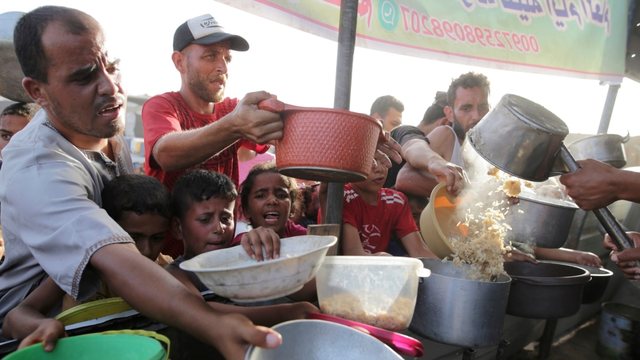
Israel's military campaign against the Hamas militant group, prompted by the group's October 7 attack, has plunged Gaza into a humanitarian crisis, with the UN reporting widespread starvation and hundreds of thousands of people on the brink of starvation. The international community has urged Israel to do more to ease the crisis and said ongoing fighting, including in Rafah, has complicated aid deliveries throughout the war.
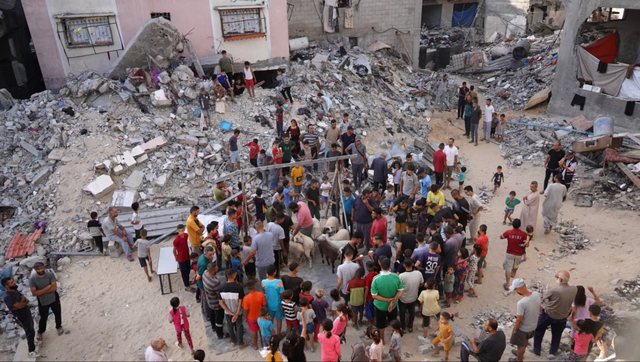
From May 6 to June 6, the UN received an average of 68 truckloads of aid per day, according to data from the UN humanitarian office, known as OCHA. That was down from 168 trucks a day in April and well short of the 500 trucks a day that aid groups say is needed.
Aid flows to southern Gaza fell as humanitarian needs increased. More than 1 million Palestinians, many of whom had already been displaced, fled the city of Rafah after the attack, flocking to other parts of southern and central Gaza. Most now languish in dilapidated tent camps, using trenches as toilets, with sewage flowing through the streets.
COGAT says there are no restrictions on the entry of trucks. It says more than 8,600 trucks of all types, both aid and commercial, entered Gaza from all crossings from May 2 to June 13, an average of 201 per day. But most of the aid has piled up at the crossings and has not reached the country.
A COGAT spokesman, Shimon Freedman, said it was the UN's fault that its cargo was piled up on the Gaza side of Kerem Shalom. He said the agencies have "fundamental logistical problems that they haven't solved," especially the lack of trucks.
The UN denies such accusations. She says fighting between Israel and Hamas often makes it too dangerous for UN trucks inside Gaza to travel to Kerem Shalom, which is close to the border with Israel.
The new agreement aims to reduce the need to coordinate shipments by providing an uninterrupted 11-hour "window" each day for trucks to move in and out of the crossing.
It was not clear whether the army will provide security for relief trucks as they move along the highway.

Russian security forces have killed the kidnappers of ...

Eighty countries jointly demanded on Sunday (today) that U...

Serbian President Aleksandar Vucic is preparing to giv...

The abortion rights debate has been divisive in American p...

During the Hajj in Mecca and Medina, 14 Jordanians los...
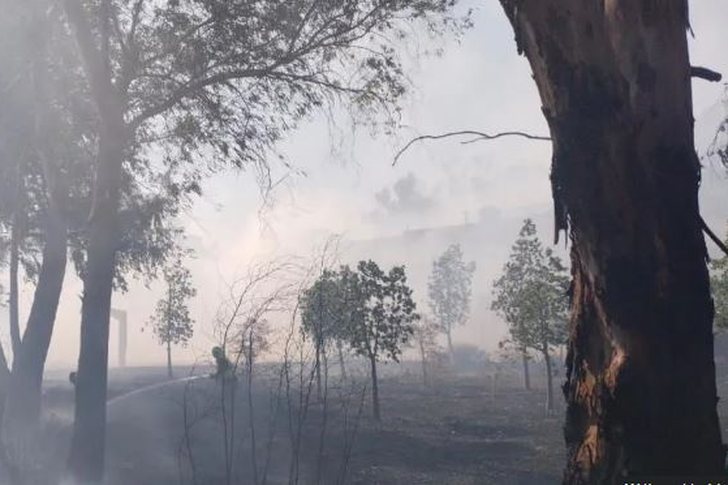
The village of Alma al-Shaab lies in southern Lebanon ...

A major police operation is underway in the center of ...

Norway announced on Sunday that it will donate $103 mi...

The Kosovo Culture Week in Berlin ended on Friday, Jun...
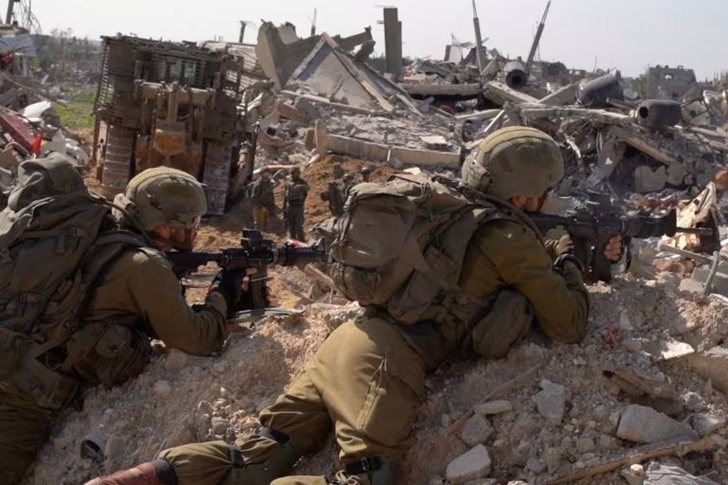
Eight Israeli soldiers were killed Saturday by an expl...
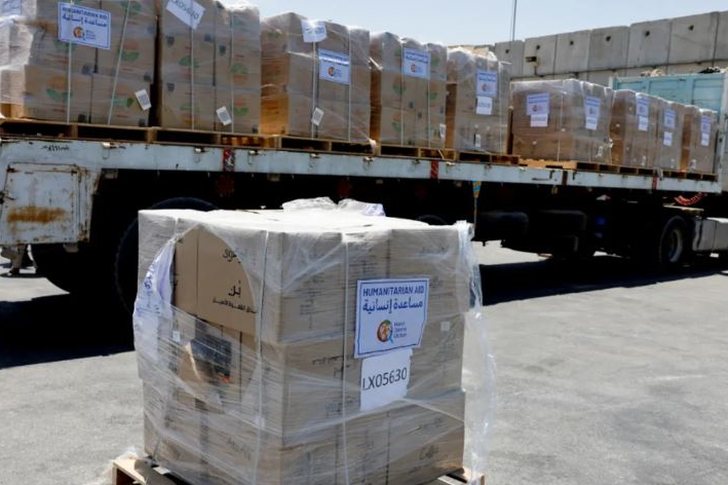
The Israeli military says it will hold a daily "tactical p...

In the United States, a president can serve a maximum ...
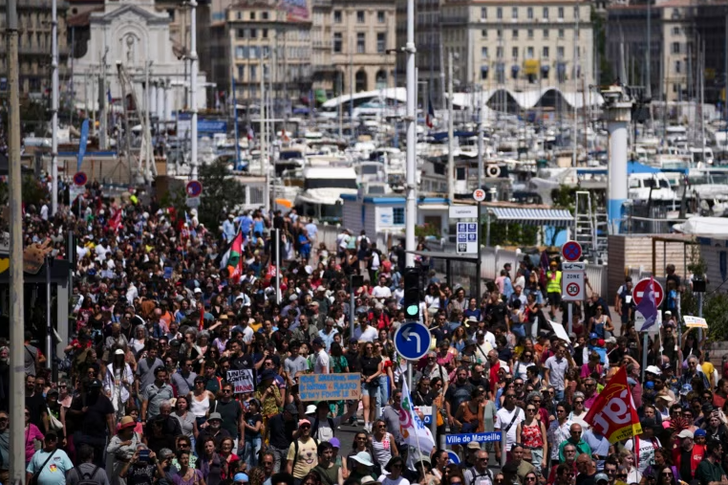
Thousands of French people marched in Paris and cities...

The United States and NATO have different positions regard...
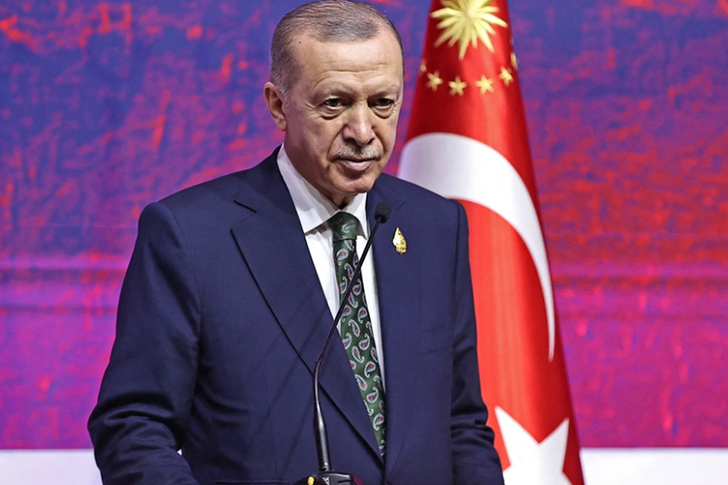
The issue of the "Eurofighter", which is a joint productio...

US Vice President Kamala Harris has promised an aid packag...

France, Germany and Great Britain condemned Iran on Sa...

A two-day meeting regarding the achievement of peace i...

Prime Minister of Kosovo Albin Kurti met on Saturday w...

US Vice President Kamala Harris has promised an aid pa...

CNA has launched another investigation that could lead to ...

Irfan Hysenbelliu is a businessman that we call "Irfan the...

In March 2026, CNA launched another investigation centered...
The arrested mayor of Tirana, Erion Veliaj, with 13 charge...

The Special Board of Appeal (KPA) decided this Monday ...

The KPA vetting decided this Thursday to dismiss the p...

Suela Salavaçi, a prosecutor in the Prosecutor's Offic...

The Special Board of Appeal reinstated the prosecutor ...

A road accident occurred this evening on Nikolla Zoraqi St...

Three people were shot and wounded in Elbasan last night b...

A serious incident occurred this Tuesday in the Yrshek are...

An accident occurred this Tuesday on "Dituria" street in K...

All of Southern Europe will face changing weather conditio...

Albania was hit by temperatures significantly higher than ...

For the first time, Pogradec welcomed the Inter-Lake Chess...

Albania has achieved a record for the employment of foreig...

US Secretary of State Marco Rubio arrived in Manila on Jul...

In the space of a few days, Ukrainian President Volodymyr ...

The spokesman for the Iranian Foreign Ministry warned Bulg...

Autoritetet italiane sekuestruan pako me afër 800 kilogram...

At a time when industrial products are increasingly taking...

Trust among people is not just a three-syllable word. It c...

Master of humor Todi Llupi has passed away at the age of 7...

The ninth edition of "MIK Festival" kicked off with one of...

Construction company licenses will have a validity period ...

The Centralized Purchasing Operator recently opened a tend...

The new draft law "On the Bank of Albania" provides that t...

This Tuesday, one US dollar is bought for 81.2 lek and sol...