

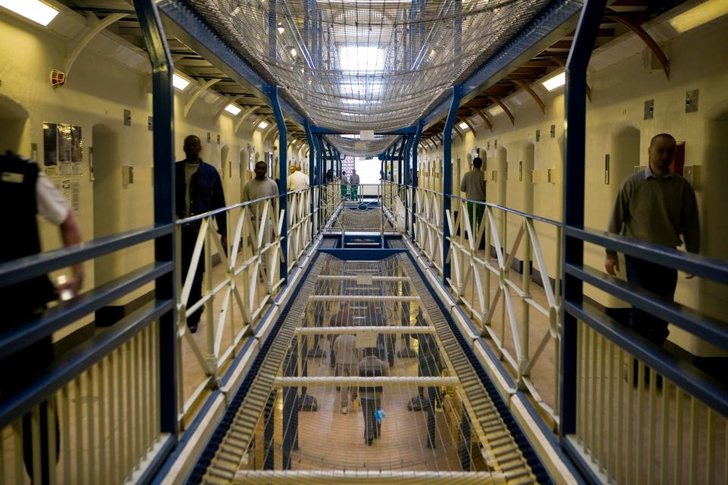
Spread of Hepatitis B and C in prisons/ EU adopts framework of preventive measures
EU disease prevention and drugs agencies have jointly laun...


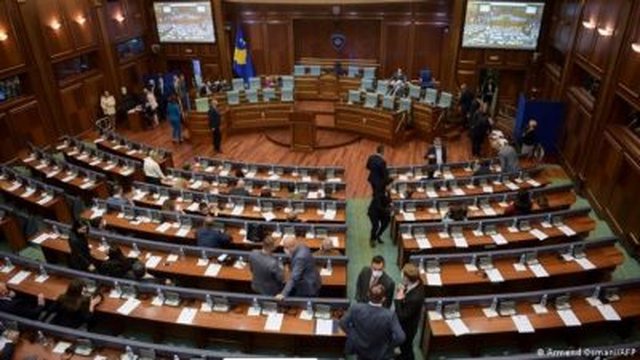
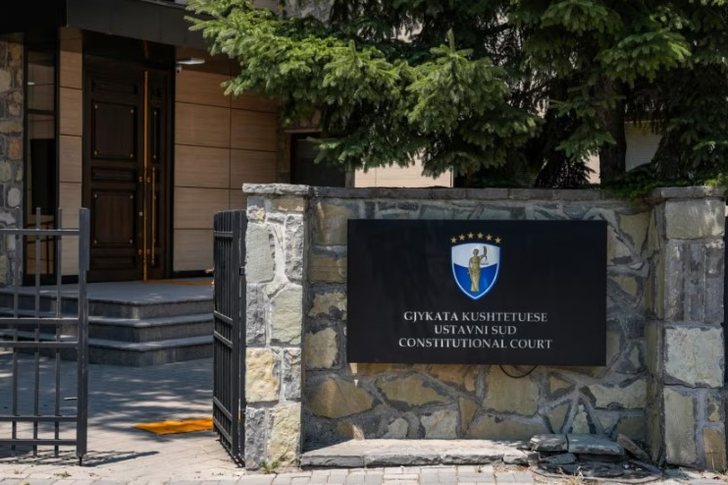
The Constitutional Court in Kosovo decided today that the new Speaker of the Assembly will be elected by open vote.
The Constitutional Court's decision has once again "collided" the parties, bringing different reactions. For the Vetëvendosje Movement, the Constitutional Court's decision constitutes a dangerous deviation, because it contradicts the fundamental principles of the rule of law.
According to the winning party of the elections, the Constitutional Court has exceeded its powers and arbitrarily invented rules, taken sides and defied the popular will.
"The Constitutional Court violated the Constitution
The announcement published today by the Constitutional Court constitutes a dangerous deviation from the constitutional role. It is contrary to the fundamental principles of the rule of law and the separation of powers.
The Constitutional Court is an independent body tasked with interpreting and controlling the compliance of laws or other acts with the Constitution, within its jurisdiction.
The announcement has clarified nothing other than that the Court has exceeded its constitutional powers. The Court does not have the right to create new legal norms or impose rules that have no basis in the Constitution.
The court has chosen to arbitrarily invent rules. Inventing entirely new rules in the middle of the process and substantially interfering with the powers of the Assembly is a violation of the constitutional order.
The Constitution is approved and amended by the Assembly. Taking this competence by usurping the constitutional role of the Assembly is a blow to the democratic system that has its source in the sovereign. There are no other known forms of writing and rewriting, approving and amending the Constitution. They are done either by the Assembly or by the popular Referendum. The members of the Constitutional Court are not subjects of either one or the other. When a body that should be the guardian of the Constitution begins to produce new norms or to fulfill norms that are not foreseen either in the Constitution or by the legislature, then it is transformed into an extra-constitutional body.
Where, exactly, is it written in the Constitution, in the Rules of Procedure of the Assembly, in the Court's Judgment in case KO119/14 or in the Court's Judgment in case KO124/25, or in international jurisprudence that the largest parliamentary group has the right to propose the same candidate only three times? Where does this norm come from? Why not twice, four times, ten times? Where is the constitutional or doctrinal connection with the number three?
The Court's announcement warns that the Judgment that is expected to be issued will seriously violate the separation of powers. An unprecedented case and a flagrant interference in the powers of the Assembly. The Court cannot usurp the function of drafting or amending the Rules of Procedure of the Assembly, because this constitutes a violation of the Constitution, namely the constitutional principle of the separation of powers, which is one of the pillars of parliamentary democracy.
The new rules announced by the Constitutional Court, if they are not in the Constitution or in the Rules of Procedure of the Assembly, cannot be in any Judgment.
The decision reflects partisan motives. Whenever the VETËVENDOSJE! Movement has to act according to rules that have previously been established by the Court itself as jurisprudence in analogous cases, such as the 2014 Judgment, those rules are being changed by the Court itself.
The partisan dimension of the decision is also distinguished by the completely unnecessary focus on the Chairman of the constitutive session, Mr. Avni Dehari. It would have had the same legal effect if it had been linked to the agenda without subjectifying it with the figure of the Chairman of the session. Because, in the end, the Chairman of the constitutive session is not a constitutional subject, only the Assembly is. The Chairman of the constitutive session is only a subject of the Rules of Procedure of the Assembly. By highlighting only the Chairman of the session without any legal justification, it is clearly revealed that the goal was to politically label his figure according to the vocabulary of the opposition parties.
If the Chairman of the constitutive session acted incorrectly when he asked the deputies to vote for, against or abstain with regard to the committee for a secret ballot, it is incomprehensible why the Court did not find this violation in Judgment KO 124/25, announced on June 26, which was issued after the Chairman of the session had already started calling for the committee to vote on May 1, 2025.
The court clearly seems to have chosen to take sides, seriously affecting democratic principles and challenging the popular will.
This is a serious warning about the danger of an uncontrolled legal power, which instead of controlling other powers, itself becomes a source of institutional capture, says the official statement of the LVV"./ CNA

EU disease prevention and drugs agencies have jointly laun...

Italian media reports that Prime Minister Giorgia Meloni h...

While President Donald Trump previously didn't speak ill o...

Sekretari i Jashtëm britanik, David Lammy do të presë më 8...
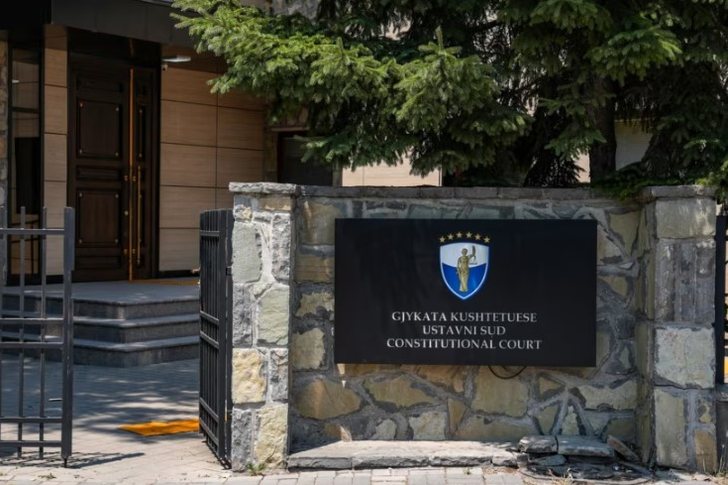
The Constitutional Court of Kosovo said that the deputies ...

Firefighters and local authorities said they were on high ...
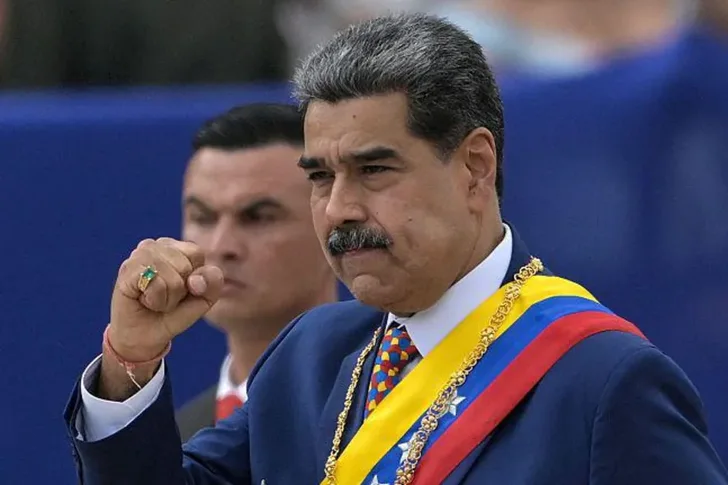
The US has doubled the reward for information leading to t...
On Friday, August 8, the temporary measure imposed by the ...
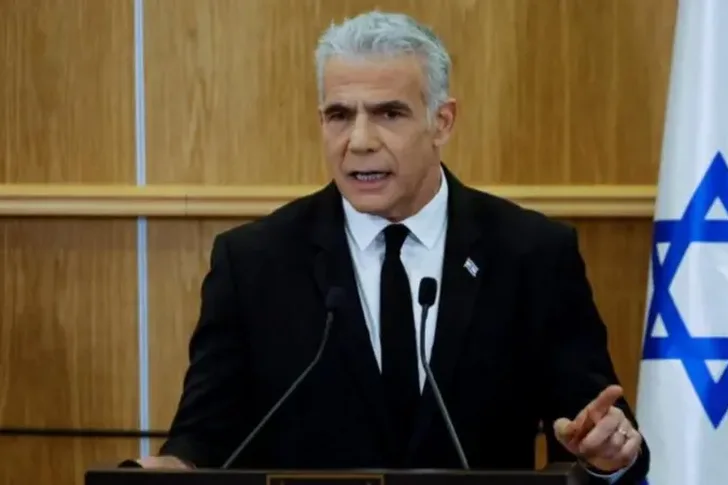
The leader of the opposition in Israel has called the secu...

Early Friday morning, after an hours-long Israeli security...

China's first pet-friendly gym, Gogogym, recently welcomed...

France's highest court today blocked a key part of a contr...

The Albanian-American community has sent a letter to the P...
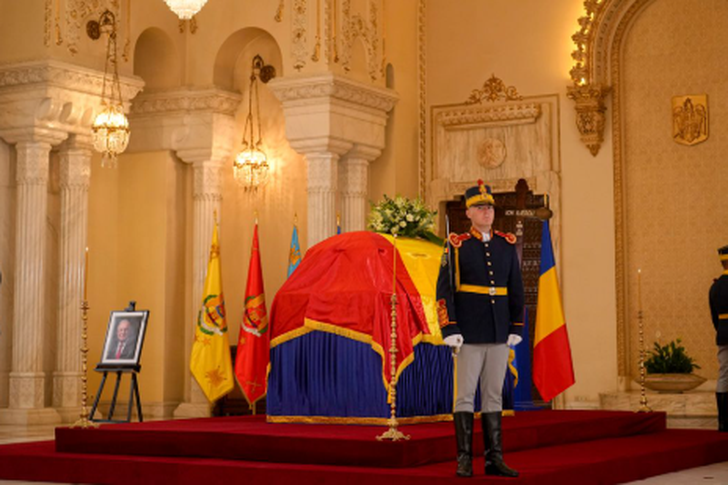
The official funeral ceremony for Romania's first elected ...

Israeli Prime Minister Benjamin Netanyahu is expected to m...
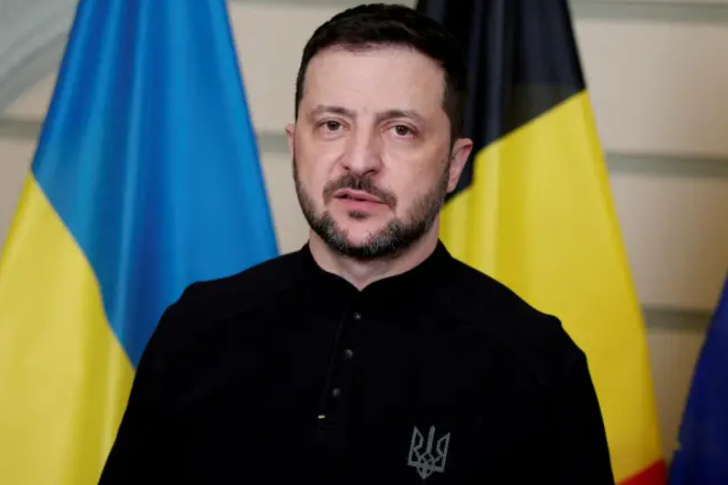
Ukrainian President Volodymyr Zelensky called on Thursday ...

A 4.7-magnitude earthquake shook the Messinia region of th...
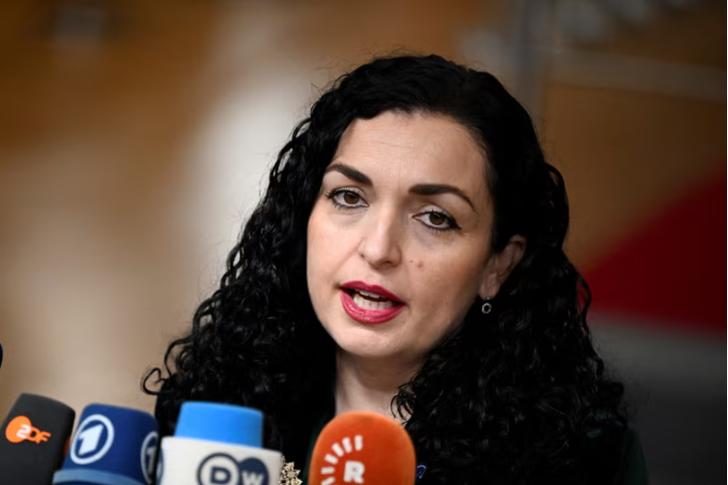
Kosovo President Vjosa Osmani has published the letter tha...

US President Donald Trump and Russian President Vladimir P...
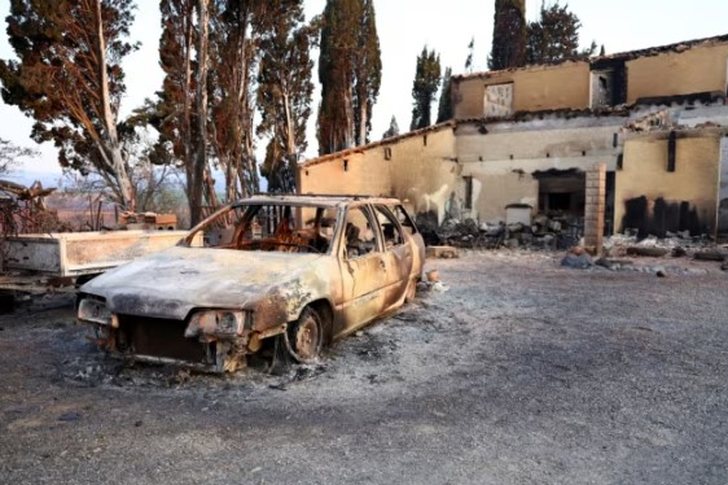
French firefighters are battling for the third day in a ro...

CNA has launched another investigation that could lead to ...

Irfan Hysenbelliu is a businessman that we call "Irfan the...

In March 2026, CNA launched another investigation centered...
The arrested mayor of Tirana, Erion Veliaj, with 13 charge...

The Special Board of Appeal (KPA) decided this Monday ...

The KPA vetting decided this Thursday to dismiss the p...

Suela Salavaçi, a prosecutor in the Prosecutor's Offic...

The Special Board of Appeal reinstated the prosecutor ...

Footage emerges from the serious accident that occurred th...

A Shkodra traffic police officer was hit with hard objects...

This Wednesday, around 4:00 PM, a serious accident occurre...

Tirana Police have shared details regarding the accident t...

A serious accident that occurred this Wednesday with the c...

The Institute of Geosciences has shared a forecast for wea...

Rising energy and fertilizer prices are expected to contin...

Over 18,000 foreign citizens from 140 countries have appli...
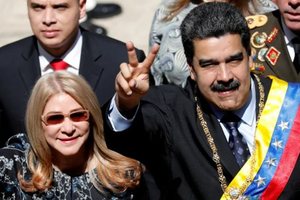
The trial of ousted Venezuelan President Nicolas Maduro on...
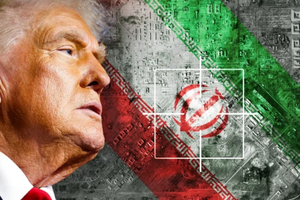
US President Donald Trump has issued another warning to Ir...

Prime Minister Andy Burnham has announced that most bus fa...

France's parliament has passed a law to ban social media f...

At a time when industrial products are increasingly taking...

Trust among people is not just a three-syllable word. It c...

Master of humor Todi Llupi has passed away at the age of 7...

The ninth edition of "MIK Festival" kicked off with one of...

The price of diesel reached 206 lek per liter from 198 lek...

Businesses will no longer be required to simply register t...

Despite economic growth and income in recent years, Albani...

This Wednesday, one US dollar is bought for 81.4 lek and s...