



In space for two months, NASA sends supplies to the International Space Station for stranded astronauts
A spacecraft docked with the International Space Station (...


In 2022, the number of births in the European Union reached its lowest level since 1960, according to the latest data.
That year, just 3.88 million babies were born in the EU, marking the first time the figure fell below 4 million.
Fertility rates also fell, approaching levels seen two decades ago. The EU had one of the lowest fertility rates in the world, defined as the number of births per woman.
But how do fertility rates in different parts of Europe compare, and how have fertility rates changed in Europe compared to the rest of the world?
There has been a downward trend since 1960 in the number of children born in the EU. The lowest number was recorded in 2022 with 3.88 million.
In 1990, 5.1 million babies were born in the EU, marking the last year that births exceeded 5 million.
In 2022, the fertility rate, which reflects the number of live births per woman, changed significantly in the EU, ranging from 1.79 in France to 1.08 in Malta according to Eurostat, the EU's statistical office.
The average for the EU as a whole was 1.46. Including the European Free Trade Association (EFTA), Great Britain and EU candidate countries, Georgia (1.83) and Moldova (1.81) reported higher rates than France.
While the highest fertility rate is observed in France, a Mediterranean country, other Mediterranean countries such as Malta (1.08), Spain (1.16), Italy (1.24), Greece (1.32) and Cyprus (1.37) have significantly lower rates. .
Slightly higher fertility rates were recorded in countries such as Romania (1.71), Turkey (1.63), UK (1.56), Germany (1.46) and Finland (1.32).
Is the fertility rate rising or falling in Europe?
Examination of long-term changes in the EU's fertility rate reveals a clear downward trend.
It was 2.35 in 1970, the highest on record before falling to a low in the late 1990s, reaching 1.4 in 1998, according to World Bank data.
It then began to rise gradually, reaching a final peak of 1.57 in 2016.
In 2022, the total fertility rate in the EU was 1.46 live births per woman, approaching levels seen in the early 2000s, which were around 1.4.
Fertility rates have changed significantly in EU countries over the past 20 years, falling in 13 of the 27 EU Member States between 2002 and 2022.
Ireland and Finland reported the most significant declines in fertility rates, each falling by over 0.4 points, corresponding to declines of more than 20 percent.
Conversely, the Czech Republic, Romania and Bulgaria experienced the highest increases, each increasing by more than 35 percent.
This rate remained stable in the EU, with only an increase of 2 percent.
The EU has one of the lowest fertility rates in the world
In 2021, the EU reported a birth rate of 1.52, the lowest after the East Asia and Pacific region, which had a rate of 1.49, according to World Bank data.
West and Central Africa had the highest fertility rate at 4.98, followed by East and Southern Africa at 4.35 and the Arab world at 3.14.
The global average fertility rate was 2.27, with North Africa and the Middle East reporting a higher rate of 2.63. The North American rate of 1.64 was slightly above the OECD average of 1.59.
Since 1970, there has been a marked downward trend in fertility rates in almost all regions, although this decline has been significantly slower in Africa.
Fertility rates in all 41 European countries, including the EU, EFTA and candidate countries, are below the global average./ CNA

A spacecraft docked with the International Space Station (...

Two Italian journalists who drew the ire of Moscow aft...

The Basic Prosecutor's Office of Ferizaj in Kosovo has req...

Chechen leader Ramzan Kadyrov has posted a video in wh...

The US State Department (Dash) said that any assertion...

The Vice President of the United States, Kamala Harris...

The President of Serbia, Aleksandar Vučić, has spoken ...

The tragedy that leaves you speechless, the Greek medi...
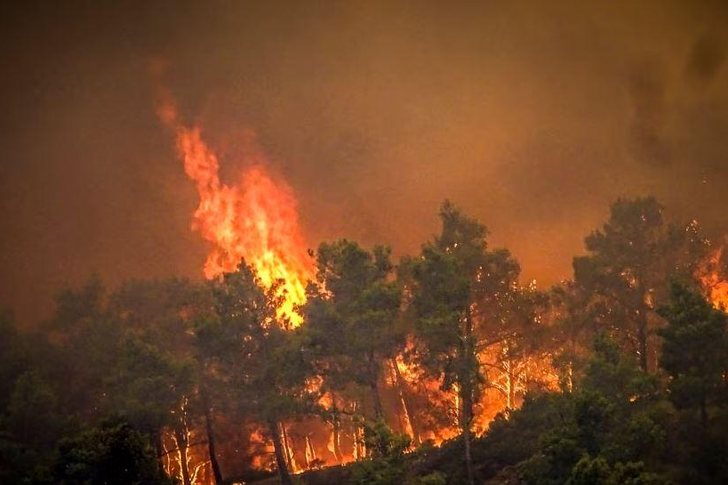
The Greek authorities raised to IV the fire danger level f...
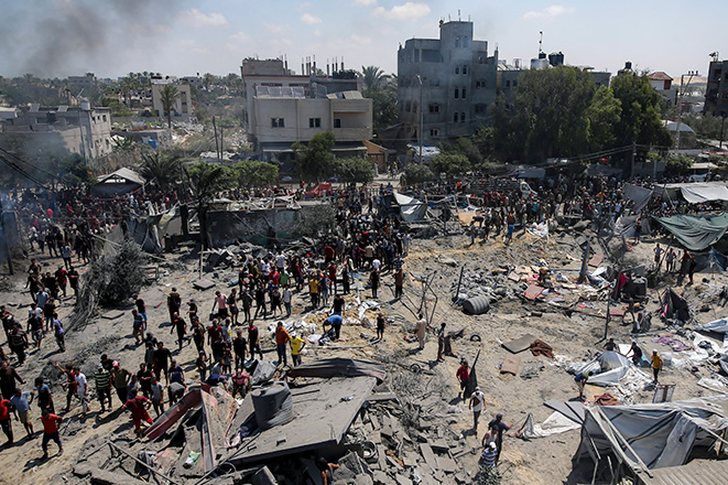
Leaders of Hamas have reacted on Saturday regarding th...
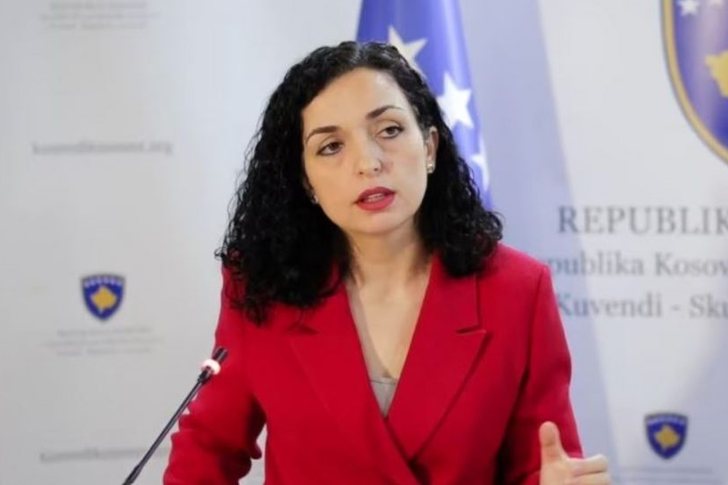
After the reports about last night's murder in Ferizaj...

Ukrainian President Volodymyr Zelensky said his troops...

At least nine people have been killed and five others woun...
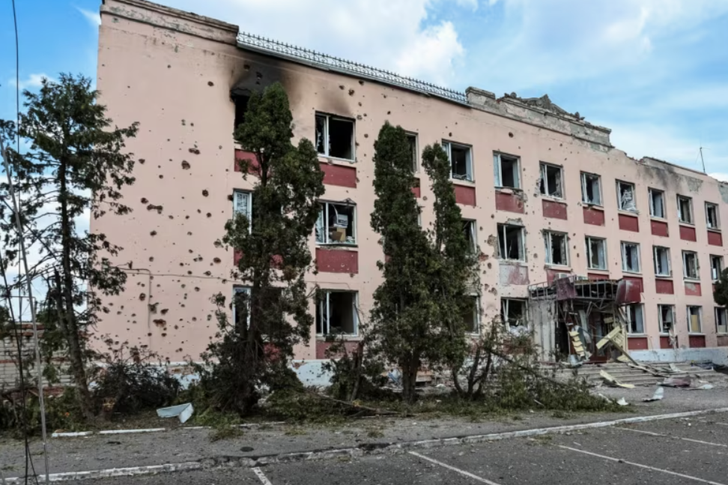
Russia's Foreign Ministry said Ukraine had used Western mi...

Firefighters are battling wildfires in Turkey's Izmir for ...

Talks in Doha, Qatar on reaching a Gaza ceasefire broke do...

Legally, the use of German weapons in Russia is not a prob...

Although the final cease-fire agreement in the Gaza St...

A police official has been arrested, after allegedly killi...
Një burrë është vrarë në oborrin e një salle dasmash në Fe...

Dritan Prençi is the SPAK prosecutor who is sleeping on th...

The in-depth investigations that SPAK conducted into Ajola...

SPAK's standards, the way it investigates, how it secures ...

Irfan Hysenbelliu claims to be a big businessman, an hones...

The Special Board of Appeal (KPA) decided this Monday ...

The KPA vetting decided this Thursday to dismiss the p...

Suela Salavaçi, a prosecutor in the Prosecutor's Offic...

The Special Board of Appeal reinstated the prosecutor ...
Durres Customs has announced that today, during checks car...

A road accident was recorded a few minutes ago on the Pogr...

The State Police has published new footage from the operat...

A TNT explosion has occurred in the village of Balldren i ...

Albania is facing a deep demographic crisis where official...
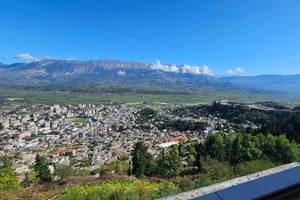
This Wednesday, our country will be affected by relatively...

The UN's World Meteorological Organization now warns that ...

Intense rainfall has caused numerous problems in the Radom...

The United States, Australia, European allies and other co...

United States Secretary of Defense Pete Hegseth visited th...
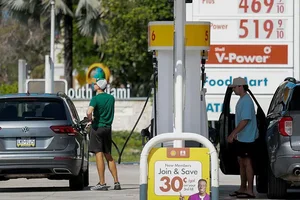
Prices in the US in May rose at their fastest pace in thre...

Billionaire Bill Gates will appear today before a US Congr...

Korça has transformed this weekend into the capital of cel...

Korça is ready to open the summer season with one of the c...

Two years after his passing, the renowned Korçë poet Skënd...

The Ethnographic Museum of Berat has opened its doors to v...

The non-performing loan ratio returned to decline in April...

This Wednesday, one US dollar is bought for 81.6 lek and s...

The 2025 turnover reassessment for businesses in Tirana ha...

Predictions of a severe oil shortage this summer have not ...