


Qeveria gjermane dëshiron siguri më të madhe digjitale
The German government has approved a draft law on digital ...


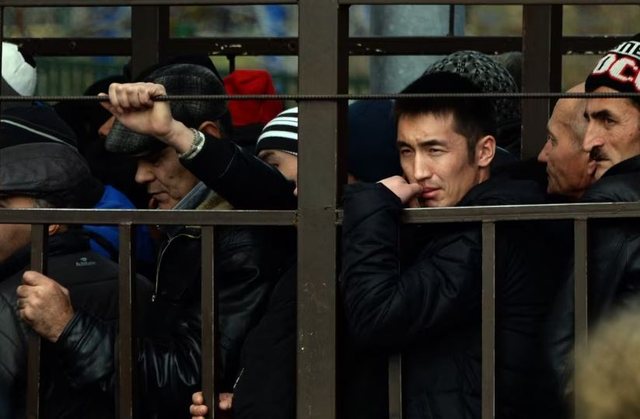
A Russian agency is pushing new rules of conduct for Central Asian migrants.
The rules severely restrict the use of their native language and warn them against absolving in public and sacrificing animals for religious purposes.
They are introduced to immigrants through a 70-minute course, created by Russia's Federal Agency for Ethnic Affairs (FAEA), in seminars organized in certain parts of this country.
Among other things, the course informs them that they must have a mandatory knowledge of the Russian language and immigration laws, and not to use their mother tongue when talking about Russians.
From the course, they also learn that they should not "even whisper" in public in their native language, Kommersant newspaper reported.
Furthermore, the common Central Asian practice of addressing people as "brother" or "sister" is said to be unacceptable when referring to Russians.
In addition to restrictions on language and behavior, there are also religious restrictions, including a ban on slaughtering animals in public.
The course, which includes 11 animated videos featuring a character named Timur, also has a history lesson, according to which "the development of Central Asia was financed significantly from the budget of the Soviet Union."
The course is also supposed to tell immigrants about the possibility of "getting Russian citizenship in a simplified way": by serving in the Russian army.
It also includes warnings against joining extremists or people involved in terrorist activities.
Such rules of conduct have not yet become law, but some analysts told the Kommersant newspaper that this "adaptation course" could become mandatory for all immigrants seeking long-term residence, employment and citizenship in Russia.
Stanislav Bedkin, deputy head of Russia's Federal Agency for Ethnic Affairs, said the course has been successfully tested in four Russian regions, including Moscow. After some improvements, he said the updated course has been sent to all regions of the country.
"Corruption will increase"
Many Kyrgyz expats in Russia learned about these rules only from online news reports.
Asan, a Kyrgyz worker who has lived in Russia for seven years, says he is considering returning to Kyrgyzstan or trying to get to the United States because of his concerns about the reported new rules. .
"The laws here are changing every day. Let's see what happens... They still can't fine us if we speak in Kyrgyz," he told RFE/RL's Kyrgyz Service.
Another Kyrgyz immigrant, Maksat, thinks the new rules will increase corruption among Russian policemen.
"They will make money from immigrants for something that doesn't exist," he says.
"Corruption will increase [among law enforcement officials]. Immigrants will suffer as usual. We will be silent as if we are in a totalitarian regime", adds Maksati.
"Kommersant" reported that the course is already applied in at least five regions: Kaliningrad, Moscow, Perm, Yakutia and Krasnodar.
A representative from the Kyrgyz Ministry of Emigrants in Russia told Radio Free Europe that "the new rules for the behavior of immigrants are only a proposal" and that the entire course is currently being studied by officials in Kyrgyzstan.
Kyrgyz lawyer Erlanbek Toktosunov, who works in Russia, says he agrees with the demand that immigrants learn Russian laws. But, according to him, most immigrants from Central Asia, who are looking for work in Russia, come from rural regions and do not speak Russian.
"Ordinary people from the rural regions of Central Asia go [to Russia] to make a living, but most of them do not speak Russian well and they simply work as street cleaners or in construction," Toktosunov told Radio Free Europe. .
Can Russia survive without immigrants?
According to the Russian Interior Ministry, about 10.5 million immigrants - mainly from Uzbekistan, Tajikistan and Kyrgyzstan - work in Russia.
Central Asia has been a major source of free labor for Russia for years. It fills many of its gaps, which were created due to the needs of the Russian military, after the invasion of Ukraine in 2022.
While senior Russian officials are aware of the country's labor shortage and its negative impact on the economy, some regions are placing restrictions on hiring immigrants.
About 18 regions have passed or are in the process of passing laws that prohibit the employment of immigrants as taxi drivers, as alcohol and tobacco sellers, as employees in financial services and others.
Many of these restrictions were taken after the terrorist attack on a concert hall near Moscow in March. 145 people were killed in that attack.
Anti-immigrant sentiment in Russia has risen since the attack, prompting countries such as Tajikistan and Kyrgyzstan to warn their citizens against traveling to Russia.
Also, many migrants have been detained upon arrival in Russia and many have been refused entry - despite having valid documents - and returned to their countries of origin.
But even before the terrorist attack, immigrants were often the target of discrimination in Russia.
Every year, Russian authorities carry out major anti-immigrant campaigns, which include sweeping raids on mosques, businesses that employ citizens from Central Asia, and places where immigrants congregate.
Despite such difficulties, many citizens from Central Asia have no choice but to continue working in Russia.
Tajikistan and Kyrgyzstan are among the poorest countries in Central Asia, and remittances from their citizens, who work in Russia, account for nearly half of the gross domestic product of these countries./REL

The German government has approved a draft law on digital ...
The F-16 fighter jet has been in service for fifty years, ...

Numerous rockets hit the northern city of Israel, Majd...

Vice President Kamala Harris' new economic plan is bei...

Violence against women and girls in England and Wales ...

Potential rivals in the US presidential election, Vice...
Some deputies of the Democratic Union for Integration in N...
US Secretary of State Antony Blinken asked Southeast A...

The National Institute of Public Health of Kosovo (IKSHPK)...

France's interior minister said today that he could not ru...

Hungarian Prime Minister Viktor Orban has again critic...
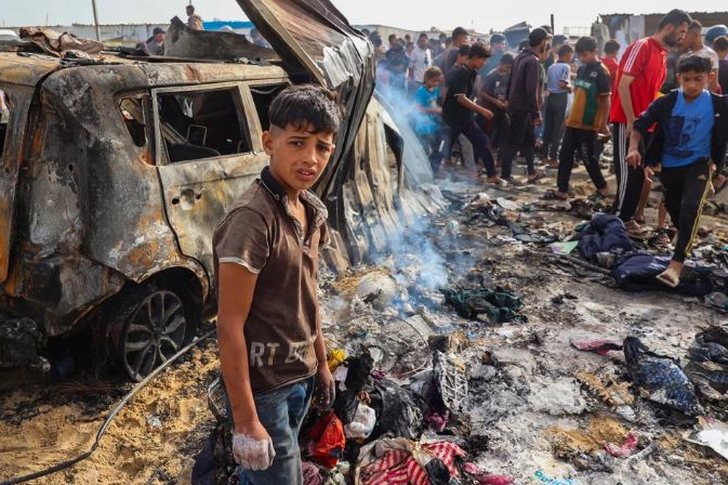
On July 27, the Israeli army ordered the evacuation of...
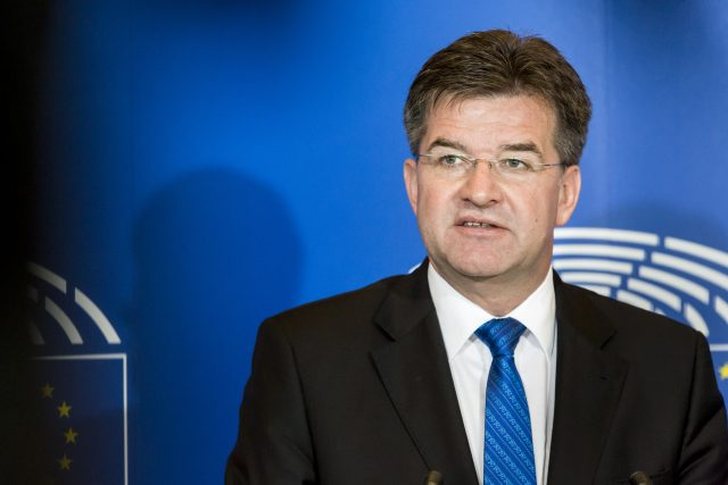
Miroslav Lajçak will continue to be the EU emissary fo...
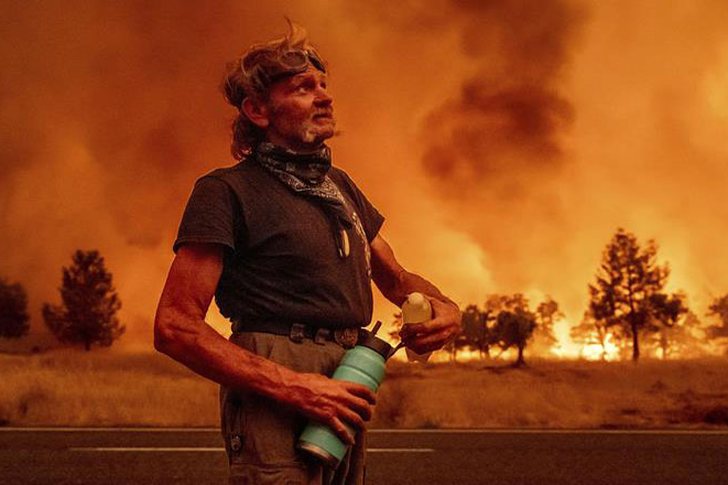
About 4,000 people have been forced from their homes i...
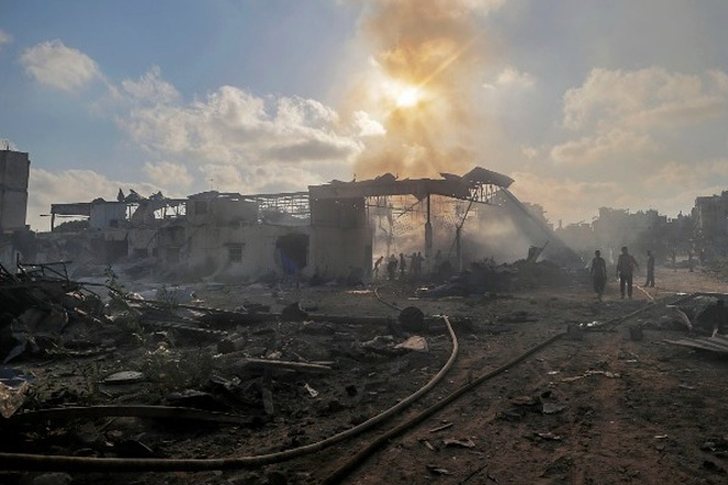
Delegacionet nga Egjipti, SHBA, Katari dhe Izraeli pri...

Ismael 'El Mayo' Zambada is one of the most notorious ...

The Republican candidate for the presidential election...
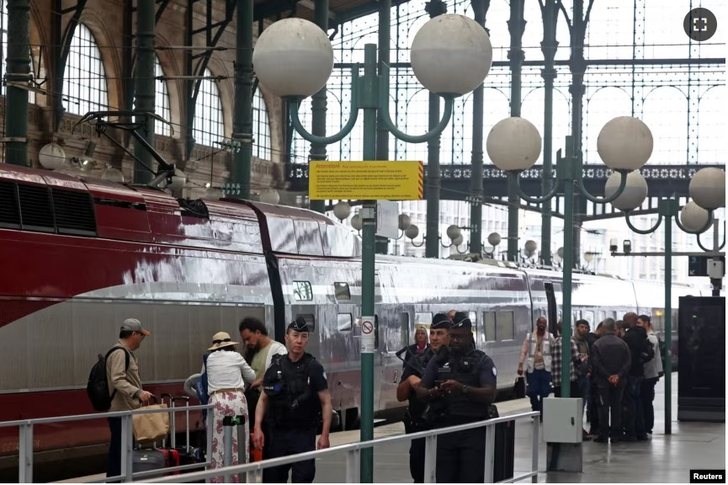
French rail company SNCF has warned that service disru...

The opening of the Paris 2024 Olympics was completely diff...

The FBI announced that former President Donald Trump w...

CNA has launched another investigation that could lead to ...

Irfan Hysenbelliu is a businessman that we call "Irfan the...

In March 2026, CNA launched another investigation centered...
The arrested mayor of Tirana, Erion Veliaj, with 13 charge...

The Special Board of Appeal (KPA) decided this Monday ...

The KPA vetting decided this Thursday to dismiss the p...

Suela Salavaçi, a prosecutor in the Prosecutor's Offic...

The Special Board of Appeal reinstated the prosecutor ...

Footage emerges from the serious accident that occurred th...

A Shkodra traffic police officer was hit with hard objects...

This Wednesday, around 4:00 PM, a serious accident occurre...

Tirana Police have shared details regarding the accident t...

A serious accident that occurred this Wednesday with the c...

The Institute of Geosciences has shared a forecast for wea...

Rising energy and fertilizer prices are expected to contin...

Over 18,000 foreign citizens from 140 countries have appli...

The trial of ousted Venezuelan President Nicolas Maduro on...

US President Donald Trump has issued another warning to Ir...

Prime Minister Andy Burnham has announced that most bus fa...

France's parliament has passed a law to ban social media f...

At a time when industrial products are increasingly taking...

Trust among people is not just a three-syllable word. It c...

Master of humor Todi Llupi has passed away at the age of 7...
The ninth edition of "MIK Festival" kicked off with one of...

The price of diesel reached 206 lek per liter from 198 lek...

Businesses will no longer be required to simply register t...

Despite economic growth and income in recent years, Albani...

This Wednesday, one US dollar is bought for 81.4 lek and s...