


BBC investigation / Greek coast guard caused casualties, threw migrants overboard
The Greek coastguard has caused the deaths of dozens o...


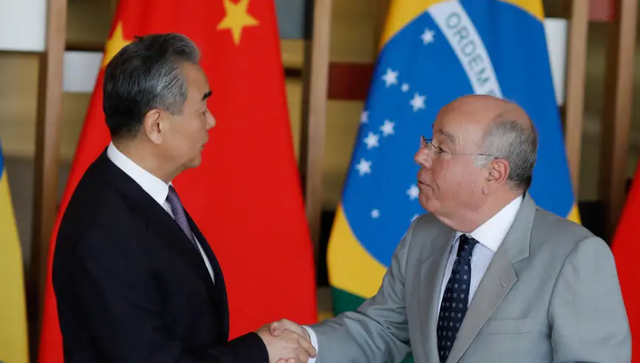
China's growing influence in Latin America is now revealing its dark side. Beijing is applying deliberate pressure in countries like Guatemala, in Brazil traders are angry.
For Guatemalan exporters, the news was like a friend. As local media reported, China banned the import of coffee and other goods from Guatemala. There was no official explanation for this, but Guatemalan President Bernardo Arévalo speculated that it might have something to do with his country's relationship with Taiwan. "We will take care of it," Arévalo said.
Along with Paraguay, Guatemala is the only Latin American country that has diplomatic relations with Taiwan. Beijing sees the island nation as part of China. In recent years, Honduras and Nicaragua have changed direction, moving away from Taiwan and closer to China.
China: many conflicts in Latin America
The blockade of goods from Guatemala is one of many minor conflicts that have begun to cloud the long course of China's development and expansion in Latin America.
However, conflicts have different natures, says in an interview for DW Vladimir Rouvinski from the Department of Political Studies at the Universidad Icesi in Colombia. "In this case it is clear that it is a pressure tool that China is using and not so much against Guatemala as against Taiwan."
In Costa Rica, the government pressured a manager at state-owned energy company ICE to leave the company because about 70 senior employees had attended a party hosted by Chinese tech giant Huawei.
A message to China" from the president of Costa Rica
Relations between Costa Rica and Huawei have been strained since President Rodrigo Chaves established the Budapest Convention on Combating Cybercrime as the standard for economic engagement in Costa Rica, a convention that China has not signed. Soon after, the head of Huawei in Latin America criticized Costa Rica's actions in an interview as "unprofessional".
For political scientist Rouvinski, Chaves' stance is "a message to Beijing, that even China must abide by the rules of the game".
The Budapest Convention is the first international convention on cybercrimes. Its focus is on copyright infringement, computer fraud and network security breaches.
There are other examples of economic conflicts between China and Latin American countries. This includes anger over cheap steel from China, which is putting Latin American producers under severe pressure. In Brazil, fashion boutiques see their existence threatened by cheap textiles from China. At the center of the discussions are the accusations that Chinese companies are damaging the environment with their production.
Brazil imposes tariffs on imports from China
Brazil is now protecting itself against cheap imports from China with a 20 percent tax. It applies to orders under $50 that are made through international websites.
According to Brazilian media, the Chinese online giant AliExpress was "surprised" by the decision. The tax will especially affect the poorest and hinder foreign investment in the country.
In the textile sector there is great anger towards Chinese suppliers, because concerns like Shein, which produce under different terms and conditions than small Brazilian companies, are pushing thousands of local companies out of the market. There is a growing belief that China's strategy is destroying local trade structures, rather than allowing them to benefit.
Who benefits from the Latin America-China economic relationship?
"Recently, even in Latin America, the challenges and risks associated with China's ascension to a dominant player in many areas of the economy and technology have become increasingly clear," says in an interview with DW, Latin America expert Christian Hauser from Graubünden University of Applied Sciences in Switzerland.
In various Latin American societies, the perception is growing that Beijing primarily benefits from economic relations with China, says Hauser. Therefore, criticism of China's trade practices in the region may become even stronger in the future.
Added to this is a foreign policy component: "Latin American countries are increasingly finding themselves in the tense field of geopolitical rivalry between the US and China," says Hauser. "In this context the current tensions between some Central American countries such as Guatemala and Costa Rica and China are likely to be just the beginning of more conflictual relations in the future."
Only with Nicaragua do China's relations seem to be stable. There, the authoritarian government has banned many non-governmental organizations, some of them very active in environmental protection. According to media critical of the government in Nicaragua, Chinese companies received 13 licenses for mining projects within six months./ DW

The Greek coastguard has caused the deaths of dozens o...

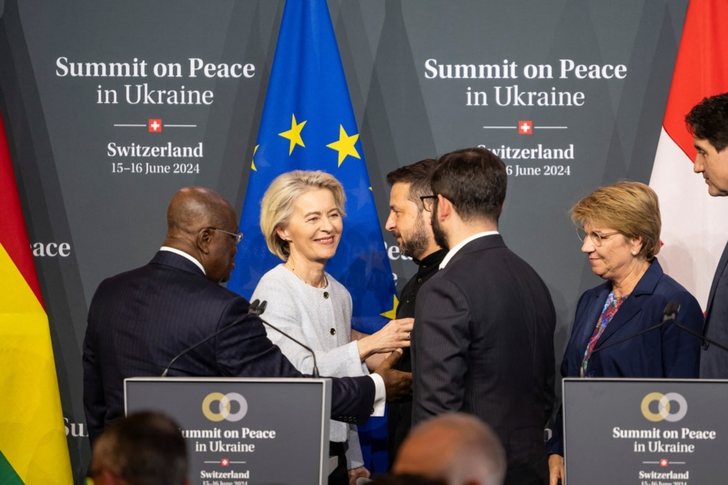
In the final document of the peace summit for Ukraine ...
For months, Russia watchers have known that President ...
Some of Hollywood's biggest stars took center stage at a d...
Israeli Prime Minister Benjamin Netanyahu criticized plans...
Russian security forces have killed the kidnappers of ...
Eighty countries jointly demanded on Sunday (today) that U...
Serbian President Aleksandar Vucic is preparing to giv...

The abortion rights debate has been divisive in American p...

During the Hajj in Mecca and Medina, 14 Jordanians los...
The village of Alma al-Shaab lies in southern Lebanon ...

A major police operation is underway in the center of ...
Norway announced on Sunday that it will donate $103 mi...
The Kosovo Culture Week in Berlin ended on Friday, Jun...
Eight Israeli soldiers were killed Saturday by an expl...
The Israeli military says it will hold a daily "tactical p...
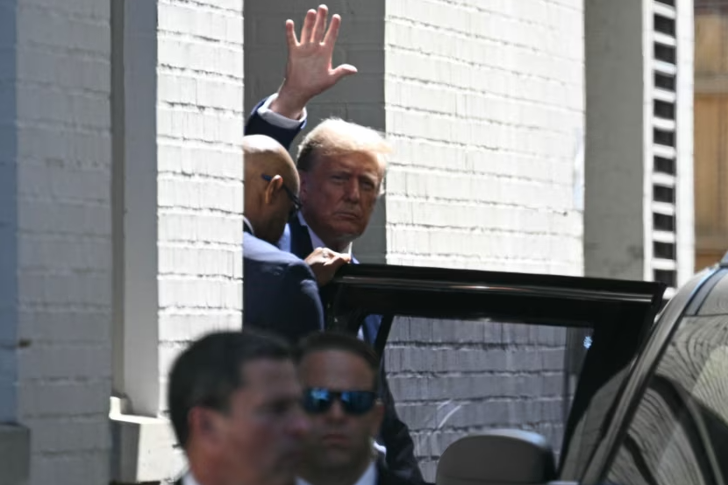
In the United States, a president can serve a maximum ...
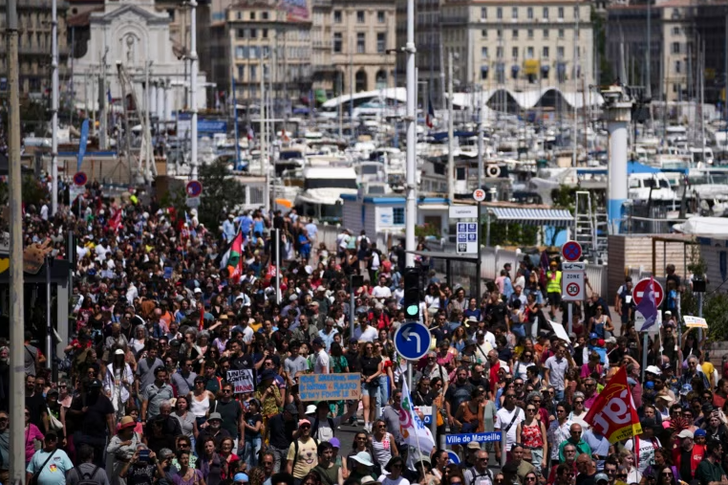
Thousands of French people marched in Paris and cities...
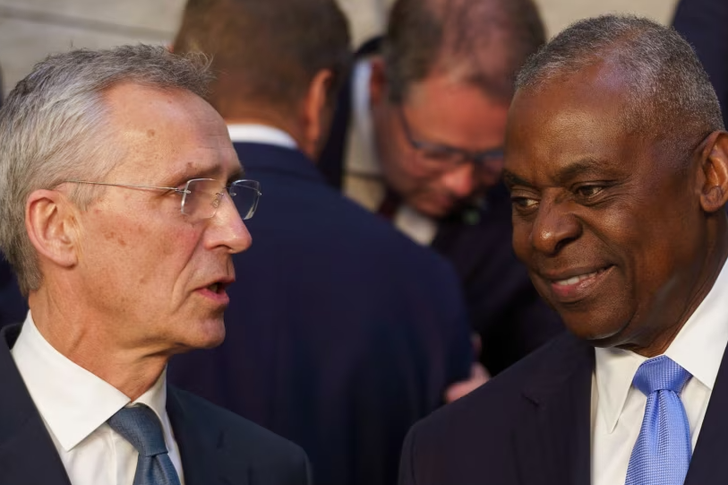
The United States and NATO have different positions regard...
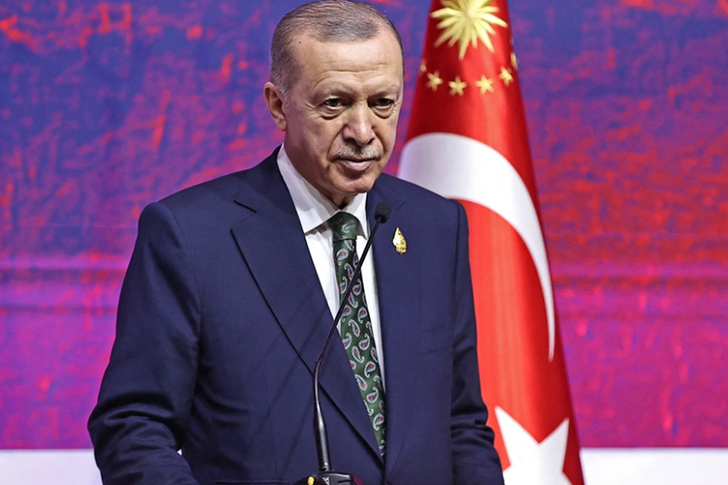
The issue of the "Eurofighter", which is a joint productio...

CNA has launched another investigation that could lead to ...

Irfan Hysenbelliu is a businessman that we call "Irfan the...

In March 2026, CNA launched another investigation centered...
The arrested mayor of Tirana, Erion Veliaj, with 13 charge...

The Special Board of Appeal (KPA) decided this Monday ...

The KPA vetting decided this Thursday to dismiss the p...

Suela Salavaçi, a prosecutor in the Prosecutor's Offic...

The Special Board of Appeal reinstated the prosecutor ...

A road accident occurred this evening on Nikolla Zoraqi St...

Three people were shot and wounded in Elbasan last night b...

A serious incident occurred this Tuesday in the Yrshek are...

An accident occurred this Tuesday on "Dituria" street in K...
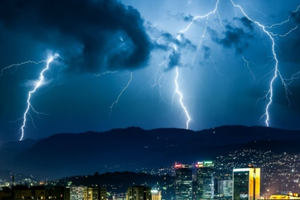
All of Southern Europe will face changing weather conditio...
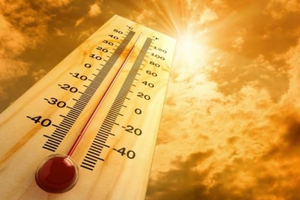
Albania was hit by temperatures significantly higher than ...

For the first time, Pogradec welcomed the Inter-Lake Chess...
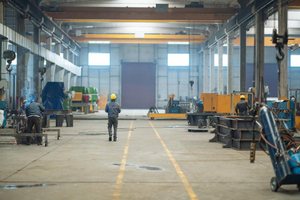
Albania has achieved a record for the employment of foreig...
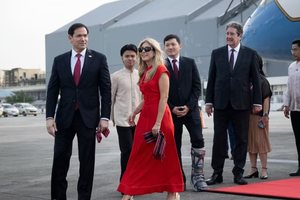
US Secretary of State Marco Rubio arrived in Manila on Jul...

In the space of a few days, Ukrainian President Volodymyr ...
The spokesman for the Iranian Foreign Ministry warned Bulg...

Autoritetet italiane sekuestruan pako me afër 800 kilogram...

At a time when industrial products are increasingly taking...

Trust among people is not just a three-syllable word. It c...

Master of humor Todi Llupi has passed away at the age of 7...

The ninth edition of "MIK Festival" kicked off with one of...

Construction company licenses will have a validity period ...

The Centralized Purchasing Operator recently opened a tend...

The new draft law "On the Bank of Albania" provides that t...

This Tuesday, one US dollar is bought for 81.2 lek and sol...