


After the match, protesters move to the DP headquarters: Opposition sold out
After the match, the protesters moved in front of the DP h...

After the match, the protesters moved in front of the DP h...

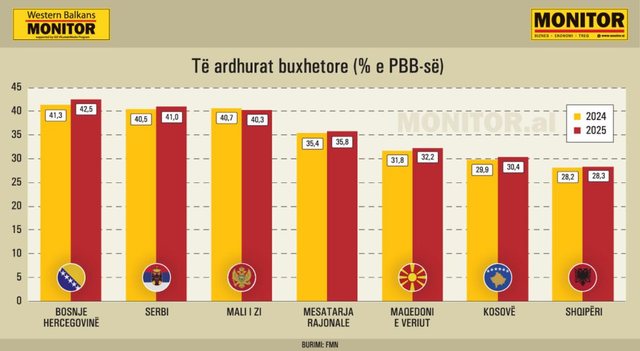
The Western Balkan countries have made strides in increasing budget revenues in relation to Gross Domestic Product (GDP).
On the one hand, Bosnia, Serbia and Montenegro are more effective as they manage to collect over 40% of Gross Domestic Product in the budget, while on the other hand, Albania, Kosovo and North Macedonia result in very low quotas, without even managing to cross the 33% threshold, according to data published in the International Monetary Fund database for the year 2025.
Bosnia and Herzegovina not only has the highest income to GDP ratio in the Region, but also records the highest annual growth in 2025.
Its revenues increase from 41.3 percent in 2024 to 42.5 percent in 2025, by 1.2 percentage points. Bosnia's strong fiscal expansion was supported by good performance in indirect taxes and VAT collection, which were driven by inflation and stable domestic consumption.
The positive change shows that the Bosnian authorities have managed to capitalize on economic flows, strengthening their budgetary position in the face of the challenges posed by internal fragmentation.
Serbia also confirms a strong position and a constant increase in its fiscal indicators in the region, rising from 40.5 percent of GDP in 2024 to 41.0 percent in 2025.
This increase of 0.5 percentage points reflects the large share this country plays in regional industrial production and its ability to collect significant revenues from foreign direct investment and the export sector.
The Serbian fiscal system benefits from a broad tax base and stricter control over the performance of public and private enterprises, which keeps revenue levels at high levels, comparable to those of developed European countries.
Montenegro constitutes a specific exception in the region, as it is the only country to record a decline in income as a percentage of GDP in 2025. The data show that from a high of 40.7 percent in 2024, the indicator dropped to 40.3 percent in 2025, shrinking by -0.4 percentage points.
This slowdown is not related to the weakening of the economy, but to the faster growth of nominal GDP driven by tourism and foreign investment, compared to the pace of tax collections.
North Macedonia continued to grow, with its budget revenues relative to GDP moving from 31.8 percent in 2024 to 32.2 percent in 2025.
This positive change of 0.4 percentage points reflects the stability of its tax policies and the government's efforts to harmonize fiscal legislation with European Union standards. North Macedonia has increased efficiency in collecting liabilities from large businesses, ensuring a stable revenue stream for the state treasury.
Kosovo also shows an upward trend in its budget collections, demonstrating a continuous consolidation of its revenue collection institutions. From 29.9 percent in 2024, Kosovo manages to cross the psychological threshold by rising to 30.4 percent in 2025, which represents an increase of 0.5 percentage points.
This progress is largely attributed to the declared war on the formal economy, reforms in Customs and Tax Administration, as well as increased transparency in the declaration of personal income, which is helping to create greater fiscal space for public investments.
In this regional context, Albania continues to remain at relatively low levels of revenue collection relative to the size of its economy, ranking among the poorest performing countries in the Western Balkans.
According to IMF figures, revenues as a percentage of GDP for Albania rose from 28.2 percent in 2024 to 28.3 percent in 2025, marking an almost negligible improvement of only 0.1 percentage points.
This minimal growth reflects the chronic challenges the country faces in expanding the tax base, the high level of informality in key sectors such as tourism, construction, and agriculture.
Although reforms in the digitalization of tax administration and the fiscalization process have yielded some results, they have not yet brought about a radical turnaround that would bring Albania closer to regional or European averages in capital data collection./ Monitor.al

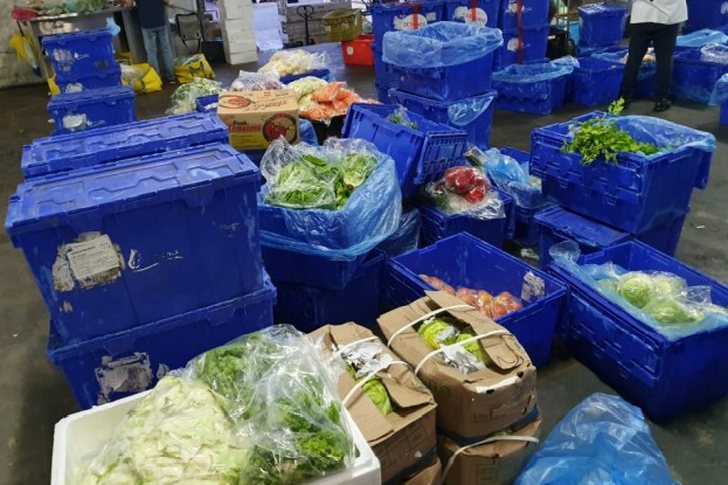
Food items experienced a significant increase in imports f...

In Albania, an employee receives an average of 10.3 thousa...
This week, one US dollar is bought for 81.3 lek and sold f...
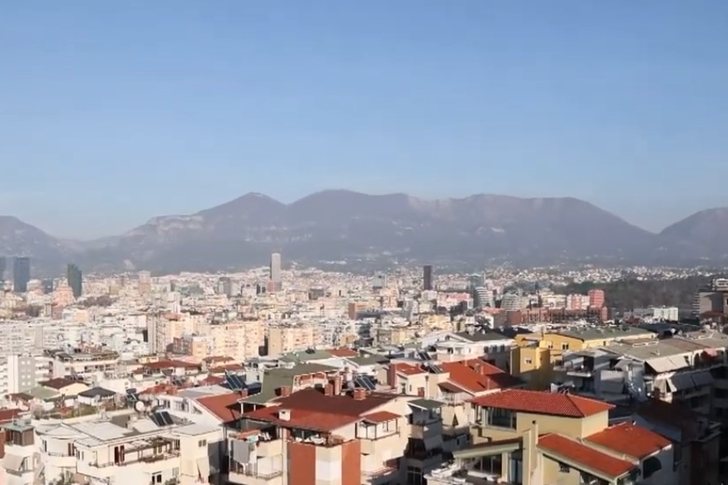
The construction sector in Albania is experiencing new mom...
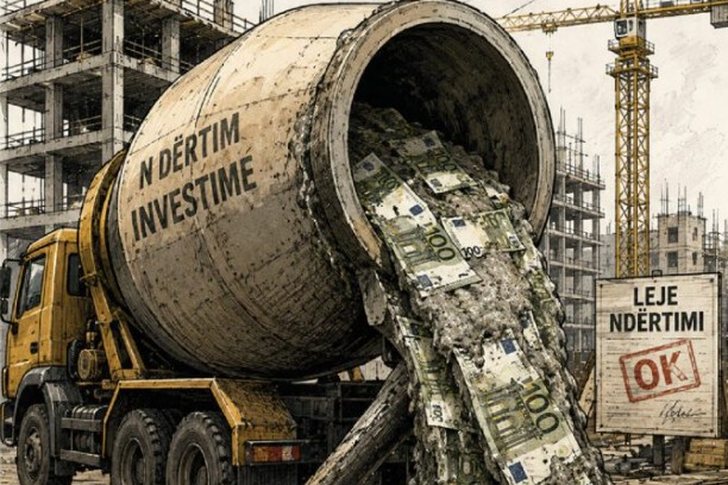
Auditors, accountants and fiscal experts unanimously asses...
This Saturday, one US dollar is bought for 81.3 lek and so...

The average rate of interest for members in private pensio...
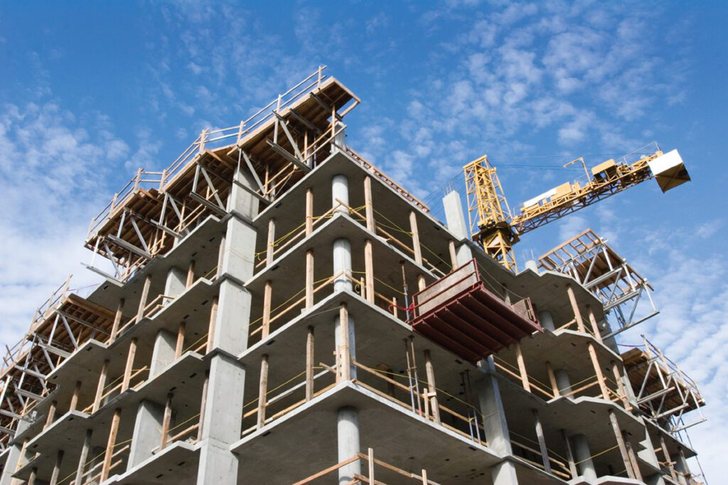
The total area forecast for new construction in this quart...

Fuel consumption has marked a significant decline in April...
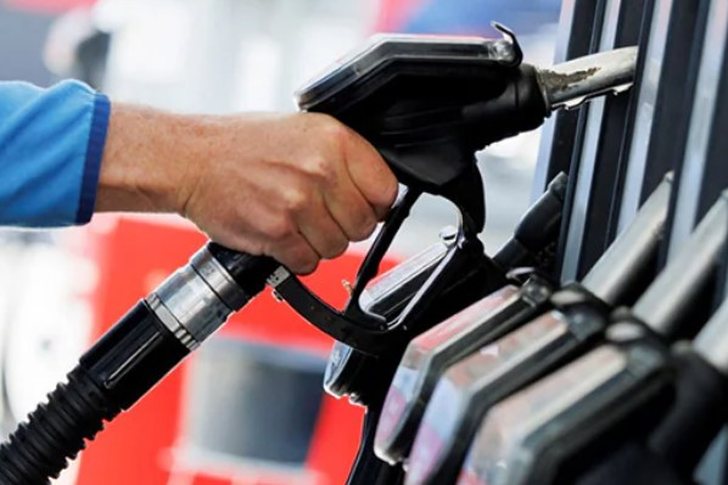
Oil companies have warned the government that they will su...
This Friday, one US dollar is bought for 81.4 lek and sold...

Lending to the economy improved again in April. According ...
This Thursday, one US dollar is bought for 81.4 lek and so...
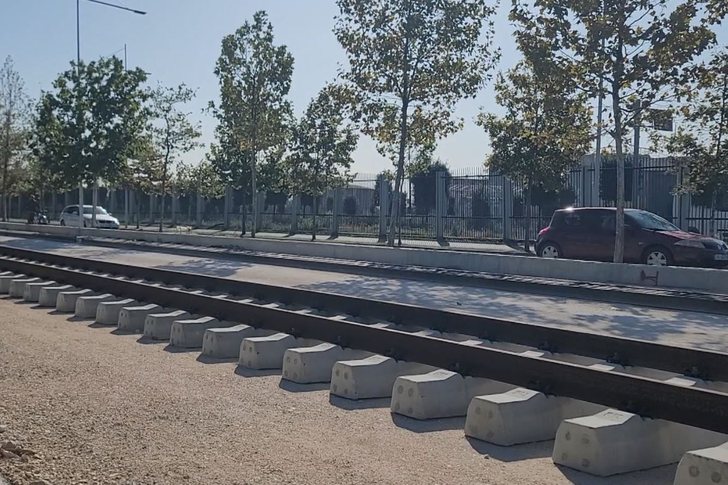
The Albanian Railways has planned to open a tender for the...
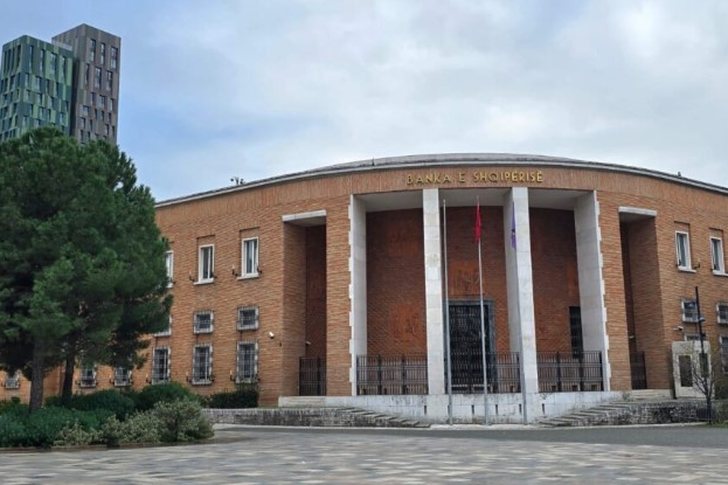
The Bank of Albania earned almost 123 million euros from t...

The installation of POS/POI devices (a system connected to...
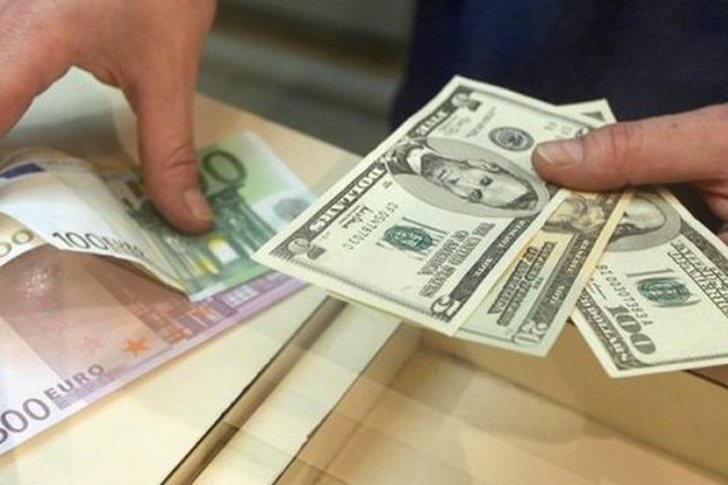
This Wednesday, one US dollar is bought for 81.5 lek and s...
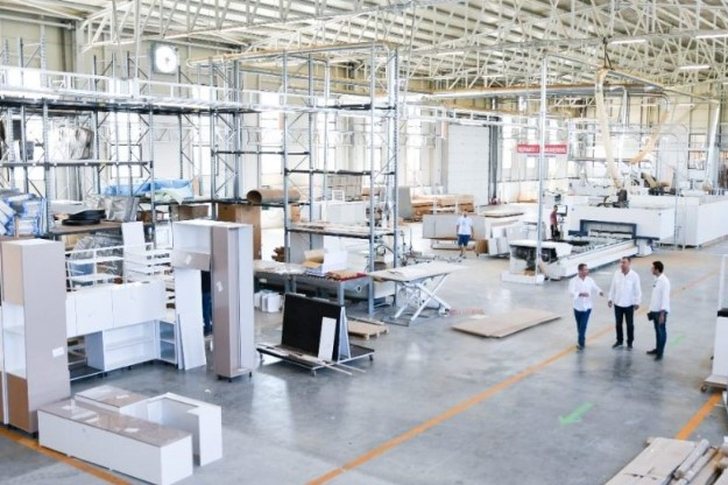
Instat has published the results of the Survey on Innovati...

The capital investment fund from the budget is at an all-t...
This Tuesday, one US dollar is bought for 81.5 lek and sol...

The case addressed this Wednesday, June 3, on the show "St...

The show "Stop" broadcast this Wednesday, June 3, the case...

Irfan Hysenbelliu claims to be a big businessman, an hones...

The show "Stop" dealt with a denunciation case this Tuesda...

The Special Board of Appeal (KPA) decided this Monday ...

The KPA vetting decided this Thursday to dismiss the p...

Suela Salavaçi, a prosecutor in the Prosecutor's Offic...

The Special Board of Appeal reinstated the prosecutor ...

A road accident occurred this evening on the Tirana-Durres...
Policia e Lezhës ka dalë me reagim zyrtar lidhur me ngjarj...
The Special Court against Corruption and Organized Crime h...

Një banesë është përfshirë nga flakët në lagjen nr. 4 në q...

An alarming figure of more than 166.4 thousand Albanians a...

The weather today will be mostly clear and temperatures wi...
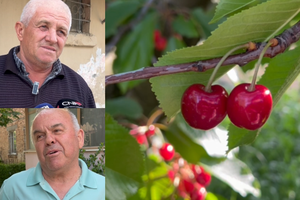
The cherry harvest season is expected to begin in the vill...

The education system in Albania is facing a challenging re...

United States President Donald Trump announced in a post o...
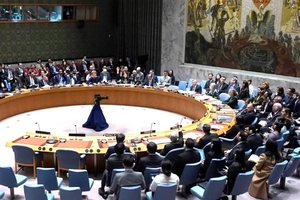
Asambleja e Përgjithshme e Kombet e Bashkuara ka përfundua...
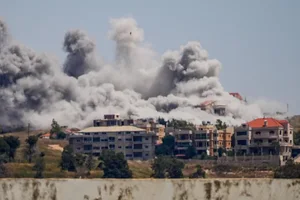
At least nine people have been killed in Israeli airstrike...

A serious incident has occurred in Bakersfield, California...

Korça is ready to open the summer season with one of the c...

Two years after his passing, the renowned Korçë poet Skënd...
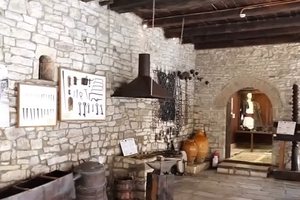
The Ethnographic Museum of Berat has opened its doors to v...
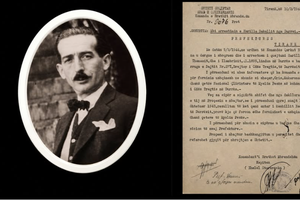
The story of Harilla Bakalli is one of the most chilling t...
The Minister of Finance, Petrit Malaj, announced today a n...
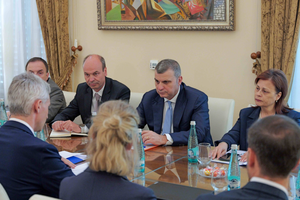
Guvernatori i Bankës së Shqipërisë, Gent Sejko, priti m...
Today, in the foreign exchange market, one US dollar is bo...

DP MP Igli Cara has submitted to the Parliament a draf...